Kirjojen hintavertailu. Mukana 12 016 292 kirjaa ja 12 kauppaa.

Kirjahaku

Etsi kirjoja tekijän nimen, kirjan nimen tai ISBN:n perusteella.

1000 tulosta hakusanalla Chappy

Elizabeth Gaskell

Elizabeth Gaskell

John Chapple

Manchester University Press
2009
nidottu
This absorbing study of Elizabeth Gaskell’s early life up to her marriage in 1832 is based almost entirely on new evidence. Also, using parish records, marriage settlements, property transfers, wills, record office documents, letters, journals and private papers, John Chapple has recreated the background of one of the nineteenth century’s greatest novelists.The widely differing lives of her father, brother and the aunt who raised her are illuminated at length by these original documents. Chapple has discovered a number of letters written by close relations that shed new light on her upbringing, and he analyses three hitherto unknown travel journals buy her Knutsford cousins which prove that she grew up in a literary milieu.Other biographical accounts of Elizabeth Gaskell’s life have been compared and, where necessary, corrected, but Chapple’s main emphasis lies with the wealth of new material that he has discovered. This ensures that The early years will provide a secure basis for future criticism of her creative works, which so often rely on biographical details
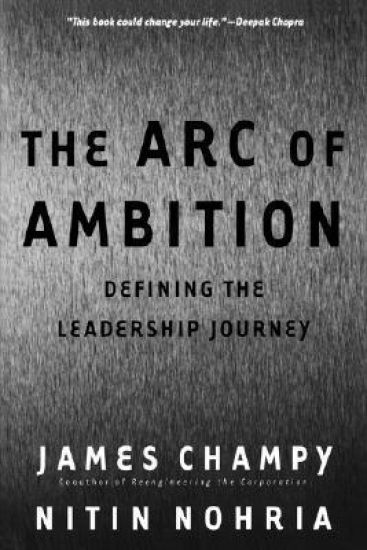
The Arc Of Ambition

The Arc Of Ambition

James Champy; Nitin Nohria

Perseus Books
2001
pokkari
What separates the wannabes from the great achievers? For internationally renowned management experts Jim Champy and Nitin Nohria, the key ingredient is ambition. Showcasing the experiences of dozens of contemporary and historical figures from all walks of life, The Arc of Ambition is a practical and inspirational guide to harnessing your ambition and leaving a legacy of accomplishment.
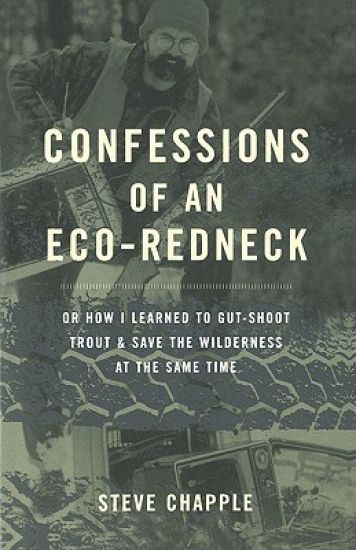
Confessions Of An Eco-redneck

Confessions Of An Eco-redneck

Steve Chapple

Da Capo Press Inc
2001
pokkari
Confessions of an Eco-Redneck collects the best of outdoor writer Steve Chapple's short pieces. This is outdoor adventure writing at its best, in a league with Tim Cahill, Randy White, or PJ O'Rourke, and the essays range from fishing: for tigerfish on the Zambezi, tarpon in the Keys, trout on the Yellowstone to hunting: the "Bambi Syndrome" (Hollywood's bias against the sport), "Dinner Bell Grizzlies," and stalking televisions in Montana to the larger questions: "Now or Never for American Rivers," and the great unasked question about the Lewis & Clark expedition: "How were the bugs??" Underneath Steve Chapple's laugh-out loud wit there's a serious plea to environmentalists to remember that sportsmen (the eco-rednecks of the title) are among the most passionate and effective advocates for conservation of the environment that we've got.
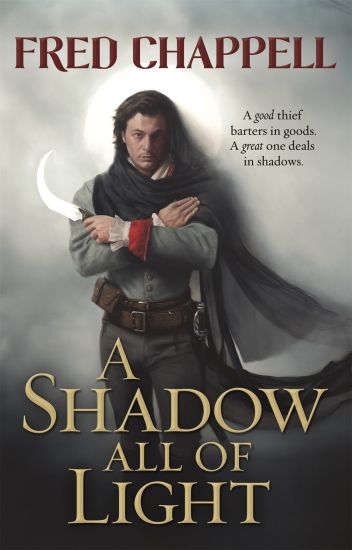
A Shadow All of Light

A Shadow All of Light

Fred Chappell

Tor Books
2017
nidottu
A good thief barters in goods. A great one deals in shadows. A Shadow all of Light is a stylish, elegant, episodic fantasy novel by World Fantasy Award-winning author and former poet laureate Fred Chappell. This stylish, episodic fantasy novel is for fans of epic fantasies and heists. The tale follows the exploits of Falco, a young man from the country, who arrives in the port city of Tardocco with the ambition of becoming an apprentice to a master shadow thief. Maestro Astolfo, whose mysterious powers of observation would rival those of Sherlock Holmes, sees Falco's potential and puts him through a grueling series of physical lessons and intellectual tests. Falco's adventures coalesce into one overarching story of con men, monsters, ingenious detection, pirates, and the King of Cats. A wry humor leavens this fantastical concoction, and the style is as rich and textured as one would hope for from Chappell, a distinguished poet as well as a World Fantasy Award-winning author.
Gendering Government

Gendering Government

Louise Chappell

University of British Columbia Press
2002
sidottu
Feminists, like other political actors, cannot avoid the state.Whether they want equal pay, anti-domestic violence laws, refugee orchildcare centres, they must engage with state institutions. Whatdetermines the nature and extent of this involvement? Why are somefeminists more willing to engage with some institutions, while othersare not? Gendering Government seeks to answer these questionsthrough a comparison of feminist engagement with political institutionsin Australia and Canada. Chappell considers what effect politicalinstitutions have had on shaping feminist claims, and in turn, to whatextent these claims shape the nature of these institutions. She adds anew dimension to our understanding of the relationship between genderinterests and government, showing how the interaction is dynamic andmutually defining. She further extends existing comparative studies inthe field of women and politics by examining the full range of suchinstitutions, including the electoral, parliamentary,legal/constitutional, and bureaucratic arenas.
Gendering Government

Gendering Government

Louise Chappell

University of British Columbia Press
2003
pokkari
Feminists, like other political actors, cannot avoid the state.Whether they want equal pay, anti-domestic violence laws, refugee orchildcare centres, they must engage with state institutions. Whatdetermines the nature and extent of this involvement? Why are somefeminists more willing to engage with some institutions, while othersare not? Gendering Government seeks to answer these questionsthrough a comparison of feminist engagement with political institutionsin Australia and Canada. Chappell considers what effect politicalinstitutions have had on shaping feminist claims, and in turn, to whatextent these claims shape the nature of these institutions. She adds anew dimension to our understanding of the relationship between genderinterests and government, showing how the interaction is dynamic andmutually defining. She further extends existing comparative studies inthe field of women and politics by examining the full range of suchinstitutions, including the electoral, parliamentary,legal/constitutional, and bureaucratic arenas.
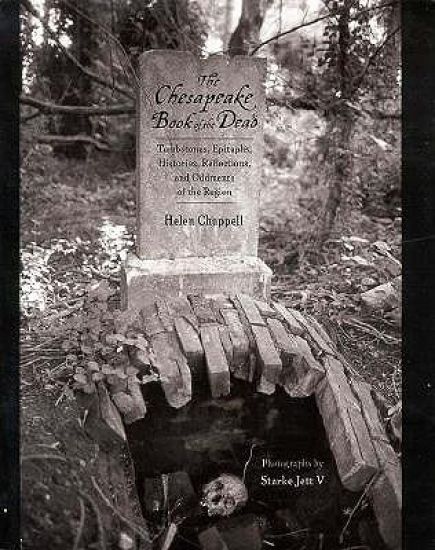
The Chesapeake Book of the Dead

The Chesapeake Book of the Dead

Helen Chappell

Johns Hopkins University Press
1999
sidottu
"There is a romantic, nostalgic, pleasantly melancholy feeling to old cemeteries that is hard to define but easy to experience. Perhaps it is because we can feel the direct link to our past that no history book, no movie, no historical fantasy can ever convey. These stones and these unkempt grounds are the hard evidence of lives that came before us. Once, these people lived and breathed, loved, worked, fought, hoped and despaired, and experienced their triumphs and failures just as we do today. And, although we seldom care to acknowledge it, we will inevitably go where they have gone."-from the Preface For the many people who enjoy walking through old cemeteries, exploring forgotten and overgrown graveyards, and reading the names, dates, and epitaphs of the dead, the Chesapeake Bay region offers a rich assortment of final resting places, many dating back to the early 1600s. From Williamsburg to Havre de Grace, it is not uncommon to see a number of the living wandering among the markers of the dead. Some are genealogists and historians, others come in search of quietude and a tangible connection to the past. In The Chesapeake Book of the Dead, Helen Chappell and photographer Starke Jett survey this rich legacy, from the vast and imposing Arlington National Cemetery to lone graves so modest as to have been lost almost as soon as they were dug. Chappell and Jett visit graveyards of the famous and the obscure, wander through cemeteries dotted with both elaborate funerary and simple, weather-beaten headstones, and discover epitaphs that range from the literary to the amusing to the poignant. As old grave sites disappear under developers' bulldozers, through neglect, and at the hands of unscrupulous headstone collectors, this remarkable book offers a unique and elegiac look at our past and its tales of love and tragedy. Among the cemeteries explored are Southeast Washington's Congressional Cemetery (posthumous home to composer John Philip Sousa, FBI head J. Edgar Hoover, pioneering feminist and muckraking journalist Anne Royall, and Choctaw chief and notable military tactician Pushmataha); Baltimore's Green Mount Cemetery (built in the 1830s as Baltimore's first sylvan graveyard); and Westminster Burying Ground in downtown Baltimore. At Westminster lies the grave of Edgar Allan Poe, which a mysterious figure visits each year on Poe's birthday to leave roses and a bottle of brandy. The book also describes the final resting places for such celebrities as Dorothy Parker (Chappell located her ashes at the NAACP headquarters in Baltimore), F. Scott and Zelda Fitzgerald (buried in Rockville at Scott's wish, because, he insisted, "I belong here," in Maryland, "where everything is civilized and gay and rotted and polite"), and cosmopolitan actress Tallulah Bankhead (interred in a plot her sister provided near Chestertown). Included throughout this fascinating book are essays on mourning fashion and deathbed performances, graveyard ghost stories, discussions of efforts to save historic cemeteries, and notes from the diary of a nineteenth-century doctor who today is buried in Rising Sun Cemetery alongside many of his patients. Chappell's lively prose, accompanied by Jett's haunting black-and-white photographs, will delight all those drawn to the seclusion, peacefulness, and melancholy of old graveyards. Jacket illustration: Lower Hooper's Island, Maryland
Castle Tzingal

Castle Tzingal

Fred Chappell

Louisiana State University Press
1984
nidottu
With this poem, Fred Chappell takes his readers far from the southern landscape and familiar passions of his acclaimed Midquest tetralogy. He tells instead of a forbidding medieval castle ruled by a mad king and peopled by bitter, scheming grotesques and melancholy weaklings who cower at the sound of the sweet, sad voice of truth that haunts their nights.Castle Tzingal is a fairy tale without moral or happy ending, a tale in which lies and self-deceptions take the place of ogres and in which moral corruption is the dragon to be slain. In a series of highly formal dramatic monologues, Chappell presents the corrupt longings and fears of the court's manipulative astrologer, its forlorn queen, a pensioned admiral, a seductive page, and the homunculus, born of chemicals and fire, who spies on them all:What things I might say if I so inclined! The astrologer's passion for a comely page Is news; Queen Frynna has no peace of mind Since a nimble harpist sojourned here Last twelvemonth; there's a wealthy vein of silver Runs beneath our Castle Tzingal; the magpie Singing in the courtyard wicker cage Is a transformed enemy sorcerer. This kind if information finds its flowering In time; all knowledge becomes of use, And when it does I bear it to the King.Ruling over this monstrous court is King Tzingal himself, self-proclaimed ""great lord of toads"", whose only power is hatred and whose reign can only be ended when his dismal kingdom is finally overrun by truth, by poetry.Set in a mythical kingdom in a mythical age, Castle Tzingal is a political fairy tale that speaks with the vivid, sometimes harsh truth and knowledge of our most fevered nightmares.
Source

Source

Fred Chappell

Louisiana State University Press
1985
nidottu
In a noteworthy career Fred Chappell has created a body of verse that will likely endure as long as the North Carolina mountains that are the setting of so many of his poems. In such works as the tetralogy Midquest and the long poem Castle Tzingal, Chappell has shown himself to be a master of his craft, acutely inquisitive and keenly observant, adept at a variety of forms and styles. Earlier this year Chappell's poetic achievement was honored when he received the Bollingen Prize in Poetry. With Source, his newest collection, Chappell again reveals himself as a mature and gifted poet writing at the peak of his powers.The poems in Source show the breadth and diversity of Chappell's range. They are by turn soft and lyrical, elegiac and formal, speculative and experimental. They draw on mythic images of the past and horrific visions of the future, but most important, they reflect Chappell's southern roots and his knowledge of a simple people and a simple way of life, as seen in these lines from ""Humility"":In the necessary field among the round Warm stones we bend to our gleaning. The brown earth gives in to our hands, and straw By straw burns red aslant the vesper light. The village behind the graveyard tolls softly, begins To glow with new-laid fires. . . . . . . This is the country we return to when For a moment we forget ourselves, When we watch the sleeping kitten quiver After long play, or rain comes down warm. Here we might choose to live always, here where Ugly rumors of ourselves do not reach, Where in the whisper-light of the kerosene lamp The deep Bible lies open like a turned-down bed.
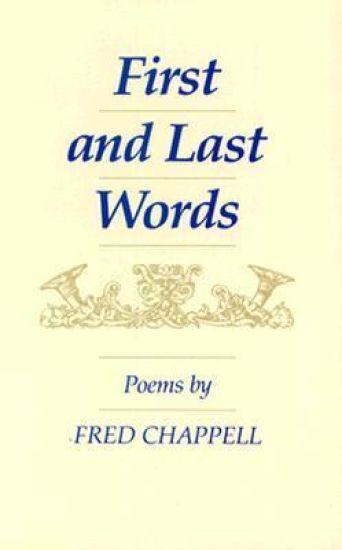
First and Last Words

First and Last Words

Fred Chappell

Louisiana State University Press
1989
nidottu
Fred Chappell continues to astonish. In his new collection of verse, he matches the vitality and grace, the deep intelligence and keenly observant sensibility, that characterize such earlier works as Midquest and Source. First and Last Words revives the traditional practice of supplying new prologue and epilogue poems to classic works of literature. The poems invite renewed acquaintance with familiar works and authors, The Georgics and The Dynasts, Livy and Lucretius, Goethe and Tolstoy, The Wind in the Willows, and are offered as a celebration of their enduring significance. In ""The Watchman,"" a prologue to the Orteseia, Chappell writes:The watchman keeps his vigil on the roof Of the ruining house. This long year, Stretched out on his belly like a hound, He has awaited the semaphore Blaze, awaited proof Of the victory that shall pull down A proud and bitter family. In rain Or cold starshine, gripping the eave, He has searched the hard horizon for a sign.Still other poems are appreciations of music or the visual arts, as in ""My Hand Placed on a Rubens Drawing"":The ages work toward mastery Of a single gesture. A torso's twist, The revelation of a thigh, White stone corded in a fist: Fragments that might still add up To compose a figure of the perfected soul As it releases from the grip Of vision that burned to draw it whole.All of the poems in First and Last Words are marked by a thoughtful use of the voice and a careful attention to language. They confirm Fred Chappell's status as one of our very finest living poets.
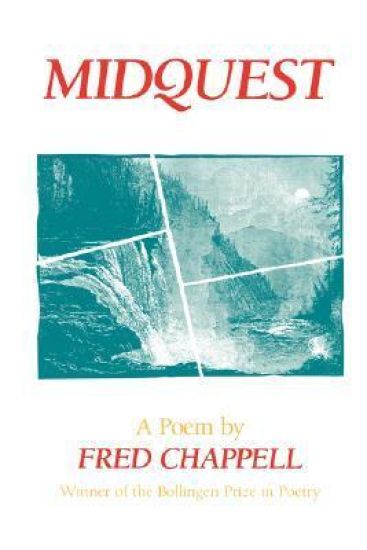
Midquest

Midquest

Fred Chappell

Louisiana State University Press
1989
nidottu
Together now, the four poems River, Bloodfire, Wind Mountain, and Earthsleep counterpoint one another in a grand symphony, Midquest. In what he has referred to as ""something like a verse novel,"" Fred Chappell has summoned up the rich veins of memory and brings this to bear on the contemporary sensibility. Through the remarkable range of his poetic talent, in turns lyrical, dramatic, elegiac, mythic, and humorous, Chappell brings us to the elemental: this encounter with earth, air, fire, and water. The dynamic of their interrelation contains multitudes but also holds a pattern.In his preface to the completed work, Chappell explains that ""though he is called 'Fred,' the 'I' of the poem is no more myself than any character in any novel I might choose to write. . . . He was constructed, as was Dante's persona, Dante, in order to be widely representative."" Chappell's Fred has moved away from the land and the work of the hands to the city and the work of the intellect. In the memories he reviews at mid-life, he regains the values that he had thought were lost. In its mental reclamation, Midquest belongs in a long and vital southern tradition. In design, he tells us, its model was ""that elder American art form, the sampler, each form standing for a different fancy stitch.
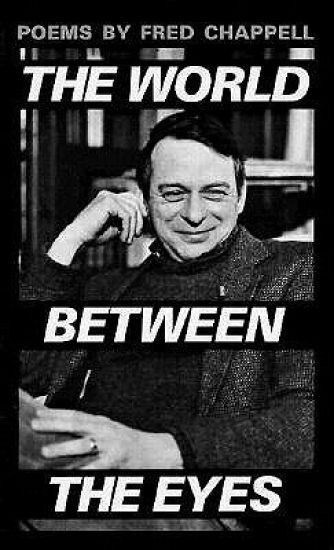
The World Between the Eyes

The World Between the Eyes

Fred Chappell

Louisiana State University Press
1990
nidottu
Although Fred Chappell has long been recognised as a novelist of talent and achievement, his poetry has been known to only a few because he has chosen to publish little. Now, in this collection, his work becomes widely available for the first time.The subjects of these poems range from the poet's love for his wife and son to that hallowed American institution, the skin flick; from baseball to blues. From ""Trios II"" to the slaughter of pigs. Their forms vary from short lyrics, often humorous or ironic, to longer narratives, more serious and intense. All in all, it is a stunning performance by a consummate artist in his first appearance.
C

C

Fred Chappell

Louisiana State University Press
1993
nidottu
Fred Chappell has long been considered one of the South's finest writers of both fiction and poetry. C not only provides abundant justification for that assessment but also makes clear the inadequacy of geographical stricture; Chappell is indeed a writer of world-class stature.C is of course the roman numeral for one-hundred, the precise number of poems that appear in this dazzling collection. Delicate, highly wrought miracles of compression and insight, these pieces gleam with passion, humor, and intelligence. At times Chappell's tone is acerbic, as in this sly comment on the self-indulgence of some confessional poets: ""If my peccadilloes were so small/ I never would undress at all,"" a couplet that would surely draw a delighted chuckle from Alexander Pope himself. With the apparent effortlessness of a master, Chappell also can suffuse a poem with sensual wonder, in ""A Glorious Twilight,"" for example, an ecstatic speaker rhapsodizes about a woman painting her nails ""such a brilliant shade of bright/ she seems to have sprouted 22 fingers."" And sometimes his jeweler's eye and the sheer artfulness of his language align the shutters of our perception so precisely that we can see for a hushed instant the incandescence of the everyday moment, ""As common as air,/ Startling as fire.""Satirical or elegiac, bitter or rejoicing, giddy or profound, each of these one hundred poems is unnervingly alive. All readers who delight in observing an artist at the height of his powers are sure to find C both an inspiration and an eloquent reminder that poetry, language squeezed against the unsayable until it burns, remains our last fragile link with the infinite.
The Gaudy Place

The Gaudy Place

Fred Chappell

Louisiana State University Press
1994
nidottu
Fred Chappell's The Gaudy Place is perhaps the first novel to depict the society of the street people of the New South and their relationship to the middle class. For its wry portrayal of displacement and injustice this novel was awarded the Sir Walter Raleigh Prize.The street-smart teenager Arkie triggers the events of the story with his ambition to rise in economic status. He proposes business deals to the prostitute Clemmie and the successful con man Oxie, a hustler who aspires to political office. When the prank of a middle-class teenager, Linn Harper, offers Oxie the surprising opportunity to gain a foothold in respectable society, an unexpected climax reveals the interdependence of all social levels in a culture too quickly changing from a rural to an urban character. Here is a small world in which quick wits and wily survival skills are necessary and admirable, even though the race is not always to the swift.Originally published in 1973, The Gaudy Place is drily humorous, darkly ironic, fast-moving, and entertaining. Its best strength is its gallery of sharply drawn, fondly observed characters unknowingly at odds with one another.
A New Pleiade

A New Pleiade

Fred Chappell

Louisiana State University Press
1998
nidottu
A New Pleiade is a celebration of close literary friendships among seven eminent American poets- Fred Chappell, Kelly Cherry, R. H. W. Dillard, Brendan Galvin, George Garrett, David R. Slavitt, and Henry Taylor. The affection, fun, and mutual respect of this happy association of poets have resulted in this anthology, in which the selection from the work of each was made by the contributor whose name precedes his or hers alphabetically. Endowed with great variety as well as delightful and unexpected connections of subjects and personae, A New Pleiade is exceptional not only because it unites in a single volume these seven accomplished poets: the real allure of this enchanting, broadly appealing collection is the diversity, the vast scope of their masterful voices. The bucolic musings of Fred Chappell greet the reader, followed by the searching, graceful lamentations of Kelly Cherry, the unconventional observations of R.H.W. Dillard, and the eccentric creations of Brendan Galvin. George Garrett's precise, shining insights precede David R. Slavitt's erudite, witty contemplations until, alas, Henry Taylor bids farewell by bringing us full circle, back to a pastoral world reminiscent of Chappell's rural samplings. These poets have been delighting and entertaining one another- and their loyal readers- for decades. With A New Pleiade, these seven illustrious bards- and good friends- are able to settle comfortably between the covers of one extraordinary book.
Family Gathering

Family Gathering

Fred Chappell

Louisiana State University Press
2000
nidottu
The occasion might be a holiday or a wedding, a christening or a funeral, and a family is gathered on the eve to eat, drink, talk, and cast eyes upon each other. Like all relations, the extended family in Fred Chappell's Family Gathering has its foibles and strengths- oddballs and know-it-alls, hussies and historians, sparring spouses and model marriages. More than anything, this family loves gossip. Chappell portrays its members one and all in a series of sharply limned character sketches. In this crowd of strangers we may find personalities familiar, maybe too familiar. Perhaps we may even find a glimpse or two of ourselves.Framed by the observations of Elizabeth, ""age eight, / Priss-proud in her finery and bored / Bored bored,"" the collection introduces ebullient Cousin Marjorie, self-satisfied Uncle Einar, evasive Cousin Lilias, cunning Aunt Wilma, aged Uncle Nahum, convivial Uncle Hobart, confusing Aunt Alicia- set down in poems terse, witty, sympathetic, thoughtful, and satiric. Cousin Elmer ""tends the family tree, / Shaping it to topiary rare / And strange as he trims a little here and there / And lops some ugly branches drastically."" Cousin Lola ""charts her paramours / On a performance scale from One to Ten / And then announces publicly the scores."" Uncle Brit ""cuts you off before you say / Two sentences and lets you know / He knows already what you think / And what you think is pretty dumb."" And Aunt Agnes, ever forgiving, ""recognizes what we are, / Yet holds us in affection / As steadfast as the morning star, / As if our faults had no connection / With the persons we are within.""Although there is no continuous story line, the poems in Family Gathering almost amount to a piece of fiction. We leave these lines with full knowledge of the characters- their personalities, prejudices, idiosyncrasies, and intricate relationships with one another. Chappell gives us gossip, but also gossip parodied. If your family is like most, sparks of recognition will leap from every page. With results like those of the Polaroids taken by the family photographer, Chappell ""makes us look as scary / As old woodcuts in a bestiary- / But maybe, after all, that's us.""Varied, humorous, and, above all, true, Family Gathering is pure mean fun.
Backsass

Backsass

Fred Chappell

Louisiana State University Press
2004
nidottu
This collection of humorous and satiric verse takes its title from that thoroughly southern term meaning ""irreverent retort,"" ""ironic remark,"" or ""scoffing observation."" The ancient Roman poet Juvenal noted that his world made it hard not to write satire. Fred Chappell, finding his contemporary era analogous to that of imperial Rome, has in Backsass given in to the impulse for invective and mockery. Whether addressing the political, the poetical, or the practical, Chappell brandishes his lexical sword, ribbing our shortcomings, offering tonic advice, and occasionally shedding a tear for our fallen ideals. Some poetry is fine wine. Backsass is the driest of martinis.
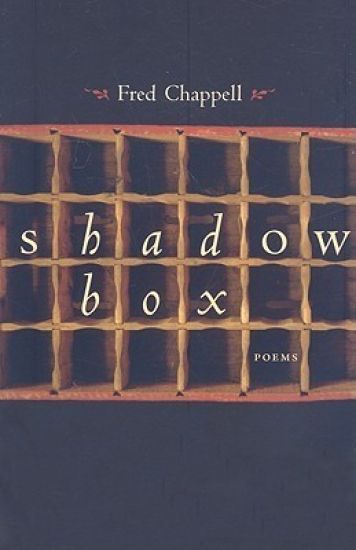
Shadow Box

Shadow Box

Fred Chappell

Louisiana State University Press
2009
nidottu
In this sharply innovative collection, renowned poet Fred Chappell layers words and images to create a new and dramatic poetic form- the poem-within-a-poem. Like the shadow box in the volume's title, each piece consists of an inner world contained, framed, supported by an outer- the two interdependent, sometimes supplementary, often contrary. For example, the grim but gorgeous ""The Caretakers"" is a landscape that reveals another image inside it. Chappell also introduces sonnets in which the sestet nests within the octet. Play serves as an important component, but the poems do not depend upon gamesmanship or verbal strategems. Instead, they delicately or wittily trace human feelings, respond somberly to the news of the world, and rejoice in humankind's plentiful variety of attitudes and beliefs. Just as an x-ray can show the inner structure of a physical object, so the techniques in Shadow Box display the internal energies of the separate works.With this new form- the ""enclosed"" or ""embedded"" or ""inlaid"" poem- Chappell broadens the expressive possibilities of formal poetry, intrigues the imagination in an entirely new way, and offers surprise and revelation in sudden flashes. At once revolutionary and traditional, Shadow Box contains an Aladdin's trove of surprises.