Kirjojen hintavertailu. Mukana 11 699 587 kirjaa ja 12 kauppaa.

Kirjahaku

Etsi kirjoja tekijän nimen, kirjan nimen tai ISBN:n perusteella.

761 tulosta hakusanalla Cherokee Hatcher

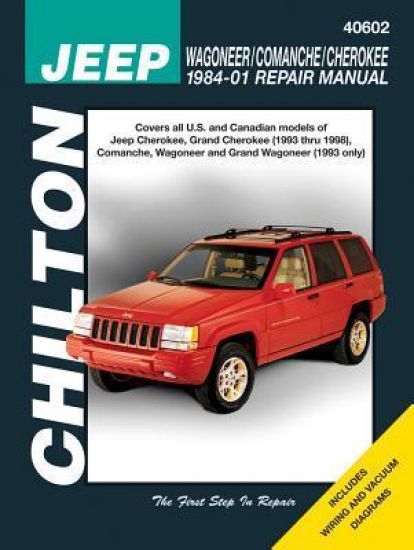
Jeep Wagoneer/Comanche/Cherokee (Chilton)
Total Car Care is the most complete, step-by-step automotive repair manual you'll ever use. All repair procedures are supported by detailed specifications, exploded views, and photographs. From the simplest repair procedure to the most complex, trust Chilton's Total Car Care to give you everything you need to do the job. Save time and money by doing it yourself, with the confidence only a Chilton Repair Manual can provide.
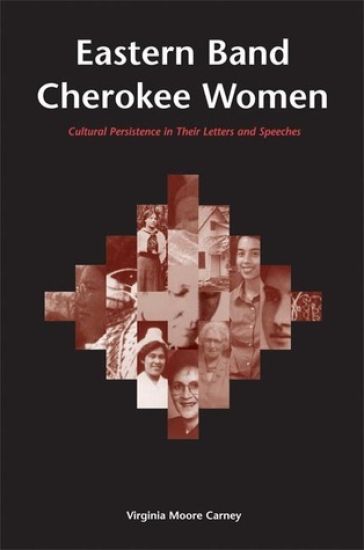
Eastern Band Cherokee Women

Eastern Band Cherokee Women

Virginia Carney

University of Tennessee Press
2005
sidottu
For the first time, the voices of Eastern Band Cherokee women receive their proper due. A watershed event, this book unearths three centuries of previously unknown and largely ignored speeches, letters, and other writings from Eastern Band Cherokee women. Like other Native American tribes, the Cherokees endured numerous hardships at the hands of the United States government. As their heritage came under assault, so did their desire to keep their traditions. The Eastern Band Cherokees were no exception, and at the forefront of their struggle were their women. Eastern Band Cherokee Women analyzes how the women of the Eastern Band served as honored members of the tribe, occupying both positions of leadership and respect. Carney shows how in the early 1800s women leaders, such as Beloved Nancy Ward, battled to retain her people's heritage and sovereignty. Other women, such as Catharine Brown, a mission school student, discovered the power of the written word and thereby made themselves heard just as eloquently. Carney traces the voices of these women through the twentieth century, describing how Cherokees such as Marie Junaluska and Joyce Dugan have preserved a culture threatened by an increasingly homogenous society. This book is a fitting testament to their contributions. Eastern Band Cherokee Women stands out by demonstrating the overwhelming importance of women to the preservation of the Eastern Band. From passionate speeches to articulately drafted personal letters, Carney helps readers explore the many nuances of these timeless voices.
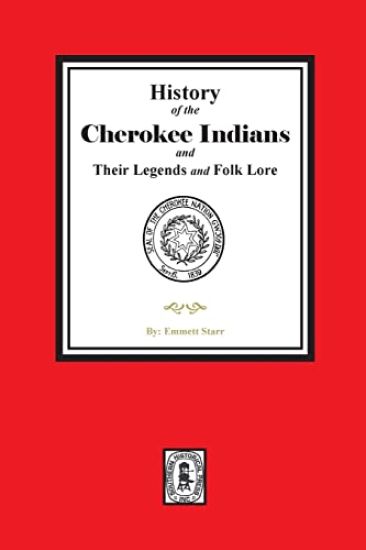
History of the Cherokee Indians and Their Legends and Folk Lore. With a New Added Index
This reprinted edition contains a New, comprehensive, every-name Index, consisting of 123 pages, which was not included in the original publication. The History of the Cherokee Indians and Their Legends and Folk Lore, is considered an essential source of reference for researchers investigating the Cherokee tribe, or family historians tracing their Native American family genealogy. In his Preface, the author Dr. Emmet Starr writes, "This humble effort is attempted for the purpose of perpetuating some of the facts relative to the Cherokee tribe that might otherwise be lost. The object has been to make it as near a personal history and biography of as many Cherokees as possible." Dr. Starr easily accomplishes his stated purpose and objective in this well-written and comprehensive book.This volume covers a multitude of subjects in the first-half of the book, including: Cherokee Origin, Religion, Characteristics; Trouble with the Chickamauga, the attack at Knoxville, Mussel Shoals Massacre, Removal to Arkansas, First printed laws; Convention of Delegates, Constitution Adopted; Proclamation of May 28, 1828; Treaty with the Cherokees, 1835;The emigration from Georgia, Cost Detachment, Resolutions of Protest, Political Differences, Civil War Averted; Act of Union between the Eastern and Western Cherokees; Treaty with the Cherokees, 1846, Schools established, Old settler payments, Keetoowah Society organized, Organization of military companies, Cherokees enter the Civil War, General Waite surrenders; Treaty with the Cherokees, 1866, Delawares acquire full rights, Shawnees adopted by Cherokees, Land sold to Osages, Officers' salaries fixed, Land donated to Masons, Lodges; The Texas Cherokees 1820-1830, Grant from Mexico, Grant from Texas, Treaties, Expulsion; Public school system established, National officials, Male and female seminary, Graduates, Eleemosynary Institutions; Missionary activities, first printing; Officers of the Cherokee Nation, September 9, 1839 to June 30, 1908;The second-half of this work is devoted to genealogies and biographies, of which there are several hundred, providing information on marriages, births, deaths over several generations and naming thousands of related persons. A new, every-name index has been added, containing more than 15,000 names.
Jeep Grand Cherokee Haynes Manual de Reparación: Grand Cherokee 1993 al 2004 todos modelos Haynes Repair Manual (edición española)
Los Manuales Haynes Explican Mejor: -Paso por paso de los cientos de procedimientos con fotografias para que sean mas faciles de seguir.-Escritos por manos que tienen experiencia...usando herramientas comunes.-Seccion para los procedimientos de identificacion y soluciones rapidas y faciles de problemas.-Diagramas detallando los alambrados.-Diagnostico en colores para las bujias.
Jeep Grand Cherokee (2005-2019) (USA)
With a Haynes manual, you can do-it-yourself...from simple maintenance to basic repairs. Haynes writes every book based on a complete teardown of the vehicle, where we learn the best ways to do a job and that makes it quicker, easier and cheaper for you. Haynes books have clear instructions and hundreds of photographs that show each step. Whether you are a beginner or a pro, you can save big with a Haynes manual This manual features complete coverage for your 2005-2019 Jeep Grand Cherokee or 2011-2019 Dodge Durango, covering: Routine maintenanceTune-up proceduresEngine repairCooling and heatingAir conditioningFuel and exhaustEmissions controlIgnitionBrakesSuspension and steeringElectrical systems, andWring diagrams.The manual does not include information specific to diesel engine models or 6.2L supercharged models.
Eastern Band Cherokee Women

Eastern Band Cherokee Women

Virginia Carney

University of Tennessee Press
2015
nidottu
For the first time, the voices of Eastern Band Cherokee women receive their proper due. A watershed event, this book unearths three centuries of previously unknown and largely ignored speeches, letters, and other writings from Eastern Band Cherokee women. Like other Native American tribes, the Cherokees endured numerous hardships at the hands of the United States government. As their heritage came under assault, so did their desire to keep their traditions. The Eastern Band Cherokees were no exception, and at the forefront of their struggle were their women. Eastern Band Cherokee Women analyzes how the women of the Eastern Band served as honored members of the tribe, occupying both positions of leadership and respect. Carney shows how in the early 1800s women leaders, such as Beloved Nancy Ward, battled to retain her people’s heritage and sovereignty. Other women, such as Catharine Brown, a mission school student, discovered the power of the written word and thereby made themselves heard just as eloquently. Carney traces the voices of these women through the twentieth century, describing how Cherokees such as Marie Junaluska and Joyce Dugan have preserved a culture threatened by an increasingly homogenous society. This book is a fitting testament to their contributions. Eastern Band Cherokee Women stands out by demonstrating the overwhelming importance of women to the preservation of the Eastern Band. From passionate speeches to articulately drafted personal letters, Carney helps readers explore the many nuances of these timeless voices.
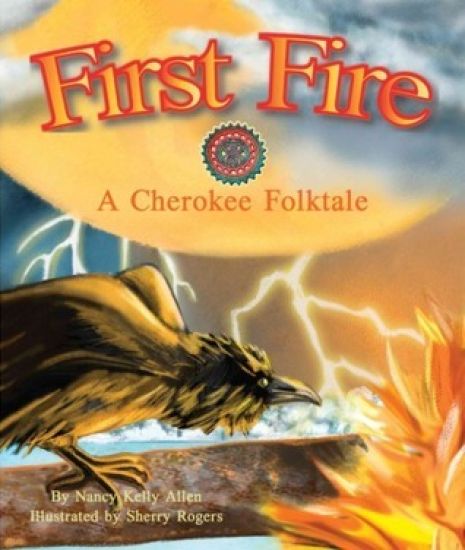
First Fire: A Cherokee Folktale

First Fire: A Cherokee Folktale

Nancy Kelly Allen

Arbordale Publishing, LLC
2014
nidottu
Why are ravens black? Why do screech owl eyes look red in light? How did we get fire? You'll find the answers to those questions in this retelling of a Cherokee pourquoi folktale. The earth was cold and dark but the animals could see fire coming from the tree on the island. They tried to fly or swim to the island to bring back the fire heat and light. What happened to some of the animals? Which animal brought it back and how? This fictional story includes a 4-page For Creative Minds section in the back of the book and a 41-page cross-curricular Teaching Activity Guide online. First Fire is vetted by experts and designed to encourage parental engagement. Its extensive back matter helps teachers with time-saving lesson ideas, provides extensions for science, math, and social studies units, and uses inquiry-based learning to help build critical thinking skills in young readers. The Spanish translation supports ELL and dual-language programs. The interactive ebook reads aloud in both English and Spanish with word highlighting and audio speed control to promote oral language skills, fluency, pronunciation, text engagement, and reading comprehension.
History of the Cherokee Indians and their Legends and Folk Lore
By: Emmett Star, Pub. 1921, reprinted 2021, 676 pages, Index, soft cover, ISBN #9788-1-63914-048-0.The Cherokees were considered the largest of the so-called Five Civilized Tribes, which also included Choctaws, Chickasaws, Creeks, and Seminoles. Having been forcibly removed from their Southeastern lands in Georgia, North Carolina and Tennessee via a treaty in the 1830's to new lands in Oklahoma. As the researcher will already know, there is a great deal of genealogical data on the Cherokees, mostly in the form of census records and enrollment records. The author has included many valuable items of interest concerning the Cherokee's history as a whole, such as: their constitution, treaties with the federal government, land transactions, school system, migration and resettlement to Oklahoma, committees, councils, officials, religion, language, and culture. The genealogist or family history will be delighted to find that half of this book is devoted to hundreds of genealogies and biographies. The biographies are noteworthy for their focus on the genealogical events of birth, marriage, and death over a period of several generations, naming thousands of related individuals in a classic roll-call of family members.
History of Cherokee County, Georgia

History of Cherokee County, Georgia

Lloyd G. Marlin

Southern Historical Press
2023
nidottu
By: Rev. Lloyd G. Marlin, Pub. 1932, reprinted 2023, 330 pages, soft cover, NEW INDEX, ISBN #978-1-63914-118-0.Cherokee County was created in 1831 out of lands that were ceded from the Cherokee Indians as part of the 1832 Cherokee Land Lottery. This book is broken in to two main sections. The first is a historical account of the county with topics as: creation of the county, Indians, Boundaries and divisions, early settlers, Land Lotteries, Land Grants, Militia, Civil War involvement, towns, education, religion, commerce along with other things all important to growth and development to the county. The second section is devoted to biographical sketches of these early residents. Surnames: Anderson, Bearden, Blanton, Bobo, Brady, Burtz, Cagle, Carpenter, Chapman (6), Cline (3), Coker, Collins (2), Covington, Cox, Crisler (2), Day, Dean, Dial, Dobbs, Doss (2), Dowda, DuPree, Edwards, Elliott, Epperson, Erwin, Faulkner, Field, Fincher (4), Galt (2), Garrett, Gramling, Groover, Groves, Harbin, Harmon, Hillhouse, Hogan, Holcomb, Hughes, Johnson, Johnston (3), Jones (6), Knox, Landrum, Lathem, Lewis, McCanless (3), McClure (2), McWhorter, Mahan, Moore (2), Moss, Perry, Pettis, Ponder, Power (2), Redd, Richardson, Roberts (3), Rudasill, Sharp, Simpson, Spears, Stone, Tate, Teasley, Thomas, Thomason, Timmons, Vandivier, Wood (3), Worley and Wright.
Myths of the CHEROKEE and Sacred Formulas of the CHEROKEES
By: James Mooney, Pub. 1901, reprinted 2023, 726 pages, Index, soft cover, ISBN #978-1-63914-145-6. Thye author is recognized as the foremost student of Cherokee lore. This book is considered the most comprehensive and authoritative handbook on the folklore, religion, and myths of the largest tribe of North American aborigines. Together these two monographs constitute the finest first-hand study of the Cherokee. This book is not a formal history. It does contain an historical sketch of more than 200 pages. The sketch is followed by the 126 myths, which illustrate how important a part their mythology is to their history.
Starr Roll 1894 (Cherokee Payment Rolls) Volume One
The Starr Roll, 1894 (Cherokee Payment Rolls and Index) is found in the National Archives film 7RA38, Rolls 2-5, under the heading Record Group 75. The rolls or lists were compiled by Ezekiel Eugene Starr (1849-1905), a Cherokee Senator for the Flint District in 1883 and then Treasurer for the Western Cherokee Nation in 1891. The background to the Starr Roll requires some telling. On March 3, 1893, Congress passed an act that authorized the sale of lands west of the Cherokee Nation lands known as the Cherokee Outlet, and later referred to as the 1894 Cherokee Strip Payment. Originally created by agreement with the Eastern Cherokee in 1835, the Cherokee Outlet occupied a strip of land fifty-seven miles wide in present-day northern/northwestern Oklahoma and was intended as a "perpetual outlet west" for the Cherokee. After 1877 the Cherokee National leased the Outlet to the Cherokee Strip Livestock Association, who desired it for its rich grazing lands. Then, in 1893, homesteaders were permitted to stake their claims to this land in the fourth and largest of Oklahoma's five land runs. In return for opening the Cherokee Outlet to white settlers, eligible members of the Cherokee National were paid the per-capita sum of $365.70. E.E. Starr, then Cherokee Treasurer, created the receipt roll for these payments. He arranged the roll by each of the nine Cherokee Districts, and thereunder by each party's enrollment number. The contents of the receipt roll, transcribed for this volume (the first in a series), includes the name of the head of household, names of other household members, name of person receiving the payment, and name of a person who witnessed the transaction of record. The Starr Roll also includes an Orphans Roll and Supplemental, the contents of which are self-explanatory within this transcription. In all, this transcription of the first volume of the Starr Roll, 1894 refers to 14,000 persons impacted by the Cherokee Strip Payment.
Starr Roll 1894 (Cherokee Payment Rolls) Volume Two
The Starr Roll, 1894 (Cherokee Payment Rolls and Index) is found in the National Archives film 7RA38, Rolls 2-5, under the heading Record Group 75. The rolls or lists were compiled by Ezekiel Eugene Starr (1849-1905), a Cherokee Senator for the Flint District in 1883 and then Treasurer for the Western Cherokee Nation in 1891. The background to the Starr Roll requires some telling. On March 3, 1893, Congress passed an act that authorized the sale of lands west of the Cherokee Nation lands known as the Cherokee Outlet, and later referred to as the 1894 Cherokee Strip Payment. Originally created by agreement with the Eastern Cherokee in 1835, the Cherokee Outlet occupied a strip of land fifty-seven miles wide in present-day northern/northwestern Oklahoma and was intended as a "perpetual outlet west" for the Cherokee. After 1877 the Cherokee National leased the Outlet to the Cherokee Strip Livestock Association, who desired it for its rich grazing lands. Then, in 1893, homesteaders were permitted to stake their claims to this land in the fourth and largest of Oklahoma's five land runs. In return for opening the Cherokee Outlet to white settlers, eligible members of the Cherokee National were paid the per-capita sum of $365.70. E.E. Starr, then Cherokee Treasurer, created the receipt roll for these payments. He arranged the roll by each of the nine Cherokee Districts, and thereunder by each party's enrollment number. The contents of the receipt roll, transcribed for this volume (the first in a series), includes the name of the head of household, names of other household members, name of person receiving the payment, and name of a person who witnessed the transaction of record. The Starr Roll also includes an Orphans Roll and Supplemental, the contents of which are self-explanatory within this transcription.
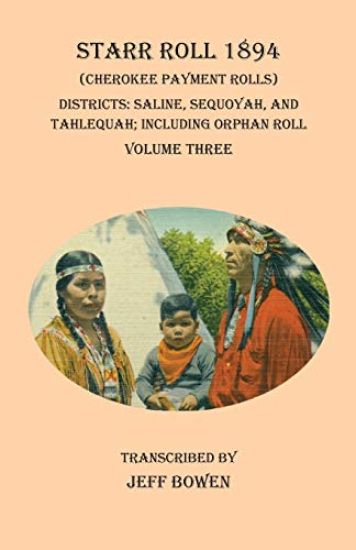
Starr Roll 1894 (Cherokee Payment Rolls) Volume Three
The Starr Roll, 1894 (Cherokee Payment Rolls and Index) is found in the National Archives film 7RA38, Rolls 2-5, under the heading Record Group 75. The rolls or lists were compiled by Ezekiel Eugene Starr (1849-1905), a Cherokee Senator for the Flint District in 1883 and then Treasurer for the Western Cherokee Nation in 1891. The background to the Starr Roll requires some telling. On March 3, 1893, Congress passed an act that authorized the sale of lands west of the Cherokee Nation lands known as the Cherokee Outlet, and later referred to as the 1894 Cherokee Strip Payment. Originally created by agreement with the Eastern Cherokee in 1835, the Cherokee Outlet occupied a strip of land fifty-seven miles wide in present-day northern/northwestern Oklahoma and was intended as a "perpetual outlet west" for the Cherokee. After 1877 the Cherokee National leased the Outlet to the Cherokee Strip Livestock Association, who desired it for its rich grazing lands. Then, in 1893, homesteaders were permitted to stake their claims to this land in the fourth and largest of Oklahoma's five land runs. In return for opening the Cherokee Outlet to white settlers, eligible members of the Cherokee National were paid the per-capita sum of $365.70. E.E. Starr, then Cherokee Treasurer, created the receipt roll for these payments. He arranged the roll by each of the nine Cherokee Districts, and thereunder by each party's enrollment number. The contents of the receipt roll, transcribed for this volume (the first in a series), includes the name of the head of household, names of other household members, name of person receiving the payment, and name of a person who witnessed the transaction of record. The Starr Roll 1894 Volume Three also includes an Orphans Roll and Supplemental, the contents of which are self-explanatory within this transcription; and contains one page of names from the Insane Asylum. This 3-book series contains thousands of Cherokee names.
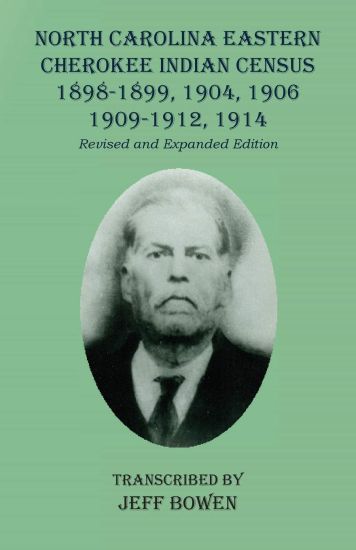
North Carolina Eastern Cherokee Indian Census 1898-1899, 1904, 1906, 1909-1912, 1914
The work at hand is a recasting and expansion of Mr. Bowen's 1998 publication by the same name. For the most part, the book is based on National Archives microfilm series M-595, roll #22; however, this expanded edition includes 84 pages of census transcriptions that are indecipherable on the microfilm. Thanks to the kind assistance of Archives personnel who copied the corresponding original census pages, the author was able to include them in this edition. The census records themselves concern the Eastern Band of Cherokee Indians from Cherokee, North Carolina, living on the reservation known as the Qualla Boundary, and were enumerated by various Indian Agents in the employ of the U.S. Department of the Interior. Individuals enumerated in the successive censuses are descendants of the Cherokees who were not removed to Indian Territory during the period 1838-1839 in the migration known as the Trail of Tears. Mr. Bowen has transcribed each census in chronological order, and thereunder by household membership. While there is sometimes additional data, information provided in the census almost invariably gives the individual's name, family relationship, age, and sex--information that is critical in any genealogical research. The complete name index at the back of the volume refers to about 9,000 Eastern Cherokee who lived on the Qualla Boundary between 1898 and 1914. Finally, persons or institutions who purchased the first edition of this book or the author's two sequel series devoted to Qualla Boundary inhabitants (Eastern Cherokee Census, Cherokee, North Carolina, 1915-1922 and Eastern Cherokee Census, Cherokee, North Carolina, 1923-1929) should consider adding this reference to their collection.
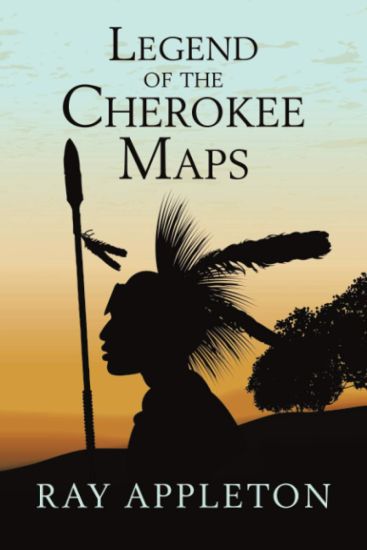
Legend of the Cherokee Maps

Legend of the Cherokee Maps

Ray Appleton

Authorhouse
2021
pokkari
What starts out as a hunting trip for a young lawyer, turns into a mystery involving a 160 year old legend. A legend that, if proven, could alter the course of history. As his curiosity impels him to dig deeper, he never stops to think about the consequences of his actions, or who might be threatened by what he discovers. Or to what lengths they will go to stop him from revealing his discoveries Join our young lawyer as he goes on the quest of a lifetime to discover the shocking truth behind the Legend of the Cherokee Maps