
Kirjahaku
Etsi kirjoja tekijän nimen, kirjan nimen tai ISBN:n perusteella.
1000 tulosta hakusanalla Cornelia Absmanner
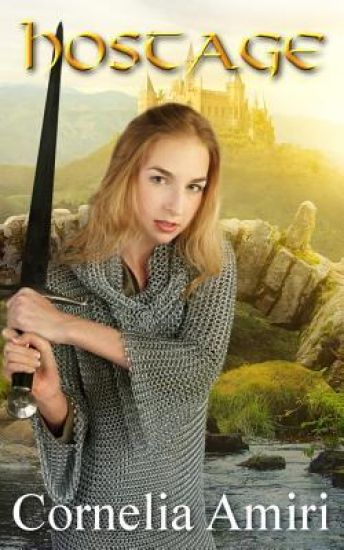
An ancient god and a magic sword...can only lead to war or love.In an age of heroes, Branda avails her power as a Saxon princess to aid a Welsh prince's escape. In turn, the prince, Blaise, vows to take Branda to Scotland so she can evade an arranged marriage.Instead, he holds her hostage in the unbreachable hill fort of Dinas Bran.What dangers await her there?Does Branda need an escape plan that will catch Blaise off guard?Or has she already captured his heart?

Almost half of all pregnant women are overweight in the U.S. today, but there are few places they can turn for reliable information and helpful advice on the special set of challenges they'll face during the nine-month adventure that lies ahead. In Big, Beautiful and Pregnant, Cornelia van der Ziel, a highly sought-after obstetrician who specializes in plus-size pregnancies, and Jacqueline Tourville, a plus-size mom who's lived the experience, offer a warm, witty, medically-sound guide for overweight women who want the skinny on what to expect from pregnancy and childbirth. They answer all the questions pregnant moms may have, including: Is my pregnancy doomed to be difficult because I'm overweight? How can I find a sympathetic doctor? Am I destined for a c-section because of my extra pounds? Are there special medical risks to my unborn child? Where can I find maternity clothes in extra-large sizes? A unique combination of impeccable medical advice, fun, and down-to-earth charm, Big, Beautiful and Pregnant provides plus-size pregnant women with information, inspiration, a sense of sisterhood, and reassurance that they can have a healthy and happy pregnancy.

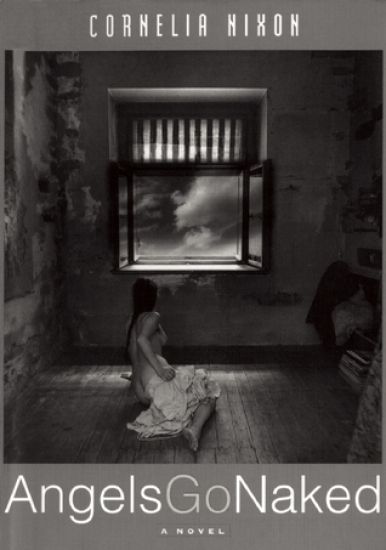
Margaret Rose is a talented but nervous violinist given to bouts of stage fright and unrequited love; Webster Hale is a biologist who, on principle, refuses to kill animals in order to study them. In Angels Go Naked, a novel told in stories, Cornelia Nixon, a writer whose gift is apparent on every page, follows this vexed love story and the collision course they call their life together.Their connection is never in doubt, though Webster is appalled by the urban underbelly of Chicago, which Margy calls home. He refuses to have children because the earth is overrun with humans, and Margy feels compelled to expiate an early abortion by having a live child. Webster's gloomy view of global disaster threatens to triumph in the final story, as their close friend Calvin is dying of AIDS beside a moribund Lake Michigan. Meanwhile, the one child Webster has agreed to conceive appears destined for stillbirth because Margy herself was poisoned as a fetus by misguided medical intervention.At the end of this sad, funny, moving tale, there may be hope, as life and love prove unexpectedly resilient, even in the twenty-first century.
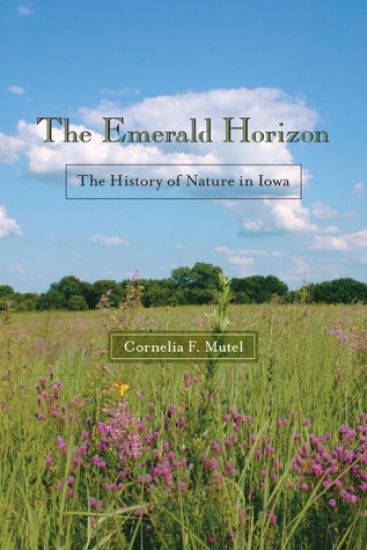
In ""The Emerald Horizon"", Cornelia Mutel combines lyrical writing with meticulous scientific research to portray the environmental past, present, and future of Iowa. In doing so, she ties all of Iowa's natural features into one comprehensive whole.Since so much of the tallgrass state has been transformed into an agricultural landscape, Mutel focuses on understanding today's natural environment by understanding yesterday's changes. After summarizing the geological, archaeological, and ecological features that shaped Iowa's modern landscape, she recreates the once-wild native communities that existed prior to Euroamerican settlement. Next she examines the dramatic changes that overtook native plant and animal communities as Iowa's prairies, woodlands, and wetlands were transformed. Finally she presents realistic techniques for restoring native species and ecological processes as well as a broad variety of ways in which Iowans can reconnect with the natural world. Throughout, in addition to the many illustrations commissioned for this book, she offers careful scientific exposition, a strong sense of respect for the land, and encouragement to protect the future by learning from the past.The ""emerald prairie"" that ""gleamed and shone to the horizon's edge,"" as botanist Thomas Macbride described it in 1895, has vanished. Cornelia Mutel's passionate dedication to restoring this damaged landscape - and by extension the transformed landscape of the entire Corn Belt - invigorates her blend of natural history and human history. Believing that citizens who are knowledgeable about native species, communities, and ecological processes will better care for them, she gives us hope - and sound suggestions - for the future.
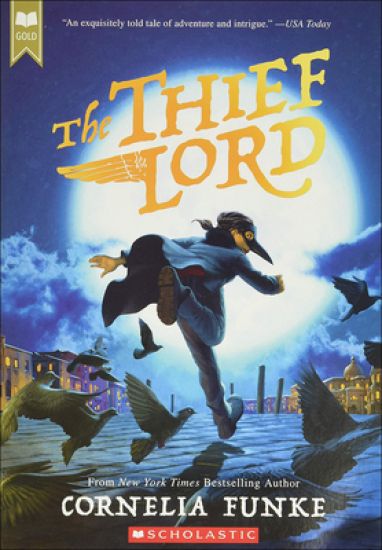
Two orphaned brothers, Prosper and Bo, have run away to Venice, where crumbling canals and misty alleyways shelter a secret community of street urchins. Leader of this motley crew of lost children is a clever, charming boy with a dark history of his own: He calls himself the Thief Lord. Propser and Bo relish their new "family" and life of petty crime. But their cruel aunt and a bumbling detective are on their trail. And posing an even greater threat to the boys' freedom is something from a forgotten past: a beautiful magical treasure with the power to spin time itself. THE THIEF LORD was the first of internationally acclaimed author CORNELIA FUNKE's novels to be translated from her native German into English, and was awarded the prestigious Batchelder award when it was originally published in hardcover in 2003. New York Times Bestseller and Notable Book USA Today Bestseller Winner of the 2003 Mildred L. Batchelder Award for Outstanding Translated Book Book Sense Book of the Year Award School Library Journal Best Book of the Year Child Magazine Best Book of the Year ALA Notable Children's Book NCTE Notable Children's Book in the Language Art "A radiant novel...Today's young readers will probably love this book as they love the Harry Potter series, for its zany plot and well-defined characters. Splendid."--The New York Times Book Review "An exquisitely told tale of adventure and intrigue...displays the kind of zest that makes you inhale a book in as few sittings as possible."--USA Today "A darn good yarn--the charming tale of a band of urchin-thieves, a magical carousel, and two orphaned brothers."--Newsweek "Funke's deft exploration of a timeless theme--the longing of kids to grow up and of grown-ups to relive their youth--should engage both yound and old."--People * "Funke delineates her characters...with masterful subtlety, as well as sometimes-puckish humor. It's a compelling tale, rich in in

In the last 200 years, Iowa’s prairies and other wildlands have been transformed into vast agricultural fields. This massive conversion has provided us with food, fiber, and fuel in abundance. But it has also robbed Iowa’s land of its native resilience and created the environmental problems that today challenge our everyday lives: polluted waters, increasing floods, loss and degradation of rich prairie topsoil, compromised natural systems, and now climate change. In a straightforward, friendly style, Iowa’s premier scientists and experts consider what has happened to our land and outline viable solutions that benefit agriculture as well as the state’s human and wild residents.
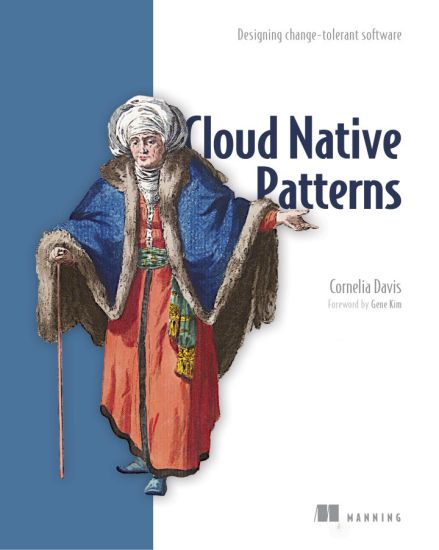
With cloud platforms like AWS, Azure, and Google Cloud, even small teams can take full advantage of web-scale distributed application patterns and practice. Cloud Native: Designing Change-tolerant Software is the best guide to developing strong applications that thrive in the dynamic, distributed, virtual world of the cloud. Key Features · The application lifecycle of Cloud Native apps · Automated configuration management · Multi-tenant services, versioned services, and parallel deploys · Understanding Cloud Native Routing · Managing dependencies between apps and services Requires intermediate programming skill with Java or a similar language. Some experience with server-side development is helpful. About the technology Cloud-native software promises near-zero downtime, shortened feedback cycles, multi-device support, and improved cost control. All this means developers need to learn new skills and techniques, along with a new way of thinking about application design. Cornelia Davis is the Sr. Director of Technology at Pivotal Software. A teacher at heart, Cornelia has spent the last 25 making better software and better software developers.
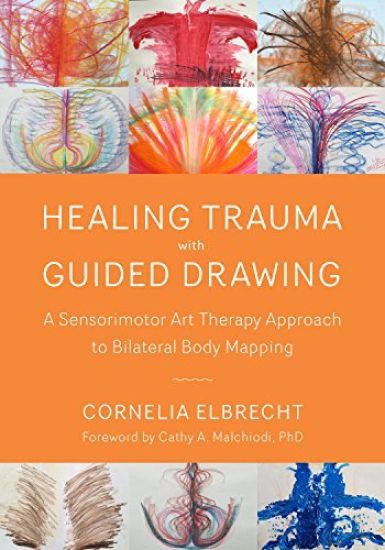
Trauma Healing with Guided Drawing
Cornelia Elbrecht; Cathy A. Malchiodi
North Atlantic Books,U.S.
2018
nidottu
A body-focused, trauma-informed art therapy that will appeal to art therapists, somatic experiencing practitioners, bodyworkers, artists, and mental health professionals While art therapy traditionally focuses on therapeutic image-making and the cognitive or symbolic interpretation of these creations, Cornelia Elbrecht instructs readers how to facilitate the body-focused approach of guided drawing. Clients draw with both hands and eyes closed as they focus on their felt sense. Physical pain, tension, and emotions are expressed without words through bilateral scribbles. Clients then, with an almost massage-like approach, find movements that soothe their pain, discharge inner tension and emotions, and repair boundary breaches. Archetypal shapes allow therapists to safely structure the experience in a nonverbal way. Sensorimotor art therapy is a unique and self-empowering application of somatic experiencing--it is both body-focused and trauma-informed in approach--and assists clients who have experienced complex traumatic events to actively respond to overwhelming experiences until they feel less helpless and overwhelmed and are then able to repair their memories of the past. Elbrecht provides readers with the context of body-focused, trauma-informed art therapy and walks them through the thinking behind and process of guided drawing--including 100 images from client sessions that serve as helpful examples of the work.
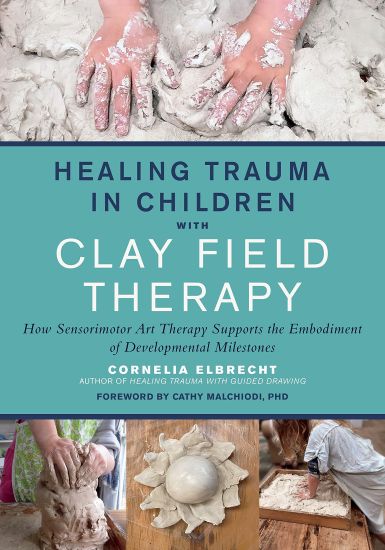
Healing Trauma in Children with Clay Field Therapy
Cornelia Elbrecht; Cathy Malchiodi
North Atlantic Books,U.S.
2021
nidottu
The first book of its kind on treating trauma in children through creative play with clay, written by a leading voice in the field of art therapy. From the moment we're born, we rely on our hands to perceive the world. It's through touch that we communicate with our primary caregivers and attain an abiding sense of love and security. In Clay Field therapy, client children work with clay and water in a rectangular box. The therapeutic focus is not on object creation, but on the touch connection with the clay as a symbolic external world. Movement, touch, and sensory feedback that have long been out of reach are actualized through the creative process, enabling the child to heal past wounds and regain a more fulfilling sense of self. Author and therapist Cornelia Elbrecht has been a leader in groundbreaking art therapy techniques for over 40 years. In Healing Trauma in Children with Clay Field Therapy, she shows how embodied expression within the Clay Field can be an effective tool in treating children suffering the mental, emotional, and physical effects of trauma. She discusses the theory and practice of Clay Field therapy using dozens of case examples and more than 200 images. Working within a fun, safe, and trusting environment, children respond with their embodied braced, chaotic, or dissociated structures of the past, but are then able to foster new sensorimotor experiences that enhance self-esteem, empowerment, and a restoration of developmental deficits. Child therapists will find this book to be a valuable tool--working with a Clay Field can reach even the earliest developmental trauma events, repairing their damage through the haptic hands-brain connection.

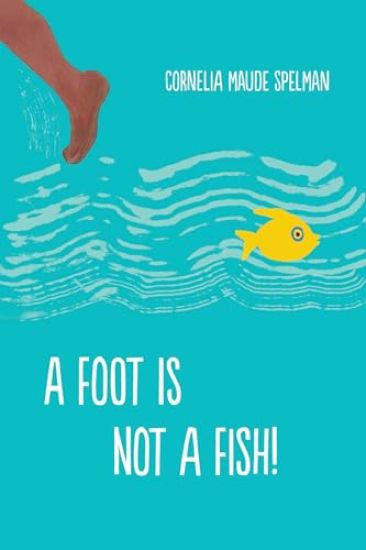
In a time of alternative facts and the loss of a shared sense of reality, A Foot is Not a Fish playfully illustrates the difference between what is true and what is not through absurd fun comparisons that every child--and parent--will instantly understand. One of our important responsibilities as parents, grandparents, and teachers is to reinforce and support our children's perceptions of reality, and to strengthen their ability to distinguish what is real, true, and provable from what is belief or opinion or wish. They do learn, naturally, as they grow from babyhood, what is real and true; they delight in recognizing that a story or a game is "pretend," and are quick to object when someone else says something that they recognize is "not true " This book aims to playfully illustrate common and observable truths by making absurd comparisons: "a foot is not a fish." It aims to show that it is not hard to see what is true, and it also tries to establish that, to make sense of our mutual world, agreement about what is true is necessary. What if some of us thought that a foot was a fish? Children understand that while different people have different beliefs and opinions--such as about religion, or what is good to eat--they also understand that beliefs and opinions are not the same as facts, such as what is "night" or "day." Reality cannot be changed by simply saying the opposite of what is true: "we can't just say that red is green." Children also understand that there is a difference between a wish and what is true. They understand, once they are past toddlerhood, that we cannot change the truth just by wishing or hoping: "a wish is just a wish." They know that, although they might wish it to be so, every day cannot be their birthday. Encouraging children to create their own verses (rhyming or not) can be fun, and can further help them in their understanding of what is real and what is not. They undoubtedly will come up with surprising and funny examples of their own. A________ is not a _________
In a time of alternative facts and the loss of a shared sense of reality, A Foot is Not a Fish playfully illustrates the difference between what is true and what is not through absurd fun comparisons that every child--and parent--will instantly understand. One of our important responsibilities as parents, grandparents, and teachers is to reinforce and support our children's perceptions of reality, and to strengthen their ability to distinguish what is real, true, and provable from what is belief or opinion or wish. They do learn, naturally, as they grow from babyhood, what is real and true; they delight in recognizing that a story or a game is "pretend," and are quick to object when someone else says something that they recognize is "not true " This book aims to playfully illustrate common and observable truths by making absurd comparisons: "a foot is not a fish." It aims to show that it is not hard to see what is true, and it also tries to establish that, to make sense of our mutual world, agreement about what is true is necessary. What if some of us thought that a foot was a fish? Children understand that while different people have different beliefs and opinions--such as about religion, or what is good to eat--they also understand that beliefs and opinions are not the same as facts, such as what is "night" or "day." Reality cannot be changed by simply saying the opposite of what is true: "we can't just say that red is green." Children also understand that there is a difference between a wish and what is true. They understand, once they are past toddlerhood, that we cannot change the truth just by wishing or hoping: "a wish is just a wish." They know that, although they might wish it to be so, every day cannot be their birthday. Encouraging children to create their own verses (rhyming or not) can be fun, and can further help them in their understanding of what is real and what is not. They undoubtedly will come up with surprising and funny examples of their own. A________ is not a _________
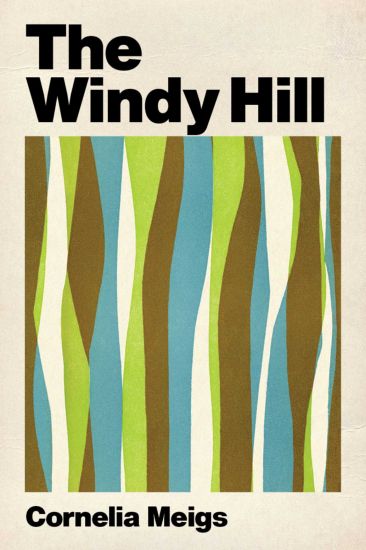
Will these two siblings help solve a family mystery? Find out in one of the earliest Newbery Honor Award winners! Brother and sister, Oliver and Janet, are excited to spend their summer with their cousin Jasper, who has always been cheerful and fun to be around. However, when the children arrive at his home, Jasper is despondent and distracted—nothing like the cousin they know. Eventually, the children discover that their cousin has been having trouble with a neighbor but is doing nothing to fix the problem! The siblings want to help . . . but how? Enter in The Beeman, a neighbor who regales Oliver and Janet with enchanting stories of local history. The two siblings visit the friendly neighbor more and more to hear his amazing stories but continue to wonder how they can help their cousin. As it turns out, The Beeman’s tales of their family history just so happen to contain the secret to helping Jasper with his villainous neighbor! With beautiful, descriptive prose, this classic award-winner is perfect for young readers eager for a good, wholesome mystery. Whether you read it alone or as a family, get ready to be swept away by The Windy Hill!