

Kirjahaku
Etsi kirjoja tekijän nimen, kirjan nimen tai ISBN:n perusteella.
1000 tulosta hakusanalla David L. Minter
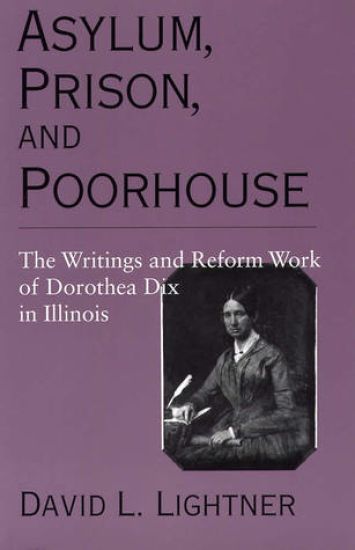
This illustrated collection of annotated newspaper articles and memorials by Dorothea Dix provides a forum for the great mid-nineteenth-century humanitarian and reformer to speak for herself. Dorothea Lynde Dix (1802–87) was perhaps the most famous and admired woman in America for much of the nineteenth century. Beginning in the early 1840s, she launched a personal crusade to persuade the various states to provide humane care and effective treatment for the mentally ill by funding specialized hospitals for that purpose. The appalling conditions endured by most mentally ill inmates in prisons, jails, and poorhouses led her to take an active interest also in prison reform and in efforts to ameliorate poverty. In 1846–47 Dix brought her crusade to Illinois. She presented two lengthy memorials to the legislature, the first describing conditions at the state penitentiary at Alton and the second discussing the sufferings of the insane and urging the establishment of a state hospital for their care. She also wrote a series of newspaper articles detailing conditions in the jails and poorhouses of many Illinois communities. These long-forgotten documents, which appear in unabridged form in this book, contain a wealth of information on the living conditions of some of the most unfortunate inhabitants of Illinois. In his preface, David L. Lightner describes some of the vivid images that emerge from Dorothea Dix's descriptions of social conditions in Illinois a century and a half ago: ""A helpless maniac confined throughout the bitter cold of winter to a dark and filthy pit. Prison inmates chained in hallways and cellars because no more men can be squeezed into the dank and airless cells. Aged paupers auctioned off by county officers to whoever will maintain them at the lowest cost."" Lightner provides an introduction to every document, placing each memorial and newspaper article in its proper social and historical context. He also furnishes detailed notes, making these documents readily accessible to readers a century and a half later. In his final chapter, Lightner assesses both the immediate and the continuing impact of Dix's work.
Mutuality in the Rhetoric and Composition Classroom
David L. Wallace; Helen Rothschild Ewald
Southern Illinois University Press
2000
nidottu
This study points out the centrality of rhetoric in the academy, asserting the intimate connection between language and knowledge making. The authors also stress the need for a change in the roles of teachers and students in today's classroom. Their goal is mutuality, a sharing of authority.

This biography of William E. Burton explores Burton's diary, letters, reviews, and various reminiscences to reveal the personal and professional lives of the nineteenth-century actor/manager and his role in American literary history.

An exploration of the virtues and defects of federalism as it has developed from a variety of perspectives that include historical, constitutional, economic, social and political considerations. Using the dialectical form adopted by advocates trying a case before a court, the author examines the strongest arguments on the two prinicpal sides of the issue but also probes the potential value of the dialectical process itself.
What are the skills necessary for effective middle school leadership? What are the components of quality middle schools? The answers to these questions lie within this book. The author explores the important facets of a middle school principal's leadership role. It is organized around eleven central skill areas, such as: leadership effectiveness, interdisciplinary teaming, designing curriculum content, and meeting the needs of at-risk students. The result of years of research and evaluation, this essential guide is one that new and experienced middle school principals can implement in their schools in order to provide a better education and a safer learning environment for their students.
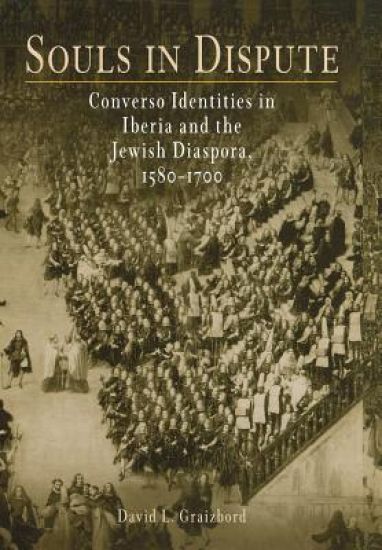
Throughout the Middle Ages, the Iberian Peninsula was home to a rich cultural mix of Christians, Jews, and Muslims. At the end of the fifteenth century, however, the last Islamic stronghold fell, and Jews were forced either to convert to Christianity or to face expulsion. Thousands left for other parts of Europe and Asia, eventually establishing Sephardic communities in Amsterdam, Venice, Istanbul, southwestern France, and elsewhere. More than a hundred years after the expulsion, some Judeoconversos-descendants of Spanish and Portuguese Jews who had converted to Christianity-were forced to flee the Iberian Peninsula once again to avoid ethnic and religious persecution. Many of them joined the Sephardic Diaspora and embraced rabbinic Judaism. Later some of these same people or their descendants returned to Iberian lands temporarily or permanently and, in a twist that Jewish authorities considered scandalous, reverted to Catholicism. Among them were some who betrayed their fellow conversos to the Holy Office. In Souls in Dispute, David L. Graizbord unravels this intriguing history of the renegade conversos and constructs a detailed and psychologically acute portrait of their motivations. Through a probing analysis of relevant inquisitorial documents and a wide-ranging investigation into the history of the Sephardic Diaspora and Habsburg Spain, Graizbord shows that, far from being simply reckless and vindictive, the renegades used their double acts of border crossing to negotiate a dangerous and unsteady economic environment: so long as their religious and social ambiguity remained undetected, they were rewarded with the means for material survival. In addition, Graizbord sheds new light on the conflict-ridden transformation of makeshift Jewish colonies of Iberian expatriates-especially in the borderlands of southwestern France-showing that the renegades failed to accommodate fully to a climate of conformity that transformed these Sephardic groups into disciplined communities of Jews. Ultimately, Souls in Dispute explains how and why Judeoconversos built and rebuilt their religious and social identities, and what it meant to them to be both Jewish and Christian given the constraints they faced in their time and place in history.
Although US involvement in the Vietnam conflict began long before 1965, Lyndon Johnson's substantial large commitment of combat troops that year marked the official beginning of America's longest twentieth-century war. By 1969, after years of intense fighting and thousands of casualties, an increasing number of Americans wanted the United States out of Vietnam. Richard Nixon looked for a way to pull out while preserving the dignity of the United States at home and abroad, and at the same time, to support the anticommunist Republic of Vietnam. Ultimately, he settled on the strategy of Vietnamization—the gradual replacement of US soldiers with South Vietnamese forces. Drawing on newly declassified documents and international archives, Unwilling to Quit dissects the domestic and foreign contexts of America's withdrawal from the Vietnam War. David L. Prentice demonstrates how congressional and presidential politics were a critical factor in Nixon's decision to abandon his hawkish sensibilities in favor of de-escalation. Prentice reframes Nixon's choices, emphasizes Secretary of Defense Melvin Laird's outsized yet subtle role in the decision-making process, and considers how South Vietnam's Nguyen Van Thieu and North Vietnam's Le Duan decisively shaped the American exit. Prentice brings Vietnamese voices into the discussion and underscores the unprecedented influence of American civilians on US foreign policy during the Vietnamization era.
An account of the legal battle to open up New Jersey's suburbs to the poor, looking at the views of lawyers on both sides of the controversy. It is a case study of judicial activism and its consequences and an analysis of suburban attitudes regarding race, class and property.
The South, the Nation and the World
David L. Carlton; Peter A. Coclanis
University of Virginia Press
2003
nidottu
Like the rest of British North America, the American South was ""born capitalist."" The slave plantation, then, was essentially a form of business enterprise like any other - indeed, one quite modern and sophisticated for its time. There were initially very few significant differences in business culture between the northern and southern parts of what became the United States Yet the plantation placed its peculiar stamp on the South, and vice versa, and its path of development diverged increasingly from that of the growing manufacturing belt of the North. In their essays collected in The South, the Nation, and the World, David Carlton and Peter Coclanis effectively argue that the chronic economic difficulties of the American South cannot simply be explained away as resulting from a distinctive ""premodern"" business climate, because there was actually very little variation between one region's business climate and another's during the Antebellum period. Instead, it was the collapse of the slave regime in the 1860s that left the South in dire need of economic restructuring, and by Reconstruction the emergent American economy had foreclosed options formerly available to southern enterprise. Forced to play catch-up, southerners have had at best mixed success in the continuing struggle to create an economic life affording stable growth and broad opportunity to all the region's people - and Carlton and Coclanis offer a fascinating illumination of the twists and turns in that economic history.

The Gaither Committee, Eisenhower and the Cold War
David L. Snead
Ohio State University Press
1998
nidottu
Trajectory: 7 Career Strategies to Take You from Where You Are to Where You Need to Be
David L. Van Rooy
Amacom
2014
nidottu
When the economy's difficult and jobs aren't secure, people tend to focus on the short term...on survival. But what they don't grasp is how their current position could be a springboard to their next position--or even the one after that. Caught between a fear of failure and a desire for instant success, they limit the risks they take, unwittingly limiting their opportunities. As much as they want to get ahead, they simply can't see how to get there. Trajectory is the answer. Each and every person has their own "trajectory" or career path--and this timely and refreshingly practical new book presents seven strategies designed to help anyone create and manage theirs. Readers will discover how to: ? Make the most of feedback ? Avoid stagnation and break through plateaus ? Think big, act small, and move quick ? Achieve growth through failure ? Move to the front of the pack through persistence ? Continuously develop both "soft" and "hard" professional skills ? And much more Career success doesn't happen overnight. From building relationships with mentors, to positioning (and repositioning) yourself for promotion--this essential guide provides the tools you need for a lifetime of advancement.
In dealing with the complex issues surrounding labor law, this volume analyzes the rapid, profound, and all - encompassing nature of change in the work place. The essays examine the politics of the modern working world and its relationship with the law. By taking an interdisciplinary approach, including articles from feminist and social justice theorists, this volume is a significant contribution to the worlds of law and industrial relations.
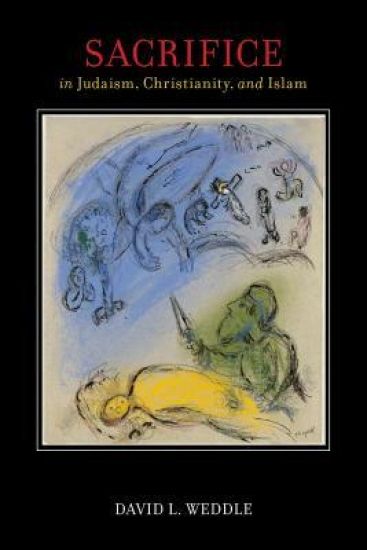
Sacrifice in Judaism, Christianity, and Islam
David L. Weddle
New York University Press
2017
sidottu
An examination of the practice and philosophy of sacrifice in three religious traditions In the book of Genesis, God tests the faith of the Hebrew patriarch Abraham by demanding that he sacrifice the life of his beloved son, Isaac. Bound by common admiration for Abraham, the religious traditions of Judaism, Christianity, and Islam also promote the practice of giving up human and natural goods to attain religious ideals. Each tradition negotiates the moral dilemmas posed by Abraham's story in different ways, while retaining the willingness to perform sacrifice as an identifying mark of religious commitment. This book considers the way in which Jews, Christians, and Muslims refer to "sacrifice"—not only as ritual offerings, but also as the donation of goods, discipline, suffering, and martyrdom. Weddle highlights objections to sacrifice within these traditions as well, presenting voices of dissent and protest in the name of ethical duty. Sacrifice forfeits concrete goods for abstract benefits, a utopian vision of human community, thereby sparking conflict with those who do not share the same ideals. Weddle places sacrifice in the larger context of the worldviews of Judaism, Christianity, and Islam, using this nearly universal religious act as a means of examining similarities of practice and differences of meaning among these important world religions. This book takes the concept of sacrifice across these three religions, and offers a cross-cultural approach to understanding its place in history and deep-rooted traditions.
Sacrifice in Judaism, Christianity, and Islam
David L. Weddle
New York University Press
2017
pokkari
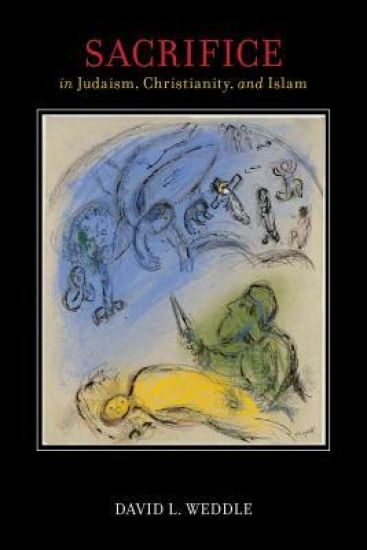
An examination of the practice and philosophy of sacrifice in three religious traditions In the book of Genesis, God tests the faith of the Hebrew patriarch Abraham by demanding that he sacrifice the life of his beloved son, Isaac. Bound by common admiration for Abraham, the religious traditions of Judaism, Christianity, and Islam also promote the practice of giving up human and natural goods to attain religious ideals. Each tradition negotiates the moral dilemmas posed by Abraham's story in different ways, while retaining the willingness to perform sacrifice as an identifying mark of religious commitment. This book considers the way in which Jews, Christians, and Muslims refer to "sacrifice"—not only as ritual offerings, but also as the donation of goods, discipline, suffering, and martyrdom. Weddle highlights objections to sacrifice within these traditions as well, presenting voices of dissent and protest in the name of ethical duty. Sacrifice forfeits concrete goods for abstract benefits, a utopian vision of human community, thereby sparking conflict with those who do not share the same ideals. Weddle places sacrifice in the larger context of the worldviews of Judaism, Christianity, and Islam, using this nearly universal religious act as a means of examining similarities of practice and differences of meaning among these important world religions. This book takes the concept of sacrifice across these three religions, and offers a cross-cultural approach to understanding its place in history and deep-rooted traditions.

Despite the dominance of scientific explanation in the modern world, at the beginning of the twenty-first century faith in miracles remains strong, particularly in resurgent forms of traditional religion. In Miracles, David L. Weddle examines how five religious traditions—Hinduism, Judaism, Buddhism, Christianity, and Islam—understand miracles, considering how they express popular enthusiasm for wondrous tales, how they provoke official regulation because of their potential to disrupt authority, and how they are denied by critics within each tradition who regard belief in miracles as an illusory distraction from moral responsibility. In dynamic and accessible prose, Weddle shows us what miracles are, what they mean, and why, despite overwhelming scientific evidence, they are still significant today: belief in miracles sustains the hope that, if there is a reality that surpasses our ordinary lives, it is capable of exercising—from time to time—creative, liberating, enlightening, and healing power in our world.

Despite the dominance of scientific explanation in the modern world, at the beginning of the twenty-first century faith in miracles remains strong, particularly in resurgent forms of traditional religion. In Miracles, David L. Weddle examines how five religious traditions—Hinduism, Judaism, Buddhism, Christianity, and Islam—understand miracles, considering how they express popular enthusiasm for wondrous tales, how they provoke official regulation because of their potential to disrupt authority, and how they are denied by critics within each tradition who regard belief in miracles as an illusory distraction from moral responsibility. In dynamic and accessible prose, Weddle shows us what miracles are, what they mean, and why, despite overwhelming scientific evidence, they are still significant today: belief in miracles sustains the hope that, if there is a reality that surpasses our ordinary lives, it is capable of exercising—from time to time—creative, liberating, enlightening, and healing power in our world.

First published in 1999. This ongoing series, Controversies in Constitutional Law, provides teachers, scholars, and students convenient access to the debates and scholarly literature surrounding major questions of constitutional law. In the structure of government in the United States the Constitution, the Bill of Rights and other Amendments - especially the Fourteenth Amendment - are the primary referential points to locate, protect, and enhance our fundamental political freedoms. The intersections between Labor Law and Constitutional Law occasionally synergize, but perhaps more often obviate the tensions among, several fundamental freedoms. This first volume will situate and examine the intersections among labor, religion, and speech, the two latter among our most fundamental First Amendment rights.


Offers concise, comparative information on Alabama's state governmental system. This volume is the third edition and supplies the answers to such questions as: How does the Department of Revenue chase tax dodgers? Why do some voters cast more than one vote? How long is the average prison sentence?