Kirjojen hintavertailu. Mukana 12 083 983 kirjaa ja 12 kauppaa.

Kirjahaku

Etsi kirjoja tekijän nimen, kirjan nimen tai ISBN:n perusteella.

1000 tulosta hakusanalla Derek Gerrard

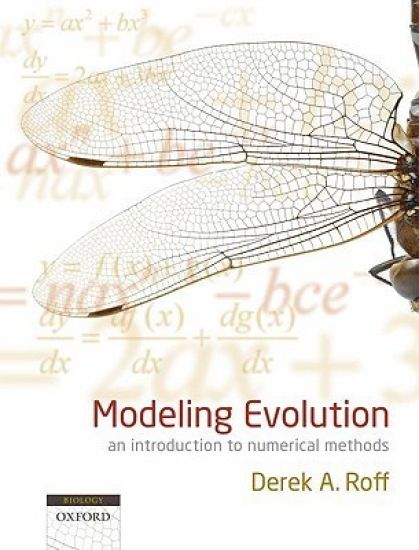
Modeling Evolution

Modeling Evolution

Derek A. Roff

Oxford University Press
2009
nidottu
Computer modeling is now an integral part of research in evolutionary biology. The advent of increased processing power in the personal computer, coupled with the availability of languages such as R, SPLUS, Mathematica, Maple, Mathcad, and MATLAB, has ensured that the development and analysis of computer models of evolution is now within the capabilities of most graduate students. However, there are two hurdles that tend to discourage students from making full use of the power of computer modeling. The first is the general problem of formulating the question and the second is its implementation using an appropriate computer language. Modeling Evolution outlines how evolutionary questions are formulated and how, in practice, they can be resolved by analytical and numerical methods (with the emphasis being on the latter). Following a general introduction to computer modeling, successive chapters describe "Fisherian" optimality models, invasibility analysis, genetic models, game theoretic models, and dynamic programming. A common chapter plan facilitates tuition and comprises an introduction (in which the general approach and methods are described) followed by a series of carefully structured scenarios that have been selected to highlight particular aspects of evolutionary modeling. Coding for each example is provided in either R or MATLAB since both of these programs are readily available and extensively used. This coding is available on the author's web site allowing easy implementation and study of the programs. Each chapter concludes with a list of exemplary papers which have been chosen on the basis of how well they explain and illustrate the techniques discussed in the chapter.

On What Matters

On What Matters

Derek Parfit

Oxford University Press
2011
sidottu
On What Matters is a major work in moral philosophy. It is the long-awaited follow-up to Derek Parfit's 1984 book Reasons and Persons, one of the landmarks of twentieth-century philosophy. In this first volume Parfit presents a powerful new treatment of reasons and rationality, and a critical examination of three systematic moral theories -- Kant's ethics, contractualism, and consequentialism -- leading to his own ground-breaking synthetic conclusion. Along the way he discusses a wide range of moral issues, such as the significance of consent, treating people as a means rather than an end, and free will and responsibility. On What Matters is already the most-discussed work in moral philosophy: its publication is likely to establish it as a modern classic which everyone working on moral philosophy will have to read, and which many others will turn to for stimulation and illumination.
On What Matters

On What Matters

Derek Parfit

Oxford University Press
2011
sidottu
On What Matters is a major work in moral philosophy. It is the long-awaited follow-up to Derek Parfit's 1984 book Reasons and Persons, one of the landmarks of twentieth-century philosophy. Parfit now presents a powerful new treatment of reasons, rationality, and normativity, and a critical examination of three systematic moral theories - Kant's ethics, contractualism, and consequentialism - leading to his own ground-breaking synthetic conclusion. Along the way he discusses a wide range of moral issues, such as the significance of consent, treating people as a means rather than an end, and free will and responsibility. On What Matters is already the most-discussed work in moral philosophy: its publication is likely to establish it as a modern classic which everyone working on moral philosophy will have to read, and which many others will turn to for stimulation and illumination. The second volume of Derek Parfit's magnum opus is in four parts. The first presents critiques of his work by four of the world's leading moral philosophers. The second contains his responses. The third and longest part is a self-contained monograph by Parfit on normativity. The final part comprises seven new essays by Parfit on Kant, reasons, irrationality, autonomy - and why the universe exists.
The History of British Birds

The History of British Birds

Derek Yalden; Umberto Albarella

Oxford University Press
2009
nidottu
The History of British Birds reviews our knowledge of avifaunal history over the last 15,000 years, setting it in its wider historical and European context. The authors, one an ornithologist the other an archaeologist, integrate a wealth of archaeological data to illuminate and enliven the story, indicating the extent to which climatic, agricultural, and social changes have affected the avifauna. They discuss its present balance, as well as predicting possible future changes. It is a popular misconception that bird bones are rarely preserved (compared with mammals), and cannot be reliably identified when they are found. The book explores both of these contentions, armed with a database of 9,000 records of birds that have been identified on archaeological sites. Most are in England, but sites elsewhere in Great Britain, Ireland, the Isle of Man and the Channel Isles are included. Britain's most numerous bird is also the most widespread in the archaeological record, but some of the more charismatic species also have a rich historical pedigree. For example, we can say quite a lot about the history of the Crane, Red Kite, White-tailed Eagle, and Great Auk. The history of many introduced domestic species can also be illuminated. Even so, there remain uncertainties, posed by difficulties of dating or identification, the vagaries of the archaeological record or the ecological specialities of the birds themselves. These issues are highlighted, thus posing research questions for others to answer. And the commonest British bird, then and now? Buy the book and read on...
Fiction and Narrative

Fiction and Narrative

Derek Matravers

Oxford University Press
2014
sidottu
For the past twenty years there has been a virtual consensus in philosophy that there is a special link between fiction and the imagination. In particular, fiction has been defined in terms of the imagination: what it is for something to be fictional is that there is some requirement that a reader imagine it. Derek Matravers argues that this rests on a mistake; the proffered definitions of 'the imagination' do not link it with fiction but with representations more generally. In place of the flawed consensus, he offers an account of what it is to read, listen to, or watch a narrative whether that narrative is fictional or non-fictional. The view that emerges, which draws extensively on work in psychology, downgrades the divide between fiction and non-fiction and largely dispenses with the imagination. In the process, he casts new light on a succession of issues: on the 'paradox of fiction', on the issue of fictional narrators, on the problem of 'imaginative resistance', and on the nature of our engagement with film.
Andrew Marvell, Orphan of the Hurricane

Andrew Marvell, Orphan of the Hurricane

Derek Hirst; Steven N. Zwicker

Oxford University Press
2012
sidottu
Andrew Marvell, Orphan of the Hurricane studies the poetry and polemics of one of the greatest of early modern writers, a poet of immense lyric talent and political importance. The book situates these writings and this writer within the patronage networks and political upheavals of mid seventeenth-century England. Derek Hirst and Steven Zwicker track Marvell's negotiations among personalities and events; explores his idealizations, attachments, and subversions, and speculate on the meaning of the narratives that he told of himself within his writings -- what they call his 'imagined life'. Hirst and Zwicker draw the figure of an imagined life from the repeated traces Marvell left of lyric yearning and satiric anger, and suggest how these were rooted both in the body and in the imagination. The book sheds new light on some of Marvell's most familiar poems -- 'Upon Appleton House', 'The Garden',' To His Coy Mistress', and 'Horatian Ode' -- but at its centre is an extended reading of Marvell's 'The unfortunate Lover', his least familiar and surely most mysterious lyric, and his most sustained narrative of the self. By attending to the lyric, the polemical, and the parliamentary careers together, this book offers a reading, for the first time, of Marvell and his writings as an interpretable whole.
On What Matters

On What Matters

Derek Parfit

Oxford University Press
2013
nidottu
On What Matters is a major work in moral philosophy. It is the long-awaited follow-up to Derek Parfit's 1984 book Reasons and Persons, one of the landmarks of twentieth-century philosophy. In this first volume Parfit presents a powerful new treatment of reasons and rationality, and a critical examination of three systematic moral theories -- Kant's ethics, contractualism, and consequentialism -- leading to his own ground-breaking synthetic conclusion. Along the way he discusses a wide range of moral issues, such as the significance of consent, treating people as a means rather than an end, and free will and responsibility. On What Matters is already the most-discussed work in moral philosophy: its publication is likely to establish it as a modern classic which everyone working on moral philosophy will have to read, and which many others will turn to for stimulation and illumination.
On What Matters

On What Matters

Derek Parfit

Oxford University Press
2013
nidottu
On What Matters is a major work in moral philosophy. It is the long-awaited follow-up to Derek Parfit's 1984 book Reasons and Persons, one of the landmarks of twentieth-century philosophy. Parfit now presents a powerful new treatment of reasons, rationality, and normativity, and a critical examination of three systematic moral theories - Kant's ethics, contractualism, and consequentialism - leading to his own ground-breaking synthetic conclusion. Along the way he discusses a wide range of moral issues, such as the significance of consent, treating people as a means rather than an end, and free will and responsibility. On What Matters is already the most-discussed work in moral philosophy: its publication is likely to establish it as a modern classic which everyone working on moral philosophy will have to read, and which many others will turn to for stimulation and illumination. The second volume of Derek Parfit's magnum opus is in four parts. The first presents critiques of his work by four of the world's leading moral philosophers. The second contains his responses. The third and longest part is a self-contained monograph by Parfit on normativity. The final part comprises seven new essays by Parfit on Kant, reasons, irrationality, autonomy - and why the universe exists.
Moving Words: Forms of English Poetry

Moving Words: Forms of English Poetry

Derek Attridge

Oxford University Press
2013
sidottu
The contemporary reader of English poetry is able to take pleasure in the sounds and movements of the English language in works written over the past eight centuries, and to find poems that convey powerful emotions and vivid images from this entire period. This book investigates the ways in which poets have exploited the resources of the language as a spoken medium - its characteristic rhythms, its phonetic qualities, its deployment of syntax - to write verse that continues to move and delight. The chapters in the first of the two parts examine a number of issues relating to poetic form: the resurgence of interest in formal questions in recent years, the role of syntactic phrasing in the operation of poetry, the function of rhyme, and the relation between sound and sense. The second part is concerned with rhythm and metre, explaining and demonstrating 'beat prosody' as a tool of poetic analysis, and discussing three major traditions in English versification: the free four-beat form used in much popular verse, the controlled power of the iambic pentameter, and the twentieth-century invention of free verse. All these topics are discussed by means of particular case studies, from the metrical form of a thirteenth-century lyric to uses of sound in recent poetry. Among the many poets whose work is considered are Spenser, Milton, Dryden, Keats, Tennyson, Hardy, Yeats, Frost, Ashbery, Hill, Plath, Paterson, and Prynne. Drawing on Derek Attridge's forty-five years of engagement with the forms of poetry, this volume provides extensive evidence of the importance of close attention to the moving and sounding of language in the poems we enjoy.
Catholicism and the Roots of Nazism

Catholicism and the Roots of Nazism

Derek Hastings

Oxford University Press Inc
2012
nidottu
Derek Hastings here illuminates an important and largely overlooked aspect of early Nazi history, going back to the years after World War I--when National Socialism first emerged--to reveal its close early ties with Catholicism. Although an antagonistic relationship between the Catholic Church and Hitler's regime developed later during the Third Reich, the early Nazi movement was born in Munich, a city whose population was overwhelmingly Catholic. Focusing on Munich and the surrounding area, Hastings shows how Catholics played a central and hitherto overlooked role in the Nazi movement before the 1923 Beerhall Putsch. He examines the activism of individual Catholic writers, university students, and priests and the striking Catholic-oriented appeals and imagery formulated by the movement. He then discusses why the Nazis embarked on a different path following the party's reconstitution in early 1925, ultimately taking on an increasingly anti-Catholic and anti-Christian identity.
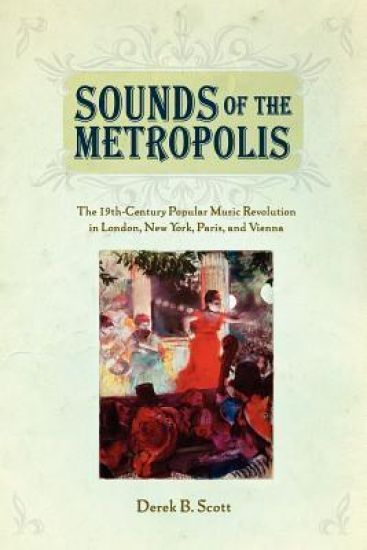
Sounds of the Metropolis

Sounds of the Metropolis

Derek B. Scott

Oxford University Press Inc
2012
nidottu
The phrase "popular music revolution" may instantly bring to mind such twentieth-century musical movements as jazz and rock 'n' roll. In Sounds of the Metropolis, however, Derek Scott argues that the first popular music revolution actually occurred in the nineteenth century, illustrating how a distinct group of popular styles first began to assert their independence and values. He explains the popular music revolution as driven by social changes and the incorporation of music into a system of capitalist enterprise, which ultimately resulted in a polarization between musical entertainment (or "commercial" music) and "serious" art. He focuses on the key genres and styles that precipitated musical change at that time, and that continued to have an impact upon popular music in the next century. By the end of the nineteenth century, popular music could no longer be viewed as watered down or more easily assimilated art music; it had its own characteristic techniques, forms, and devices. As Scott shows, "popular" refers here, for the first time, not only to the music's reception, but also to the presence of these specific features of style. The shift in meaning of "popular" provided critics with tools to condemn music that bore the signs of the popular-which they regarded as fashionable and facile, rather than progressive and serious. A fresh and persuasive consideration of the genesis of popular music on its own terms, Sounds of the Metropolis breaks new ground in the study of music, cultural sociology, and history.
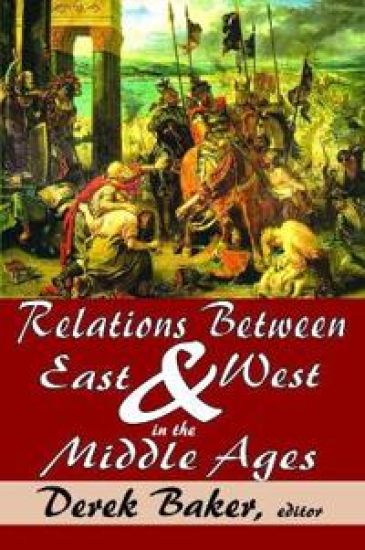
Relations Between East and West in the Middle Ages
In the Roman Empire, relations between East and West meant connections between the eastern and western parts of a unified structure of empire. Romans sometimes complained about the corrupting influence on their city of Greeks and Orientals, but they employed Greek tutors to educate their sons. People did not think of the eastern and western parts of the empire as being separate entities whose relations with each other must be the object of careful study. Even at the moment of the empire's birth, there was a clear idea of where the Latin West ended and the Greek East began. This began to change with Constantine, when the Roman Empire was split in two, with Rome itself in decay.This volume, first published in 1973, derives from a colloquium on medieval history held at Edinburgh University. Its theme was the fl uctuating balance-of-power of Latin West and Greek East, Rome and Constantinople. The book starts with Justinian's attempt to reunite the two halves of the old Roman Empire and then goes on to consider the polarization of Christianity into its Catholic and Orthodox sectors, and the misunderstandings fostered by the Crusades; and ends with the growing power and conquests of Islam in the fourteenth century.The contributions included in Relations between East and West in the Middle Ages are: Old and New Rome in the Age of Justinian, by W. H. C. Frend; The Tenth Century in Byzantine-Western Relationships, by Karl Leyser; William of Tyre, by R. H. C. Davis; Cultural Relations between East and West in the Twelfth Century, by Anthony Bryer; Innocent III and the Greeks, Aggressor or Apostle? by Joseph Gill; Government in Latin Syria and the Commercial Privileges of Foreign Merchants, by Jonathan Riley-Smith; and Dante and Islam, by R. W. Southern.
Godforsaken Sea

Godforsaken Sea

Derek Lundy

Vintage Publishing
2000
pokkari
On 3 November 1996 sixteen sailors set out from the Bay of Biscay to embark on the Vendee Globe - a single-handed yacht race through the world's most treacherous and isolated seas. Of the sixteen starters only six completed the course, six others withdrew, three were plucked from sinking boats and one disappeared. This book deals with this race.
J. M. Coetzee and the Ethics of Reading

J. M. Coetzee and the Ethics of Reading

Derek Attridge

University of Chicago Press
2004
sidottu
Nobel Prize-winning novelist J. M. Coetzee is one of the most widely taught contemporary writers, but also one of the most elusive. Many critics who have addressed his work have devoted themselves to rendering it more accessible and acceptable, often playing down the features that discomfort and perplex his readers.Yet it is just these features, Derek Attridge argues, that give Coetzee's work its haunting power and offer its greatest rewards. Attridge does justice to this power and these rewards in a study that serves as an introduction for readers new to Coetzee and a stimulus for thought for those who know his work well. Without overlooking the South African dimension of his fiction, Attridge treats Coetzee as a writer who raises questions of central importance to current debates both within literary studies and more widely in the ethical arena. Implicit throughout the book is Attridge's view that literature, more than philosophy, politics, or even religion, does singular justice to our ethical impulses and acts. Attridge follows Coetzee's lead in exploring a number of issues such as interpretation and literary judgment, responsibility to the other, trust and betrayal, artistic commitment, confession, and the problematic idea of truth to the self.
J. M. Coetzee and the Ethics of Reading – Literature in the Event
Nobel Prize-winning novelist J. M. Coetzee is one of the most widely taught contemporary writers, but also one of the most elusive. Many critics who have addressed his work have devoted themselves to rendering it more accessible and acceptable, often playing down the features that discomfort and perplex his readers.Yet it is just these features, Derek Attridge argues, that give Coetzee's work its haunting power and offer its greatest rewards. Attridge does justice to this power and these rewards in a study that serves as an introduction for readers new to Coetzee and a stimulus for thought for those who know his work well. Without overlooking the South African dimension of his fiction, Attridge treats Coetzee as a writer who raises questions of central importance to current debates both within literary studies and more widely in the ethical arena. Implicit throughout the book is Attridge's view that literature, more than philosophy, politics, or even religion, does singular justice to our ethical impulses and acts. Attridge follows Coetzee's lead in exploring a number of issues such as interpretation and literary judgment, responsibility to the other, trust and betrayal, artistic commitment, confession, and the problematic idea of truth to the self.
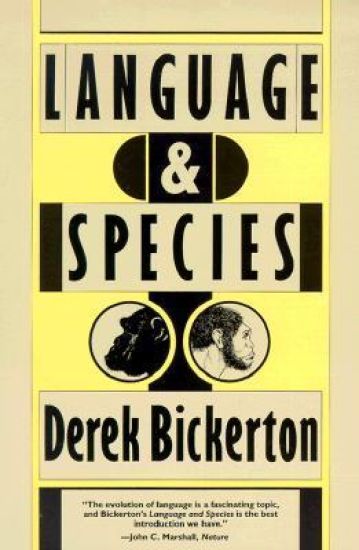
Language and Species

Language and Species

Derek Bickerton

University of Chicago Press
1992
nidottu
Language and Species presents the most detailed and well-documented scenario to date of the origins of language. Drawing on "living linguistic fossils" such as "ape talk," the "two-word" stage of small children, and pidgin languages, and on recent discoveries in paleoanthropology, Bickerton shows how a primitive "protolanguage" could have offered Homo erectus a novel ecological niche. He goes on to demonstrate how this protolanguage could have developed into the languages we speak today. "You are drawn into [Bickerton's] appreciation of the dominant role language plays not only in what we say, but in what we think and, therefore, what we are."—Robert Wright, New York Times Book Review"The evolution of language is a fascinating topic, and Bickerton's Language and Species is the best introduction we have."—John C. Marshall, Nature
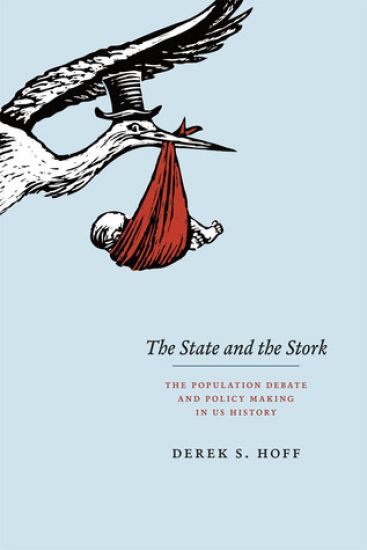
The State and the Stork

The State and the Stork

Derek S. Hoff

University of Chicago Press
2012
sidottu
From the colonial era to the present, the ever-shifting debate about America's almost uninterrupted population growth has exerted a profound influence on the evolution of politics, public policy, and economic thinking in the United States. In a remarkable shift since the 1970s, Americans have celebrated the economic virtues of population growth - but as one of the only wealthy countries experiencing significant growth in the twenty-first century, the United States now finds itself at a crossroads with policymakers unwilling or unable to address the future. From the founders' fears that crowded cities would produce corruption, luxury, and vice to the zero population growth movement of the late 1960s and the continuing emergence of the aging crisis, the debate has often been about much more than race or resource exhaustion. In "The State and the Stork", Derek S. Hoff draws on his extraordinary knowledge of the intersections of population debates and economics throughout American history to explain the many surprising ways that population ideas and anxieties have provoked a wide range of policies, connecting demographic debates and economics to unexpected policies and political developments - including the recent conservative revival. At once a fascinating history and a revelatory look at the national conversation, "The State and the Stork" could not be timelier.
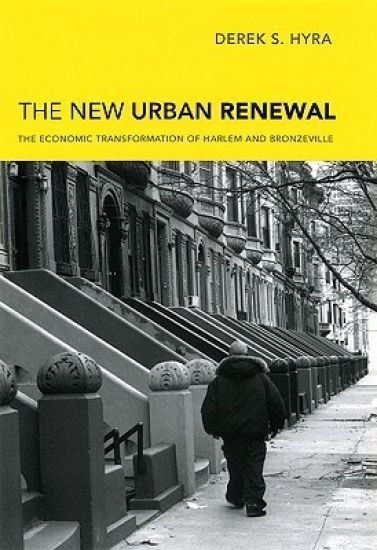
The New Urban Renewal

The New Urban Renewal

Derek S. Hyra

University of Chicago Press
2008
sidottu
Two of the most celebrated black neighborhoods in the United States - Harlem in New York City and Bronzeville in Chicago - were once plagued by crime, drugs, and abject poverty. But now both have transformed into increasingly trendy and desirable neighborhoods, with old buildings being rehabbed, new luxury condos being built, and banks opening branches in areas that were once redlined. In "The New Urban Renewal", Derek S. Hyra offers an illuminating exploration of the complicated web of factors - local, national, and global - driving the remarkable revitalization of these two iconic black communities.How did these formerly notorious ghettos become dotted with expensive restaurants, health spas, and chic boutiques? And, given that urban renewal in the past often meant displacing African Americans, how have both neighborhoods remained black enclaves? Hyra combines his personal experiences as a resident of both communities with deft historical analysis to investigate who has won and who has lost in the new urban renewal. He discovers that today's redevelopment affects African Americans differentially: the middle class benefits while lower-income residents are priced out. Federal policies affecting this process also come under scrutiny, and Hyra breaks new ground with his penetrating investigation into the ways that economic globalization interacts with local political forces to massively reshape metropolitan areas.As public housing is torn down and money floods back into cities across the United States, countless neighborhoods are being monumentally altered. "The New Urban Renewal" is a compelling study of the shifting dynamics of class and race at work in the contemporary urban landscape.
Race, Class, and Politics in the Cappuccino City

Race, Class, and Politics in the Cappuccino City

Derek S. Hyra

University of Chicago Press
2017
sidottu
For long-time residents of Washington, D.C.'s Shaw/U Street, the neighborhood has become almost unrecognizable in recent years. Where the city's most infamous open-air drug market once stood, a farmers' market now sells grass-fed beef and homemade duck egg ravioli. On the corner where AM.PM carryout used to dish out soul food, a new establishment markets its $28 foie gras burger. Shaw is experiencing a dramatic transformation, from "ghetto" to "gilded ghetto," where white newcomers are rehabbing homes, developing dog parks, and paving the way for a third wave coffee shop on nearly every block.Race, Class, and Politics in the Cappuccino City is an in-depth ethnography of this gilded ghetto. Derek S. Hyra captures here a quickly gentrifying space in which long-time black residents are joined, and variously displaced, by an influx of young, white, relatively wealthy, and/or gay professionals who, in part as a result of global economic forces and the recent development of central business districts, have returned to the cities earlier generations fled decades ago. As a result, America is witnessing the emergence of what Hyra calls "cappuccino cities." A cappuccino has essentially the same ingredients as a cup of coffee with milk, but is considered upscale and double the price. In Hyra's cappuccino city, the black inner-city neighborhood undergoes enormous transformations and becomes racially "lighter" and more expensive by the year.
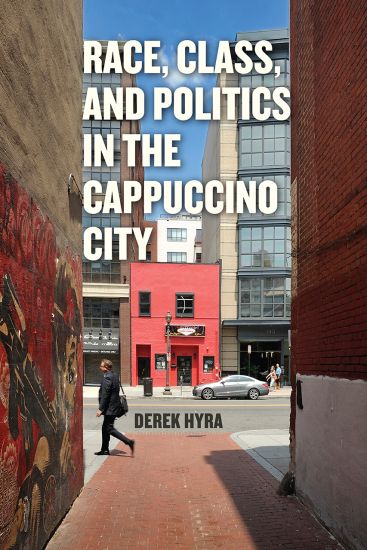
Race, Class, and Politics in the Cappuccino City

Race, Class, and Politics in the Cappuccino City

Derek S. Hyra

University of Chicago Press
2017
nidottu
For long-time residents of Washington, D.C.'s Shaw/U Street, the neighborhood has become almost unrecognizable in recent years. Where the city's most infamous open-air drug market once stood, a farmers' market now sells grass-fed beef and homemade duck egg ravioli. On the corner where AM.PM carryout used to dish out soul food, a new establishment markets its $28 foie gras burger. Shaw is experiencing a dramatic transformation, from "ghetto" to "gilded ghetto," where white newcomers are rehabbing homes, developing dog parks, and paving the way for a third wave coffee shop on nearly every block.Race, Class, and Politics in the Cappuccino City is an in-depth ethnography of this gilded ghetto. Derek S. Hyra captures here a quickly gentrifying space in which long-time black residents are joined, and variously displaced, by an influx of young, white, relatively wealthy, and/or gay professionals who, in part as a result of global economic forces and the recent development of central business districts, have returned to the cities earlier generations fled decades ago. As a result, America is witnessing the emergence of what Hyra calls "cappuccino cities." A cappuccino has essentially the same ingredients as a cup of coffee with milk, but is considered upscale and double the price. In Hyra's cappuccino city, the black inner-city neighborhood undergoes enormous transformations and becomes racially "lighter" and more expensive by the year.