Kirjojen hintavertailu. Mukana 12 016 292 kirjaa ja 12 kauppaa.

Kirjahaku

Etsi kirjoja tekijän nimen, kirjan nimen tai ISBN:n perusteella.

665 tulosta hakusanalla Dissected Lives

The Dublin Dissector

The Dublin Dissector

Robert Harrison

Anatiposi Verlag
2023
pokkari
Reprint of the original. The publishing house Anatiposi publishes historical books as reprints. Due to their age, these books may have missing pages or inferior quality. Our aim is to preserve these books and make them available to the public so that they do not get lost.
The Dublin Dissector

The Dublin Dissector

Robert Harrison

Anatiposi Verlag
2023
sidottu
Reprint of the original. The publishing house Anatiposi publishes historical books as reprints. Due to their age, these books may have missing pages or inferior quality. Our aim is to preserve these books and make them available to the public so that they do not get lost.
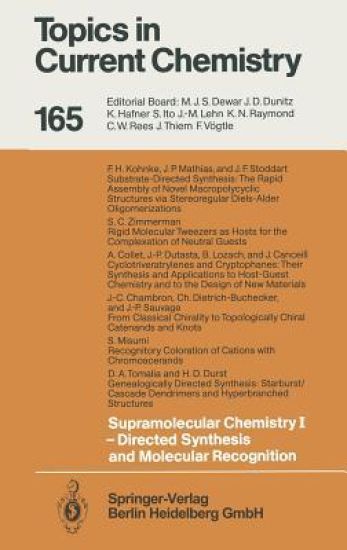
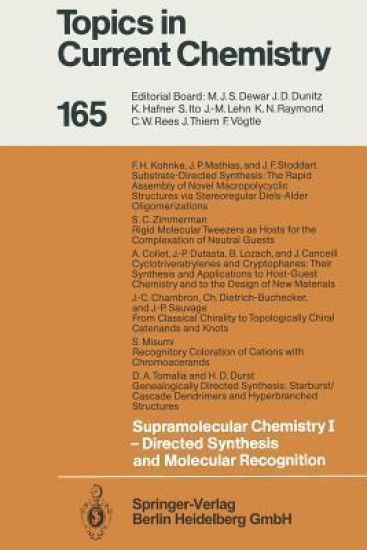
Supramolecular Chemistry I — Directed Synthesis and Molecular Recognition
1. F.H. Kohnke, J. Mathias, J.F. Stoddart: Substrate-Directed Synthesis: The Rapid Assembly of Novel Macropolycyclic Structures via Stereoregular Diels-Alder Oligomerizations 2. S.C. Zimmerman: Rigid Molecular Tweezers as Hosts for the Complexation of Neutral Guests 3. A. Collet, J.-P. Dutasta, B. Lozach, J. Canceill: Cyclotriveratrylenes and Cryptophanes: Their Synthesis and Applications to Host-Guest Chemistry and to the Design of New Materials 4. J.-C. Chambron, Ch.D. Dietrich-Buchecker, S. Misumi: From Classical Chirality to Topologically Chiral Catenands and Knots 5. S. Misumi: Recognitory Coloration of Cations with Chromoacerands 6. D.A. Tomalia, H.D. Durst: Genealogically Directed Synthesis: Starburst/Cascade Dendrimers and Hyperbranched Structures
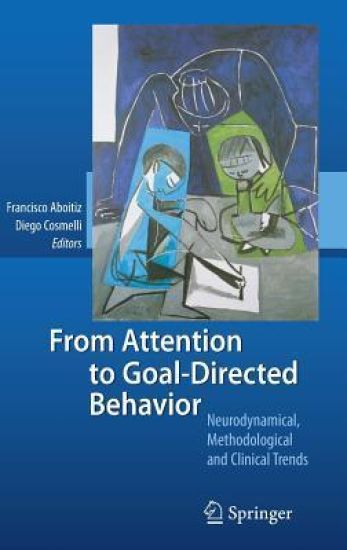
From Attention to Goal-Directed Behavior

From Attention to Goal-Directed Behavior

Springer-Verlag Berlin and Heidelberg GmbH Co. K
2008
sidottu
Attention is a key psychological construct in the understanding of human cognition, and the target of enormous efforts to elucidate its physiological mechanisms, as the wealth of literature—both primary and secondary—attests (for recent compilations see Itti, Rees, & Tsotsos, 2005; Paletta & Rome, 2008; Posner, 2004). But in addition to asking what attention actually is, decomposing and analyzing its varieties, or delimiting its neurobiological mechanisms and effects, in this volume we want to explore attention somewhat differently. We believe that a full-fledged theory of attention must consider its workings in the context of motivated, goal-directed, and environmentally constrained organisms. That attention is related to goal-directed behavior is not news. What the contri- tions to this volume do suggest, however, is the existence of fundamental links between attention and two key processes that are crucial for adapted conduct: go- directed behavior and cognitive control. Importantly, they show that these relations can be explored at multiple levels, including neurodynamical, neurochemical, evo- tionary, and clinical aspects, and that in doing so multiple methodological challenges arise that are worth considering and pursuing. The reader will find here, therefore, a selection of contributions that range from basic mechanisms of attention at the n- ronal level to developmental aspects of cognitive control and its impairments. Another trend that will become evident is that, in different ways, the authors stress the need to understand these issues as they unfold in natural behavior (both healthy and pathological), thus arguing for a more ecological approach to these questions.
From Attention to Goal-Directed Behavior

From Attention to Goal-Directed Behavior

Springer-Verlag Berlin and Heidelberg GmbH Co. K
2010
nidottu
Attention is a key psychological construct in the understanding of human cognition, and the target of enormous efforts to elucidate its physiological mechanisms, as the wealth of literature—both primary and secondary—attests (for recent compilations see Itti, Rees, & Tsotsos, 2005; Paletta & Rome, 2008; Posner, 2004). But in addition to asking what attention actually is, decomposing and analyzing its varieties, or delimiting its neurobiological mechanisms and effects, in this volume we want to explore attention somewhat differently. We believe that a full-fledged theory of attention must consider its workings in the context of motivated, goal-directed, and environmentally constrained organisms. That attention is related to goal-directed behavior is not news. What the contri- tions to this volume do suggest, however, is the existence of fundamental links between attention and two key processes that are crucial for adapted conduct: go- directed behavior and cognitive control. Importantly, they show that these relations can be explored at multiple levels, including neurodynamical, neurochemical, evo- tionary, and clinical aspects, and that in doing so multiple methodological challenges arise that are worth considering and pursuing. The reader will find here, therefore, a selection of contributions that range from basic mechanisms of attention at the n- ronal level to developmental aspects of cognitive control and its impairments. Another trend that will become evident is that, in different ways, the authors stress the need to understand these issues as they unfold in natural behavior (both healthy and pathological), thus arguing for a more ecological approach to these questions.
Supramolecular Chemistry I — Directed Synthesis and Molecular Recognition
1. F.H. Kohnke, J. Mathias, J.F. Stoddart: Substrate-Directed Synthesis: The Rapid Assembly of Novel Macropolycyclic Structures via Stereoregular Diels-Alder Oligomerizations 2. S.C. Zimmerman: Rigid Molecular Tweezers as Hosts for the Complexation of Neutral Guests 3. A. Collet, J.-P. Dutasta, B. Lozach, J. Canceill: Cyclotriveratrylenes and Cryptophanes: Their Synthesis and Applications to Host-Guest Chemistry and to the Design of New Materials 4. J.-C. Chambron, Ch.D. Dietrich-Buchecker, S. Misumi: From Classical Chirality to Topologically Chiral Catenands and Knots 5. S. Misumi: Recognitory Coloration ofCations with Chromoacerands 6. D.A. Tomalia, H.D. Durst: GenealogicallyDirected Synthesis: Starburst/Cascade Dendrimers and Hyperbranched Structures