Kirjojen hintavertailu. Mukana 12 016 292 kirjaa ja 12 kauppaa.

Kirjahaku

Etsi kirjoja tekijän nimen, kirjan nimen tai ISBN:n perusteella.

1000 tulosta hakusanalla Drew Mitchell

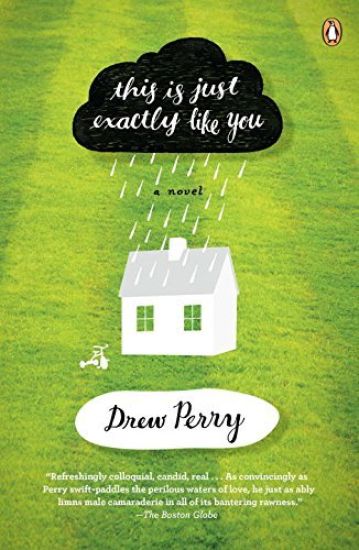
This Is Just Exactly Like You

This Is Just Exactly Like You

Drew Perry

PENGUIN BOOKS
2011
nidottu
"Richly imagined, beautifully written, and completely absorbing. I found myself spellbound, turning pages well past my bedtime. What a fine, fine book." -Tim O'Brien After Jack Lang impulsively buys the house directly across the street from his own, his wife, Beth, has finally had enough. She leaves him- and their six-year-old autistic son, Hendrick-for Jack's best friend, Terry Canavan. Jack tries telling everyone he's okay, but even he's not so sure. When Hendrick, who rarely talks, starts speaking in fluent Spanish, Jack knows he's in uncharted territory. But once Canavan's ex- girlfriend Rena turns up at his door to see how things are going, Jack begins to suspect the world could be far more complicated than he'd ever believed. Set against a landscape of defunct putt-putt courses and karaoke bars, parenthood and infidelity, This Is Just Exactly Like You is a wise and witty debut novel with captivating insights into marriage, autism, suburban fiasco, and life's occasional miracles.
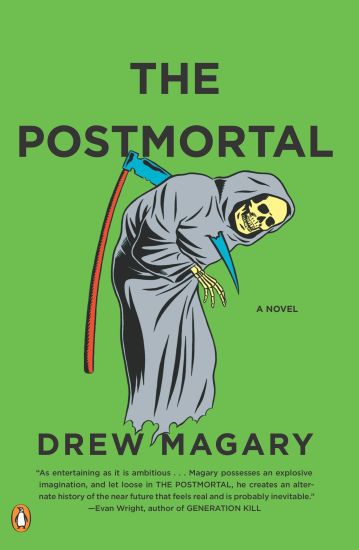
The Postmortal

The Postmortal

Drew Magary

PENGUIN BOOKS
2011
nidottu
- Finalist for the Philip K. Dick and Arthur C. Clarke Awards - The gripping first novel by Drew Magary, author of The Hike and The Night the Lights Went Out "An exciting page turner. . . . Drew Magary is an excellent writer. The Postmortal is . . . even more terrifying than zombie apocalypse." -- Mark Frauenfelder, Boing Boing John Farrell is about to get "The Cure." Old age can never kill him now. The only problem is, everything else still can . . . Imagine a near future where a cure for aging is discovered and-after much political and moral debate-made available to people worldwide. Immortality, however, comes with its own unique problems-including evil green people, government euthanasia programs, a disturbing new religious cult, and other horrors. Witty, eerie, and full of humanity, The Postmortal is an unforgettable thriller that envisions a pre-apocalyptic world so real that it is completely terrifying.
Guest is God

Guest is God

Drew Thomases

Oxford University Press Inc
2020
sidottu
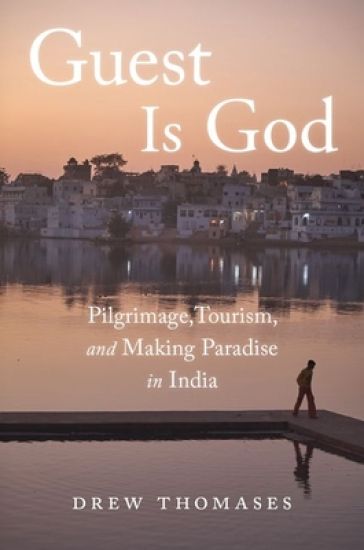
Every year, the Indian pilgrimage town of Pushkar sees its population of 20,000 swell by two million visitors. Since the 1970s, Pushkar, which is located about 250 miles southwest of the capital of New Delhi, has received considerable attention from international tourists. Originally hippies and backpackers, today's visitors now come from a wide range of social positions. To locals, though, Pushkar is more than just a gathering place for pilgrims and tourists: it is where Brahma, the creator god, made his home; it is where Hindus should feel blessed to stay, if only for a short time; and it is where locals would feel lucky to be reborn, if only as a pigeon. In short, it is their paradise. But even paradise needs upkeep. In Guest is God, Drew Thomases uses ethnographic fieldwork to explore the massive enterprise of building heaven on earth. The articulation of sacred space necessarily works alongside economic changes brought on by tourism and globalization. Here the contours of what actually constitutes paradise are redrawn by developments in, and the agents of, tourism. And as paradise is made and remade, people in Pushkar help to create a brand of Hindu religion that is tailored to its local surroundings while also engaging global ideas. The goal, then, becomes to show how religion and tourism can be mutually constitutive.
Form as Harmony in Rock Music

Form as Harmony in Rock Music

Drew Nobile

Oxford University Press Inc
2020
sidottu
Overturning the inherited belief that popular music is unrefined, Form as Harmony in Rock Music brings the process-based approach of classical theorists to popular music scholarship. Author Drew Nobile offers the first comprehensive theory of form for 1960s, 70s, and 80s classic rock repertoire, showing how songs in this genre are not simply a series of discrete elements, but rather exhibit cohesive formal-harmonic structures across their entire timespan. Though many elements contribute to the cohesion of a song, the rock music of these decades is built around a fundamentally harmonic backdrop, giving rise to distinct types of verses, choruses, and bridges. Nobile's rigorous but readable theoretical analysis demonstrates how artists from Bob Dylan to Stevie Wonder to Madonna consistently turn to the same compositional structures throughout rock's various genres and decades, unifying them under a single musical style. Using over 200 transcriptions, graphs, and form charts, Form as Harmony in Rock Music advocates a structural approach to rock analysis, revealing essential features of this style that would otherwise remain below our conscious awareness.
Form as Harmony in Rock Music

Form as Harmony in Rock Music

Drew Nobile

Oxford University Press Inc
2020
nidottu
Overturning the inherited belief that popular music is unrefined, Form as Harmony in Rock Music brings the process-based approach of classical theorists to popular music scholarship. Author Drew Nobile offers the first comprehensive theory of form for 1960s, 70s, and 80s classic rock repertoire, showing how songs in this genre are not simply a series of discrete elements, but rather exhibit cohesive formal-harmonic structures across their entire timespan. Though many elements contribute to the cohesion of a song, the rock music of these decades is built around a fundamentally harmonic backdrop, giving rise to distinct types of verses, choruses, and bridges. Nobile's rigorous but readable theoretical analysis demonstrates how artists from Bob Dylan to Stevie Wonder to Madonna consistently turn to the same compositional structures throughout rock's various genres and decades, unifying them under a single musical style. Using over 200 transcriptions, graphs, and form charts, Form as Harmony in Rock Music advocates a structural approach to rock analysis, revealing essential features of this style that would otherwise remain below our conscious awareness.
Oxford Handbook of Clinical Haematology

Oxford Handbook of Clinical Haematology

Drew Provan; Trevor Baglin; Inderjeet Dokal; Johannes de Vos

Oxford University Press
2015
muu
The Oxford Handbook of Clinical Haematology provides core and concise information on the entire spectrum of blood disorders affecting both adults and children. Updated for its fourth edition, it includes all major advances in the specialty, including malignant haematology, haemato-oncology, coagulation, transfusion medicine, and red cell disorders, with a brand new chapter on rare diseases. Practically focused, and specifically designed for ease-of-use, and rapid access to the information you need, this handbook is an indispensable resource on all aspects of haematology for all trainee doctors, nurses, technicians, and research professionals. The handbook is divided into clinical approach and disease-specific areas. The clinical approach section outlines various symptoms and signs in patients with blood disease to enable the reader to formulate a sensible differential diagnosis beofre embarking on investigation and treatment. The disease-specific section is written by four authors whose expertise covers the whole breadth of diseases included in the book. All authors have contributed to national guidelines (e.g. British Committee for Standards in Haematology, BCSH) and are experts in the evidence base that exists for each topic. The Oxford Handbook of Clinical Haematology offers a concise and logical approach to caring for patients with diseases of the blood.
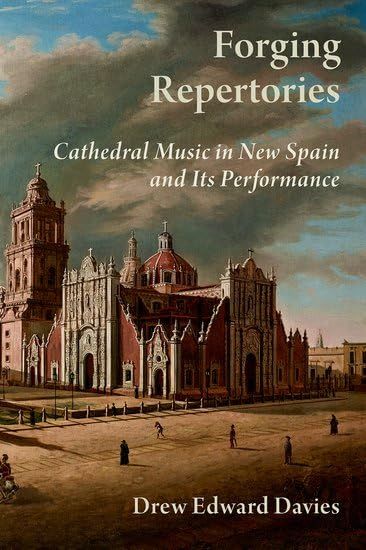
Forging Repertories

Forging Repertories

Drew Edward Davies

OXFORD UNIVERSITY PRESS INC
2025
sidottu
Much engagement with the cathedral music of New Spain has been through lens of exoticism. This book challenges this view by uncovering how colonial repertories mixed European aesthetics with locally composed pieces to create canons both tailored to local liturgies and shaped by European tradition. Building upon material from the archives of Mexico City, Durango, and Puebla cathedrals, author Drew Edward Davies examines how composers, some of them priests, communicated theological doctrine through music genres. The book also offers a new understanding of cultural encounter, both by assessing how music was used for indoctrination and by rethinking stereotypes in villancicos through the lens of topic theory. Illuminating the unique mix of devotional subjects stressed in New Spain, Davies argues that topicality rather than style differentiated New Spanish musical repertory from that of Europe. Concluding with a history of the early music movement's revival of New Spanish music beginning in the 1960s, Davies suggests that exoticism and the imagination continue to shape performances in ways that may not be plausible historically, but nonetheless resonate with audiences in the contemporary world. In so doing, he invites performers and scholars alike to engage with broader repertories of New Spanish music moving forward.
Doctors and Demonstrators

Doctors and Demonstrators

Drew Halfmann

University of Chicago Press
2011
sidottu
Since Roe v. Wade, abortion has been a continually divisive political issue in the United States. In contrast, it has remained primarily a medical issue in Britain and Canada despite the countries' shared heritage. "Doctors and Demonstrators" looks beyond simplistic cultural or religious explanations to find out why abortion politics and policies differ so dramatically in these otherwise similar countries. Drew Halfmann argues that political institutions are the key. In the United States, federalism, judicial review, and a private health care system contributed to the public definition of abortion as an individual right rather than a medical necessity. Meanwhile, Halfmann explains, the porous structure of American political parties gave pro-choice and pro-life groups the opportunity to move the issue onto the political agenda. A groundbreaking study of the complex legal and political factors behind the evolution of abortion policy, "Doctors and Demonstrators" will be vital for anyone trying to understand this contentious issue.
Doctors and Demonstrators

Doctors and Demonstrators

Drew Halfmann

University of Chicago Press
2011
nidottu
Since Roe v. Wade, abortion has been a continually divisive political issue in the United States. In contrast, it has remained primarily a medical issue in Britain and Canada despite the countries' shared heritage. "Doctors and Demonstrators" looks beyond simplistic cultural or religious explanations to find out why abortion politics and policies differ so dramatically in these otherwise similar countries. Drew Halfmann argues that political institutions are the key. In the United States, federalism, judicial review, and a private health care system contributed to the public definition of abortion as an individual right rather than a medical necessity. Meanwhile, Halfmann explains, the porous structure of American political parties gave pro-choice and pro-life groups the opportunity to move the issue onto the political agenda. A groundbreaking study of the complex legal and political factors behind the evolution of abortion policy, "Doctors and Demonstrators" will be vital for anyone trying to understand this contentious issue.
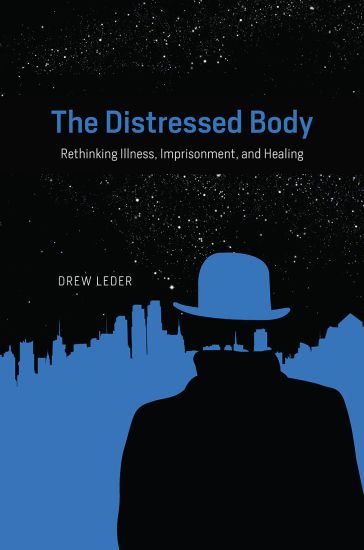
The Distressed Body

The Distressed Body

Drew Leder

University of Chicago Press
2016
sidottu
Bodily pain and distress come in many forms. They can well up from within at times of serious illness, but the body can also be subjected to harsh treatment from outside. The medical system is often cold and depersonalized, and much worse are conditions experienced by prisoners in our age of mass incarceration, and by animals trapped in our factory farms. In this pioneering book, Drew Leder offers bold new ways to rethink how we create and treat distress, clearing the way for more humane social practices. Leder draws on literary examples, clinical and philosophical sources, his medical training, and his own struggle with chronic pain. He levies a challenge to the capitalist and Cartesian models that rule modern medicine. Similarly, he looks at the root paradigms of our penitentiary and factory farm systems and the way these produce distressed bodies, asking how such institutions can be reformed. Writing with coauthors ranging from a prominent cardiologist to long-term inmates, he explores alternative environments that can better humanize even spiritualize the way we treat one another, offering a very different vision of medical, criminal justice, and food systems. Ultimately Leder proposes not just new answers to important bioethical questions but new ways of questioning accepted concepts and practices.
The Distressed Body

The Distressed Body

Drew Leder

University of Chicago Press
2016
nidottu
Bodily pain and distress come in many forms. They can well up from within at times of serious illness, but the body can also be subjected to harsh treatment from outside. The medical system is often cold and depersonalized, and much worse are conditions experienced by prisoners in our age of mass incarceration, and by animals trapped in our factory farms. In this pioneering book, Drew Leder offers bold new ways to rethink how we create and treat distress, clearing the way for more humane social practices. Leder draws on literary examples, clinical and philosophical sources, his medical training, and his own struggle with chronic pain. He levies a challenge to the capitalist and Cartesian models that rule modern medicine. Similarly, he looks at the root paradigms of our penitentiary and factory farm systems and the way these produce distressed bodies, asking how such institutions can be reformed. Writing with coauthors ranging from a prominent cardiologist to long-term inmates, he explores alternative environments that can better humanize even spiritualize the way we treat one another, offering a very different vision of medical, criminal justice, and food systems. Ultimately Leder proposes not just new answers to important bioethical questions but new ways of questioning accepted concepts and practices.
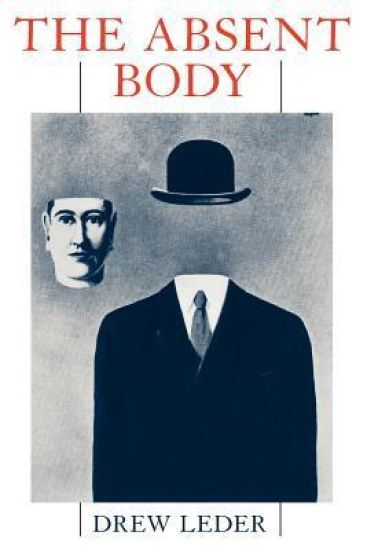
The Absent Body

The Absent Body

Drew Leder

University of Chicago Press
1990
nidottu
The body plays a central role in shaping our experience of the world. Why, then, are we so frequently oblivious to our own bodies? We gaze at the world, but rarely see our own eyes. We may be unable to explain how we perform the simplest of acts. We are even less aware of our internal organs and the physiological processes that keep us alive. In this fascinating work, Drew Leder examines all the ways in which the body is absent—forgotten, alien, uncontrollable, obscured. In part 1, Leder explores a wide range of bodily functions with an eye to structures of concealment and alienation. He discusses not only perception and movement, skills and tools, but a variety of "bodies" that philosophers tend to overlook: the inner body with its anonymous rhythms; the sleeping body into which we nightly lapse; the prenatal body from which we first came to be. Leder thereby seeks to challenge "primacy of perception." In part 2, Leder shows how this phenomenology allows us to rethink traditional concepts of mind and body. Leder argues that Cartesian dualism exhibits an abiding power because it draws upon life-world experiences. Descartes' corpus is filled with disruptive bodies which can only be subdued by exercising "disembodied" reason. Leder explores the origins of this notion of reason as disembodied, focusing upon the hidden corporeality of language and thought. In a final chapter, Leder then proposes a new ethic of embodiment to carry us beyond Cartesianism. This original, important, and accessible work uses examples from the author's medical training throughout. It will interest all those concerned with phenomenology, the philosophy of mind, or the Cartesian tradition; those working in the health care professions; and all those fascinated by the human body.
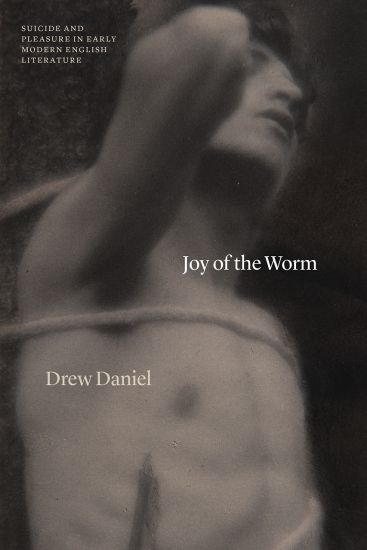
Joy of the Worm

Joy of the Worm

Drew Daniel

THE UNIVERSITY OF CHICAGO PRESS
2022
sidottu
Consulting an extensive archive of early modern literature, Joy of the Worm asserts that voluntary death in literature is not always a matter of tragedy. In this study, Drew Daniel identifies a surprisingly common aesthetic attitude that he calls “joy of the worm,” after Cleopatra’s embrace of the deadly asp in Shakespeare’s play—a pattern where voluntary death is imagined as an occasion for humor, mirth, ecstatic pleasure, even joy and celebration. Daniel draws both a historical and a conceptual distinction between “self-killing” and “suicide.” Standard intellectual histories of suicide in the early modern period have understandably emphasized attitudes of abhorrence, scorn, and severity toward voluntary death. Daniel reads an archive of literary scenes and passages, dating from 1534 to 1713, that complicate this picture. In their own distinct responses to the surrounding attitude of censure, writers including Shakespeare, Donne, Milton, and Addison imagine death not as sin or sickness, but instead as a heroic gift, sexual release, elemental return, amorous fusion, or political self-rescue. “Joy of the worm” emerges here as an aesthetic mode that shades into schadenfreude, sadistic cruelty, and deliberate “trolling,” but can also underwrite powerful feelings of belonging, devotion, and love.
Joy of the Worm

Joy of the Worm

Drew Daniel

THE UNIVERSITY OF CHICAGO PRESS
2022
nidottu
Consulting an extensive archive of early modern literature, Joy of the Worm asserts that voluntary death in literature is not always a matter of tragedy. In this study, Drew Daniel identifies a surprisingly common aesthetic attitude that he calls “joy of the worm,” after Cleopatra’s embrace of the deadly asp in Shakespeare’s play—a pattern where voluntary death is imagined as an occasion for humor, mirth, ecstatic pleasure, even joy and celebration. Daniel draws both a historical and a conceptual distinction between “self-killing” and “suicide.” Standard intellectual histories of suicide in the early modern period have understandably emphasized attitudes of abhorrence, scorn, and severity toward voluntary death. Daniel reads an archive of literary scenes and passages, dating from 1534 to 1713, that complicate this picture. In their own distinct responses to the surrounding attitude of censure, writers including Shakespeare, Donne, Milton, and Addison imagine death not as sin or sickness, but instead as a heroic gift, sexual release, elemental return, amorous fusion, or political self-rescue. “Joy of the worm” emerges here as an aesthetic mode that shades into schadenfreude, sadistic cruelty, and deliberate “trolling,” but can also underwrite powerful feelings of belonging, devotion, and love.
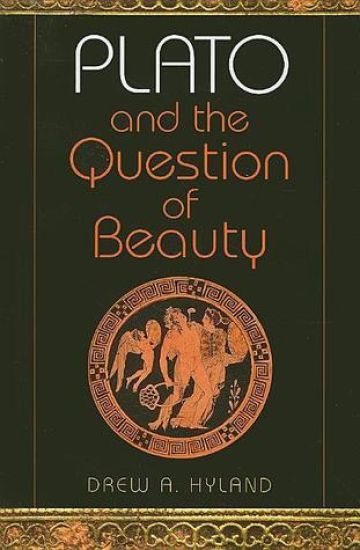
Plato and the Question of Beauty

Plato and the Question of Beauty

Drew A. Hyland

Indiana University Press
2008
pokkari
Drew A. Hyland, one of Continental philosophy's keenest interpreters of Plato, takes up the question of beauty in three Platonic dialogues, the Hippias Major, Symposium, and Phaedrus. What Plato meant by beauty is not easily characterized, and Hyland's close readings show that Plato ultimately gives up on the possibility of a definition. Plato's failure, however, tells us something important about beauty—that it cannot be reduced to logos. Exploring questions surrounding love, memory, and ideal form, Hyland draws out the connections between beauty, the possibility of philosophy, and philosophical living. This new reading of Plato provides a serious investigation into the meaning of beauty and places it at the very heart of philosophy.
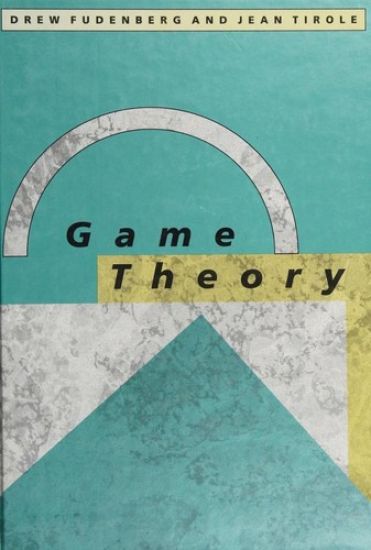
Game Theory

Game Theory

Drew Fudenberg; Jean Tirole

MIT Press
1991
sidottu
This advanced text introduces the principles of noncooperative game theory in a direct and uncomplicated style that will acquaint students with the broad spectrum of the field while highlighting and explaining what they need to know at any given point.This advanced text introduces the principles of noncooperative game theory-including strategic form games, Nash equilibria, subgame perfection, repeated games, and games of incomplete information-in a direct and uncomplicated style that will acquaint students with the broad spectrum of the field while highlighting and explaining what they need to know at any given point. The analytic material is accompanied by many applications, examples, and exercises. The theory of noncooperative games studies the behavior of agents in any situation where each agent's optimal choice may depend on a forecast of the opponents' choices. "Noncooperative" refers to choices that are based on the participant's perceived selfinterest. Although game theory has been applied to many fields, Fudenberg and Tirole focus on the kinds of game theory that have been most useful in the study of economic problems. They also include some applications to political science. The fourteen chapters are grouped in parts that cover static games of complete information, dynamic games of complete information, static games of incomplete information, dynamic games of incomplete information, and advanced topics.
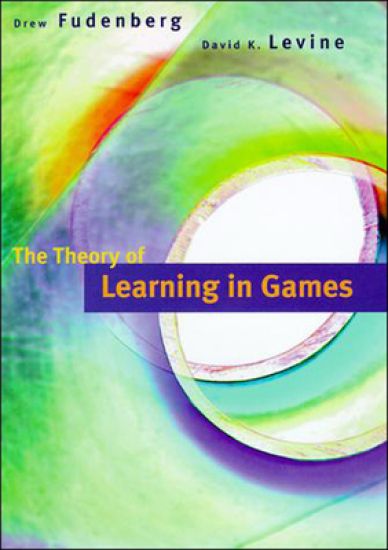
The Theory of Learning in Games

The Theory of Learning in Games

Drew Fudenberg; David K. Levine

MIT Press
1998
pokkari
In economics, most noncooperative game theory has focused on equilibrium in games, especially Nash equilibrium and its refinements. The traditional explanation for when and why equilibrium arises is that it results from analysis and introspection by the players in a situation where the rules of the game, the rationality of the players, and the players' payoff functions are all common knowledge. Both conceptually and empirically, this theory has many problems.In The Theory of Learning in Games Drew Fudenberg and David Levine develop an alternative explanation that equilibrium arises as the long-run outcome of a process in which less than fully rational players grope for optimality over time. The models they explore provide a foundation for equilibrium theory and suggest useful ways for economists to evaluate and modify traditional equilibrium concepts.
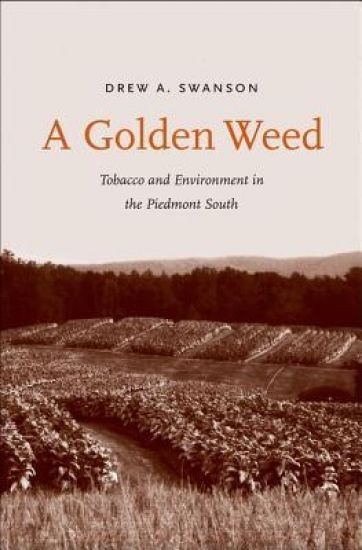
A Golden Weed

A Golden Weed

Drew A. Swanson

Yale University Press
2014
sidottu
An exploration of the rise of the crop strain that came to dominate the American tobacco industry and its toll on the Southern landscape that produced it Drew A. Swanson has written an “environmental” history about a crop of great historical and economic significance: American tobacco. A preferred agricultural product for much of the South, the tobacco plant would ultimately degrade the land that nurtured it, but as the author provocatively argues, the choice of crop initially made perfect agrarian as well as financial sense for southern planters. Swanson, who brings to his narrative the experience of having grown up on a working Virginia tobacco farm, explores how one attempt at agricultural permanence went seriously awry. He weaves together social, agricultural, and cultural history of the Piedmont region and illustrates how ideas about race and landscape management became entangled under slavery and afterward. Challenging long-held perceptions, this innovative study examines not only the material relationships that connected crop, land, and people but also the justifications that encouraged tobacco farming in the region.
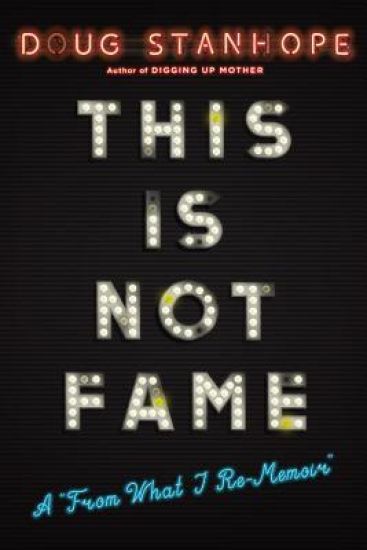
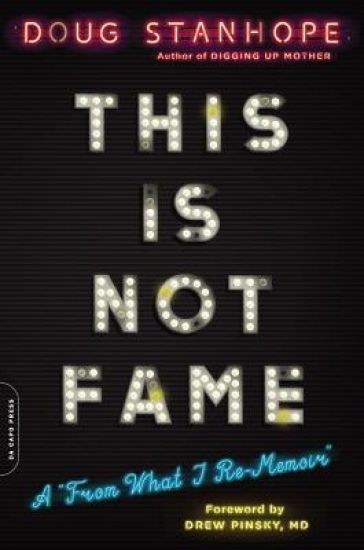
This Is Not Fame

This Is Not Fame

Drew Pinsky; Doug Stanhope; Dr. Drew Pinsky

Da Capo Press Inc
2017
sidottu
As his legions of devoted fans (known as "termites") already know, Doug Stanhope lives in an interesting world, a "cult legend" who nonetheless commands an audience that is larger than many mainstream stars. That's because Stanhope built his career from the ground up, playing the dive-iest dives and most decrepit out-of-the-way comedy rooms you can imagine for two decades, in the process becoming a populist hero to an equally drunken fan base.This Is Not Fame is the uncensored story of how it happened, full of debauched tales from the low side of the road as related by a master comedic storyteller. In his relentless pursuit of non-fame, Stanhope has done it all, including having to hide out in Alaska from a raging state senator who was searching every bar to kick his ass for remarks made about him on the radio; scouring the frozen streets of Korea trying to procure a prostitute for a certain Fellow Comedian; taking a job doing gay phone sex just for the story (and showing up on mushrooms); being booked for a private backyard party and finding out it's for children; having Johnny Depp call and tell him he thinks he's a legend, not knowing he's standing in the rain in a Days Inn parking lot about to play a sports bar to a crowd of 65 people; pretending to be Johnny Rotten for an incompetent interviewer just so he'll stop calling; agreeing to do a stand-up gig--sober and unpaid--for the country of Iceland's worst criminals; filming his own vasectomy to boost ticket sales ahead of a tour; appearing on The Jerry Springer Show posing as a traveling salesman whose wife is leaving him for a lesbian stripper . . . and so much more (and so much worse).This book is exactly what Stanhope's fans have been waiting for: Stanhope unleashed, holding nothing back no matter how embarrassing, immoral, sordid, or compromising it may be.
This Is Not Fame

This Is Not Fame

Drew Pinsky; Doug Stanhope; Dr. Drew Pinsky

Da Capo Press Inc
2018
pokkari
Doug Stanhope has been drunkenly stumbling down the back roads and dark alleys of stand-up comedy for over a quarter of a century, roads laden with dank bars, prostitutes, cheap drugs, farm animals, evil dwarfs, public nudity, menacing third-world police, psychotic breaks, sex offenders, and some understandable suicides. You know, just for levity.While other comedians were seeking fame, Stanhope was seeking immediate gratification, dark spectacle, or sometimes just his pants. Not to say he hasn't rubbed elbows with fame. He's crashed its party, snorted its coke, and jumped into its pool naked, literally and often repeatedly--all while artfully dodging fame himself.Doug spares no legally permissible detail, and his stories couldn't be told any other way. They're weird, uncomfortable, gross, disturbing, and fucking funny.This Is Not Fame is by no means a story of overcoming a life of excess, immorality, and reckless buffoonery. It's an outright celebration of it. For Stanhope, the party goes on.