
Kirjahaku
Etsi kirjoja tekijän nimen, kirjan nimen tai ISBN:n perusteella.
1000 tulosta hakusanalla Edward M Shepard
Morphy, E: York pioneer's recollections of a visit to "The E
Edward M. Morphy
Antigonos Verlag
2024
nidottu
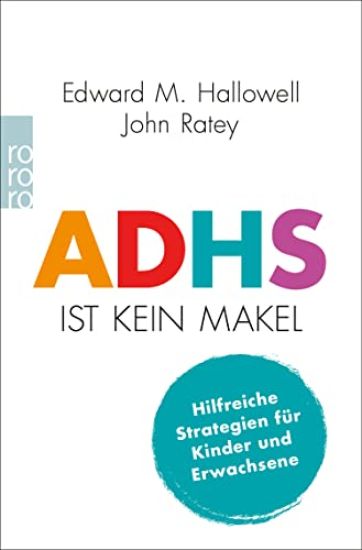

Konzentrationsmangel, keine Ausdauer, ewig abgelenkt, sprunghaft. Kennen Sie das von sich selbst, von Ihrem Kollegen, Ihrem Kind? In vielen Fällen handelt es sich um ein angeborenes neurologisches Problem. Die Wissenschaft nennt es ADD: "Aufmerksamkeits-Defizit-Disposition". Dieses praxisnahe, oft humorvolle, ermutigende Buch wird jeder mit Gewinn lesen, der mit einem ADD-Menschen lebt oder selber einer ist.
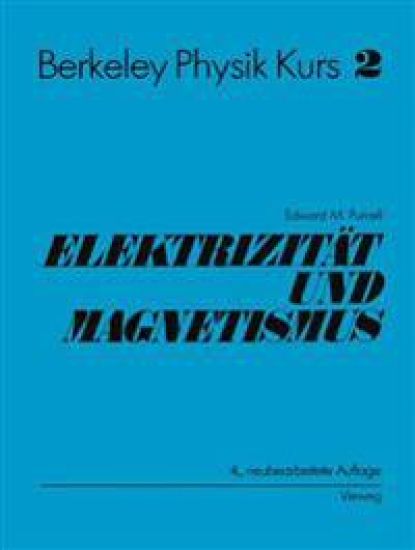
Electrizität und Magnetismus
Edward M. Purcell
Springer-Verlag Berlin and Heidelberg GmbH Co. K
2011
nidottu



George Washington, the Ideal Patriot is an unchanged, high-quality reprint of the original edition of 1897. Hansebooks is editor of the literature on different topic areas such as research and science, travel and expeditions, cooking and nutrition, medicine, and other genres. As a publisher we focus on the preservation of historical literature. Many works of historical writers and scientists are available today as antiques only. Hansebooks newly publishes these books and contributes to the preservation of literature which has become rare and historical knowledge for the future.

Reprint of the original, first published in 1867.

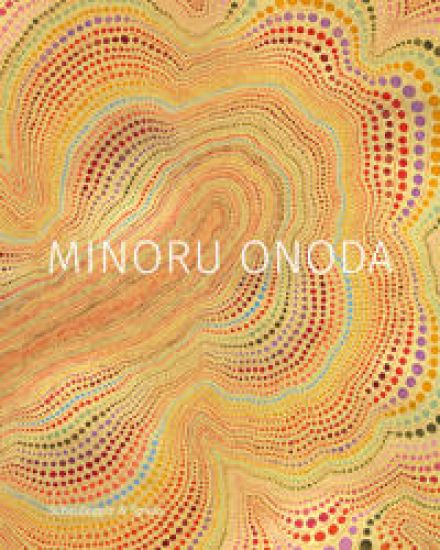
Minoru Onoda
Edward M. Gómez; Astrid Handa-Gagnard; Shoichi Hirai; Koichi Kawasaki
Scheidegger und Spiess AG, Verlag
2018
sidottu
Minoru Onoda was born in Japanese-occupied Manchuria to a Japanese family in 1937. Before the outbreak of World War II, they moved to Himeji in Japan, which remained the artist's residence until his passing in 2008. Following his artistic education at the Osaka Institute of Fine Arts and at Osaka School of Art in the 1960s, Onoda joined the Gutai, Japan's first post-war radical artistic movement. Gutai challenged what the movement considered a reactionary understanding to initiate new notions of art, and redefined the relationships among body, matter, time, and space. Enchanted by concepts of repetition, Onoda produced panels with amalgamations of gradually increasing dots with relief, creating organically growing shapes, progressing to infinite circles and ultimately moving to a monochrome style in painting. When Gutai disbanded in 1972, he opted for a conceptual style in which the proliferating dots disappeared. The Western world has received Minoru Onoda's art almost exclusively in the Gutai context, for example in the 2013 exhibition Gutai: Splendid Playground at New York's Guggenheim Museum. This overdue first-ever monograph on Minoru Onoda introduces him as an artist in his own right. Apart from investigating his relations with Gutai, it explores his creative process with a particular focus on his sketchbooks.
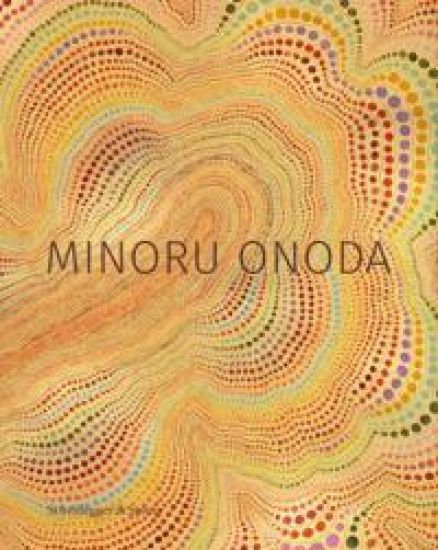
Minoru Onoda
Edward M. Gómez; Astrid Handa-Gagnard; Shoichi Hirai; Koichi Kawasaki
Scheidegger und Spiess AG, Verlag
2018
sidottu
Minoru Onoda was born in Japanese-occupied Manchuria to a Japanese family in 1937. Before the outbreak of World War II, they moved to Himeji in Japan, which remained the artist's residence until his passing in 2008. Following his artistic education at the Osaka Institute of Fine Arts and at Osaka School of Art in the 1960s, Onoda joined the Gutai, Japan's first post-war radical artistic movement. Gutai challenged what the movement considered a reactionary understanding to initiate new notions of art, and redefined the relationships among body, matter, time, and space. Enchanted by concepts of repetition, Onoda produced panels with amalgamations of gradually increasing dots with relief, creating organically growing shapes, progressing to infinite circles and ultimately moving to a monochrome style in painting. When Gutai disbanded in 1972, he opted for a conceptual style in which the proliferating dots disappeared. The Western world has received Minoru Onoda's art almost exclusively in the Gutai context, for example in the 2013 exhibition Gutai: Splendid Playground at New York's Guggenheim Museum. This overdue first-ever monograph on Minoru Onoda introduces him as an artist in his own right. Apart from investigating his relations with Gutai, it explores his creative process with a particular focus on his sketchbooks. Text in Japanese.




An all-time classic from E. M. Bounds, a giant of prayer. If you want to understand the power of a life of prayer, read this book.