Kirjojen hintavertailu. Mukana 12 016 292 kirjaa ja 12 kauppaa.

Kirjahaku

Etsi kirjoja tekijän nimen, kirjan nimen tai ISBN:n perusteella.

1000 tulosta hakusanalla Edward Michell

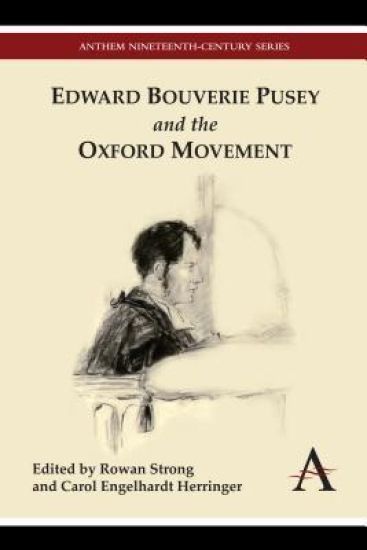
Edward Bouverie Pusey and the Oxford Movement
The Oxford Movement, initiating what is commonly called the Catholic Revival of the Church of England and of global Anglicanism more generally, has been a perennial subject of study by historians since its beginning in the 1830s. But the leader of the movement whose name was most associated with it during the nineteenth century, Edward Bouverie Pusey, has long been neglected by historical studies of the Anglican Catholic Revival. This collection of essays seeks to redress the negative and marginalizing historiography of Pusey, and to increase current understanding of both Pusey and his culture. The essays take Pusey’s contributions to the Oxford Movement and its theological thinking seriously; most significantly, they endeavour to understand Pusey on his own terms, rather than by comparison with Newman or Keble. The volume reveals Pusey as a serious theologian who had a significant impact on the Victorian period, both within the Oxford Movement and in wider areas of church politics and theology. This reassessment is important not merely to rehabilitate Pusey’s reputation, but also to help our current understanding of the Oxford Movement, Anglicanism and British Christianity in the nineteenth century.
Edward FitzGerald’s Rubáiyát of Omar Khayyám
The book presents the text of Edward FitzGerald’s three main versions of the Rubáiyát of Omar Khayyám, together with non-technical commentary on the origins, role and influence of the poem, including the story of its publication. The commentary also addresses the many spin-offs the poem has generated in the fields of art and music, as well as its message and its worldwide influence during the 150 years since its first appearance.
Nonsense Verse of Edward Lear

Nonsense Verse of Edward Lear

Edward Lear

Random House Childrens Publish
2012
sidottu
John Vernon's Lord's stunning illustrations completely capture the spirit and satirical wit of Lear's work, conveying a lifelong enthusiasm for Lear's nonsense. 'Nonsense is the breath of my nostrils', wrote Edward Lear (1812-88)The perfect gift for both Lear fans and those discovering his work for the first time.
Edward and Lane on European Union Law

Edward and Lane on European Union Law

David Edward; Robert Lane

Edward Elgar Publishing Ltd
2013
sidottu
Key features of the book include:Authoritative authorship combining the analysis of a senior academic with the experience of a former judge.Comprehensive and wide-ranging in scope.Structured specifically to reflect the Treaty of Lisbon reorientation and immediate post-Lisbon developments.Extensive reference to primary sources (Treaties, legislation, case law) and to issues of national adaptation.A fully updated and expanded new edition of a classic text, this authoritative and wide-ranging volume provides expert analysis on the key issues across all areas of European Union law - including its constitutional, procedural and substantive aspects. In particular, coverage of the constitutional and procedural elements includes: historical background and development of the European Union; constitutional structure of the Union; the Treaties: interrelationship and fundamental (constitutional) rules; the institutional framework; jurisdiction of, and actions before, the Court of Justice; sources, principles and methods of Union law.Comprehensive coverage of the substantive law includes: basic rules; citizenship of the Union; the internal market; the four freedoms; competition; economic and monetary policy; social policy; environmental policy; commercial policy.Precise and rich in references to the primary materials of the Treaties, the principal legislation and the key case law of the Court of Justice, this highly detailed and comprehensive book will be an indispensable resource for all legal practitioners whose practice must take account of EU Law.
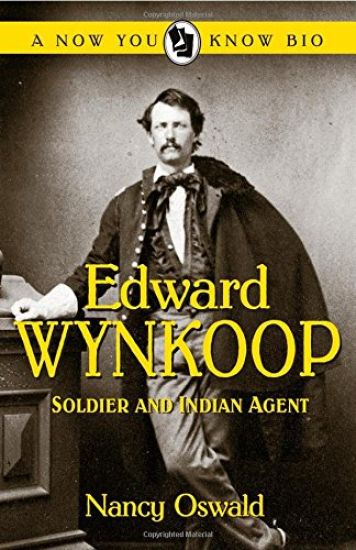
Edward Wynkoop

Edward Wynkoop

Nancy Oswald

Filter Press
2014
pokkari
In 1858 Edward Wynkoop arrived in the frontier town of Denver City. He was twenty-two years old and soon became a town leader and Denver's first sheriff. During the American Civil War, he joined the Colorado Volunteers and played an important role in the Union victory at the Battle of Glorieta Pass in New Mexico.After the Civil War, Wynkoop worked to see that the Plains Indians were treated fairly. He was a popular public figure until he spoke out in protest after the Sand Creek Massacre. His investigations into the actions of Colonel John Chivington's men at Sand Creek turned the public against him. Today he is a hero to Coloradans. Wynkoop Street in Denver is named for him.Number Seventeen in the Now You Know Bio series.Winner of the Spur Award from Western Writers of America.
Art of Edward Reed

Art of Edward Reed

Edward Reed

S Q Publications,US
2008
nidottu
Edward Reed is a unique artist who delights in the old-school masters of pin-up like Vargas, Elvgren and Petty, yet he has a fascination for photo-realism that borders on the surreal. He has the practised ease of an expert when it comes to real-world airbrushing, yet has no difficulty bringing that talent to a computer screen. Whether analogue or digital, the finished illustration is what's important, and Reed brings outstanding style and beauty to all his creations. His women are classic in form yet modern in sensibility -- just the right mix for a 21st Century pin-up artist! This first collection of this works -- Portraits & Pin-Ups, is well named, as it showcases both his serious and fun sides to an appreciative audience. Also an in-demand instructor, Edward has assembled a fascinating step-by-step to show how he creates such intricate and amazing masterworks.
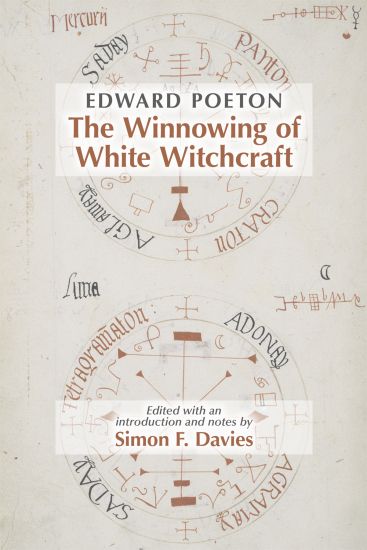
Edward Poeton: The Winnowing of White Witchcraft

Edward Poeton: The Winnowing of White Witchcraft

Simon F. Davies

State University of New York at Binghamton,Medieval Renaissance Texts Studies
2018
nidottu
Edward Poeton’s The Winnowing of White Witchcraft was written in the 1630s and has never been printed. Poeton, a physician, was one of few non-clergymen to write about magic during the early modern period, and the treatise offers new insights into the problem of popular errors concerning the nature of witchcraft. As well as advancing a number of standard and not-so-standard arguments for the sinfulness of white witches, the treatise offers fascinating insight into Poeton’s practice as a physician and his own youthful dalliance with magic. It is thus a significant new source in the history of early modern medicine and witchcraft belief. This edition includes an introduction and explanatory notes.Edited with an introduction and notes by Simon F. Davies
Edward III

Edward III

William Shakespeare; Octavio Solis

Arizona Center for Medieval Renaissance Studies,US
2022
nidottu
Edward III comes to life in a new version by playwright Octavio Solis. Written after England’s victory over the Spanish Armada in 1588, Edward III follows the exploits of King Edward III and his son Edward, the Black Prince of Wales. England dominates on the battlefield as the play explores questions of kinghood and chivalry through the actions of King Edward and his son. Octavio Solis’s translation of the play provides all of the complexity and richness of the original while renewing the allusions and metaphors lost through time. This translation of Edward III was written as part of the Oregon Shakespeare Festival’s Play On! project, which commissioned new translations of thirty-nine Shakespeare plays. These translations present work from “The Bard” in language accessible to modern audiences while never losing the beauty of Shakespeare’s verse. Enlisting the talents of a diverse group of contemporary playwrights, screenwriters, and dramaturges from diverse backgrounds, this project reenvisions Shakespeare for the twenty-first century. These volumes make these works available for the first time in print—a new First Folio for a new era.
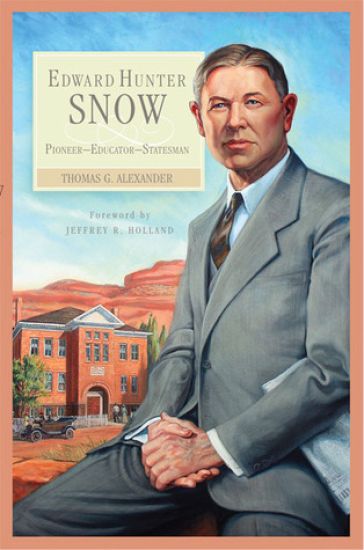
Edward Hunter Snow

Edward Hunter Snow

Thomas G. Alexander

Arthur H. Clark Company
2012
sidottu
The life of Edward Hunter Snow (1865-1932), a leader in second-generation Mormon Utah, closely paralleled the early-twentieth-century development of the West. Born in St. George, Utah, to Julia Spencer and Mormon apostle Erastus Snow, Edward Hunter Snow was instrumental both in the development of southern Utah and in the growth of the Church of Jesus Christ of Latter-day Saints during a period of rapid change. In Edward Hunter Snow, the first biography of the man, noted western and Mormon historian Thomas G. Alexander presents Snow as a servant of family, church, state, and nation. Offering insights into the LDS Church around the turn of the twentieth century, Alexander narrates the events of Snow's missions to the American South, including encounters with the Ku Klux Klan in the 1880s, and to New York. As president of the St. George Stake and church leader, Snow sought to reshape the LDS Church's place in Utah--confining its influence to religious and cultural practices and avoiding politics.Although he was involved in numerous causes throughout his life, Snow was especially dedicated to education. A graduate of what is now Brigham Young University, he worked to ensure that the state's children would have access to quality education. Snow founded what is now Dixie State College and, as a state senator, introduced legislation to establish what is now Southern Utah University.As the nineteenth century gave way to the twentieth, Snow helped St. George grow from an isolated cotton colony to an important stop on the main automobile route from Salt Lake City to Los Angeles. Alexander shows that rugged, southwestern Utah's flowering into cultural and commercial maturity was due to the foresight and dedication of second-generation pioneers like Edward Hunter Snow.
Edward Eberstadt & Sons

Edward Eberstadt & Sons

Michael Vinson; William Reese

Arthur H. Clark Company
2016
sidottu
An unlikely bookseller in New York City became the leading dealer in rare Western Americana for most of the twentieth century. After working in western-U.S. and South American gold mines at the turn of the twentieth century, Edward Eberstadt (1883-1958) returned to his home in New York City in 1907. Through luck and happenstance, he purchased an old book for fifty cents that turned out to be a rare sixteenth-century Mexican imprint. From this bit of serendipity, Eberstadt quickly became one of the leading western Americana rare book dealers. In this book Michael Vinson tells the story of how Edward Eberstadt & Sons developed its legendary book collection, which formed the backbone of many of today's top western Americana archives. Although the firm's business records have not survived, Edward and his sons, Charles and Lindley, were all prodigious letter writers, and nearly every collector kept his or her correspondence. Drawing upon these letters and on his own extensive experience in the rare book trade, Vinson gives the reader a vivid sense of how the commerce in rare books and manuscripts unfolded during the era of the Eberstadts, particularly in the relationships between dealers and customers. He explores the backstory that scholars of art history and museology have pursued in recent decades: the assembling of cultural treasures, their organization for use, and the establishment of institutions to support that use. His work describes the important role this key bookselling firm played in the western Americana trade from the early 1900s to Eberstadt & Sons' dissolution in 1975. From Yale University and the American Antiquarian Society to the Newberry Library and the Huntington Library, the firm of Edward Eberstadt & Sons has left its mark in western Americana repositories across the nation. Told here for the first time, the Eberstadt story reveals how one family's business and legacy have shaped the study of the American West.
Edward Taylor's ""Gods Determinations"" and ""Preparatory Meditations
The new standard edition of Edward Taylor's major works of poetry. Daniel Patterson's Edward Taylor's Gods Determinations and Preparatory Meditations: A Critical Edition reconsiders the texts of Taylor's two major works for the first time since Donald Stanford's 1960 edition. This volume also offers the first complete text of all of the Meditations that Taylor transcribed into his "Poetical Works" manuscript. The restoration of Taylor's text, however, is the most enduring value of this edition, which is designed to become the new standard edition of these poems.
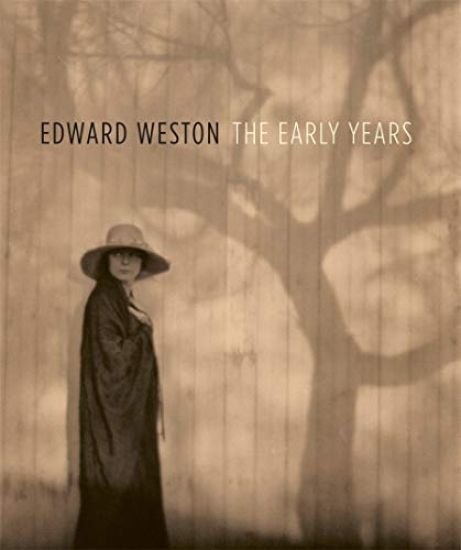
Edward Weston: The Early Years

Edward Weston: The Early Years

Karen E. Haas; Margaret Wessling

Museum of Fine Arts,Boston
2018
sidottu
This is a book about Edward Weston before he was Edward Weston – before he was the renowned modernist photographer we know so well. His early years in the field coincided exactly with the height of the Pictorialist movement in America, and while he was never a typical practitioner, he did make photographs that borrowed themes from paintings and other media, and experimented with soft-focused imagery that sometimes look more like graphite drawings or inky dark prints than photographs. He would later disavow the gauzy, painterly experiments of his early years, claiming in his Daybooks that ‘even as I made the soft “artistic” work...I would secretly admire sharp, clean, technically perfect photographs.’ Introducing rare surviving prints from the unplumbed holdings of the Lane Collection at the Museum of Fine Arts, Boston, this book offers new insights into Weston’s working methods and his evolution as a photographer. By taking a longer and more nuanced view of his early years, and by reinserting his first experiments back into the larger story of his artistic production, it reveals the variety of ways in which the paths he took as a young man led him to become the mature modernist master. Beautifully reproduced examples of Weston’s most important early work, essays explaining their place in his oeuvre, and a section dedicated to the variety of Weston’s early materials and techniques make this book a must-have resource.
Edward Schillebeeckx and Hans Frei

Edward Schillebeeckx and Hans Frei

Marguerite Abdul-Masih

Wilfrid Laurier University Press
2001
nidottu
What is ""theological method""? Can there be more than one method? If so, how do you choose between them? How does method relate to experience? Would experience affect your choice of method and method affect experience? Abdul-Masih offers a three-part proposition. The first is that theological method is influenced by theological reasoning. That is, beliefs about the doctrines of revelation and God's activity will shape one's attitude toward experience. Your convictions provide a broad definition of ""experience,"" and determine how it is to be used. Her second proposition is that one's attitude toward experience and its use will, in turn, shape subsequent theology. In other words, the relationship between theological method and subsequent theological discourse is circular - or, more accurately, a spiral. Her third proposition is that ""experience"" is itself contextual, and therefore there is no right or wrong choice but rather a plurality of methods. To expand upon and illustrate her claim, Abdul-Masih analyzes, throughout her book, the methods of Edward Schillebeeckx and Hans Frei, who represent the tension in contemporary theology surrounding the issue of experience. Edward Schillebeeckx and Hans Frei: A Conversation on Method and Christology is a book that will challenge and enlighten those who wish to expand their understanding of theological methodology.
Edward Weston's Book of Nudes

Edward Weston's Book of Nudes

. Weston

J Paul Getty Trust Publications,US
2007
sidottu
Edward Henry Weston (1886-1958) first started taking photographs at the age of sixteen with a camera given to him by his father. Over the next five decades, he would come to be regarded by his peers as one of the greatest photographers of the twentieth century.This unique volume is a collection of his photographic studies of the nude form, first put together in 1953 with co-operation of acclaimed photography critic Nancy Newhall, and is the only book on the subject that Weston himself participated in. In the 1950s, however, publishers of fine art photography were reluctant to address the subject, and the proposal was rejected.In 1985, an incomplete version of the original mock up was acquired by the J. Paul Getty Museum. It was only in 2006 that the previously unpublished volume was able to be re-created in its original form - finally realizing Weston and Newhall's true vision.
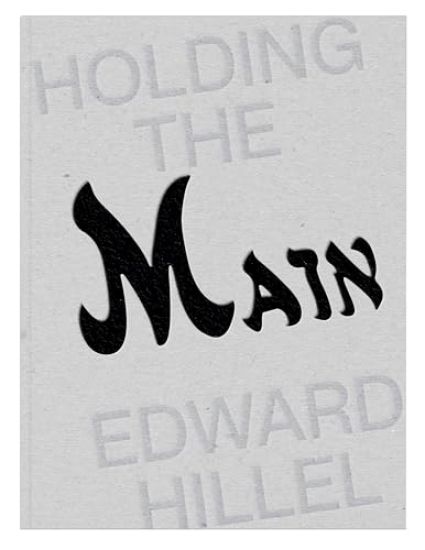
Edward Hillel (Bilingual edition)
In 1987, The Main: Portrait of a Neighborhood celebrated tolerance and the urban immigrant experience around Montreal's Boulevard Saint Laurent. This 2025 reimagining investigates belonging, identity and memory in a globalized world. In 1987 The Main: Portrait of a Neighborhood was published and quickly sold out. The critically acclaimed project celebrated the communities around Montreal’s Boulevard Saint Laurent and contributed to the eventual designation of “The Main” as a Canadian heritage landmark. In 2017 to celebrate the city’s 375th anniversary, the author was invited to re-imagine the original book. Returning to his former neighbourhood, his new book weaves old and new photographs with texts and archives, inviting us on a journey into his creative process to reflect on questions of home, identity, time, memory, and the evolving urban landscape, and asking: in a globalized world where people and cities are in constant movement, what happens to places and memories? Can we go home again?
Edward Burr Van Vleck Collection of Japanese Prints

Edward Burr Van Vleck Collection of Japanese Prints

University of Wisconsin-Madison Art

University of Wisconsin Press
1990
sidottu
The Van Vleck collection of Japanese woodblock prints is one of the Elvehjem Museum of Art s (now the Chazen Museum of Art) most important collections of more than 3700 prints collected by Van Vleck between 1910 and 1943, including the prints that Frank Lloyd Wright collected in Japan in the 1920s. This copiously illustrated catalog is the culmination of several years of intensive study and documentation, and is the first step in making this impressive collection accessible to museum visitors and scholars. Distributed for theChazen Museum of Art, University of Wisconsin Madison"
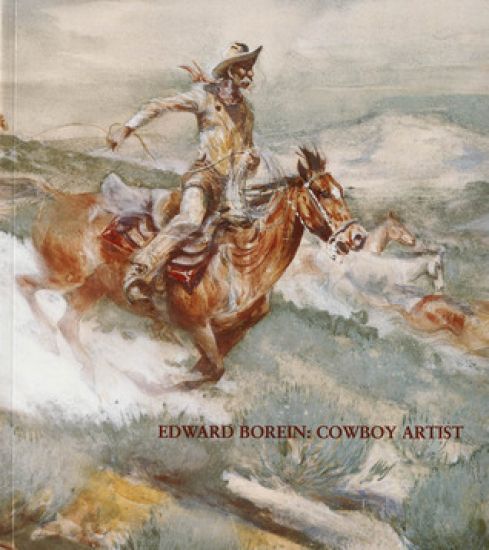
Edward Borein

Edward Borein

Harold G. Davidson

Gerald Peters Gallery,U.S.
2011
nidottu
John Edward Borein (1872-1945) was the oldest of five children, born into a politically inclined family in San Leandro, then a Western cow town on the main northern California cattle trail not far from Oakland. The constant stream of cattle and 'vaqueros' moving through his hometown had a powerful effect on the young Borein, who began to sketch these men and animals when he was but five years old. Borein's artistic bent was encouraged by his family, and after grade school he briefly enrolled at the San Francisco Art Association School, leaving to become a working cowboy himself. For several years, the artist combined the two occupations, becoming a skilled and prolific sketcher of the Old West and its life. A move to New York in 1907 helped to cement his reputation as an artist. Like his good friend Charles M. Russell, Borein stands today as one of the most artistically gifted and intellectually honest chroniclers of the American West and a way of life that has now passed almost completely away. A master at portraying cowboys, Indians and Western life and work, his early work documented the transition from Spanish to American influence in California. He continued to paint Western scenes until the end of his life. The fine sketches, etchings, drawings and watercolors of this self-taught artist come to life in this book.