Kirjojen hintavertailu. Mukana 12 016 292 kirjaa ja 12 kauppaa.

Kirjahaku

Etsi kirjoja tekijän nimen, kirjan nimen tai ISBN:n perusteella.

1000 tulosta hakusanalla Elizabeth A. Cook

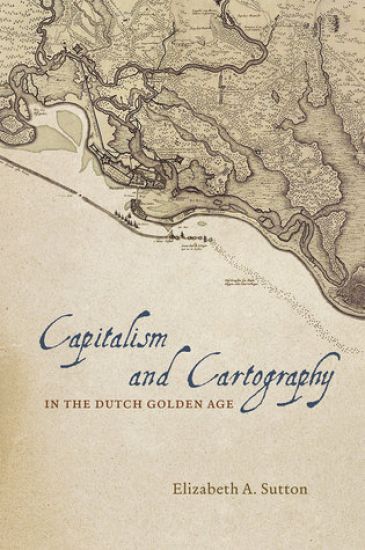
Capitalism and Cartography in the Dutch Golden Age

Capitalism and Cartography in the Dutch Golden Age

Elizabeth A. Sutton

University of Chicago Press
2015
sidottu
In Capitalism and Cartography in the Dutch Golden Age, Elizabeth A. Sutton explores the fascinating but previously neglected history of corporate cartography during the Dutch Golden Age, from ca. 1600 to 1650. She examines how maps were used as propaganda tools for the Dutch West India Company in order to encourage the commodification of land and an overall capitalist agenda. Building her exploration around the central figure of Claes Jansz Vischer, an Amsterdam-based publisher closely tied to the Dutch West India Company, Sutton shows how printed maps of Dutch Atlantic territories helped rationalize the Dutch Republic's global expansion. Maps of land reclamation projects in the Netherlands, as well as the Dutch territories of New Netherland (now New York) and New Holland (Dutch Brazil), reveal how print media were used both to increase investment and to project a common narrative of national unity. Maps of this era showed those boundaries, commodities, and topographical details that publishers-state-sponsored corporate bodies-and the Dutch West India Company merchants and governing Dutch elite deemed significant to their agenda. In the process, Sutton argues, they perpetuated and promoted modern state capitalism.
Labor's Lot

Labor's Lot

Elizabeth A. Povinelli

University of Chicago Press
1994
sidottu
How does an Aboriginal community see itself, its work and its place on the land? Elizabeth Povinelli went to the Belyuen community of northern Australia to show how it draws identity from deep connections between labour, language and the landscape. Her findings challenge Western notions of "productive labour" and long-standing ideas about the role of culture in subsistence economies. In "Labor's Lot", Povinelli shows how everyday activities shape Aboriginal identity and provide cultural meaning. She focuses on the Belyuen women's interactions with the countryside and on Belyuen conflicts with the Australian government over control of local land. Her analysis raises serious questions about the validity of Western theories about labour and culture and their impact on Aboriginal society. Povinelli's focus on women's activities provides an important counterpoint to recent works centering on male roles in hunter-gatherer societies. Her "cultural economy" approach overcomes the dichotomy between the two standard approaches to these studies. "Labor's Lot" should engage anyone interested in indigenous peoples or in the relationship between culture and economy in contemporary social practice.
Labor's Lot

Labor's Lot

Elizabeth A. Povinelli

University of Chicago Press
1994
nidottu
How does an Aboriginal community see itself, its work and its place on the land? Elizabeth Povinelli went to the Belyuen community of northern Australia to show how it draws identity from deep connections between labour, language and the landscape. Her findings challenge Western notions of "productive labour" and long-standing ideas about the role of culture in subsistence economies. In "Labor's Lot", Povinelli shows how everyday activities shape Aboriginal identity and provide cultural meaning. She focuses on the Belyuen women's interactions with the countryside and on Belyuen conflicts with the Australian government over control of local land. Her analysis raises serious questions about the validity of Western theories about labour and culture and their impact on Aboriginal society. Povinelli's focus on women's activities provides an important counterpoint to recent works centering on male roles in hunter-gatherer societies. Her "cultural economy" approach overcomes the dichotomy between the two standard approaches to these studies. "Labor's Lot" should engage anyone interested in indigenous peoples or in the relationship between culture and economy in contemporary social practice.
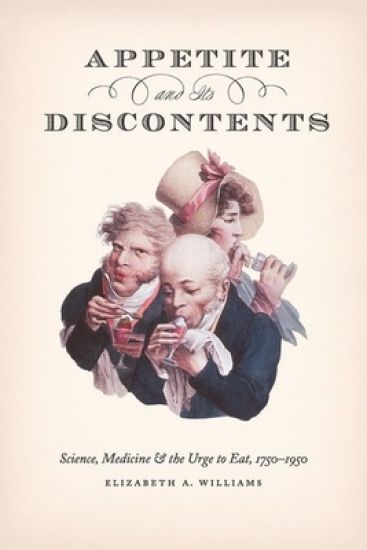
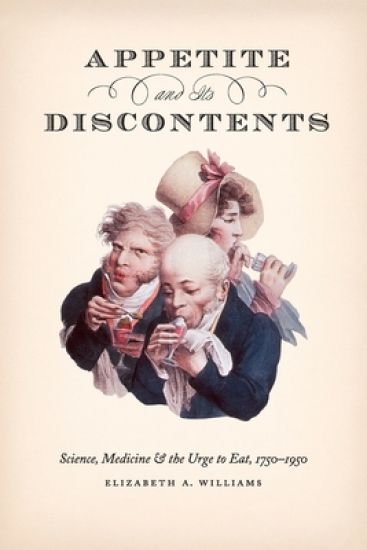
Appetite and Its Discontents

Appetite and Its Discontents

Elizabeth A Williams

University of Chicago Press
2020
sidottu
Why do we eat? Is it instinct, or some other impetus? Despite the necessity of food, anxieties about what and how to eat are widespread in our culture, and scientists and physicians continue to have shifting theories about the phenomenon of appetite and its causes and norms. In Appetite and Its Discontents, Elizabeth A. Williams charts the history of inquiry into appetite between 1750 and 1950, as scientific and medical concepts of appetite shifted alongside developments in physiology, natural history, psychology, and ethology. Williams argues that trust in appetite was undermined in the mid-eighteenth century, when researchers who investigated ingestion and digestion began claiming that science alone could say which ways of eating were healthy and which were not. Tracing nineteenth- and twentieth-century conflicts over the nature of appetite, Williams explores contemporary worries about eating through the lens of science and medicine to show us how appetite--once a matter of personal inclination--became an object of science.
Appetite and Its Discontents

Appetite and Its Discontents

Elizabeth A Williams

University of Chicago Press
2020
pokkari
Why do we eat? Is it instinct, or some other impetus? Despite the necessity of food, anxieties about what and how to eat are widespread in our culture, and scientists and physicians continue to have shifting theories about the phenomenon of appetite and its causes and norms. In Appetite and Its Discontents, Elizabeth A. Williams charts the history of inquiry into appetite between 1750 and 1950, as scientific and medical concepts of appetite shifted alongside developments in physiology, natural history, psychology, and ethology. Williams argues that trust in appetite was undermined in the mid-eighteenth century, when researchers who investigated ingestion and digestion began claiming that science alone could say which ways of eating were healthy and which were not. Tracing nineteenth- and twentieth-century conflicts over the nature of appetite, Williams explores contemporary worries about eating through the lens of science and medicine to show us how appetite--once a matter of personal inclination--became an object of science.
The Holy Spirit and Worship

The Holy Spirit and Worship

Elizabeth A. Welch

JAMES CLARKE CO LTD
2022
nidottu
The Holy Spirit has become an object of greater attention in Trinitarian theology, and indeed in the broader life of the Church, since the rise of Pentecostalism at the beginning of the twentieth century. Different understandings of the Holy Spirit have had different impacts on worship; here, Elizabeth Welch examines four surprising overlaps in the thought of two radically different traditions of the church about the relationship between the Holy Spirit and worship. These traditions are represented by John Owen, from seventeenth-century England, and John Zizioulas, from contemporary Greece. Welch explores in turn the common themes of the personal and relational nature of the triune God, the immediacy of the encounter with God through the Holy Spirit in worship, the role of the Holy Spirit in leading people into truth, and the transformative nature of worship that draws people into sharing God's purpose for the world. In each, the insights of Owen and Zizioulas shed new light on the ongoing debate in the Church today.
National Animals

National Animals

Elizabeth A Jackson

Tellwell Talent
2023
pokkari
Spark your child's interests before a visit to the zoo Together, you can learn fun facts about animals and the country they represent. This volume will explore Australia, India and the United States of America. Children 7 years old and under will learn how far a kangaroo can jump, how fast a tiger can run, and how high an eagle can fly, along with colourful illustrations. More volumes to follow.
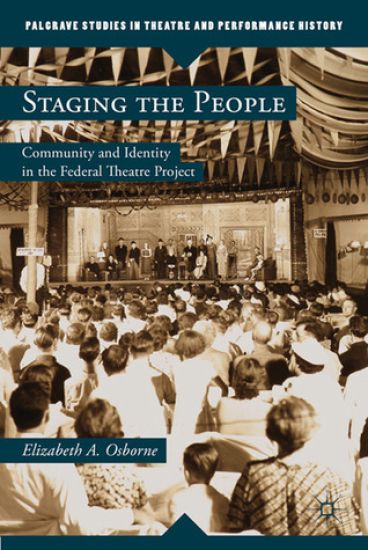
Staging the People

Staging the People

Elizabeth A. Osborne

Palgrave Macmillan
2011
sidottu
The Federal Theatre Project, a New Deal plan to fund theatre and other live artistic performances during the Great Depression, had the primary goal of employing out-of-work artists, writers, and directors, with the secondary aim of entertaining poor families and creating relevant art. These case studies explore the ties between the Federal Theatre Project and regional communities throughout the United States.
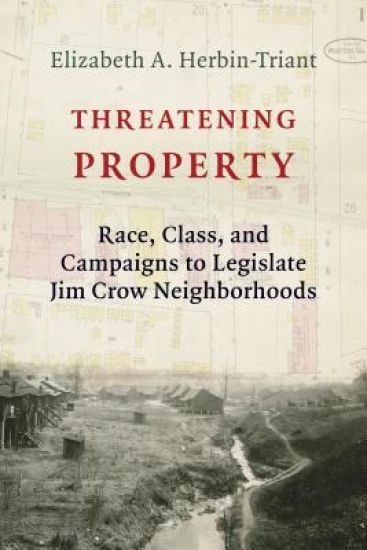
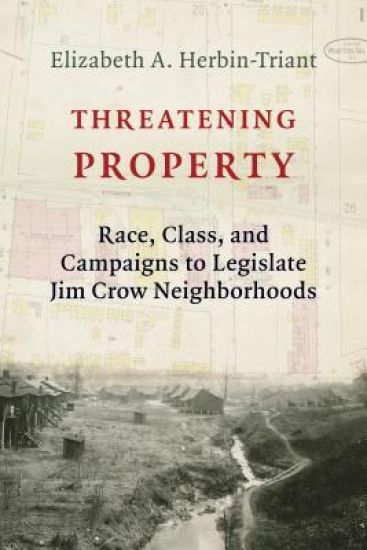
Threatening Property

Threatening Property

Elizabeth A. Herbin-Triant

Columbia University Press
2019
sidottu
White supremacists determined what African Americans could do and where they could go in the Jim Crow South, but they were less successful in deciding where black people could live because different groups of white supremacists did not agree on the question of residential segregation. In Threatening Property, Elizabeth A. Herbin-Triant investigates early-twentieth-century campaigns for residential segregation laws in North Carolina to show how the version of white supremacy supported by middle-class white people differed from that supported by the elites. Class divides prevented Jim Crow from expanding to the extent that it would require separate neighborhoods for black and white southerners as in apartheid South Africa.Herbin-Triant details the backlash against the economic successes of African Americans among middle-class whites, who claimed that they wished to protect property values and so campaigned for residential segregation laws both in the city and the countryside, where their actions were modeled on South Africa’s Natives Land Act. White elites blocked these efforts, primarily because it was against their financial interest to remove the black workers that they employed in their homes, farms, and factories. Herbin-Triant explores what the split over residential segregation laws reveals about competing versions of white supremacy and about the position of middling whites in a region dominated by elite planters and businessmen. An illuminating work of social and political history, Threatening Property puts class front and center in explaining conflict over the expansion of segregation laws into private property.
Threatening Property

Threatening Property

Elizabeth A. Herbin-Triant

Columbia University Press
2019
pokkari
White supremacists determined what African Americans could do and where they could go in the Jim Crow South, but they were less successful in deciding where black people could live because different groups of white supremacists did not agree on the question of residential segregation. In Threatening Property, Elizabeth A. Herbin-Triant investigates early-twentieth-century campaigns for residential segregation laws in North Carolina to show how the version of white supremacy supported by middle-class white people differed from that supported by the elites. Class divides prevented Jim Crow from expanding to the extent that it would require separate neighborhoods for black and white southerners as in apartheid South Africa.Herbin-Triant details the backlash against the economic successes of African Americans among middle-class whites, who claimed that they wished to protect property values and so campaigned for residential segregation laws both in the city and the countryside, where their actions were modeled on South Africa’s Natives Land Act. White elites blocked these efforts, primarily because it was against their financial interest to remove the black workers that they employed in their homes, farms, and factories. Herbin-Triant explores what the split over residential segregation laws reveals about competing versions of white supremacy and about the position of middling whites in a region dominated by elite planters and businessmen. An illuminating work of social and political history, Threatening Property puts class front and center in explaining conflict over the expansion of segregation laws into private property.
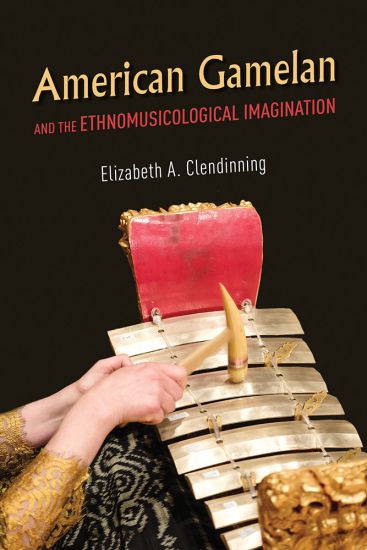
American Gamelan and the Ethnomusicological Imagination

American Gamelan and the Ethnomusicological Imagination

Elizabeth A. Clendinning

University of Illinois Press
2020
sidottu
Gamelan and American academic institutions have maintained their close association for more than sixty years. Elizabeth A. Clendinning illuminates what it means to devote one's life to world music ensemble education by examining the career and community surrounding the Balinese-American performer and teacher I Made Lasmawan. Weaving together stories of Indonesian and American practitioners, colleagues, and friends, Clendinning shows the impact of academic world music ensembles on the local and transnational communities devoted to education and the performing arts. While arguing for the importance of such ensembles, Clendinning also spotlights how performers and educators use them to create stable and rewarding artistic communities. Cross-cultural ensemble education emerges as a worthy goal for students and teachers alike, particularly at a time when people around the world express more enthusiasm about raising walls to keep others out rather than building bridges to invite them in.
Selling Free Enterprise

Selling Free Enterprise

Elizabeth A. Fones-Wolf

University of Illinois Press
1995
nidottu
The post-World War II years in the United States were marked by the business community's efforts to discredit New Deal liberalism and undermine the power and legitimacy of organized labor. In Selling Free Enterprise, Elizabeth Fones-Wolf describes how conservative business leaders strove to reorient workers away from their loyalties to organized labor and government, teaching that prosperity could be achieved through reliance on individual initiative, increased productivity, and the protection of personal liberty. Based on research in a wide variety of business and labor sources, this detailed account shows how business permeated every aspect of American life, including factories, schools, churches, and community institutions.
Waves of Opposition

Waves of Opposition

Elizabeth A. Fones-Wolf

University of Illinois Press
2006
nidottu
Radio sparked the massive upsurge of organized labor during the Great Depression. The powerful new medium became an important weapon in the ideological war between labor and business. Corporations used radio to sing the praises of individualism and consumerism, while unions emphasized equal rights, industrial democracy, and social justice. Elizabeth Fones-Wolf analyzes the battle to utilize, and control, the airwaves in radio's early era. Working chronologically, she explores the advent of local labor radio stations such as WCFL and WEVD, labor's campaigns against corporate censorship, and union experiments with early FM broadcasting. Using union archives and broadcast industry records, Fones-Wolf demonstrates radio's key role in organized labor's efforts to fight business's domination of political discourse throughout the 1930s, 1940s, and 1950s. She concludes with a look at how labor's virtual disappearance from today's media helps explain why unions have become so marginalized, and offers important historical lessons for revitalizing organized labor.
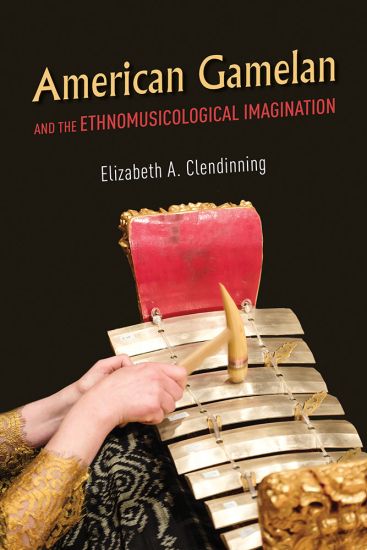
American Gamelan and the Ethnomusicological Imagination

American Gamelan and the Ethnomusicological Imagination

Elizabeth A. Clendinning

University of Illinois Press
2020
nidottu
Gamelan and American academic institutions have maintained their close association for more than sixty years. Elizabeth A. Clendinning illuminates what it means to devote one's life to world music ensemble education by examining the career and community surrounding the Balinese-American performer and teacher I Made Lasmawan. Weaving together stories of Indonesian and American practitioners, colleagues, and friends, Clendinning shows the impact of academic world music ensembles on the local and transnational communities devoted to education and the performing arts. While arguing for the importance of such ensembles, Clendinning also spotlights how performers and educators use them to create stable and rewarding artistic communities. Cross-cultural ensemble education emerges as a worthy goal for students and teachers alike, particularly at a time when people around the world express more enthusiasm about raising walls to keep others out rather than building bridges to invite them in.
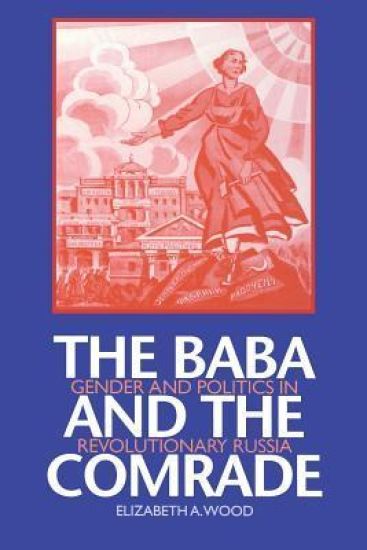
The Baba and the Comrade

The Baba and the Comrade

Elizabeth A. Wood

Indiana University Press
2000
pokkari
"Meticulously researched, impressively documented, and engrossingly written, . . . [it] contributes to a long-overdue reconception of the New Economic Policy (NEP). . . ." —Choice " . . . a well-organized, sophisticated analysis of the difficulties involved in attempting to reconcile ideology with political, economic, and cultural realities.: —The Russian Review " . . . a highly persuasive, revealing, and well-documented account of early Bolshevik policy, practice, and language pertaining to the 'baba problem' and the unexpected ways female and male comrades responded to the party-state's tutelary role toward women." —Slavic Review "This is a rich and densely argued study that embeds the story of the zhenotdel in the context of the political struggles and institutional structures of this formative period of the Russian Revolution. Wood demonstrates clearly the dilemma of whether women party activists should serve the party or their constituents." —American Historical Review "Wood's convincing work is a welcome addition to the growing literature on the gender-role traditionalism the Communists reinstitutionalized with their revolution." —The Women's Review of Books How could the baba—traditionally, the "backward" Russian woman—be mobilized as a "comrade" in the construction of a new state and society? Drawing on recently opened archives, Elizabeth A. Wood explains why the Bolsheviks proved unable and ultimately unwilling to realize their ideological notions of a gender-neutral society. Focusing on the creation and activities of the zhenotdel, a special women's section within the Russian Communist Party, Wood reconstructs the ways in which notions of gender sameness and difference both facilitated and complicated Bolshevik efforts at state building during the Civil War and the New Economic Policy.
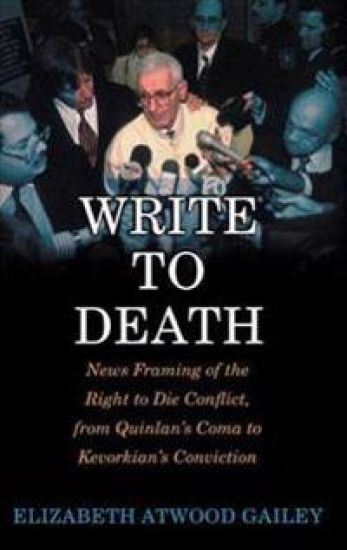
Write to Death

Write to Death

Elizabeth A. Gailey

Praeger Publishers Inc
2003
sidottu
Has the mainstream media been careless in reporting on the issue of euthanasia? As the Right to Die and Physician Assisted Suicide movements gather steam, the national media have been too quick to perpetuate and focus on the medical and legal overtones of death. The ethical, religious, and philosophical dimensions of our increased acceptance of euthanizing the aged, infirm, and disabled are often neglected. Gailey argues that the press's failure to enrich public discourse may well erode its trustworthiness in the public's eye.Using abundant examples from analysis of elite, mainstream news publications, Gailey details how the national press systematically advanced pro-euthanasia views and interpretations, while marginalizing or omitting pro-life perspectives and frames. The battle over legalizing passive and active euthanasia has enormous social, economic, and ethical implications. An understanding of how the news media frame or package such issues for public consumption is critical. Gailey's integrative approach combines an exploration of the major historical, ideational, and economic factors leading to the rise of the Right to Die movement, and includes in-depth analysis of the media's framing of the controversy in the two decades Karen Ann Quinlan's coma in 1975 to Dr. Jack Kevorkian's 1999 conviction.
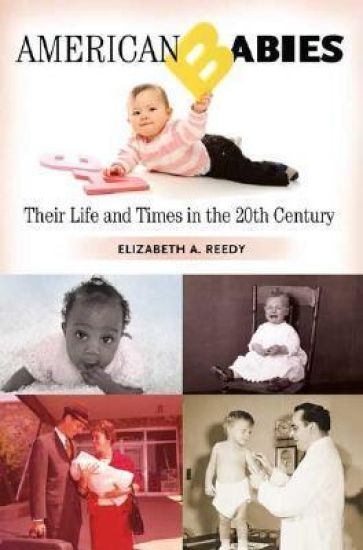
American Babies

American Babies

Elizabeth A. Reedy

Praeger Publishers Inc
2007
sidottu
The focus of this book is the journey babies have made over the past century. The rise of the middle class in America dictated major changes in the ways babies were fed, cared for, and raised. Social programs focused on improving water and sanitation programs for all, which led directly to decreased infection among infants and improved morbidity and mortality rates. Other programs also focused attention on babies. Advances in medicine allowed infants to be immunized against once-deadly and disabling diseases and to survive congenital defects, premature birth, and infectious disease. Physicians helped infertile couples conceive and carry a baby to term. Prenatal care helped mothers give birth to a healthy baby. Early intervention services gave infants an advantage as they faced growing up in the modern era. Today, most American babies are better off than they were in 1901. Overall they are bigger, healthier, and much more likely to survive the first year. But challenges remain. By reviewing the events of the past century, Reedy hopes we can make even more of a difference in the lives of American babies in the century to come.In 1900, most babies were born at home. Infant mortality was high and most families could expect to lose one or more of their babies within the first year of life. A family was expected to have babies, and they were certainly wanted in most situations, however, they did not generally receive the attention they do today. In the early years of the 21st century, the birth of a baby is a time of joy for most parents and extended families. Birth occurs most often in a hospital delivery room with the father and sometimes other family members present. While the infant mortality rate in the United States still lags behind many other developed countries, it has significantly improved over the past century, and infant death is not a family expectation.The main focus of this book is the journey babies have made over the past century. The rise of the middle class in America dictated major changes in the ways babies were fed, cared for, and raised. No longer a financial necessity as in an agrarian society, babies became a symbol of middle class prosperity and parents basked in the reflected glow. Social programs, authorized and regulated by federal and state government, became a reality. Progressive Era reformers focused on improving water and sanitation programs for all, which led directly to decreased infection among infants and improved the dismal morbidity and mortality rates prevalent among all social classes. Other programs, such as the Shepard-Towner Act, the Social Security Act, and Lyndon Johnson's Great Society initiatives also focused attention on babies. Advances in medicine allowed infants to be immunized against once-deadly and disabling diseases and to survive congenital defects, premature birth, and infectious disease. Physicians discovered the means to help infertile couples conceive and carry a baby to term. Prenatal care helped mothers prepare for the birth of a healthy baby. Early intervention services by educators, social workers, and others gave infants an advantage as they faced growing up in the modern era.At the beginning of the 21st century, most American babies are better off than they were in 1901. Overall they are bigger, healthier, and much more likely to survive the first year. But challenges remain. By reviewing the events of the past century, Reedy hopes we can make even more of a difference in the lives of American babies in the century to come.
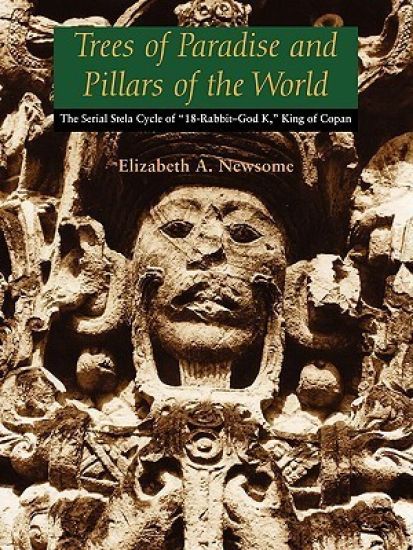
Trees of Paradise and Pillars of the World

Trees of Paradise and Pillars of the World

Elizabeth A. Newsome

University of Texas Press
2009
pokkari
Assemblies of rectangular stone pillars, or stelae, fill the plazas and courts of ancient Maya cities throughout the lowlands of southern Mexico, Guatemala, Belize, and western Honduras. Mute testimony to state rituals that linked the king's power to rule with the rhythms and renewal of time, the stelae document the ritual acts of rulers who sacrificed, danced, and experienced visionary ecstasy in connection with celebrations marking the end of major calendrical cycles. The kings' portraits are carved in relief on the main surfaces of the stones, deifying them as incarnations of the mythical trees of life.Based on a thorough analysis of the imagery and inscriptions of seven stelae erected in the Great Plaza at Copan, Honduras, by the Classic Period ruler "18-Rabbit-God K," this ambitious study argues that stelae were erected not only to support a ruler's temporal claims to power but more importantly to express the fundamental connection in Maya worldview between rulership and the cosmology inherent in their vision of cyclical time. After an overview of the archaeology and history of Copan and the reign and monuments of "18-Rabbit-God K," Elizabeth Newsome interprets the iconography and inscriptions on the stelae, illustrating the way they fulfilled a coordinated vision of the king's ceremonial role in Copan's period-ending rites. She also links their imagery to key Maya concepts about the origin of the universe, expressed in the cosmologies and mythic lore of ancient and living Maya peoples.
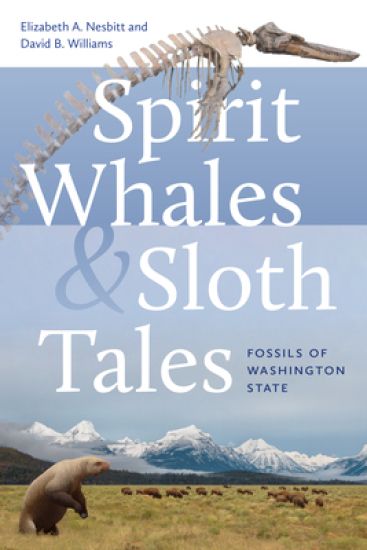
Spirit Whales and Sloth Tales

Spirit Whales and Sloth Tales

Elizabeth A. Nesbitt; David B. Williams

UNIVERSITY OF WASHINGTON PRESS
2023
pokkari
A guide to discovering the fascinating natural history beneath your feetFrom trilobites near the Idaho border and primitive horses on the Columbia Plateau to giant bird tracks near Bellingham and curious bear-like beasts on the Olympic Peninsula, fossils across Washington State are filled with clues of past life on Earth. With abundant and well-exposed rock layers, the state has fossils dating from Ice Age mammals only 12,000 years old back to marine invertebrates more than 500 million years old. In Spirit Whales and Sloth Tales, renowned paleontologist Elizabeth A. Nesbitt teams up with popular science writer David B. Williams to offer a fascinating, richly illustrated tour through more than a half billion years of natural history. Following an introduction to key concepts, twenty-four profiles—each featuring a unique plant, animal, or environment—tell the incredible stories of individual fossils, many of which are on display in Washington museums. The spectacular paleontology of Washington is brought to life with details of the fossils' discovery and extraction, their place in geological time, and the insights they provide into contemporary issues like climate change and species extinction.
Julie Speidel

Julie Speidel

Elizabeth A. Brown; Clare Henry

University of Washington Press
2007
sidottu
Julie Spiedel's bronze and stone sculptures loom large over their human viewers, their tall stature reflecting her love of ancient monuments and totems, their heavy mass often pierced and punctured by defiant holes, their geometric sections, sliced coils, facets and hard edges softened by texture and exquisite patination. With influences as varied as the megaliths of the British Isles and the totemic Native American art of her home and birthplace, the Pacific Northwest, Spiedel's work builds on organic forms, reinterpreting them with a clear, contemporary vision. Her sculptures are a tribute to the power of ancient monuments and their power to link the world of the senses to the world of the spirits.Julie Spiedel was born in Seattle in 1941 and raised in the Pacific Northwest and Europe. She works from her studio on one of the original strawberry farms on Vashon Island, Washington.