Kirjojen hintavertailu. Mukana 11 717 486 kirjaa ja 12 kauppaa.

Kirjahaku

Etsi kirjoja tekijän nimen, kirjan nimen tai ISBN:n perusteella.

1000 tulosta hakusanalla Elizabeth Subrin

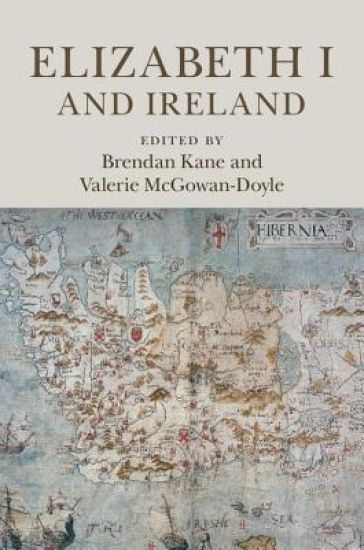
Elizabeth I and Ireland

Elizabeth I and Ireland

Cambridge University Press
2014
sidottu
The last generation has seen a veritable revolution in scholarly work on Elizabeth I, on Ireland, and on the colonial aspects of the literary productions that typically served to link the two. It is now commonly accepted that Elizabeth was a much more active and activist figure than an older scholarship allowed. Gaelic elites are acknowledged to have had close interactions with the crown and continental powers; Ireland itself has been shown to have occupied a greater place in Tudor political calculations than previously thought. Literary masterpieces of the age are recognised for their imperial and colonial entanglements. Elizabeth I and Ireland is the first collection fully to connect these recent scholarly advances. Bringing together Irish and English historians, and literary scholars of both vernacular languages, this is the first sustained consideration of the roles played by Elizabeth and by the Irish in shaping relations between the realms.
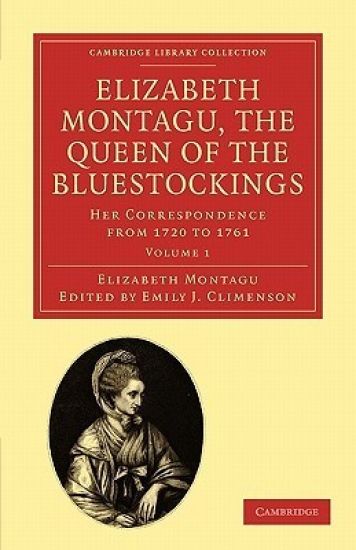
Elizabeth Montagu, the Queen of the Bluestockings

Elizabeth Montagu, the Queen of the Bluestockings

Elizabeth Montagu

Cambridge University Press
2011
pokkari
Bluestocking, author and hostess, Elizabeth Montagu (1718–1800) exercised an influence far beyond literary scholarship. Compiled by a relative, Emily Climenson, and published in 1906, this collection of her correspondence provides an excellent introduction to the culture and politics of eighteenth-century polite society. In chapters enriched by portraits of both Elizabeth and her correspondents, readers are invited to witness the public and personal interactions and entertainments of Montagu and her circle. The text contains accounts of operas, masquerades, concerts and marriages, and serious philosophical conjectures are mingled with witty and sometimes acerbic notes on 'gowns and fans', 'the northern gentry', 'spa towns' and the gallant actions of 'a brave gamekeeper'. Interwoven with portions of letters received from intimate friends, in particular the Duke and Duchess of Portland, Volume 1 takes the reader from Montagu's birth through to 1751.
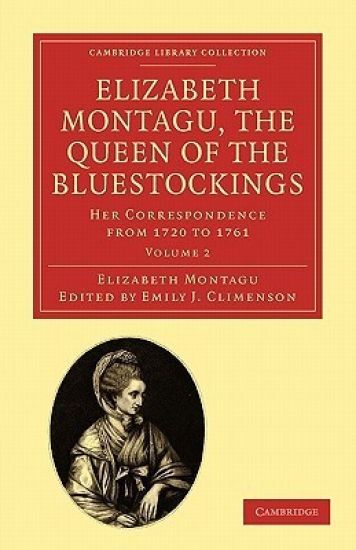
Elizabeth Montagu, the Queen of the Bluestockings

Elizabeth Montagu, the Queen of the Bluestockings

Elizabeth Montagu

Cambridge University Press
2011
pokkari
Bluestocking, author and hostess, Elizabeth Montagu (1718–1800) exercised an influence far beyond literary scholarship. Compiled by a relative, Emily Climenson, and published in 1906, this collection of her correspondence provides an excellent introduction to the culture and politics of eighteenth-century polite society. In chapters enriched by portraits of both Elizabeth and her correspondents, readers are invited to witness the public and personal interactions and entertainments of Montagu and her circle. The text contains accounts of operas, masquerades, concerts and marriages, and serious philosophical conjectures are mingled with witty and sometimes acerbic notes on 'gowns and fans', 'the northern gentry' and women suffering from the vapours. Volume 2 covers arguably the most prolific period in Montagu's life, from 1751 to 1761, and reveals her personal views on such diverse subjects as the price of food, David Garrick's playhouse on Drury Lane and the work of Laurence Sterne.
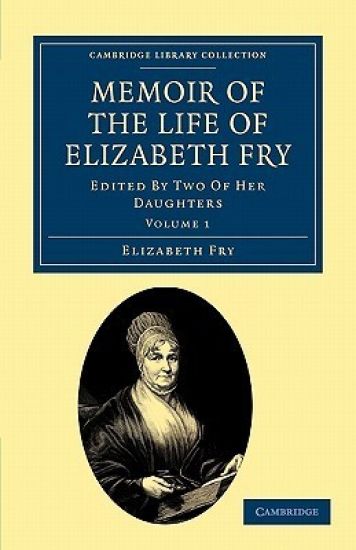
Memoir of the Life of Elizabeth Fry

Memoir of the Life of Elizabeth Fry

Elizabeth Fry

Cambridge University Press
2011
pokkari
Elizabeth Fry (née Gurney, 1780–1845) was descended from two wealthy Quaker banking families. Her Quaker faith was crucial to her adult life and she became active in social reform. Despite having eleven children, she was active in community work, and became a Quaker minister. Persuaded to visit the women's wing in Newgate Prison in 1813, she was appalled at the conditions in which the prisoners, and their children, lived. She became a pioneer in seeking to improve the situation for women in prisons and on transportation ships. The British Ladies' Society for Promoting the Reformation of Female Prisoners was probably the first national British women's society. Fry's ideas on the humane treatment of prisoners influenced international legal systems. This memoir, based on her letters and diaries, was edited by two of her daughters, and was first published in 1847. Volume 1 ends in 1825.
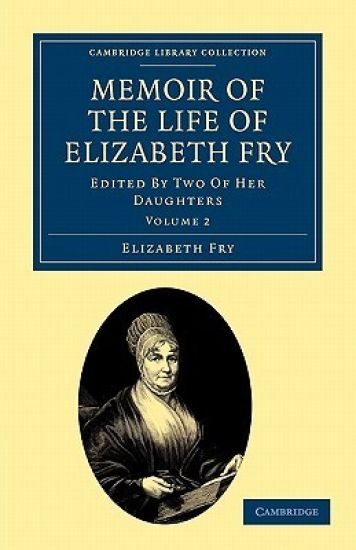
Memoir of the Life of Elizabeth Fry

Memoir of the Life of Elizabeth Fry

Elizabeth Fry

Cambridge University Press
2011
pokkari
Elizabeth Fry (née Gurney, 1780–1845) was descended from two wealthy Quaker banking families. Her Quaker faith was crucial to her adult life and she became active in social reform. Despite having eleven children, she was active in community work, and became a Quaker minister. Persuaded to visit the women's wing in Newgate Prison in 1813, she was appalled at the conditions in which the prisoners, and their children, lived. She became a pioneer in seeking to improve the situation for women in prisons and on transportation ships. The British Ladies' Society for Promoting the Reformation of Female Prisoners was probably the first national British women's society. Fry's ideas on the humane treatment of prisoners influenced international legal systems. This memoir, based on her letters and diaries, was edited by two of her daughters, and was first published in 1847. Volume 2 covers the period from 1826 to 1845.
Memoirs of the Life of Mrs Elizabeth Carter

Memoirs of the Life of Mrs Elizabeth Carter

Elizabeth Carter

Cambridge University Press
2011
pokkari
Montagu Pennington (1762–1849) published this account of the life and work of the English poet and classicist Elizabeth Carter (1717–1806) in 1807. Carter first made her name in 1758 through her English translation of the work of the Greek Stoic philosopher Epictetus, for which she was acclaimed by Samuel Johnson as the 'best Greek scholar in England'. Carter also published numerous essays, articles, and translations and was an influential member of the Blue Stockings Society; later in life, she became an evangelical Christian. This volume vividly recounts her education, life, and scholarly work. Being based on her own personal papers and letters, and containing a number of Carter's poems, notes and articles, the work is an invaluable source for the life of a remarkable eighteenth-century woman. For more information on this author, see http://orlando.cambridge.org/public/svPeople?person_id=cartel
Memoirs of the Late Mrs Elizabeth Hamilton: Volume 1

Memoirs of the Late Mrs Elizabeth Hamilton: Volume 1

Elizabeth Benger

Cambridge University Press
2014
pokkari
The novelist and essayist Elizabeth Hamilton (1756?–1816) wrote with especial distinction on the subject of education. Inspired by her older brother, the orientalist Charles Hamilton, she pursued her literary ambitions, informing her work with a knowledge of history, philosophy and politics. Her ability to present complex ideas in an accessible manner did much to secure her an appreciative readership. Establishing her reputation with a satirical attack on radical thought, Memoirs of Modern Philosophers (1800), she enjoyed her greatest literary success with The Cottagers of Glenburnie (1808), a tale of moral reformation. Her Letters on the Elementary Principles of Education (1801) is also reissued in this series. The present work was first published in two volumes in 1818 by her friend and fellow novelist Elizabeth Benger (1775–1827). Volume 1 includes a biographical fragment by Hamilton, along with a selection of journal extracts and satirical essays.
Memoirs of the Late Mrs Elizabeth Hamilton: Volume 2

Memoirs of the Late Mrs Elizabeth Hamilton: Volume 2

Elizabeth Benger

Cambridge University Press
2014
pokkari
The novelist and essayist Elizabeth Hamilton (1756?–1816) wrote with especial distinction on the subject of education. Inspired by her older brother, the orientalist Charles Hamilton, she pursued her literary ambitions, informing her work with a knowledge of history, philosophy and politics. Her ability to present complex ideas in an accessible manner did much to secure her an appreciative readership. Establishing her reputation with a satirical attack on radical thought, Memoirs of Modern Philosophers (1800), she enjoyed her greatest literary success with The Cottagers of Glenburnie (1808), a tale of moral reformation. Her Letters on the Elementary Principles of Education (1801) is also reissued in this series. The present work was first published in two volumes in 1818 by her friend and fellow novelist Elizabeth Benger (1775–1827). Volume 2 contains selected letters and Hamilton's previously unpublished critique of the Book of Revelation.
Elizabeth Garrett Anderson

Elizabeth Garrett Anderson

Louisa Garrett Anderson

Cambridge University Press
2016
pokkari
Elizabeth Garrett Anderson (1836–1917), physician, feminist and champion of women's medical education, played a key role in advancing the position of women in British professional life. Elizabeth's determination to qualify as a doctor, despite the many obstacles put in her way by the all-male medical establishment, was characteristic of her strong sense of purpose. Eventually joining the medical register in 1865, she established the St Mary's Dispensary for Women and Children in 1866, adding ten beds five years later as it became the New Hospital for Women. Staffed only by women, the hospital later moved to a purpose-built site on Euston Road and offered clinical experience to students at the London School of Medicine for Women. Through her tireless efforts, her chosen profession was opened to women. This 1939 biography by her daughter Louisa (1873–1943), herself a distinguished physician, is presented largely through Elizabeth's own letters.
The Letters of Mrs Elizabeth Montagu

The Letters of Mrs Elizabeth Montagu

Elizabeth Montagu

Cambridge University Press
2015
pokkari
This four-volume edition of the letters of Mrs Elizabeth Montagu (1718–1800), the 'Queen of the Bluestockings', was edited by her nephew and adopted son Matthew (1762–1831) and published in 1809–13. The daughter of wealthy parents, and well educated in history and languages, at the age of twenty-one she married Edward Montagu, a grandson of the earl of Sandwich whose income derived from northern estates and coal mines, and began to establish a London salon attended by the intellectual cream of British society, including Johnson, Burke, Garrick, Hannah More and Hester Chapone. The letters (and some correspondence from her circle) are arranged chronologically. Volume 1 begins with a short biography, and covers the period from her earliest preserved letter, written in 1732, up to 1741. Her teenage letters to her sister Sarah and her older friend, the duchess of Portland, sparkle with wit and good humour.
The Letters of Mrs Elizabeth Montagu

The Letters of Mrs Elizabeth Montagu

Elizabeth Montagu

Cambridge University Press
2015
pokkari
This four-volume edition of the letters of Mrs Elizabeth Montagu (1718–1800), the 'Queen of the Bluestockings', was edited by her nephew and adopted son Matthew (1762–1831) and published in 1809–13. The daughter of wealthy parents, and well educated in history and languages, at the age of twenty-one she married Edward Montagu, a grandson of the earl of Sandwich whose income derived from northern estates and coal mines, and began to establish a London salon attended by the intellectual cream of British society, including Johnson, Burke, Garrick, Hannah More and Hester Chapone. The letters (and some correspondence from her circle) are arranged chronologically. Volume 2 covers the period from 1741 to 1744, including her marriage to the fifty-year-old Edward Montagu in August 1742, and the sudden death of her beloved only son in 1744.
The Letters of Mrs Elizabeth Montagu

The Letters of Mrs Elizabeth Montagu

Elizabeth Montagu

Cambridge University Press
2015
pokkari
This four-volume edition of the letters of Mrs Elizabeth Montagu (1718–1800), the 'Queen of the Bluestockings', was edited by her nephew and adopted son Matthew (1762–1831) and published in 1809–13. The daughter of wealthy parents, and well educated in history and languages, at the age of twenty-one she married Edward Montagu, a grandson of the earl of Sandwich whose income derived from northern estates and coal mines, and began to establish a London salon attended by the intellectual cream of British society, including Johnson, Burke, Garrick, Hannah More and Hester Chapone. The letters (and some correspondence from her circle) are arranged chronologically. Volume 3 covers the period from 1744 to 1755, and her correspondents include her sister and two of her cousins, whom she keeps supplied with gossip as well as her views on the political and intellectual life of London.