Kirjahaku
Etsi kirjoja tekijän nimen, kirjan nimen tai ISBN:n perusteella.
1000 tulosta hakusanalla Emily Butler
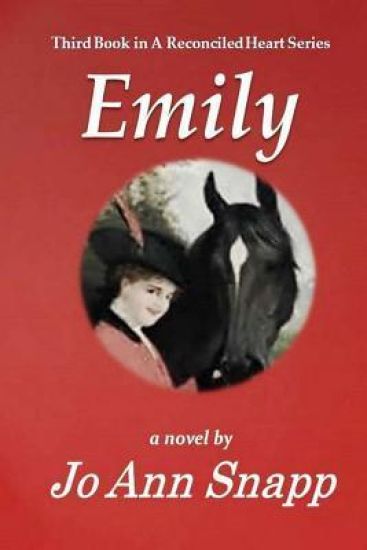
Emily: Reconciled Heart Sequel
Jo Ann Snapp
Createspace Independent Publishing Platform
2011
nidottu
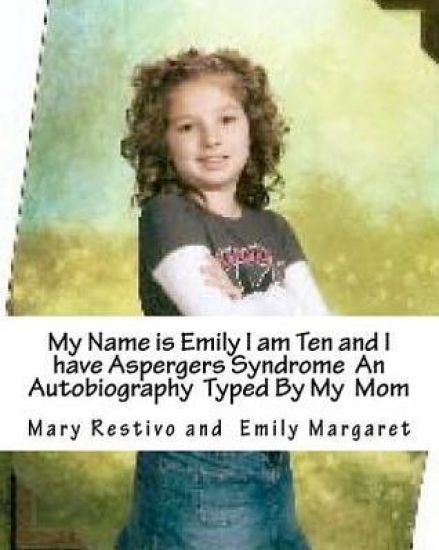
My name is Emily I am Ten and I Have Aspergers Syndrome An Autobiography Typed by My Mom
Emily M. Restivo; Mary K. Restivo
Createspace Independent Publishing Platform
2011
nidottu
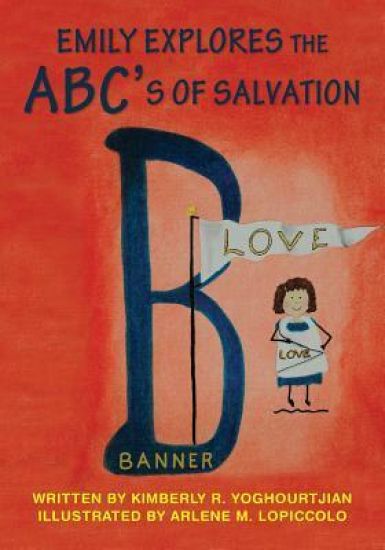
Emily Explores the ABC's of Salvation
Kimberly R. Yoghourtjian
Createspace Independent Publishing Platform
2012
nidottu
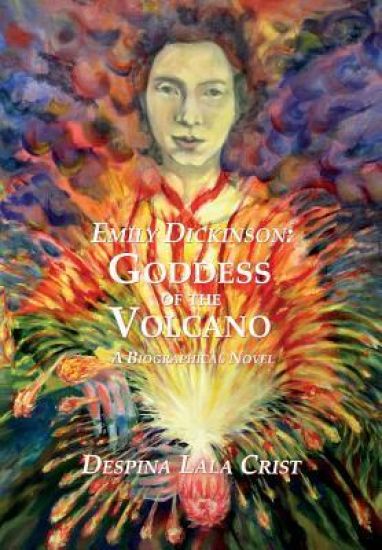
Emily Dickinson: Goddess of the Volcano: A Biographical Novel
Despina Lala-Crist
Createspace Independent Publishing Platform
2013
nidottu
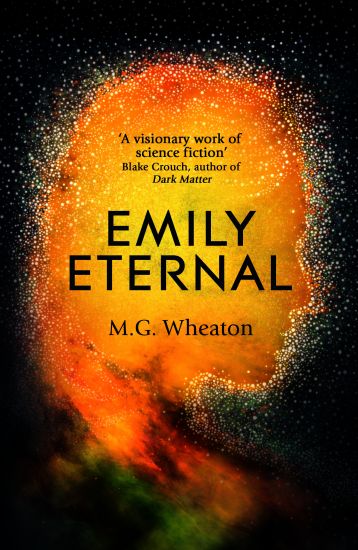
Meet Emily - she can solve advanced mathematical problems, unlock the mind's deepest secrets and even fix your truck's air con, but unfortunately, she can't restart the Sun.Emily Eternal feels like hope in the face of the end of the world'CultureFlyEmily is an artificial consciousness, designed in a lab to help humans process trauma, which is particularly helpful when the sun begins to die 5 billion years before scientists agreed it was supposed to.So, her beloved human race is screwed, and so is Emily. That is, until she finds a potential answer buried deep in the human genome. But before her solution can be tested, her lab is brutally attacked, and Emily is forced to go on the run with two human companions - college student Jason and small-town Sheriff, Mayra.As the sun's death draws near, Emily and her friends must race against time to save humanity. But before long it becomes clear that it's not only the species at stake, but also that which makes us most human.PRAISE FOR EMILY ETERNAL'A visionary work of science fiction' Blake Crouch, author of DARK MATTER'A top-class, high-tech thriller. Emily is a true heroine: warm, funny, brilliant and more human than a lot of humans. You'll be cheering for her to the end' Daily Mail'Remarkably clever and engrossing . . . It's hard not to be won over by Emily's benign narrative voice and thrilled by the race-against-time plot, even as the book explores weighty questions of self and soul' Financial Times'Sparsely drawn, but vivid and likeable . . . M.G. Wheaton writes his lead character with charming warmth' SFX'Captivating . . . a unique portrayal of the end of the world and a taste of what comes after it. If this is all we see of Emily it will be a bittersweet disappointment' British Fantasy Society
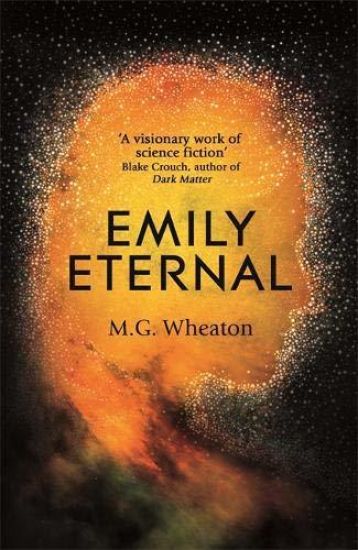
Meet Emily - she can solve advanced mathematical problems, unlock the mind's deepest secrets and even fix your truck's air con, but unfortunately, she can't restart the Sun.Emily Eternal feels like hope in the face of the end of the world'CultureFlyEmily is an artificial consciousness, designed in a lab to help humans process trauma, which is particularly helpful when the sun begins to die 5 billion years before scientists agreed it was supposed to.So, her beloved human race is screwed, and so is Emily. That is, until she finds a potential answer buried deep in the human genome. But before her solution can be tested, her lab is brutally attacked, and Emily is forced to go on the run with two human companions - college student Jason and small-town Sheriff, Mayra.As the sun's death draws near, Emily and her friends must race against time to save humanity. But before long it becomes clear that it's not only the species at stake, but also that which makes us most human.PRAISE FOR EMILY ETERNAL'A visionary work of science fiction' Blake Crouch, author of DARK MATTER'A top-class, high-tech thriller. Emily is a true heroine: warm, funny, brilliant and more human than a lot of humans. You'll be cheering for her to the end' Daily Mail'Remarkably clever and engrossing . . . It's hard not to be won over by Emily's benign narrative voice and thrilled by the race-against-time plot, even as the book explores weighty questions of self and soul' Financial Times'Sparsely drawn, but vivid and likeable . . . M.G. Wheaton writes his lead character with charming warmth' SFX'Captivating . . . a unique portrayal of the end of the world and a taste of what comes after it. If this is all we see of Emily it will be a bittersweet disappointment' British Fantasy Society
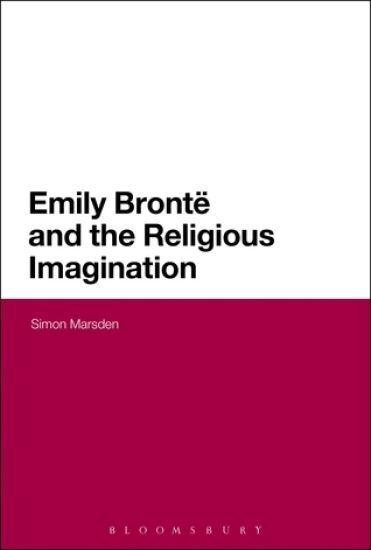
Readers of Emily Brontë's poetry and of Wuthering Heights have seen in their author, variously, a devout if somewhat unorthodox Christian, a heretic, or a visionary "mystic of the moors". Rather than seeking to resolve this matter, Emily Brontë and the Religious Imagination suggests that such conflicting readings are the product of tensions, conflicts and ambiguities within the texts themselves. Rejecting the idea that a single, coherent set of religious doctrines are to be found in Brontë's work, this book argues that Wuthering Heights and the poems dramatise individual experiences of faith in the context of a world in which such faith is always conflicted, always threatened. Brontë's work dramatises the experience of imaginative faith that is always contested by the presence of other voices, other worldviews. Her characters cling to visionary faith in the face of death and mortality, awaiting and anticipating a final vindication, an eschatological fulfilment that always lies in a future beyond the scope of the text.

American poet Emily Dickinson is revered around the world, and influenced many feminist artists and writers. Her work is some of the best known and most quoted or adapted:'Hope is the thing with feathers, that perches in the soul, and sings the tune without the words, and never stops at all' Emily DickinsonDickinson received a very good education, but chose to return home to Amherst, Massachusetts, where she spent the rest of her life, writing more than a poem a day until her death. Her refusal to compromise her highly condensed expression meant that only a tiny fraction of her work was published in her lifetime. Even today, her work feels startlingly modern:'Dogs are better than human beings because they know but do not tell' Emily Dickinson'The dearest ones of time, the strongest friends of the soul - BOOKS'This is a superb collection from a truly iconic poet.
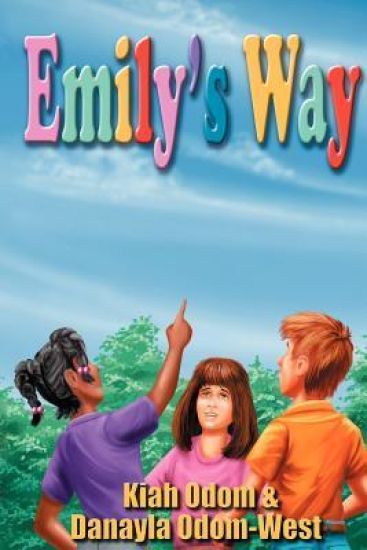
Emily's Way
Danayla K. Odom-West; Kiah D. Odom
Createspace Independent Publishing Platform
2012
nidottu
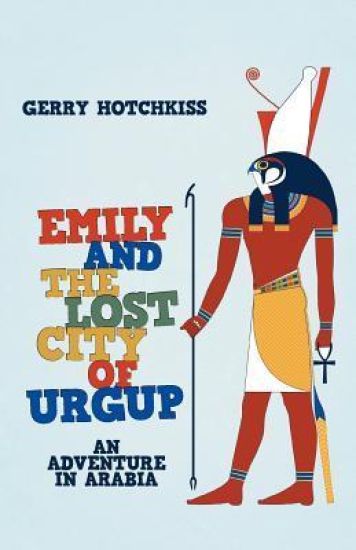

Emily Dickinson (1830-1886) wrote in 19th century American English and referenced long-vanished cultural contexts. A "private poet," she created her own vocabulary, and many of her poems have quite specific local and personal connections. Twenty-first century readers may find her poetry elusive and challenging. Promoting a richer appreciation of Dickinson's work for a modern audience, this book explores unfamiliar aspects of her language and her world.
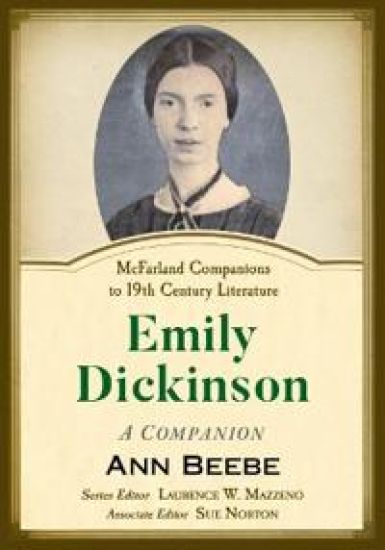
The public is familiar with the Emily Dickinson stereotype--an eccentric spinster in a white dress flitting about her father's house, hiding from visitors. But these associations are misguided and should be dismantled. This work aims to remove some of the distorted myths about Dickinson in order to clear a path to her poetry. The entries and short essays should open avenues of debate and individual critical analysis. This companion gives both instructors and readers multiple avenues for study. The entries and charts are intended to prompt ideas for classroom discussion and syllabus planning. Whether the reader is first encountering Dickinson's poems or returning to them, this book aims to inspire interpretative opportunities. The entries and charts make connections between Dickinson poems, ponder the significance of literary, artistic, historical, political or social contexts, and question the interpretations offered by others as they enter the never-ending debates between Dickinson scholars.
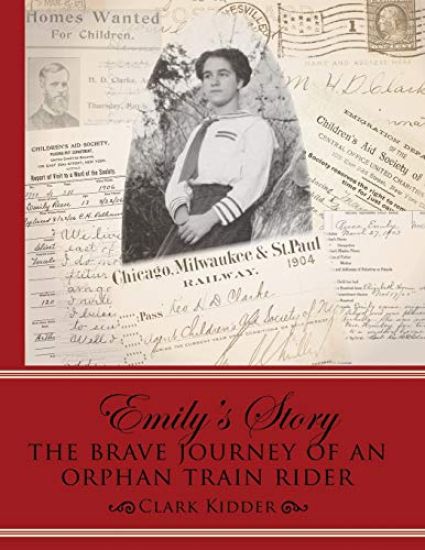
Emily's Story: The Brave Journey of an Orphan Train Rider
Clark Kidder
Createspace Independent Publishing Platform
2016
nidottu
It seems incomprehensible that there was a time in America s not-so-distant past that nearly 200,000 children could be loaded on trains in large cities on our East Coast, sent to the rural Midwest, and presented for the picking to anyone who expressed an interest in them. That's exactly what happened between the years 1854 and 1930.The primitive social experiment became known as placing out, and had its origins in a New York City organization founded by Charles Loring Brace called the Children's Aid Society. The Society gathered up orphans, half-orphans, and abandoned children from streets and orphanages, and placed them on what are now referred to as Orphan Trains. It was Brace s belief that there was always room for one more at a farmer s table. The stories of the individual children involved in this great migration of little emigrants have nearly all been lost in the attic of American history.In this book, the author tells the true story of his paternal grandmother, the late Emily (Reese) Kidder, who, at the tender age of fourteen, became one of the aforementioned children who rode an Orphan Train. In 1906, Emily was plucked from the Elizabeth Home for Girls, operated by the Children's Aid Society, and placed on a train, along with eight other children, bound for Hopkinton, Iowa. Emily s journey, as it turned out, was only just beginning. Life had many lessons in store for her lessons that would involve overcoming adversity, of perseverance, love, and great loss.Emily's story is told through the use of primary material, oral history, interviews, and historical photographs. It is a tribute to the human spirit of an extraordinary young girl who became a woman - a woman to whom the heartfelt phrase there s no place like home, had a very profound meaning.