Kirjojen hintavertailu. Mukana 11 717 486 kirjaa ja 12 kauppaa.

Kirjahaku

Etsi kirjoja tekijän nimen, kirjan nimen tai ISBN:n perusteella.

1000 tulosta hakusanalla George Malcolm Stratton

George Cheyne: The English Malady (1733) (Psychology Revivals)
‘Nerves’ became a highly eligible illness in early Georgian London and Bath. What Freud was for Vienna at the end of the nineteenth-century, George Cheyne was for eighteenth-century fashionable ailments. The English Malady was one of the best known and most influential books of the Georgian age, dealing with what we would now call psychiatric disorders. Such disorders, he contended, should be regarded as diseases of ‘civilization’ and the product of the pressures and affluence of modern life. By making ‘neurosis’ acceptable, even fashionable, Cheyne’s book assumed considerably wider significance during the Enlightenment. Prefaced by a scholarly introduction by Roy Porter, this reprint edition, originally published in 1991 as part of the Tavistock Classics in the History of Psychiatry series, places Cheyne and his work in the development of British psychiatry.

George Berkeley (Routledge Revivals)
The material reprinted in this two-volume set, first published in 1989, covers the first eighty-five years in responses to George Berkeley’s writings. David Berman identifies several key waves of eighteenth-century criticism surrounding Berkeley’s philosophies, ranging from hostile and discounted, to valued and defended. The first volume includes an account of the life of Berkeley by J. Murray and key responses from 1711 to 1748, whilst the second volume covers the years between 1745 and 1796. This fascinating reissue illustrates the breadth and diversity of the early reaction to Berkeley’s philosophies, and will help students and academics form a clear image of both Berkeley’s work and his reputation through the eyes of his contemporaries.
George Berkeley (Routledge Revivals)
The material reprinted in this two-volume set, first published in 1989, covers the first eighty-five years in responses to George Berkeley’s writings. David Berman identifies several key waves of eighteenth-century criticism surrounding Berkeley’s philosophies, ranging from hostile and discounted, to valued and defended. The first volume includes an account of the life of Berkeley by J. Murray and key responses from 1711 to 1748, whilst the second volume covers the years between 1745 and 1796. This fascinating reissue illustrates the breadth and diversity of the early reaction to Berkeley’s philosophies, and will help students and academics form a clear image of both Berkeley’s work and his reputation through the eyes of his contemporaries.
George Berkeley (Routledge Revivals)
The material reprinted in this two-volume set, first published in 1989, covers the first eighty-five years in responses to George Berkeley’s writings. David Berman identifies several key waves of eighteenth-century criticism surrounding Berkeley’s philosophies, ranging from hostile and discounted, to valued and defended. The first volume includes an account of the life of Berkeley by J. Murray and key responses from 1711 to 1748, whilst the second volume covers the years between 1745 and 1796. This fascinating reissue illustrates the breadth and diversity of the early reaction to Berkeley’s philosophies, and will help students and academics form a clear image of both Berkeley’s work and his reputation through the eyes of his contemporaries.
George Berkeley (Routledge Revivals)
The material reprinted in this two-volume set, first published in 1989, covers the first eighty-five years in responses to George Berkeley’s writings. David Berman identifies several key waves of eighteenth-century criticism surrounding Berkeley’s philosophies, ranging from hostile and discounted, to valued and defended. The first volume includes an account of the life of Berkeley by J. Murray and key responses from 1711 to 1748, whilst the second volume covers the years between 1745 and 1796. This fascinating reissue illustrates the breadth and diversity of the early reaction to Berkeley’s philosophies, and will help students and academics form a clear image of both Berkeley’s work and his reputation through the eyes of his contemporaries.
George Meredith
The Critical Heritage gathers together a large body of critical sources on major figures in literature. Each volume presents contemporary responses to a writer's work, enabling the student and researcher to read the material themselves.
George Bernard Shaw
This set comprises 40 volumes covering nineteenth and twentieth century European and American authors. These volumes will be available as a complete set, mini boxed sets (by theme) or as individual volumes. This second set compliments the first 68 volume set of Critical Heritage published by Routledge in October 1995.
George Crabbe

George Crabbe

Routledge
2013
nidottu
The Critical Heritage gathers together a large body of critical sources on major figures in literature. Each volume presents contemporary responses to a writer's work, enabling students and researchers to read for themselves, for example, comments on early performances of Shakespeare's plays, or reactions to the first publication of Jane Austen's novels. The carefully selected sources range from landmark essays in the history of criticism to journalism and contemporary opinion, and little published documentary material such as letters and diaries. Significant pieces of criticism from later periods are also included, in order to demonstrate the fluctuations in an author's reputation. Each volume contains an introduction to the writer's published works, a selected bibliography, and an index of works, authors and subjects. The Collected Critical Heritage set will be available as a set of 68 volumes and the series will also be available in mini sets selected by period (in slipcase boxes) and as individual volumes.
George Herbert
First Published in 1995. The Critical Heritage gathers together a large body of critical sources on major figures in literature. Each volume presents contemporary responses to a writer's work, enabling students and researchers to read for themselves, for example, comments on early performances of Shakespeare's plays, or reactions to the first publication of Jane Austen's novels. The carefully selected sources range from landmark essays in the history of criticism to journalism and contemporary opinion, and little published documentary material such as letters and diaries. Significant pieces of criticism from later periods are also included, in order to demonstrate the fluctuations in an author's reputation. Each volume contains an introduction to the writer's published works, a selected bibliography, and an index of works, authors and subjects. The Collected Critical Heritage set will be available as a set of 68 volumes and the series will also be available in mini sets selected by period (in slipcase boxes) and as individual volumes.
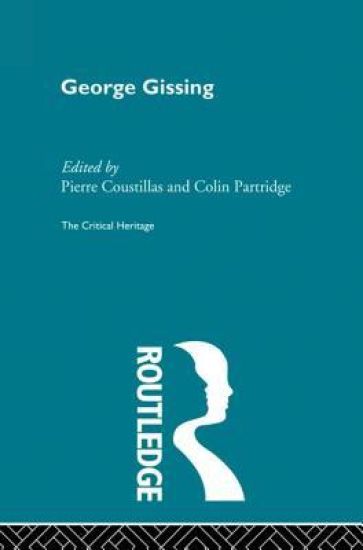
George Gissing
The Critical Heritage gathers together a large body of critical sources on major figures in literature. Each volume presents contemporary responses to a writer's work, enabling students and researchers to read for themselves, for example, comments on early performances of Shakespeare's plays, or reactions to the first publication of Jane Austen's novels. The carefully selected sources range from landmark essays in the history of criticism to journalism and contemporary opinion, and little published documentary material such as letters and diaries. Significant pieces of criticism from later periods are also included, in order to demonstrate the fluctuations in an author's reputation. Each volume contains an introduction to the writer's published works, a selected bibliography, and an index of works, authors and subjects. The Collected Critical Heritage set will be available as a set of 68 volumes and the series will also be available in mini sets selected by period (in slipcase boxes) and as individual volumes.
George Orwell, Doubleness, and the Value of Decency
In its analysis of Animal Farm , Burmese Days , Keep the Aspidistra Flying and Nineteen Eighty-Four , this book argues that George Orwell's fiction and non-fiction weigh the benefits and costs of adopting a doubled perspective - in other words, seeing one's own interests in relation to those of others - and illustrate how decency follows from such a perspective. Establishing this relationship within Orwell's work, Anthony Stewart demonstrates how Orwell's characters' ability to treat others decently depends upon the characters' relative capacities for doubleness.
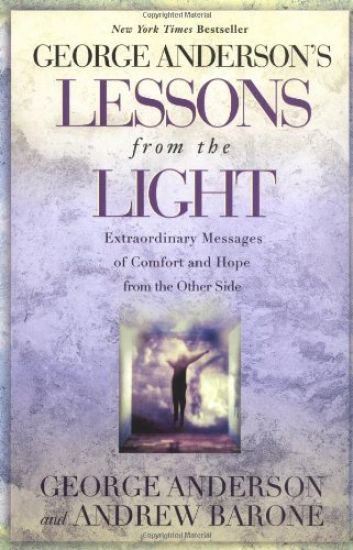
George Anderson's Lessons from the Light

George Anderson's Lessons from the Light

George Anderson

Berkley Publishing Corporation,U.S.
2000
pokkari
George Anderson--the world's premier medium--offers a personal, first-hand glimpse of the Other Side and brings a message of hope and love for all, based on the illuminating lessons of his life's work. In his years working with bereaved families to communicate with lost loved ones, George Anderson has earned an international reputation for his astonishing abilities. Now, for the first time, Anderson offers a vivid and intimate account of his spiritual communications. He explains what it's like to be a psychic, what he experiences, and what it means. He directly answers the many questions most commonly asked of him. He also shares moving, inspirational, and reassuring readings that illuminate the meaning of life, the reality of the afterlife, the importance of spirituality, and our bond to the souls in the hereafter. They are messages that not only enlighten us about what awaits, but also teach us how to fulfill our significant roles here on earth and in life. They are messages of hope and love as extraordinarily beautiful as they are eternal.
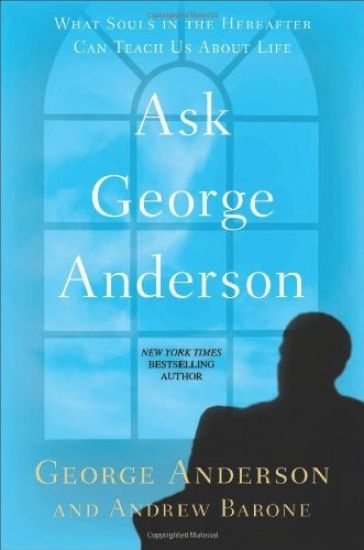
Ask George Anderson

Ask George Anderson

George Anderson; Andrew Barone

Penguin USA
2012
pokkari
Understand the importance and meaning of your life’s journey here on Earth—with the guidance and perspective of the souls in the hereafter. For nearly fifty years and more than thirty-five thousand sessions, George Anderson, widely considered the world’s greatest living medium, has listened to those who have crossed to the other side. He has bridged the worlds of the here and the hereafter by communicating messages of hope from loved ones who have passed on, in order to help bring peace to those who continue on earth. But the souls can offer so much more than proof that there is something beyond this world. They can offer answers and practical advice about issues we struggle with daily: our finances, relationships, personal matters, and questions of faith. Having lived through the struggles we now face, they can also assure us that life’s problems are not random; they happen to each of us as part of a greater purpose and plan. Ask George Anderson shares the most common questions clients ask and reveals the illuminating answers that the souls have provided on issues and concerns of our everyday life here on earth. They are invaluable lessons that will enrich all our lives because they’re imparted from a profound and rare perspective: that of the souls who have already lived it and learned from it.
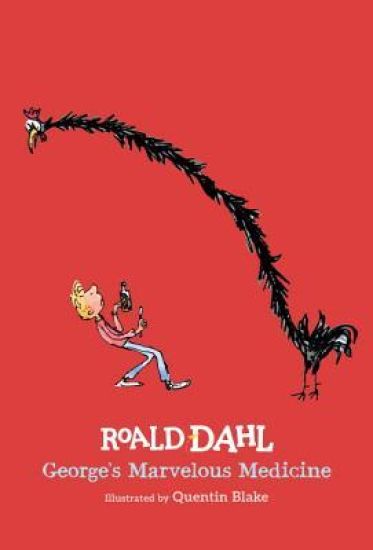
George's Marvelous Medicine

George's Marvelous Medicine

Roald Dahl

Viking Books for Young Readers
2017
sidottu
This collectable hardcover edition will feature a beautiful cover and deluxe packaging, including color interior text and illustrations From the bestselling author of Charlie and the Chocolate Factory and Matilda comes the story of a not-so-lovely grandma, a boy, and a magical medicine. George is alone in the house with Grandma. The most horrid, grizzly old grunion of a grandma ever. She needs something stronger than her usual medicine to cure her chronic grouchiness. A special grandma medicine, a remedy for everything. And George knows just what to put into it. Grandma's in for the surprise of her life-and so is George, when he sees the results of his mixture
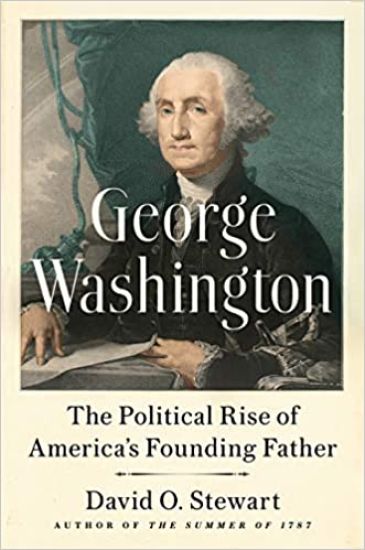
George Washington

George Washington

David O. Stewart

Dutton
2021
sidottu
A fascinating and illuminating account of how George Washington became the single most dominant force in the creation of the United States of America, from award-winning author David O. Stewart Washington's rise constitutes one of the greatest self-reinventions in history. In his midtwenties, this third son of a modest Virginia planter had ruined his own military career thanks to an outrageous ego. But by his midforties, that headstrong, unwise young man had evolved into an unassailable leader chosen as the commander in chief of the fledgling Continental Army. By his midfifties, he was unanimously elected the nation's first president. How did Washington emerge from the wilderness to become the central founder of the United States of America? In this remarkable new portrait, award-winning historian David O. Stewart unveils the political education that made Washington a master politician--and America's most essential leader. From Virginia's House of Burgesses, where Washington learned the craft and timing of a practicing politician, to his management of local government as a justice of the Fairfax County Court to his eventual role in the Second Continental Congress and his grueling generalship in the American Revolution, Washington perfected the art of governing and service, earned trust, and built bridges. The lessons in leadership he absorbed along the way would be invaluable during the early years of the republic as he fought to unify the new nation.
George Washington

George Washington

David O. Stewart

Penguin Putnam Inc
2022
nidottu
A fascinating and illuminating account of how George Washington became the dominant force in the creation of the United States of America, from award-winning author David O. Stewart "An outstanding biography . . . George Washington] has a narrative drive such a life deserves."--The Wall Street Journal Washington's rise constitutes one of the greatest self-reinventions in history. In his midtwenties, this third son of a modest Virginia planter had ruined his own military career thanks to an outrageous ego. But by his midforties, that headstrong, unwise young man had evolved into an unassailable leader chosen as the commander in chief of the fledgling Continental Army. By his midfifties, he was unanimously elected the nation's first president. How did Washington emerge from the wilderness to become the central founder of the United States of America? In this remarkable new portrait, award-winning historian David O. Stewart unveils the political education that made Washington a master politician--and America's most essential leader. From Virginia's House of Burgesses, where Washington mastered the craft and timing of a practicing politician, to his management of local government as a justice of the Fairfax County Court to his eventual role in the Second Continental Congress and his grueling generalship in the American Revolution, Washington perfected the art of governing and service, earned trust, and built bridges. The lessons in leadership he absorbed along the way would be invaluable during the early years of the republic as he fought to unify the new nation.
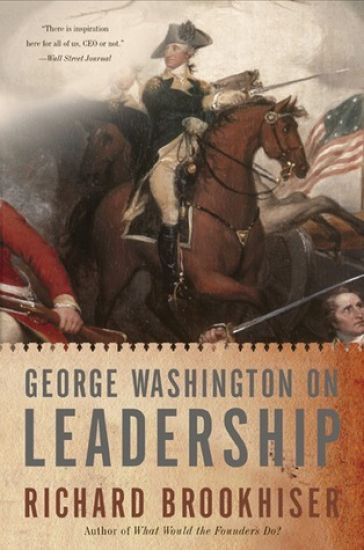
George Washington On Leadership

George Washington On Leadership

Brookhiser Richard

Basic Books
2009
pokkari
In 1799, at the end of George Washington's long life and illustrious career, the politician Henry Lee eulogized him as: First in war, first in peace, and first in the hearts of his countrymen." Esteemed historian Richard Brookhiser now adds to this list, First in leadership," examining the lessons to be learned from our first president, first commander-in-chief, and founding CEO. With wit and skill, Brookhiser expertly anatomizes true leadership with lessons from Washington's three spectacularly successful careers as an executive: general, president, and tycoon. In every area of endeavor, Washington maximized his strengths and overcame his flaws. Brookhiser shows how one man's struggles and successes two centuries ago can serve as a model,and an inspiration,for leaders today.
George III

George III

Christopher Hibbert

Basic Books
2000
pokkari
In George III: A Personal History, British historian Christopher Hibbert reassesses the royal monarch George III (1738-1820). Rather than reaffirm George III's reputation as Mad King George," Hibbert portrays him as not only a competent ruler during most of his reign, but also as a patron of the arts and sciences, as a man of wit and intelligence, indeed, as a man who greatly enhanced the reputation of the British monarchy" until he was finally stricken by a rare hereditary disease.Teeming with court machinations, sexual intrigues, and familial conflicts, George III opens a window on the tumultuous, rambunctious, revolutionary eighteenth century. It is sure to alter our understanding of this fascinating, complex, and very human king who so strongly shaped England's ,and America's,destiny.