

Kirjahaku
Etsi kirjoja tekijän nimen, kirjan nimen tai ISBN:n perusteella.
1000 tulosta hakusanalla Hans Rust; Rust Hans 1879-
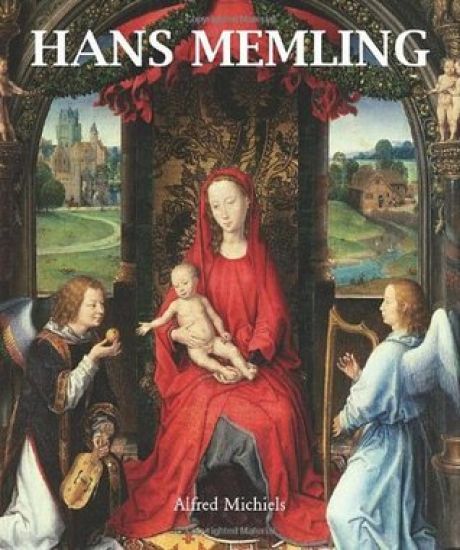
Presented as a minor artist for many years, Memling (c. 1433-1494) was not a court painter but a painter of the bourgeoisie. Forgotten during the seventeenth centuries, Memling is today considered one of the greatest fifteenth-century Northern European painters, thanks to the perfect balance between realism and concern for idealisation in his portraits. His compositions, frequently diptychs, triptychs or alterpieces, display a virtuosity comparable to that of Van Eyck. His taste for detail and precise drawing as well as his technical mastery and sense of composition are brought together perfectly in such magnificent works as The Last Judgement, The Mystic Marriage of Saint Catherine and The Seven Joys of the Virgin. Using the most representative paintings of Memling's oeuvre, this work highlights, through the finesse of his subjects' faces and the sobriety of their poses imposed by the canons of the time, the complex virtuosity of this important artist.
Hans Hofmann
Lund Humphries Publishers Ltd
2014
sidottu
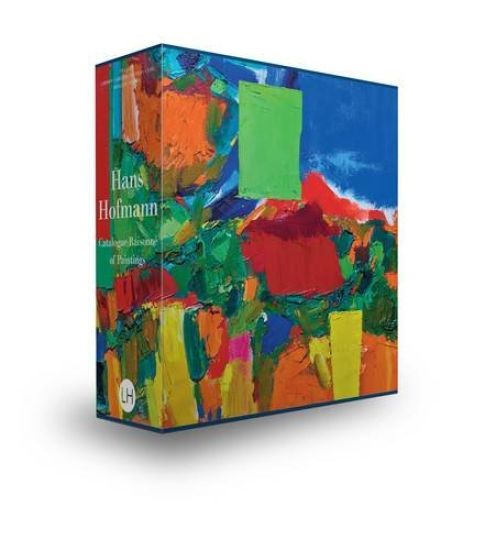
Hans Hofmann (1880-1966) was a pivotal figure in Abstract Expressionism and stands as one of the most important characters of post-war American art. This ground-breaking catalogue raisonne of paintings, which has been painstakingly researched over sixteen years, is both an invaluable scholarly resource and a celebration of Hofmann's remarkable artistic achievements. Hofmann's long and productive career began in Paris in 1904 where the young artist absorbed the manifold influences of the city's avant-garde. Drawn back to Germany due to war, Hofmann, exempt from military service, opened an innovative school for art in Munich. The school's reputation spread internationally and, as the political situation in Germany deteriorated during the 1930s, Hofmann re-located his school to New York. The city, a center for emerging artistic talent, was the perfect environment for Hofmann to continue his teaching practice, which he did until 1958, when he devoted himself entirely to painting. Throughout his American years, Hofmann enlarged the expressive language of abstraction, through his innovative use of color, materiality and structure. This impressive three-volumed catalogue marks a milestone in the scholarship and understanding of Hofmann's huge contribution to twentieth-century art. Through insightful essays, meticulous catalogue entries and supporting academic apparatus, it is shown how Hofmann's exceptional body of work often defies categorization - his was a highly personal visual language with which he endlessly explored pictorial structures and chromatic relationships. Both visually stunning and academically robust, this publication is an essential purchase for all those with a keen interest in one of the twentieth century's most significant and original artists.
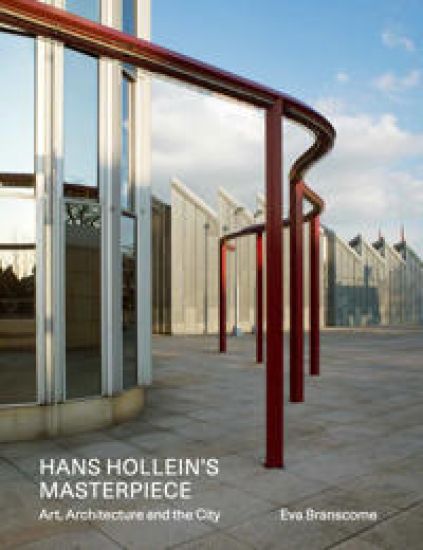
The Austrian architect-artist Hans Hollein was appointed in 1972 to design a new museum for the post-industrial city of Mönchengladbach in West Germany which transformed it into a centre for contemporary art. This book reveals the full story of this innovative masterpiece. Opening in 1982, Museum Abteiberg was instantly lauded by international critics and Hollein was duly awarded the 1985 Pritzker Prize. It rapidly became a place of architectural pilgrimage, with more than 20,000 people flocking to visit in its opening week, well over a decade before Frank Gehry completed the Guggenheim Museum in Bilbao. The book provides a timely and comprehensive reappraisal of the museum from concept, through the design process to its completion. It explains that Hollein was at his core a conceptual artist, perceiving the museum as provocative land art, with an architectural collage as exterior and a labyrinthine, ‘democratic’ interior, designed around the collection. It features a triptych of characters - Hollein, director Johannes Cladders and artist Joseph Beuys – whose close collaboration resulted in a museum which transformed thinking about how art, architecture and context – historical, cultural and geographical - should all relate. Radical at the time, many of the ideas that they first realised in this building have now become the norm in museum practice. Broader than a simple building study, this is a story which not only connects art with architecture and with the city, but with finance, corporate power and capital investment.
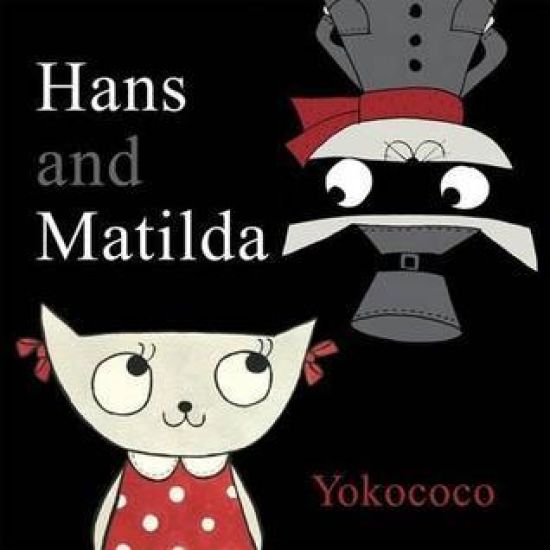
Matilda is a very good girl. She likes to sit quietly and read or water her flowers. Hans is very naughty - he makes too much noise, squirts people with his water pistol and daubs graffiti! When Hans lets the animals out of the zoo, a reward is offered for his capture. Matilda tells the police where he will be, but when they catch him and take off his mask, they find...Matilda! 'Can i have my reward now?' shes ask innocently.
Hans Eysenck: Consensus And Controversy
Falmer Press Ltd
1986
sidottu
During the last forty years, Hans Eysenck's brilliant contribution to knowledge has beenwell-known world-wide. From its early transmission, his work has not been without itscritics. Naturally, criticisms persist, although his work continues to be frequentlyacknowledged with great admiration in the channels of psychology. With such prolificwork, it would seem justified to consider the discrepancies, the omissions, together withthe various interpretations which have been and are currently being highlighted.
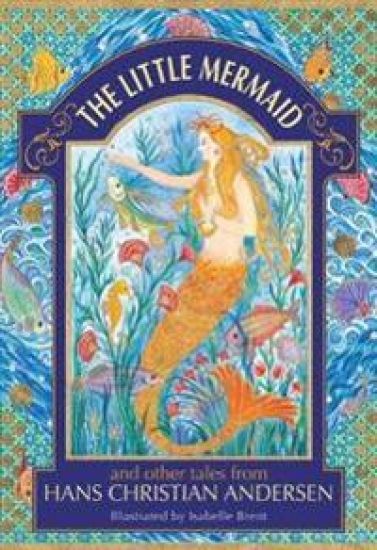
The Little Mermaid and other tales from Hans Christian Andersen
Hans Christian Andersen; Neil Philip
Armadillo Books
2018
sidottu
The Little Mermaid is one of the most haunting love stories ever written. Its author, Hans Christian Andersen, is a master storyteller whose tales have withstood the test of time and have been shared across borders and languages. In this sparkling anthology 17 of his creations are enchantingly retold for children today by Neil Philip. Many of his most popular tales are here: The Tinderbox, The Emperor's New Clothes, The Steadfast Tin Soldier and The Little Match Girl. Read about Little Ida who dared to dance at night with the flowers, the young prince who searched for a mysterious bell deep in the forest, and the very vain emperor who was cruelly tricked by wicked thieves. There are also some less-well known stories that will delight a new generation of children including Five Peas from the Same Pod, The Goblin at the Grocer's, The Flying Trunk and The Beetle. Delightfully illustrated with Isabelle Brent's magical watercolours, lavishly embellished with gold decorations. Originally the son of a poor shoemaker, the secret of Andersen's success is that he wrote his stories as if he were telling them to a child. None of the original magic has been lost in this joyful new edition, ideal to read aloud or for older readers to enjoy discovering by themselves.
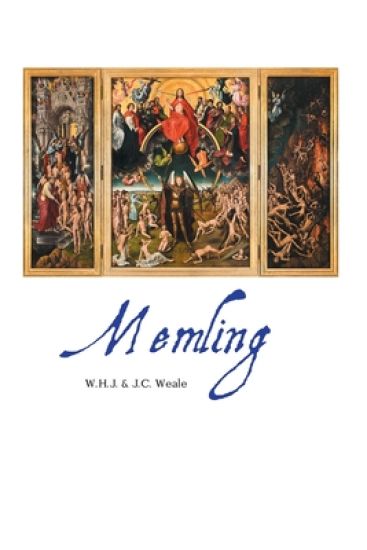
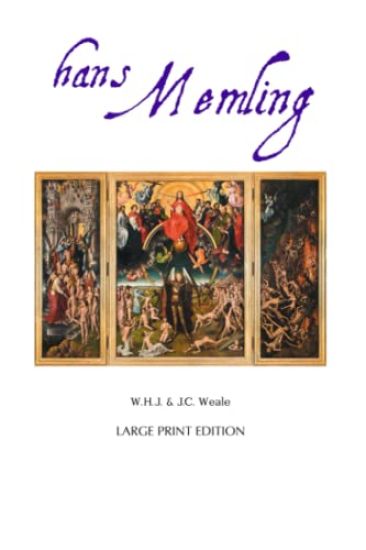
HANS MEMLING: LARGE PRINT EDITIONBy W. H. J. & J. C. WealeA fully illustrated introduction to one of the masters of Early Netherlandish painting, Hans Memling (1433-1494). Early Netherlandish painting, also known as Flemish painting, is characterized by figurative realism, its incredible sense of domestic interiors and details, luminous light, its 'realist' faces, and its fusions of a micro- and macro- cosmic vision. All Early Netherlandish paintings were made on wood panels, and painted from light to dark in thin glazes. It is partly this subtle glazing which gives Early Netherlandish painting its glorious luminescence. The Early Netherlandish artists exploited the effects of different hues and thicknesses of glazes of oil paint, controlling how the glazes reflected light. Large Print Edition - set in 18-point type. Fully illustrated in a brand new format, with extra illustrations, including images of contemporaries of Hans Memling. Bibliography and notes. Painters Series. 148 pages. www.crmoon.com
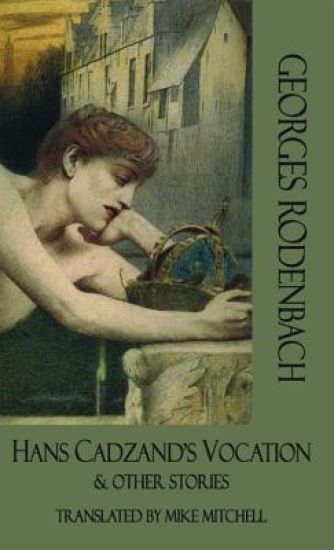
Hans Cadzand's father dies when he is an infant and he becomes the centre of his mother's life. As he grows up from a pretty child to a serious young man with deep religious convictions, she hopes she will remain the focus of his life. She sees his desire to enter holy orders as a threat to their life together and tries to keep him near her by marrying him off to the daughter of her closest friend. This plan founders on the rock of his 'vocation', but then Mevr. Cadzand engages the beautiful and experienced Ursula as housemaid.This long nouvelle is supplemented by shorter pieces from the collection Le Rouet des Brumes, brief episodes of love and death in characteristically atmospheric settings.

Hans Kelsen and the Case for Democracy is a contextual analysis of this famous jurist’s political thought. Kelsen’s works are usually reduced to his theory of law, and his reflections on democracy are often ignored. The great strength of Kelsen's political thinking lies in the largely original arguments that it musters against the critics who condemn or debunk the institutions of parliamentary democracies. This study assesses Kelsenian democratic theory by exploring three questions: first, how is Kelsen’s political theory intertwined with his legal theory? Second, how does Kelsen combine his reflections on the democratic ideal with his appreciation of a reality that more often than not quite distant from that ideal? Third, how does Kelsen conceive of the sources of the state’s cohesion in a democracy?
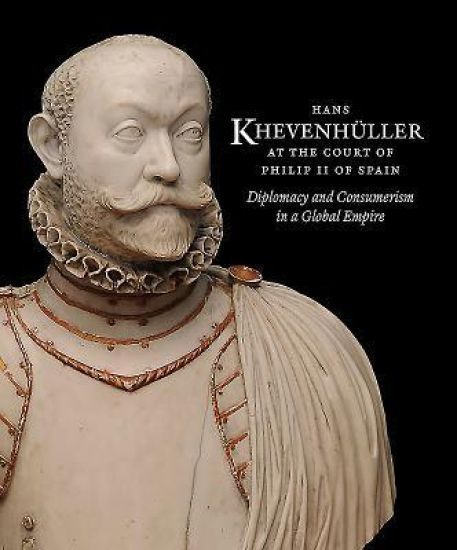
Hans KhevenhüLler at the Court of Philip II of Spain
Annemarie Jordan Gschwend
Paul Holberton Publishing
2022
sidottu
The quest for the exotic became an obsession for Renaissance princes and collectors, as markets in Lisbon and Seville were flooded by the mid 16th century with luxury goods, commodities, Ming porcelain, exotica, textiles, clothes, dress accessories and strange animals imported from Portuguese Asia, the Far East, Africa and the Americas. Shopping on a grand scale became a priority, especially for the Central European courts of the Habsburg, whose collections, known as Kunstkammers, represented their symbolic hegemony over a world empire, its peoples, flora and fauna.One man in particular played a formidable part in the expansion of these Habsburg Kunstkammers – Hans Khevenhüller, imperial ambassador in Spain. As diplomat, he assumed diverse roles at the Spanish court – politician, advisor, cultural broker, artistic agent, patron of the arts and collector. His global networks spanned continents, linking Habsburg courts across Europe with new worlds. Appointed inthe early 1570s resident ambassador at the court of Philip II, he was a keen observer of the Spanish court, meticulously recording peoples, events and happenings. Crossing ceremonial boundaries, Khevenhüller became a trusted friend and counselor of Philip II and his royal family, gaining admission into their private lives. His diary and largely unpublished correspondence are remarkable for the insights,commentaries and information he provides about contemporaries and their courts, fellow diplomats and Habsburg patrons – Maximilian II, Rudolf II, Ferdinand II of Tyrol, Karl II of Inner Austria and his wife, Maria of Bavaria. A true Renaissance man, with cultivated tastes and a discerning eye, Khevenhüller was single-handedly responsible for the acquisition of live animals, exotica, luxury goods, jewelry, precious stones, spices and drugs, including seeds and plants from overseas. In Spain, Venice, Vienna and Prague he sponsored and patronized painters, architects, goldsmiths, jewelers and artisans.Marking the 410th anniversary of Khevenhüller’s death, this book will examine Khevenhüller’s own art collection and Kunstkammer created for his residence in Madrid and his country estate at Arganda. A foreword by Martin Malcolm Elbl introduces the diplomatic world of Khevenhüller. Other contributions by Vanessa de Cruz Medina and Jorge Fernández-Santos Ortiz-Iribas will focus on Khevenhüller’s ties with the family of the imperial Ambassador Adam von Dietrichstein in Spain and Austria, and the reconstruction of Khevenhüller’s library in his Madrid residence. Correspondence, documents and inventories located in archives in Geneva, Simancas (Valladolid), Lisbon, Madrid, Vienna, Kärnten, Paris and Brno are highlighted in this book and in the appendices.Archival research was supported by a generous collaborative reserach grant given by the Getty Foundation (Los Angeles) from 2008 to 2013.
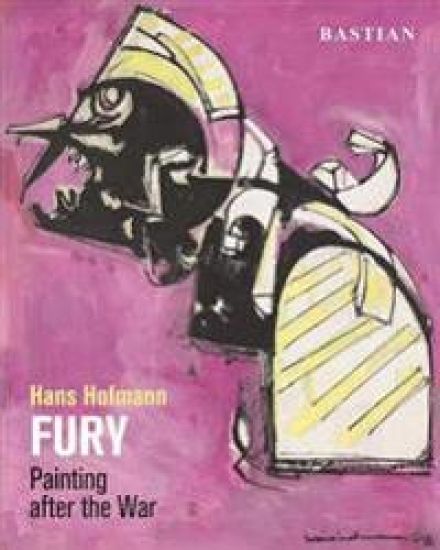
The German-born American artist Hans Hofmann (1880–1966) relocated to the United States in 1932 right before the outbreak of World War II. In the midst of wartime insecurity, he opened schools in both New York and Provincetown, immersing himself in America's growing avantgarde art scene. The works Hofmann created at the end of WWII and immediately afterward show angular abstractions and personify the uncertainties of the period. At the same time, this was also the moment that he moved toward the soft, ambiguous forms and gestures that would become the hallmark of the Abstract Expressionist movement—a movement that Hofmann presaged. Hans Hofmann: FURY presents Hofmann's work from 1942 to 1946. While demonstrating Hofmann's development towards abstraction, the paintings featured here still reveal a representational quality that nods to his figurative beginnings. Linear paintings particularly emphasize this artistic trajectory. Primarily known for his expressive use of bold, often primary colors, Hoffmann here uses a palette of vivid, bright colors, and contrasting dark tones, epitomizing the conflicted postwar feeling. Hans Hofmann: FURY gives particular insight into an essential moment in Hofmann's career—his first solo exhibition in New York in 1944 at Peggy Guggenheim's gallery, which Clement Greenberg considered "a breakthrough in painterly versus geometric abstraction that heralded abstract expressionism."
HENI Publishing is delighted to present INVADER: In Conversation with Hans Ulrich Obrist, a book that offers unique insight into the enigmatic French street artist, renowned for his iconic ceramic tile mosaics inspired by the pixelated 8-bit video game art of the 1970s and 80s. INVADER features an expansive, in-depth interview conducted by Hans Ulrich Obrist, which guides readers through the artist’s recent Paris exhibition, Invader Space Station (17 February – 5 May 2024), in the first section and through his studio in the second, offering an unparalleled glimpse into Invader’s technical and creative processes, and the global impact of his work. The first section of the book traces the route of the exhibition – held at the former offices of the newspaper Libération– with sub-chapters corresponding to the ‘levels’ of the show, reflecting on the conceptual and spatial dimensions of Invader’s work and his position as a ‘hacker’ of public spaces. The second section takes place in the artist’s studio where the conversation continues on a more personal note, offering an intimate look into Invader’s creative world. Richly illustrated, the book maps Invader’s numerous artistic encounters, from the graphic novels of Enki Bilal to legendary street artists like Leonard Hilton McGurr (aka Futura 2000) and Tsang Tsou-choi (the ‘King of Kowloon’), as well as his relationships with contemporaries including the provocative British artist Damien Hirst, American artist and activist Shepard Fairey and New York graffiti artist Revs.
Part of the Chiltern Classics rangeDescribed as the father of the modern fairy tale, Hans Christian Andersen created some of the best known and best loved stories in literature. The Little Mermaid, The Ugly Duckling, The Snow Queen, The Red Shoes and The Emperor's New Clothes - all included in this carefully curated collection - continue to captivate readers of all ages, thanks to their timeless charm and irresistible spell they cast. Chiltern are publishers of exquisitely crafted editions of the world's finest classic literature. These beautiful books are a perfect mix of tradition and the very latest in printing techniques. With wonderful original, detailed and embossed covers, sparkling gilt edges, cream art paper, ribbon markers and stitched binding they are simply the most beautiful classics ever published.
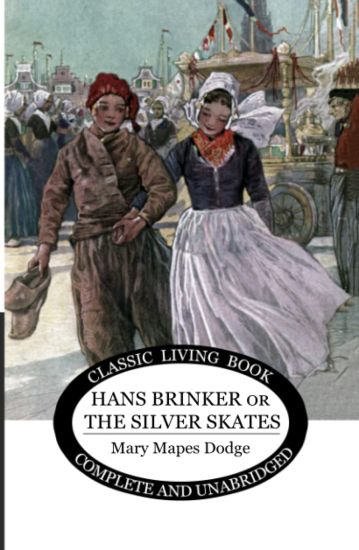
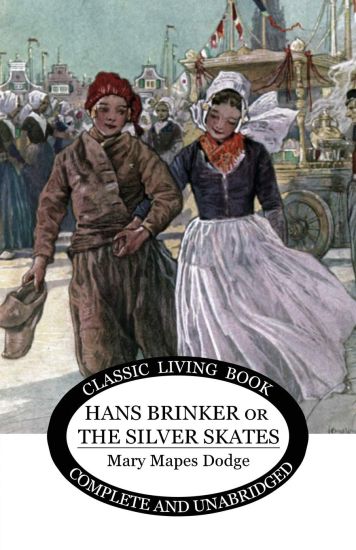
It was Hans Christian Andersen who brought us the story of "The Little Mermaid," "The Ugly Duckling," "The Emperor's New Clothes," and other classic folk and fairy tales, legends and myths, such as the "The Princess and the Pea" and "Thumbelina." Since Andersen wrote in the 1800s, Hollywood has taken a crack at his stories and innumerable illustrated works for children have been written based on them. As is so often the case, the book is better than the movie. Andersen's original tales for children have appeal beyond the many abbreviated versions made since. In this edition, the reader is invited into the imagination of Hans Christian Andersen.