

Kirjahaku
Etsi kirjoja tekijän nimen, kirjan nimen tai ISBN:n perusteella.
1000 tulosta hakusanalla Herman Tester


Postcards From Merion: paintings created in and around Merion, Pennsylvania by Nancy Clearwater Herman
Nancy Clearwater Herman
Createspace Independent Publishing Platform
2013
nidottu
Glimpses of Herman Melville's Life in Pittsfield, 1850-1851: Some Unpublished Letters of Evert A. Duyckinck
Luther Stearns Mansfield
Literary Licensing, LLC
2013
nidottu
Some Personal Letters of Herman Melville and a Bibliography
Meade Minnigerode
Literary Licensing, LLC
2014
nidottu
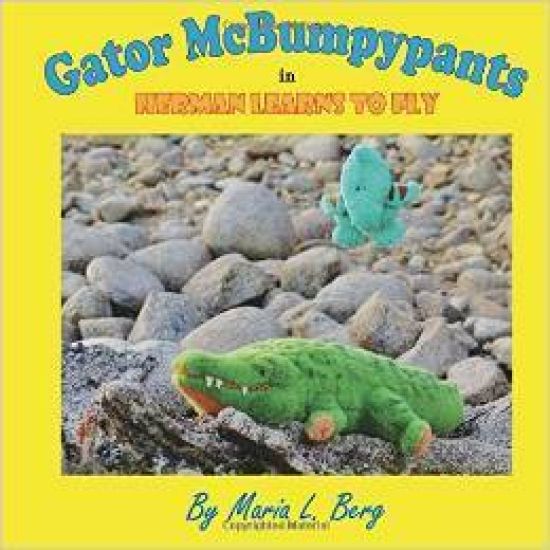
Gator McBumpypants in Herman Learns to Fly
Maria L. Berg
Createspace Independent Publishing Platform
2014
nidottu
The Adventures of Herman the Naked Mole Rat
Mark a. Wagaman
Createspace Independent Publishing Platform
2015
nidottu
The Adventures of Herman the Naked Mole Rat (The Adventures Continue) Book 2
Mark Wagaman
Createspace Independent Publishing Platform
2015
nidottu
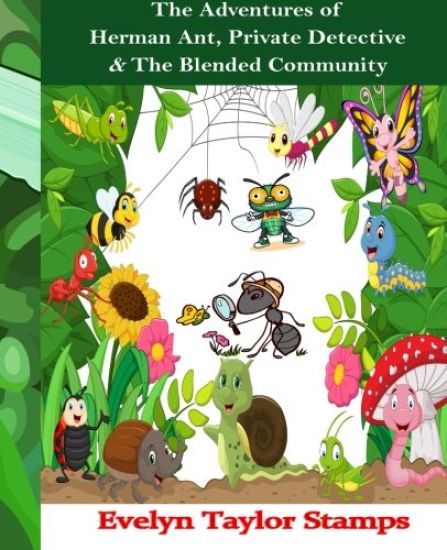
The Adventures of Herman Ant, Private Detective & The Blended Community
Evelyn Taylor Stamps
Createspace Independent Publishing Platform
2015
nidottu
Israel Potter Herman Melville (1855)
Iacob Adrian
Createspace Independent Publishing Platform
2017
nidottu
Moby-Dick Herman Melville (1851)
Iacob Adrian
Createspace Independent Publishing Platform
2017
nidottu
White Jacket Herman Melville (1850)
Iacob Adrian
Createspace Independent Publishing Platform
2017
nidottu

Our Love Story: Herman E. 'Willie' Powell and Linva Lou Allen
Linva A. Powell
Dorrance Publishing Co.
2022
nidottu
Our Love Story: Herman E. 'Willie' Powell and Linva Lou AllenBy: Linva A. Powell Linva A. Powell found her true love at the young age of fifteen. Or so she thought After being forced to separate and not get married, Linva thought she had lost her one true love forever, but after fifty years apart, she and her true love, Willie, were reunited. Linva shares her and Willie's love story and the obstacles they both faced in order to be together once again About the AuthorLinva A. Powell has moved from Kentucky to Texas. She and her husband have plans to travel in the future, but for now, they enjoy spending time at church and home and also spending time with each other.

Literary critics have aptly noted that death is arguably the most frequent topic, theme, or occurrence in all of American literature. Naturally, the works of such authors as Charles Brockden Brown, Nathaniel Hawthorne, Edgar Allan Poe, Kate Chopin, Shirley Jackson, and Stephen King, among countless others, go to great lengths to support this observation; however, the renowned nineteenth-century American literary giant Herman Melville, most famous as the author of Moby Dick, has been frequently overlooked. In this book, seasoned literary scholar Corey Evan Thompson seeks to remedy this oversight.Death in Herman Melville’s Fiction: Melville’s “Memento Mori” is the first full-length study to examine the ubiquity and implications of death in Melville’s prose fiction. As Thompson shows, death occurs in all of Melville’s novels and much of his shorter fiction by various means. Not only is death a frequent occurrence in Melville’s fiction, but his characters die regardless of age, health, social status, or moral character. Drawing from his father’s death, Melville’s fiction provides his readers with the difficult realization that it is the inevitable destination for everyone who is on this journey called life.
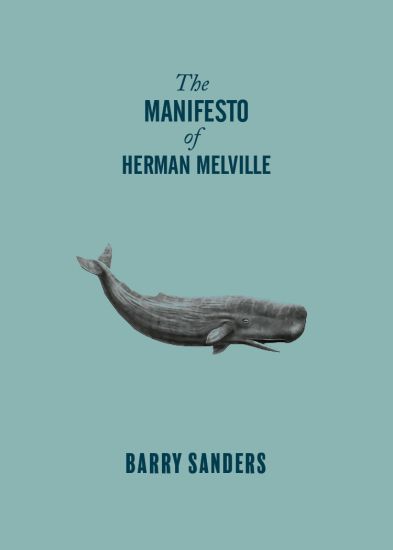
In this iconoclastic and sure to be contentious re-casting by a renowned critic, the great American novel Moby Dick is presented as a work that has been widely misread, an error that continues to this day. According to Barry Sanders, Herman Melville’s best- known work is not a novel, does not pretend to be a novel, and was not intended by its author to be read as a novel. Moby Dick is this country’s first manifesto, a tocsin sounded to warn us about the encroaching end of nature. The Manifesto of Herman Melville traces the evolution of Moby Dick—from its awful, initial reception, very rapidly passing out of print, to its remarkable revival to become lauded as one of America’s great literary classics. That turnaround happened in the early decades of the 20th century and was, in great part, the result of the new and radical aesthetic movements such as surrealism, dadaism, and cubism that allowed for a radical reading of the book. The novel’s new standing as one of the keystones of the American cannon disguises its deeper meaning as an alarm bell, an obscuring which Barry Sanders, in a critical assessment that is as persuasive as it is provocative, seeks to clear away. Sanders argues that Moby Dick needs to be recognized as Melville's manifesto: a bold statement warning of the destruction of the natural world made most evident in the book’s central metaphor the relentless pursuit to kill the whale, the first sentient being in Genesis and one of the most startling mammals—possessed of hair and scales, a tail and breasts—and the largest of the creatures on earth, weighing up to 400,000 pounds. Whalers in Melville’s day hunted down and killed these extraordinary behemoths of nature, for their oil, sold to people for cooking and to light their homes. Today the pursuit for energy has shifted dramatically, from sea to land, but the prize remains the same: energy producing fuel for which entrepreneurs and adventurers are prepared to kill off all of nature.
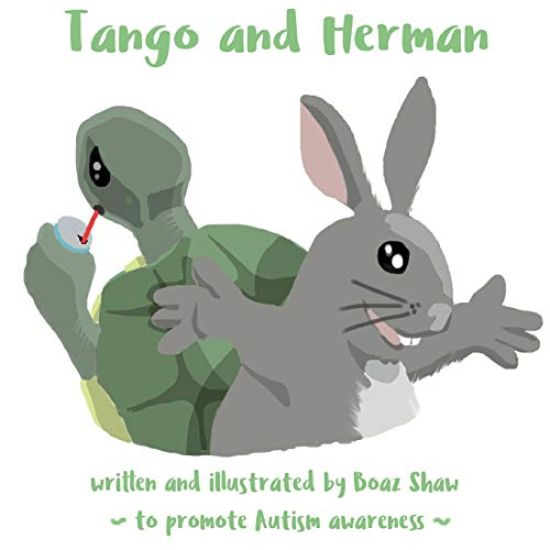
Tango and Herman is a children's picture book that aims to spread awareness of a successful and respectful method for interacting with people on the Autism spectrum. The story is centred on Tango the Tortoise. Tango has Autism spectrum disorder (ASD) and spends his days alone. that is until Herman the Hare uses this joining technique to bridge the gap between their two worlds.