Kirjojen hintavertailu. Mukana 12 390 323 kirjaa ja 12 kauppaa.

Kirjahaku

Etsi kirjoja tekijän nimen, kirjan nimen tai ISBN:n perusteella.

1000 tulosta hakusanalla Jackson Burrows

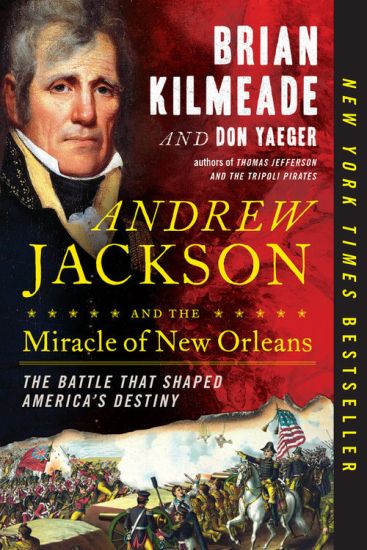
Andrew Jackson & Miracle Of No

Andrew Jackson & Miracle Of No

Don Yaeger

Prentice Hall Press
2018
nidottu
Another history pageturner from the authors of the #1 bestsellers George Washington's Secret Six and Thomas Jefferson and the Tripoli Pirates. The War of 1812 saw America threatened on every side. Encouraged by the British, Indian tribes attacked settlers in the West, while the Royal Navy terrorized the coasts. By mid-1814, President James Madison's generals had lost control of the war in the North, losing battles in Canada. Then British troops set the White House ablaze, and a feeling of hopelessness spread across the country. Into this dire situation stepped Major General Andrew Jackson. A native of Tennessee who had witnessed the horrors of the Revolutionary War and Indian attacks, he was glad America had finally decided to confront repeated British aggression. But he feared that President Madison's men were overlooking the most important target of all: New Orleans. If the British conquered New Orleans, they would control the mouth of the Mississippi River, cutting Americans off from that essential trade route and threatening the previous decade's Louisiana Purchase. The new nation's dreams of western expansion would be crushed before they really got off the ground. So Jackson had to convince President Madison and his War Department to take him seriously, even though he wasn't one of the Virginians and New Englanders who dominated the government. He had to assemble a coalition of frontier militiamen, French-speaking Louisianans, Cherokee and Choctaw Indians, freed slaves, and even some pirates. And he had to defeat the most powerful military force in the world--in the confusing terrain of the Louisiana bayous. In short, Jackson needed a miracle. The local Ursuline nuns set to work praying for his outnumbered troops. And so the Americans, driven by patriotism and protected by prayer, began the battle that would shape our young nation's destiny. As they did in their two previous bestsellers, Kilmeade and Yaeger make history come alive with a riveting true story that will keep you turning the pages. You'll finish with a new understanding of one of our greatest generals and a renewed appreciation for the brave men who fought so that America could one day stretch "from sea to shining sea."

Michael Jackson's Complete Guide to Single Malt Scotch: The World's Best-Selling Book on Malt Whisky
Michael Jackson's Complete Guide to Single Malt Scotch, the landmark best-selling malt whiskey companion by the late Michael Jackson, doyen of whiskey writers, has been comprehensively updated by a team of experts. Featuring over 500 new bottlings, reviewed and scored, plus hundreds of revised entries, Michael Jackson's Complete Guide to Single Malt Scotch includes background information on the distilleries, tasting notes on over 1,000 bottlings, and practical advice on buying malts and interpreting whiskey labels.
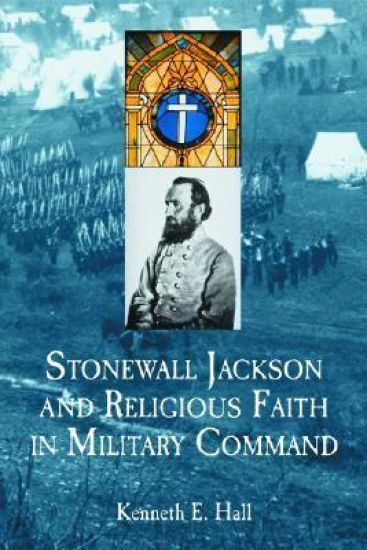
Stonewall Jackson and Religious Faith in Military Command
The relationship between war and religion is nothing new. For millennia, humankind has waged war over religion and derived religion from war. It is not surprising, then, that military leadership and religious conviction frequently coincide. This study documents the long tradition of the religious warrior in Western history and literature, with a special focus on Civil War general Thomas J. "Stonewall" Jackson. It also provides a general survey of the religious antecedents of Jackson and other more modern American military heroes. The book begins with an introduction to the Confederate general, largely from the perspective of those who lived with and served under him, whose testimonies attest to his courage, initiative, innate tactical talent, deep religious faith, and eccentric personal habits. The author analyzes the extent to which Jackson's national zeal has elevated him to the status of a religious martyr, remembered today within an epic frame of sainthood and heroism. Concise comparisons are drawn between Jackson and his Old World predecessors, including Ulrich Zwingli, John Knox and Oliver Cromwell. Similar associations are made between Jackson and such Civil War contemporaries as William Dorsey Pender and Oliver Otis Howard. A chapter addressing the representation of "Stonewall" in modern Civil War literature and film, particularly in the novel and subsequent motion picture Gods and Generals, provides an insightful juxtaposition of Jackson's status among the "gods" of the Civil War and his own reverence for the God of his Presbyterian faith.
Shirley Jackson

Shirley Jackson

McFarland Co Inc
2005
pokkari
Shirley Jackson was one of America's most prominent female writers of the 1950s. Between 1948 and 1965 she published six novels, one best-selling story collection, two popular volumes of her family chronicles and many stories, which ranged from fairly conventional tales for the women's magazine market to the ambiguous, allusive, delicately sinister and more obviously literary stories that were closest to Jackson's heart and destined to end up in the more highbrow end of the market. Most critical discussions of Jackson tend to focus on "The Lottery" and The Haunting of Hill House. An author of such accomplishment--and one so fully engaged with the pressures and preoccupations of postwar America--merits fuller discussion. To that end, this collection of essays widens the scope of Jackson scholarship with new writing on such works as The Road through the Wall and We Have Always Lived in the Castle, and topics ranging from Jackson's domestic fiction to ethics, cosmology, and eschatology. The book also makes newly available some of the most significant Jackson scholarship published in the last two decades.
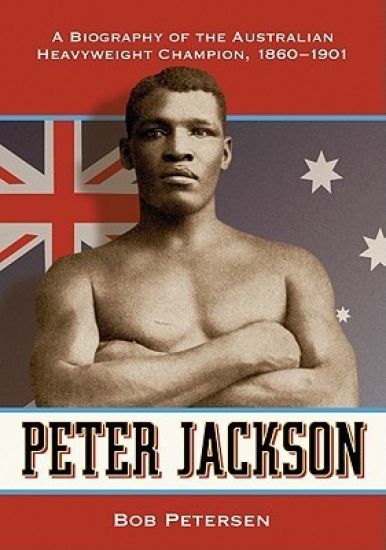
Peter Jackson

Peter Jackson

Bob Petersen

McFarland Co Inc
2011
pokkari
Born to former slaves on St. Croix in 1860, Peter Jackson made his name as a boxer with his smooth, fast style and a dangerous one-two combination. After immigrating to Australia, Jackson became that country's national heavyweight champion in 1886 before moving on to the United States and claiming the title of Colored Champion of the World in 1888. For the next ten years Peter Jackson remained undefeated, finally losing to the great Jim Jeffries in 1898. Although he never received a shot at the heavyweight title--reigning heavyweight champion John L. Sullivan refused to defend his title against a black man--Jackson remains one of the greatest heavyweights ever.
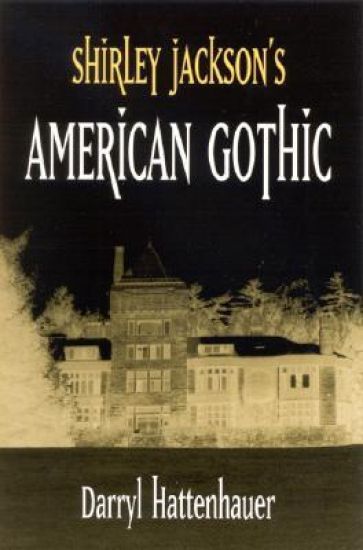
Shirley Jackson's American Gothic

Shirley Jackson's American Gothic

Darryl Hattenhauer

State University of New York Press
2003
sidottu
Argues that Jackson's anticipation of postmodernism ranks her among the most significant writers of her time.Best known for her short story "The Lottery" and her novel The Haunting of Hill House, Shirley Jackson produced a body of work that is more varied and complex than critics have realized. In fact, as Darryl Hattenhauer argues here, Jackson was one of the few writers to anticipate the transition from modernism to postmodernism, and therefore ranks among the most significant writers of her time. The first comprehensive study of all of Jackson's fiction, Shirley Jackson's American Gothic offers readers the chance not only to rediscover her work, but also to see how and why a major American writer was passed over for inclusion in the canon of American literature.
Shirley Jackson's American Gothic

Shirley Jackson's American Gothic

Darryl Hattenhauer

State University of New York Press
2003
pokkari
Argues that Jackson's anticipation of postmodernism ranks her among the most significant writers of her time. Best known for her short story "The Lottery" and her novel The Haunting of Hill House, Shirley Jackson produced a body of work that is more varied and complex than critics have realized. In fact, as Darryl Hattenhauer argues here, Jackson was one of the few writers to anticipate the transition from modernism to postmodernism, and therefore ranks among the most significant writers of her time. The first comprehensive study of all of Jackson's fiction, Shirley Jackson's American Gothic offers readers the chance not only to rediscover her work, but also to see how and why a major American writer was passed over for inclusion in the canon of American literature.
Andrew Jackson

Andrew Jackson

Robert V. Remini

Johns Hopkins University Press
1998
pokkari
Available in paperback for the first time, these three volumes represent the definitive biography of Andrew Jackson. Volume One covers the role Jackson played in America's territorial expansion, bringing to life a complex character who has often been seen simply as a rough-hewn country general. Volume Two traces Jackson's senatorial career, his presidential campaigns, and his first administration as President. The third volume covers Jackson's reelection to the presidency and the weighty issues with which he was faced: the nullification crisis, the tragic removal of the Indians beyond the Mississippi River, the mounting violence throughout the country over slavery, and the tortuous efforts to win the annexation of Texas.
Andrew Jackson

Andrew Jackson

Robert V. Remini

Johns Hopkins University Press
1998
pokkari
Available in paperback for the first time, these three volumes represent the definitive biography of Andrew Jackson. Volume One covers the role Jackson played in America's territorial expansion, bringing to life a complex character who has often been seen simply as a rough-hewn country general. Volume Two traces Jackson's senatorial career, his presidential campaigns, and his first administration as President. The third volume covers Jackson's reelection to the presidency and the weighty issues with which he was faced: the nullification crisis, the tragic removal of the Indians beyond the Mississippi River, the mounting violence throughout the country over slavery, and the tortuous efforts to win the annexation of Texas.
Andrew Jackson

Andrew Jackson

Robert V. Remini

Johns Hopkins University Press
1998
pokkari
Available in paperback for the first time, these three volumes represent the definitive biography of Andrew Jackson. Volume One covers the role Jackson played in America's territorial expansion, bringing to life a complex character who has often been seen simply as a rough-hewn country general. Volume Two traces Jackson's senatorial career, his presidential campaigns, and his first administration as President. The third volume covers Jackson's reelection to the presidency and the weighty issues with which he was faced: the nullification crisis, the tragic removal of the Indians beyond the Mississippi River, the mounting violence throughout the country over slavery, and the tortuous efforts to win the annexation of Texas.
Bernard Shaw and Barry Jackson

Bernard Shaw and Barry Jackson

Barry Jackson; Bernard Shaw

University of Toronto Press
2002
sidottu
Virtually ignored in histories of twentieth-century British theatre in favour of the more celebrated relationship of Bernard Shaw and Harley Granville Barker, the friendship of Bernard Shaw and Sir Barry Jackson is given prominence in this new book by L.W. Conolly. The collection of 183 letters, all but two of which are previously unpublished, sheds new light on a partnership that for Shaw was the most important of his later playwriting career, and for Jackson was central to his pioneering and acclaimed work in British regional theatre in both Birmingham and Stratford-upon-Avon. Also included are letters from Shaw's wife, Charlotte, and secretary, Blanche Patch, to Jackson. Headnotes with each letter set its context and provide a narrative of the continuing Shaw-Jackson relationship; further notations identify literary, historical, theatrical, and political references and allusions. Of interest to both the Shaw specialist and the drama generalist, this collection of letters represents a significant addition to modern understanding of Shaw and of British theatre.
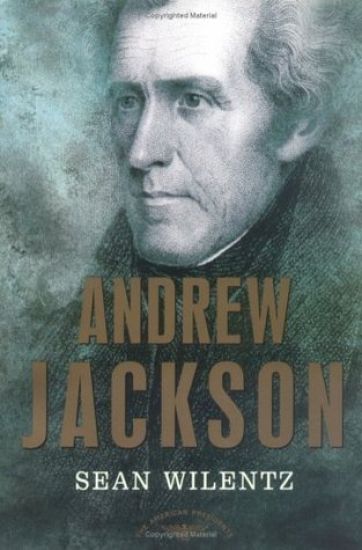
Andrew Jackson

Andrew Jackson

Sean Wilentz

Times Books
2005
sidottu
The towering figure who remade American politics the champion of the ordinary citizen and the scourge of entrenched privilege The Founding Fathers espoused a republican government, but they were distrustful of the common people, having designed a constitutional system that would temper popular passions. But as the revolutionary generation passed from the scene in the 1820s, a new movement, based on the principle of broader democracy, gathered force and united behind Andrew Jackson, the charismatic general who had defeated the British at New Orleans and who embodied the hopes of ordinary Americans. Raising his voice against the artificial inequalities fostered by birth, station, monied power, and political privilege, Jackson brought American politics into a new age. Sean Wilentz, one of America's leading historians of the nineteenth century, recounts the fiery career of this larger-than-life figure, a man whose high ideals were matched in equal measure by his failures and moral blind spots, a man who is remembered for the accomplishments of his eight years in office and for the bitter enemies he made. It was in Jackson's time that the great conflicts of American politics urban versus rural, federal versus state, free versus slave crystallized, and Jackson was not shy about taking a vigorous stand. It was under Jackson that modern American politics began, and his legacy continues to inform our debates to the present day."
Andrew Jackson Higgins and the Boats that Won World War II

Andrew Jackson Higgins and the Boats that Won World War II

Jerry E. Strahan

Louisiana State University Press
1998
nidottu
Andrew Jackson Higgins is perhaps the most forgotten hero of the Allied victory. He designed the LCVP (landing craft vehicle, personnel) that played such a vital role in the invasion of Normandy as well as the first effective tank landing craft. During the war, New Orleans- based Higgins Industries produced over twenty thousand boats, including lightning-fast PT boats and the twenty-seven-foot airborne lifeboat. Higgins dedicated himself to providing Allied soldiers with the finest landing craft in the world, and he fought the Bureau of Ships, the Washington bureaucracy, and the powerful eastern shipyards to succeed. Jerry Strahan's biography of Higgins reveals a colorful, controversial character- hard fisted, hard swearing, and hard drinking- who was an outsider to New Orleans' elite social circles. He was also, however, a hardworking boatbuilder who became a major industrialist with a worldwide reputation- even Hitler was aware of Higgins, calling him ""the new Noah.
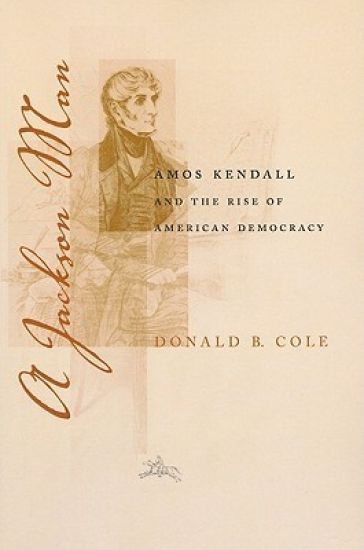
A Jackson Man

A Jackson Man

Donald B. Cole

Louisiana State University Press
2010
nidottu
Well researched... and well written, this work gives us Kendall, warts and all. We see the avarice, the ambition, and the contradictions of his subject.... This is biography at its best."" - Journal of American HistoryA rare, fascinating personality emerges in Donald B. Cole's biography of Amos Kendall (1789-1869), the reputed intellectual engine behind Andrew Jackson's administration and an influential figure in the transformation of young America from an agrarian republic to a capitalist democracy. Born on a small Massachusetts farm and educated at Dartmouth, Kendall moved to Kentucky as a young man to seek his fortune and eventually became one of the few nationally prominent antebellum politicians who successfully combined northern origins and southern experience. Kendall's role in democratizing American politics is shown in a compelling narrative of his evolution from a republican idealist to a democratic individualist who contributed greatly to the rise of the Democratic Party. The first biography of Kendall, this superbly written and researched volume charts the progression of American democracy and the culture that created it. ""Donald B. Cole's splendid book is carefully researched, detailed yet boldly interpretive, and gracefully written."" - Civil War History ""[T]his biography is both enjoyable and an indispensable read for those interested in understanding the development of Jacksonian democracy."" - Journal of the Early Republic
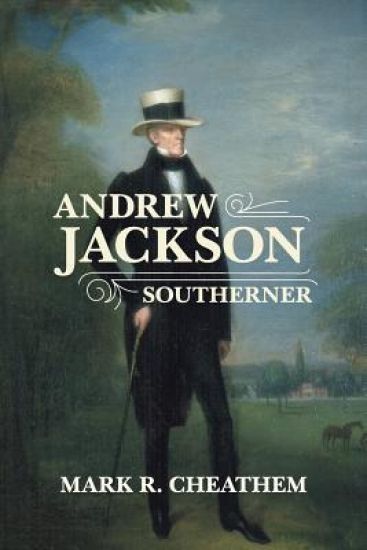
Andrew Jackson, Southerner

Andrew Jackson, Southerner

Mark R. Cheathem

Louisiana State University Press
2013
sidottu
Many Americans view Andrew Jackson as a frontiersman who fought duels, killed Indians, and stole another man's wife. Historians have traditionally presented Jackson as a man who struggled to overcome the obstacles of his backwoods upbringing and helped create a more democratic United States. In his compelling new biography of Jackson, Mark R. Cheathem argues for a reassessment of these long-held views, suggesting that in fact ""Old Hickory"" lived as an elite southern gentleman. Jackson grew up along the border between North Carolina and South Carolina, a district tied to Charleston, where the city's gentry engaged in the transatlantic marketplace. Jackson then moved to North Carolina, where he joined various political and kinship networks that provided him with entrée into society. In fact, Cheathem contends, Jackson had already started to assume the characteristics of a southern gentleman by the time he arrived in Middle Tennessee in 1788.After moving to Nashville, Jackson further ensconced himself in an exclusive social order by marrying the daughter of one of the city's cofounders, engaging in land speculation, and leading the state militia. Cheathem notes that through these ventures Jackson grew to own multiple plantations and cultivated them with the labor of almost two hundred slaves. His status also enabled him to build a military career focused on eradicating the nation's enemies, including Indians residing on land desired by white southerners. Jackson's military success eventually propelled him onto the national political stage in the 1820s, where he won two terms as president. Jackson's years as chief executive demonstrated the complexity of the expectations of elite white southern men, as he earned the approval of many white southerners by continuing to pursue Manifest Destiny and opposing the spread of abolitionism, yet earned their ire because of his efforts to fight nullification and the Second Bank of the United States.By emphasising Jackson's southern identity - characterized by violence, honor, kinship, slavery, and Manifest Destiny - Cheathem's narrative offers a bold new perspective on one of the nineteenth century's most renowned and controversial presidents.
Andrew Jackson, Southerner

Andrew Jackson, Southerner

Mark R. Cheathem

Louisiana State University Press
2015
nidottu
Winner of the 2013 Tennessee History AwardMany Americans view Andrew Jackson as a frontiersman who fought duels, killed Indians, and stole another man's wife. Historians have traditionally presented Jackson as a man who struggled to overcome the obstacles of his backwoods upbringing and helped create a more democratic United States. In his compelling new biography of Jackson, Mark R. Cheathem argues for a reassessment of these long-held views, suggesting that in fact ""Old Hickory"" lived as an elite southern gentleman. Jackson grew up along the border between North Carolina and South Carolina, a district tied to Charleston, where the city's gentry engaged in the transatlantic marketplace. Jackson then moved to North Carolina, where he joined various political and kinship networks that provided him with entrance into society. In fact, Cheathem contends, Jackson had already started to assume the characteristics of a southern gentleman by the time he arrived in Middle Tennessee in 1788.After moving to Nashville, Jackson further ensconced himself in an exclusive social order by marrying the daughter of one of the city's cofounders, engaging in land speculation, and leading the state militia. Cheathem notes that through these ventures Jackson grew to own multiple plantations and cultivated them with the labor of almost two hundred slaves. His status also enabled him to build a military career focused on eradicating the nation's enemies, including Indians residing on land desired by white southerners. Jackson's military success eventually propelled him onto the national political stage in the 1820s, where he won two terms as president. Jackson's years as chief executive demonstrated the complexity of the expectations of elite white southern men, as he earned the approval of many white southerners by continuing to pursue Manifest Destiny and opposing the spread of abolitionism, yet earned their ire because of his efforts to fight nullification and the Second Bank of the United States.By emphasising Jackson's southern identity - characterized by violence, honor, kinship, slavery, and Manifest Destiny - Cheathem's narrative offers a bold new perspective on one of the nineteenth century's most renowned and controversial presidents.
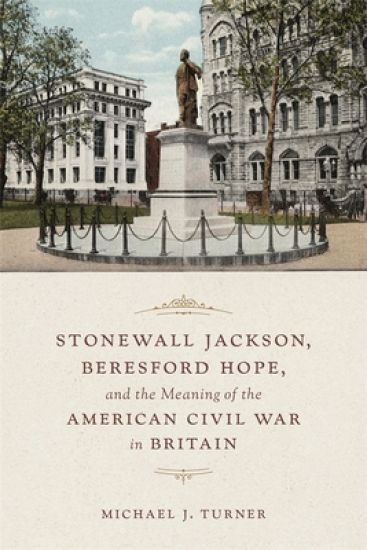
Stonewall Jackson, Beresford Hope, and the Meaning of the American Civil War in Britain
In this comprehensive examination of British sympathy for the South during and after the American Civil War, Michael J. Turner explores the ideas and activities of A.J. Beresford Hope - one of the leaders of the pro-Confederate lobby in Britain - to provide fresh insight into that seemingly curious allegiance. Hope and his associates cast famed Confederate general Thomas J. "Stonewall" Jackson as the embodiment of southern independence, courage, and honour, elevating him to the status of a hero in Britain. Historians have often noted that economic interest, political attitudes, and concern about Britain's global reach and geostrategic position led many in the country to embrace the Confederate cause, but they have focused less on the social, cultural, and religious reasons enunciated by Hope and ostensibly represented by Jackson, factors Turner suggests also heightened British affinity for the South. During the war, Hope noticed a tendency among British people to view southerners as heroic warriors in their struggle against the North. He and his pro-southern followers shared and promoted this vision, framing Jackson as the personification of that noble mission and raising the general's profile in Britain so high that they collected enough funds to construct a memorial to him after his death in 1863. Unveiled twelve years later in Richmond, Virginia, the statue stands today as a remarkable artifact of one of the lesser-known strands of British pro-Confederate ideology.Stonewall Jackson, Beresford Hope, and the Meaning of the American Civil War in Britain serves as the first in-depth analysis of Hope as a leading pro-southern activist and of Jackson's reputation in Britain during and after the Civil War. It places the conflict in a transnational context that reveals the reasons British citizens formed bonds of solidarity with the southerners whom they perceived shared their social and cultural values.