

Kirjahaku
Etsi kirjoja tekijän nimen, kirjan nimen tai ISBN:n perusteella.
1000 tulosta hakusanalla James M. Hutchisson


Elements of the Differential and Integral Calculus with Examples and Applications
James M Taylor
Trieste Publishing
2018
nidottu
Trieste Publishing has a massive catalogue of classic book titles. Our aim is to provide readers with the highest quality reproductions of fiction and non-fiction literature that has stood the test of time. The many thousands of books in our collection have been sourced from libraries and private collections around the world.The titles that Trieste Publishing has chosen to be part of the collection have been scanned to simulate the original. Our readers see the books the same way that their first readers did decades or a hundred or more years ago. Books from that period are often spoiled by imperfections that did not exist in the original. Imperfections could be in the form of blurred text, photographs, or missing pages. It is highly unlikely that this would occur with one of our books. Our extensive quality control ensures that the readers of Trieste Publishing's books will be delighted with their purchase. Our staff has thoroughly reviewed every page of all the books in the collection, repairing, or if necessary, rejecting titles that are not of the highest quality. This process ensures that the reader of one of Trieste Publishing's titles receives a volume that faithfully reproduces the original, and to the maximum degree possible, gives them the experience of owning the original work.We pride ourselves on not only creating a pathway to an extensive reservoir of books of the finest quality, but also providing value to every one of our readers. Generally, Trieste books are purchased singly - on demand, however they may also be purchased in bulk. Readers interested in bulk purchases are invited to contact us directly to enquire about our tailored bulk rates.
Frederick Douglass the Orator. Containing an Account of His Life; His Eminent Public Services; His Brilliant Career as Orator; Selections from His Speeches and Writings
James M Gregory
Trieste Publishing
2018
nidottu
Trieste Publishing has a massive catalogue of classic book titles. Our aim is to provide readers with the highest quality reproductions of fiction and non-fiction literature that has stood the test of time. The many thousands of books in our collection have been sourced from libraries and private collections around the world.The titles that Trieste Publishing has chosen to be part of the collection have been scanned to simulate the original. Our readers see the books the same way that their first readers did decades or a hundred or more years ago. Books from that period are often spoiled by imperfections that did not exist in the original. Imperfections could be in the form of blurred text, photographs, or missing pages. It is highly unlikely that this would occur with one of our books. Our extensive quality control ensures that the readers of Trieste Publishing's books will be delighted with their purchase. Our staff has thoroughly reviewed every page of all the books in the collection, repairing, or if necessary, rejecting titles that are not of the highest quality. This process ensures that the reader of one of Trieste Publishing's titles receives a volume that faithfully reproduces the original, and to the maximum degree possible, gives them the experience of owning the original work.We pride ourselves on not only creating a pathway to an extensive reservoir of books of the finest quality, but also providing value to every one of our readers. Generally, Trieste books are purchased singly - on demand, however they may also be purchased in bulk. Readers interested in bulk purchases are invited to contact us directly to enquire about our tailored bulk rates.
Record of the Descendants of Ezekiel and Mary Baker de Camp, of Butler County, Ohio
James M de Camp
Trieste Publishing
2018
nidottu

Public Document No. 12. the Commonwealth of Massachusetts. Report of the Attorney General for the Year Ending January 15, 1913
James M Swift
Trieste Publishing
2018
nidottu
In this book, originally published in 1968, James M. Gustafson asks the fundamental question, what is the significance of Jesus for the moral life? His answer is in the form of an ethical map, showing the ways in which theological affirmations about Christ relate to moral life in the writings of a number of important Christian thinkers. Gustafson has written a new preface for this edition.The Library of Theological Ethics series focuses on what it means to think theologically and ethically. It presents a selection of important and otherwise unavailable texts in easily accessible form. Volumes in this series will enable sustained dialogue with predecessors though reflection on classic works in the field.
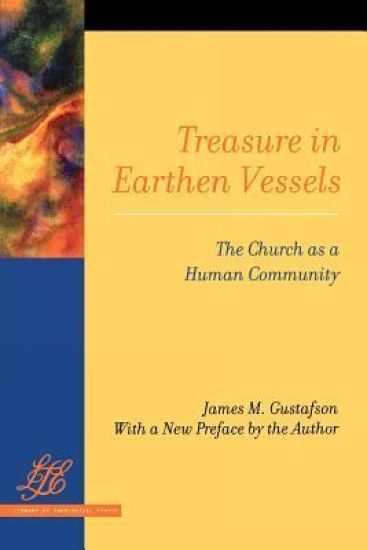
When first published in 1961, Treasure in Earthen Vessels was hailed by H. Richard Niebuhr as "the first real sociology of the church." In this landmark work, James M. Gustafson examines the church as a human institution that must, and does, participate in the social structure of all human communities. His penetrating analysis remains an important contribution to the dialogue between the theological and social-scientific disciplines. Gustafson has written a new preface for this volume. The Library of Theological Ethics series focuses on what it means to think theologically and ethically. It presents a selection of important and otherwise unavailable texts in easily accessible form. Volumes in this series will enable sustained dialogue with predecessors though reflection on classic works in the field.
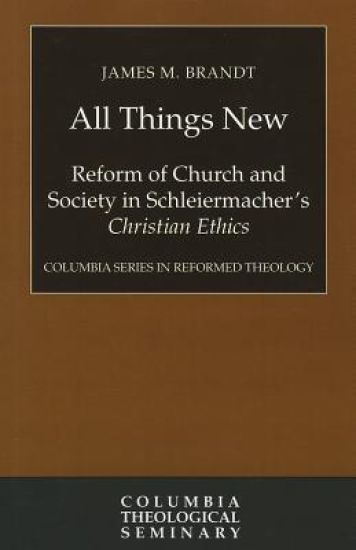
All Things New presents a study of Rudolf Schleiermacher's important but sometimes misunderstood Christian Ethics. Brandt places Schleiermacher's ethics in the context of his life, illuminates its main themes, and corrects some common misperceptions about Schleiermacher and his work. He argues that Schleiermacher's ethical concerns helped to make him truly a "Reformed" theologian. All Things New also shows Schleiermacher to be more than an "academic theologian," but rather one who was a churchman and pastor, and who energetically engaged in both church and political activities.The Columbia Series in Reformed Theology represents a joint commitment by Columbia Theological Seminary and Westminster John Knox Press to provide theological resources from the Reformed tradition for the church today. This series examines theological and ethical issues that confront church and society in our own particular time and place.

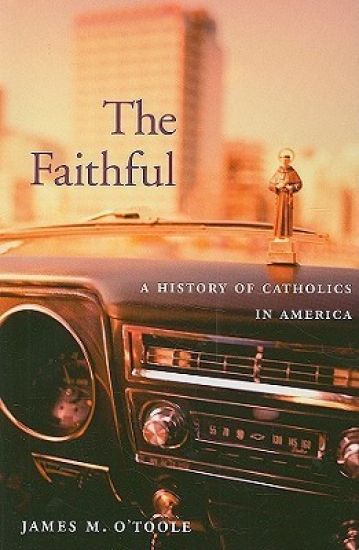
Shaken by the ongoing clergy sexual abuse scandal, and challenged from within by social and theological division, Catholics in America are at a crossroads. But is today’s situation unique? And where will Catholicism go from here? With the belief that we understand our present by studying our past, James O’Toole offers a bold and panoramic history of the American Catholic laity.O’Toole tells the story of this ancient church from the perspective of ordinary Americans, the lay believers who have kept their faith despite persecution from without and clergy abuse from within. It is an epic tale, from the first settlements of Catholics in the colonies to the turmoil of the scandal-ridden present, and through the church’s many American incarnations in between. We see Catholics’ complex relationship to Rome and to their own American nation. O’Toole brings to life both the grand sweep of institutional change and the daily practice that sustained believers. The Faithful pays particular attention to the intricacies of prayer and ritual—the ways men and women have found to express their faith as Catholics over the centuries.With an intimate knowledge of the dilemmas and hopes of today’s church, O’Toole presents a new vision and offers a glimpse into the possible future of the church and its parishioners. Moving past the pulpit and into the pews, The Faithful is an unmatched look at the American Catholic laity. Today’s Catholics will find much to educate and inspire them in these pages, and non-Catholics will gain a newfound understanding of their religious brethren.
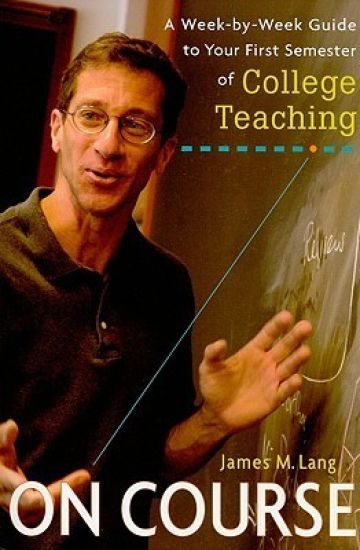
You go into teaching with high hopes: to inspire students, to motivate them to learn, to help them love your subject. Then you find yourself facing a crowd of expectant faces on the first day of the first semester, and you think “Now what do I do?” Practical and lively, On Course is full of experience-tested, research-based advice for graduate students and new teaching faculty. It provides a range of innovative and traditional strategies that work well without requiring extensive preparation or long grading sessions when you’re trying to meet your own demanding research and service requirements. What do you put on the syllabus? How do you balance lectures with group assignments or discussions—and how do you get a dialogue going when the students won’t participate? What grading system is fairest and most efficient for your class? Should you post lecture notes on a website? How do you prevent cheating, and what do you do if it occurs? How can you help the student with serious personal problems without becoming overly involved? And what do you do about the student who won’t turn off his cell phone? Packed with anecdotes and concrete suggestions, this book will keep both inexperienced and veteran teachers on course as they navigate the calms and storms of classroom life.
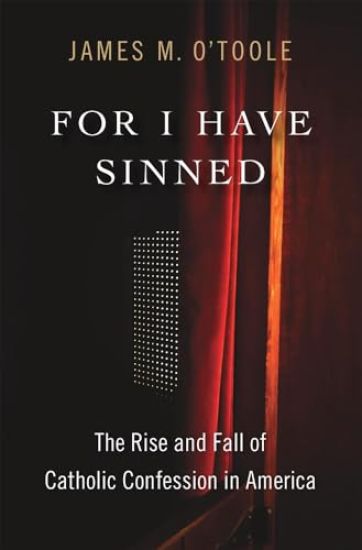
The remarkable story of how confession became a defining rite for American Catholics—and then, beginning in the 1970s, all but disappeared.For generations, American Catholics went faithfully to confession, admitting their sins to a priest and accepting through him God’s forgiveness. The sacrament served as a distinctive marker of Catholic identity, shaping parishioners’ views of their relationship to God, their neighbors, and the wider world. But starting in the 1970s, many abandoned confession altogether. Focusing on the experiences of both laypeople and priests, James M. O’Toole reconstructs the history of confession’s steady rise—and dramatic fall—among American Catholics.In the early United States, the Catholic Church grew rapidly—and with it, confession’s centrality. Although the sacrament was practiced unevenly for much of the nineteenth century, frequent confession became common by the early twentieth. Both priests and parishioners understood confession as a ritual crucial for the soul, while on a social level, it established Catholic distinctiveness within a largely Protestant country. Today, however, even faithful Catholics seldom confess. The reasons for this change, O’Toole reveals, include the emergence of psychology and other forms of counseling; the Church’s stance against contraception, which alienated many parishioners; and a growing sense of confession’s inability to confront social problems like structural racism, poverty, and sexism. Meanwhile, increasing recognition of sexual abuse within the Church further undermined trust in clergy as confessors.Sensitively attuned to the historical importance of confession, For I Have Sinned also suggests that, if the sacrament no longer serves the needs of US Catholics, the Church and its members might find new ways to express their ideals in the twenty-first century.
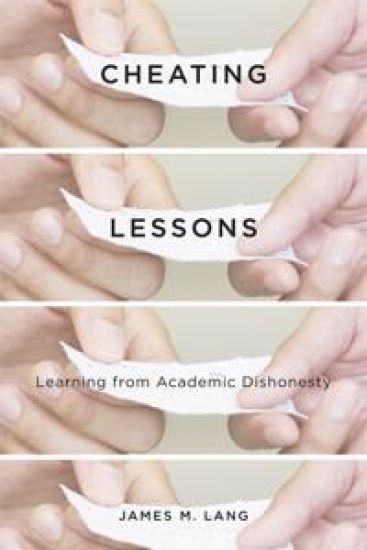
Nearly three-quarters of college students cheat during their undergraduate careers, a startling number attributed variously to the laziness of today’s students, their lack of a moral compass, or the demands of a hypercompetitive society. For James Lang, cultural or sociological explanations like these are red herrings. His provocative new research indicates that students often cheat because their learning environments give them ample incentives to try—and that strategies which make cheating less worthwhile also improve student learning. Cheating Lessons is a practical guide to tackling academic dishonesty at its roots.Drawing on an array of findings from cognitive theory, Lang analyzes the specific, often hidden features of course design and daily classroom practice that create opportunities for cheating. Courses that set the stakes of performance very high, that rely on single assessment mechanisms like multiple-choice tests, that have arbitrary grading criteria: these are the kinds of conditions that breed cheating. Lang seeks to empower teachers to create more effective learning environments that foster intrinsic motivation, promote mastery, and instill the sense of self-efficacy that students need for deep learning.Although cheating is a persistent problem, the prognosis is not dire. The good news is that strategies which reduce cheating also improve student performance overall. Instructors who learn to curb academic dishonesty will have done more than solve a course management problem—they will have become better educators all around.
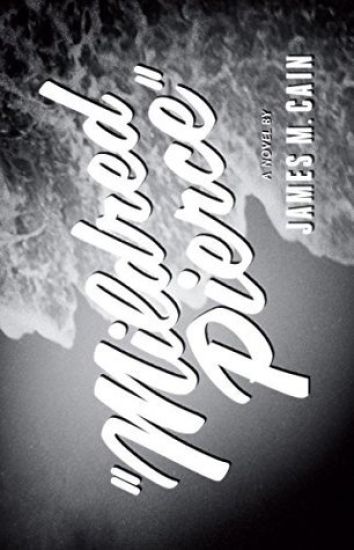
Mildred Pierce had gorgeous legs, a way with a skillet, and a bone-deep core of toughness. She used those attributes to survive a divorce and poverty and to claw her way out of the lower middle class. But Mildred also had two weaknesses: a yen for shiftless men, and an unreasoning devotion to a monstrous daughter. Out of these elements, Cain creates a novel of acute social observation and devastating emotional violence, with a heroine whose ambitions and sufferings are never less than recognizable.

Revelation is the Bible's most puzzling book. Though it has inspired some of the world's greatest literature and art, to many readers the book remains a total mystery--a hodge-podge of strange, mystical symbolism and obscure references. Now James M. Efird provides a clear, readable look at the meaning of Revelation. Probing the mysterious book to its very core, Efird offers the best of modern scholarship in an accessible way. Efird places Revelation in its historical context (approximately AD 90), and explains its message for us today. Revelation for Today features an appendix on ways to teach the book, designed for pastors and church school teachers.
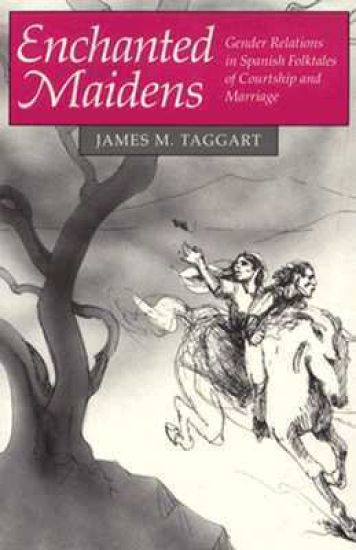
Spanish villagers tell many folktales that describe in metaphorical language the struggles of young men and women as they emerge from their parental families and join in love. In this book James Taggart presents dozens of orally transmitted tales, including "Snow White," "Cinderella," "Beauty and the Beast," "Blancaflor," and dragonslayer stories, collected from seven villages in the region of CNBceres, and analyzes the differences in male and female approaches to telling them. His study shows how men and women use the tales to grapple with some of the contradictions found in gender relations in their culture, which conditions men to be sexually assertive and to marry virgins and which teaches women to fear the men who court them. Taggart interprets the male-female dialogue voiced through storytelling by linking the content of specific tales to the life experiences and gender of the storyteller. Men and women, he finds, carry out an exchange of ideas by retelling the same stories and altering the plots and characters to express their respective views of courtship. This indirect narrative dialogue conveys an understanding of the opposite sex and establishes a common model of marriage that permits men and women to overcome their fear of each other and bond in heterosexual love.
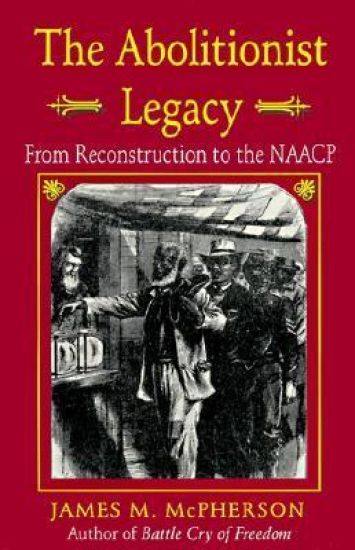
Building on arguments presented in The Struggle for Equality, James McPherson shows that many abolitionists did not retreat from Reconstruction, as historical accounts frequently lead us to believe, but instead vigorously continued the battle for black rights long after the Civil War. Tracing the activities of nearly 300 abolitionists and their descendants, he reveals that some played a crucial role in the establishment of schools and colleges for southern blacks, while others formed the vanguard of liberals who founded the NAACP in 1910. The author's examination of the complex and unhappy fate of Reconstruction clarifies the uneasy partnership of northern and southern white liberals after 1870, the tensions between black activists and white neo-abolitionists, the evolution of resistance to racist ideologies, and the origins of the NAACP.