Kirjojen hintavertailu. Mukana 12 570 953 kirjaa ja 12 kauppaa.

Kirjahaku

Etsi kirjoja tekijän nimen, kirjan nimen tai ISBN:n perusteella.

1000 tulosta hakusanalla James R Cook

Preaching the Parables, Series II, Cycle C

Preaching the Parables, Series II, Cycle C

James R Wilson; William E Keeney

CSS Publishing Company
1997
pokkari
Parables provide insights and lessons that are timeless. When they are employed in preaching, the hearer receives images that are easy to remember. Preaching the Parables provides a means of communicating the teachings of Jesus for modern Christians. With each parable Keeney includes: 1. Scripture Text so readers do not have to refer to the Bible 2. The theme of the parable 3. The context of the parable a) how it fits into the church year b) how it relates to the other scripture passages for the day 4. Some issues that the parable addresses 5. Ideas for preaching the parable 6. Creative illustrations which can be used in preaching William Keeney holds a Ph.D. from Hartford Seminary in Connecticut. He has been Assistant to the President and professor of Bible and Religion at Bluffton College, Bluffton, Ohio, and Provost and professor of Bible and Religion at Bethel College in Kansas. He has also taught Peace and Conflict Studies at Kent State University. In addition to teaching he has served pastorates in Connecticut, Kansas and Ohio.
Ethics and Selfhood

Ethics and Selfhood

James R. Mensch

State University of New York Press
2003
pokkari
Argues that a coherent theory of ethics requires an account of selfhood.According to James R. Mensch, a minimal requirement for ethics is that of guarding against genocide. In deciding which races are to live and which to die, genocide takes up a standpoint outside of humanity. To guard against this, Mensch argues that we must attain the critical distance required for ethical judgment without assuming a superhuman position. His description of how to attain this distance constitutes a genuinely new reading of the possibility of a phenomenological ethics, one that involves reassessing what it means to be a self. Selfhood, according to Mensch, involves both embodiment and the self-separation brought about by our encounter with others-the very others who provide us with the experiential context needed for moral judgment. Buttressing his position with documented accounts of those who hid Jews during the Holocaust, Mensch shows how the self-separation that occurs in empathy opens the space within which moral judgment can occur and obligation can find its expression. He includes a reading of the major moral philosophers-Plato, Aristotle, Kant, Mill, Arendt, Levinas-even as he develops a phenomenological account of the necessity of reading literature to understand the full extent of ethical responsibility. Mensch's work offers an original and provocative approach to a topic of fundamental importance.
Guidebook for the Design of ASME Section VIII Pressure Vessels

Guidebook for the Design of ASME Section VIII Pressure Vessels

James R. Farr; Maan H. Jawad

American Society of Mechanical Engineers,U.S.
2010
sidottu
This is a fully revised and updated fourth edition of a classic guidebook. Whether you are a beginning design engineer or an experienced engineering manager developing a mechanical integrity program, this updated volume gives you a thorough examination and review of the requirements applicable to the design, materials selection, fabrication, inspection, and testing of pressure vessels and their components. ""Guidebook for Design of ASME Section VIII Pressure Vessels"" provides you with a review of the background issues, reference materials, technology, and techniques necessary for the safe, reliable, cost-efficient function of pressure vessels in the petrochemical, paper, power, and other industries. Solved examples throughout the volume illustrate the application of various equations given in ""Section VIII"".
Elysium Tide

Elysium Tide

James R. Hannibal

BAKER PUBLISHING GROUP
2022
nidottu
Dr. Peter Chesterfield is one of the Royal London Hospital's top neurosurgeons. He is also a workaholic, ordered by his boss to take a week off to attend a medical symposium at the luxurious Elysium Grand on the island of Maui. While there, Peter pulls a woman with a skull fracture from the water. Though he is able to revive her in the ambulance, she eventually dies in his arms, leaving him with only one clue to what happened to her: the word "honu."Increasingly obsessed with discovering the cause of his patient's death, Peter becomes entangled in an ongoing investigation of a brazen luxury auto theft. He also becomes a source of deep irritation to detective Lisa Kealoha, who has jurisdiction over the case.But when the two join forces, they begin to uncover a destructive plot that runs far deeper than either of them could have imagined. And if they're not careful, they're both going to end up dead.Award-winning author James R. Hannibal whisks you away to the deadly beauty of Hawaii for a story of greed, violence, and justice that will leave you breathless.
Romans

Romans

James R. Edwards

Baker Books
2012
nidottu
Martin Luther called Romans the clearest gospel of all. But centuries of interpretive tradition and dogma have muddied the waters. Edwards's careful exposition pays attention to literary detail and historical context to clarify the Epistle's significance for its original readers and for the church today. The NIBC format (section-by-section exposition of the NIV, all Greek transliterated, and separate textual and technical notes) make this commentary ideal for laypeople and pastors.
The Great Urals

The Great Urals

James R. Harris

Cornell University Press
1999
sidottu
Political histories of the Soviet Union have portrayed a powerful Kremlin leadership whose will was passively implemented by regional Party officials and institutions. Drawing on his research in recently opened archives in Moscow and the Urals—a vast territory that is a vital center of the Russian mining and metallurgy industries—James R. Harris overturns this view. He argues here that the regions have for centuries had strong identities and interests and that they cumulatively exerted a significant influence on Soviet policy-making and on the evolution of the Soviet system.After tracing the development of local interests prior to the Revolution, Harris demonstrates that a desperate need for capital investment caused the Urals and other Soviet regions to press Moscow to increase the investment and production targets of the first five year plan. He provides conclusive evidence that local leaders established the pace for carrying out such radical policies as breakneck industrialization and the construction of forced labor camps. When the production targets could not be met, regional officials falsified data and blamed "saboteurs" for their shortfalls. Harris argues that such deception contributed to the personal and suspicious nature of Stalin's rule and to the beginning of his onslaught on the Party apparatus.Most of the region's communist leaders were executed during the Great Terror of 1936–38. In his conclusion, Harris measures the impact of their interests on the collapse of the communist system, and the fate of reform under Gorbachev and Yeltsin.
To Be a Citizen

To Be a Citizen

James R. Lehning

Cornell University Press
2001
sidottu
France's Third Republic confronts historians and political scientists with what seems a paradox: it is at once France's most long-lived experiment with republicanism and a regime remembered primarily for chronic instability and spectacular scandal. From its founding in the wake of France's humiliation at the hands of Prussia to its collapse in the face of the Nazi Blitzkrieg, the Third Republic struggled to consolidate the often contradictory impulses of the French revolutionary tradition into a set of stable democratic institutions. To Be a Citizen is not an institutional history of the regime, but an exploration of the political culture gradually formed by the moderate republicans who steered it. In James R. Lehning's view, that culture was forced to reconcile conflicting views of the degree of citizen participation a republican form of government should embrace. The moderate republicans called upon the entire nation to act as citizens of the Republic even as they limited the ability of many, including women, Catholics, and immigrants, to assume this identity and to participate in political life. This participation, based on universal male suffrage alone, was at odds with the notion of universal citizenship—the tradition of direct democracy as expressed in 1789, 1793, 1830, and 1848. Lehning examines a series of events and issues that reveal both the tensions within the republican tradition and the regime's success. It forged a political culture that supported the moderate republican synthesis and blunted the ideal of direct democracy. To Be a Citizen not only does much to illuminate an important chapter in the history of modern France, but also helps the reader understand the dilemmas that arise as political elites attempt to accommodate a range of citizens within ostensibly democratic systems.
Surgeons and the Scope

Surgeons and the Scope

James R. Zetka

ILR Press
2003
sidottu
In Surgeons and the Scope, James R. Zetka Jr. describes the impact of the video laparoscope on the work lives of contemporary surgeons. The video laparoscope allows surgeons to peer into the inner abdomen with a miniaturized camera, thereby enabling them to perform complex operations without large incisions through small ports punched into the abdominal wall. This technological innovation revolutionized surgery as we know it. Zetka blends rich interview and archival data into a compelling account of an important technological development. He shows how the new laparoscopic technology challenged surgeons to rethink their approaches to surgery, to relearn basic hand-eye coordination, to master complex machinery, and to shift from individualistic to team-based work strategies. Zetka then explains how and why general surgeons embraced this disruptive technology by examining the breakdown of the division of labor between general surgeons and gastroenterologists in response to the unintended and unanticipated outcomes of the scope technology. In Surgeons and the Scope, Zetka weaves cultural, structural, and political economic developments into a sophisticated account of technological change. By viewing the advent of laparoscopic surgery within the context of the history, culture, and ideology of medicine, Zetka provides a deeper understanding of the politics of technology, particularly its effects on job skills, occupations, and worker control.
Keeping Busy

Keeping Busy

James R. Dowling

Johns Hopkins University Press
1995
pokkari
Although very little can be done to alter the course of dementia, much can be done to maximize the quality of life of people with the condition. Research as well as practical experience suggest that behavior management, especially through programs that provide meaningful and constructive activity, is currently the most effective treatment. In Keeping Busy, James Dowling describes a variety of activities designed to bring meaning and enjoyment to the lives of persons with dementia. The activities are organized by general categories such as music, exercise, horticulture, pets, humor, and social events. The largest section deals with communication and includes word games that help people strengthen their remaining verbal skills. The description of each activity includes step-by-step instructions, as well as tips on how to adapt it for small or large groups, for individuals at home or in an organization, or people who are bedridden.
Sea Turtles

Sea Turtles

James R. Spotila

Johns Hopkins University Press
2005
sidottu
For more than a hundred million years, sea turtles have been swimming in the world's oceans. These magnificent, long-lived creatures spend their lives in the water, coming ashore to lay their eggs. Upon hatching, the baby turtles leave the nest and enter a dangerous world of storms and predators. The females will return to the same beach to lay their own eggs when they reach maturity a decade later. Today, there are seven species of sea turtle: the grass-eating green turtle; the sea sponge-eating hawksbill; the olive ridley; the Kemp's ridley, which is the smallest species; the loggerhead; the flatback of Australia; and the giant leatherback. Having escaped the mass extinction that wiped out the dinosaurs, these ancient reptiles today face new dangers that threaten their survival: pollution, hunting, and the destruction of their nesting grounds. Will this century be the last to witness their majesty? Will succeeding generations live in a world devoid of their graceful presence? Marine biologist James R. Spotila has spent much of his life unraveling the mysteries of these graceful creatures and working to ensure their survival. In Sea Turtles, he offers a comprehensive and compelling account of their history and life cycle based on the most recent scientific data-and suggests what we can do now to save them. From the Kemp's ridley, which nests on a single beach on Mexico's Gulf Coast, to the nomadic leatherback, which can weigh up to a ton and is in the most imminent danger of extinction, Spotila offers a vivid description of their diets and mating habits, and the conservation efforts being made on their behalf. Illustrated with stunning color photographs by the world's leading nature photographers, Sea Turtles will inform and inspire readers of all ages everywhere.
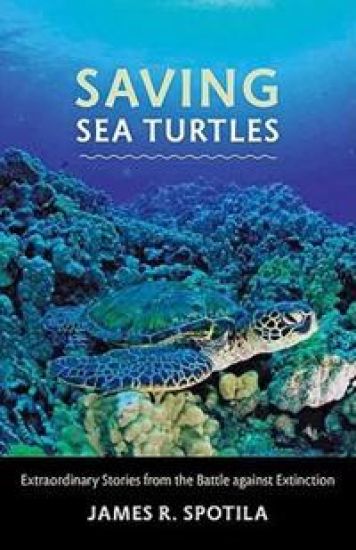
Saving Sea Turtles

Saving Sea Turtles

James R. Spotila

Johns Hopkins University Press
2011
sidottu
In April 2007, eleven leatherback turtles captured the imagination of the public worldwide as they "raced" from Costa Rica toward the Galapagos Islands. Known as the Great Turtle Race, this event tracked these critically endangered sea turtles, drawing attention to their fragile status and generating data on the turtles vital to efforts to study and protect them. But the Great Turtle Race is just one of many tools marine conservationists use to inform people about the status, biology, and lives of the seven sea turtle species. Due to human actions, once-plentiful sea turtle population levels plummeted throughout much of the twentieth century, stabilizing somewhat only after Archie Carr and Jacques Cousteau popularized their plight. With Saving Sea Turtles, award-winning author James R. Spotila picks up where Carr and Cousteau left off, going inside the modern-day conservation movement to tell the tales of today's sea turtle conservationists. He provides a complete overview of sea turtle biology and life cycles, discusses the human and natural world threats they face, and examines the new methods and technologies humans are using to save them. Throughout, Spotila dots the narrative with stories of real-life heroes who risk life and limb to understand, track, and conserve sea turtles across the globe. Spotila has been at the forefront of sea turtle research and conservation for decades. His inspirational story of dedicated individuals, creative endeavors, and adventure reveals what is being done and what else we must do in order to ensure that these fascinating animals continue swimming in the oceans.
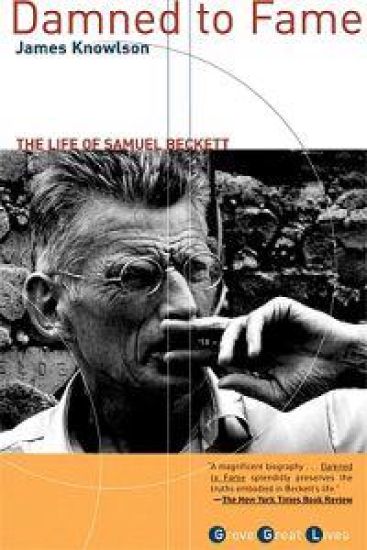
Damned to Fame

Damned to Fame

James R Knowlson

Black Cat
2004
nidottu
Damned to Fame is the brilliant and insightful portrait of Nobel Prize-winning author Samuel Beckett, mysterious and reclusive master of twentieth-century literature. Professor James Knowlson, Beckett's chosen biographer and a leading authority on Beckett, vividly recreates Beckett's life from his birth in a rural suburb of Dublin in 1906 to his death in Paris in 1989, revealing the real man behind the literary giant. Scrupulously researched and filled with previously unknown information garnered from interviews with the author and his friends, family, and contemporaries, Knowlson's unparalleled work is the definitive Beckett biography of our time. Nearing the end of his life, Samuel Beckett chose James Knowlson to be his biographer because he "knows my work best." One of the world's leading authorities on Beckett, Knowlson has drawn on his twenty-year friendship with the Nobel Prize winner, more than one hundred interviews, and research in dozens of archival collections-many previously untapped by scholars-to produce this definitive biography of one of hte century's leading writers in both English and French. Damned to Fame follows teh reclusive literary giant's life from his birth in Foxrock, a rural suburb of Dublin, in 1906 to his death in Paris in 1989. Knowlson brilliantly re-creates Beckett's early years as a struggling author in Paris, his travels through Germany in 1936-37 as the Nazis were consolidating their power, his service in the French Resistance during World War II, and the years of literary fame and financial success that followed the first performance of his controversial Waiting For Godot (1953). Paris between the wars was a city vibrant with experimentation, both in the arts and in personal lifestyle, and Knowlson introduces us to the writers and painters who, along with the young Beckett, populated his bohemian community. Most notable was James Joyce, a fellow Irishman who became Beckett's friend and mentor and influenced him to devote his life to writing. We also meet the women in Beckett's life-his domineering mother, May; his cousin Peggy Sinclair, who died at a tragically young age; Ethna McCarthy, his first love, whom he immortalized in his poetry and prose; Peggy Guggenheim, the American heiress and patron of the arts; and the strong and independent Suzanne Deschevaux-Dumesnil, whom he met in the late 1930s and married in 1961.Beyond recounting many previously unknown aspects of the writer's life, including his strong support for human rights and other political causes, Knowlson explores in fascinating detail teh roots of Beckett's works. He shows not only how the relationship between Beckett's own experiences and his work became more oblique over time, but also how his startling postmodern images were inspired by the paintings of the Old Masters, such as Antonello da Messina, Durer, Rembrandt, and Caravaggio. Perhaps most striking of all is Knowlson's portrait of Beckett's complex personality. Although Beckett is often depicted as melancholic, self-critical, and intensely preoccupied with his work, his own letters reveal him to have been also a witty, resilient, and compassionate man who could respond to adversity with humor and who inspired deep affection in his friends.
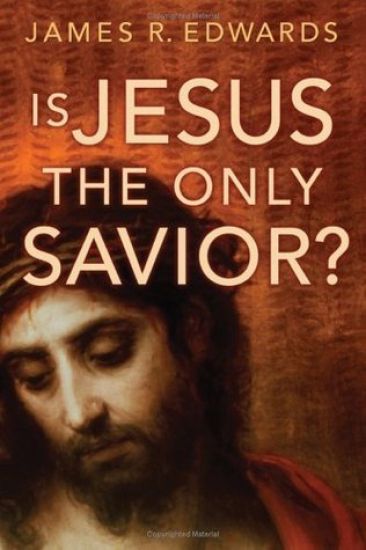
Is Jesus The Only Savior?

Is Jesus The Only Savior?

James R. Edwards

William B Eerdmans Publishing Co
2005
pokkari
In this timely book for believers, inquirers, and skeptics alike, James R. Edwards faces head-on the question of whether or not Jesus is indeed the sole savior of the world. After tracing the currents of modernity from the Enlightenment to the Jesus Seminar, Edwards contends that the assumptions of the most skeptical historical-Jesus scholars are no more intellectually defensible than the claims of faith. He then assembles extensive support to show that Jesus considered himself the unique and saving mission of God to the world. Edwards devotes the second half of the book to discussing Jesus as savior in light of contemporary cultural currents, specifically addressing the thorny issues of religious pluralism, moral relativism, postmodernism, and the quest for world peace. Illustrated with real-life stories, "Is Jesus the Only Savior?" gives a fair hearing to twenty-first-century concerns while upholding historic Christian faith.
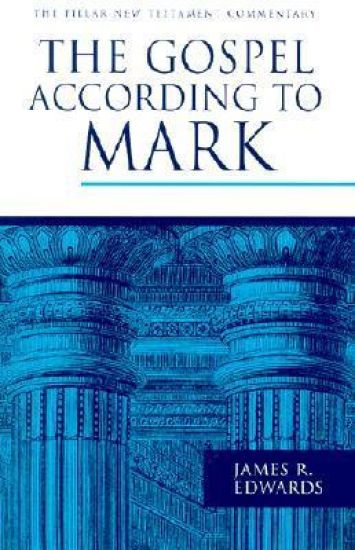
The Gospel According to Mark

The Gospel According to Mark

James R Edwards

William B. Eerdmans Publishing Company
2001
sidottu
This new Pillar volume offers exceptional commentary on Mark that clearly shows the second Gospel -- though it was a product of the earliest Christian community -- to be both relevant and sorely needed in today's church. Written by a biblical scholar who has devoted thirty years to the study of the second Gospel, this commentary aims primarily to interpret the Gosepl of Mark according to its theological intentions and purposes, especially as they relate to the life and ministry of Jesus and the call to faith and discipleship. Unique features of James Edwards's approach include clear descriptions of key terms used by Mark and revealing discussion of the Gospel's literary features, including Mark's use of the -sandwich- technique and of imagistic motifs and irony. Edwards also proposes a new paradigm for interpreting the difficult -Little Apocalypse- of chapter 13, and he argues for a new understanding of Mark's controversial ending.