

Kirjahaku
Etsi kirjoja tekijän nimen, kirjan nimen tai ISBN:n perusteella.
1000 tulosta hakusanalla John Stuart

On Liberty (Barnes & Noble Library of Essential Reading)
John Stuart Mill
Barnes Noble Inc
2004
pokkari
Published in 1859, John Stuart Mill's "On Liberty" presented one of the most eloquent defenses of individual freedom in nineteenth-century social and political philosophy and is today perhaps the most widely-read liberal argument in support of the value of liberty. Mill's passionate advocacy of spontaneity, individuality and diversity, along with his contempt for compulsory uniformity and the despotism of popular opinion, has attracted both admiration and condemnation.
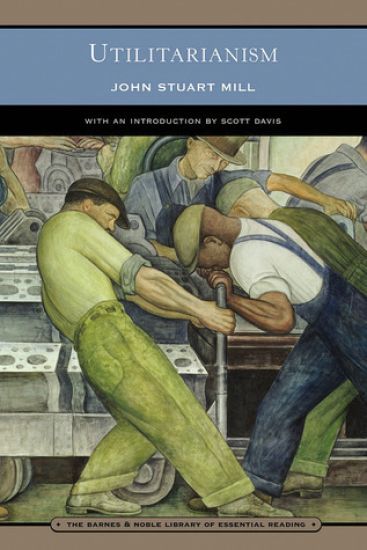
Utilitarianism (Barnes & Noble Library of Essential Reading)
John Stuart Mill
Barnes Noble Inc
2005
pokkari
John Stuart Mill's "Utilitarianism", which first appeared in three installments of "Fraser's Magazine" in 1861, was intended as a defense of the notorious doctrine identified with the liberal reformer Jeremy Bentham (1748-1832) and with the author's father, James Mill (1773-1836). The defense was successful. While 'the principle of utility, or as Bentham has latterly called it, the greatest happiness principle', may have scandalised Victorian England, Mill's "Utilitarianism" became one of the defining documents of modern British and American liberalism. It is impossible to appreciate contemporary social and political life without coming to grips with utilitarianism.
System of Logic Ratiocinative and Inductive Being a Connected View of the Principles of Evidence and the Methods of Scientific Investigation
John Stuart Mill
KESSINGER PUBLISHING CO
2004
pokkari

Principles Of Political Economy With Some Of Their Applications To Social Philosophy
John Stuart Mill
Kessinger Pub
2004
pokkari
Principles Of Political Economy With Some Of Their Applications To Social Philosophy
John Stuart Mill
Kessinger Pub
2004
pokkari
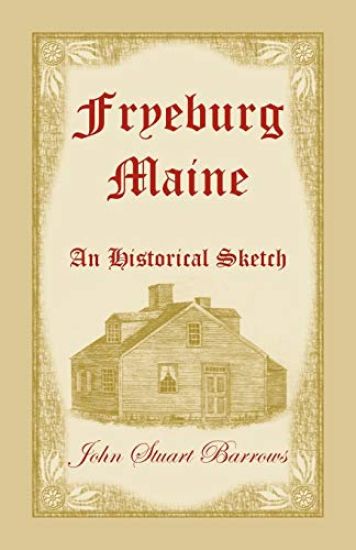
Fryeburg was the first town settled in the White Mountain region of Maine and New Hampshire. The land for Fryeburg Township, lying on both sides of the Saco River, was granted to Colonel Joseph Frye in 1763, and was incorporated in 1777. The author opens with an account of Maine's original inhabitants, the Abnaki Indians, "People of the Aurora Borealis." Particular attention is paid to the Pequawket tribe and their interactions with the early settlers of Fryeburg, including details of the "Battle at the Pond" in 1725. A biographical sketch of Joseph Frye, early settlers with details of their lots, early life and customs, first proprietors, ecclesiastical development, Parson Fessenden, early town government, schools, the Fryeburg Academy, the Saco River, and other geographical assets are covered. Additional topics include: "Fryeburg in the Wars" (the Revolutionary War, the War of 1812 and the Civil War), with several rosters; business and industry; town development; organizations; significant figures and much more. A wealth of names augments every topic. Excerpts from a variety of historical documents, an illustration of the Moses Ames house, half a dozen photographs, a list of sources, a subject index and a full-name index enhance the text.
IXAn Examination of Sir William Hamilton's Philosophy
John Stuart Mill
University of Toronto Press
1979
sidottu
An Examination of Sir William Hamilton's Philosophy, first published in 1865, with a second edition in the same year, and third and fourth editions in 1867 and 1872, has long been out of print. The Examination was, for his contemporaries, a most significant and popular work, presenting an extended treatment of some matters central to empiricism that found little space in Mill's Logic, the best known being his treatment of matter and mind from a psychological viewpoint. Appearing just before his successful parliamentary candidature, the Examination, with its deliberate and explicit onslaught on the intuitionists who were, in Mill's view, allied with anti-progressive political and religious forces, brought his beliefs into the public arena in a new way. Some of those who supported him politically found themselves viciously attacked because they had associated themselves with one who assailed settled religious beliefs. Other religionists who rejected many of Mill's attitudes strong expressed their admiration of the Examination because of its exposure to what they, with him, saw as dangerous theological and moral positions. Alan Ryan's analytical and historial introduction dwells on the most significant philosophical elements in the work, placing them in perspective and showing their relations to other aspects of Mill's thought. The textual introduction, by John M. Robson, examines the treatise in context of Mill's life in the 1860s, outlines its composition, and discusses, among other matters, the importance of the extensive revisions Mill made, mostly in response to critics. These revisions appear in full in the textual apparatus. Also provided are a bibliographical index, which gives a guide to the literature on the subject, and a collation of Mill's quotations, an analytical index, and appendices giving the reading of manuscript fragments and listing textual emendations.
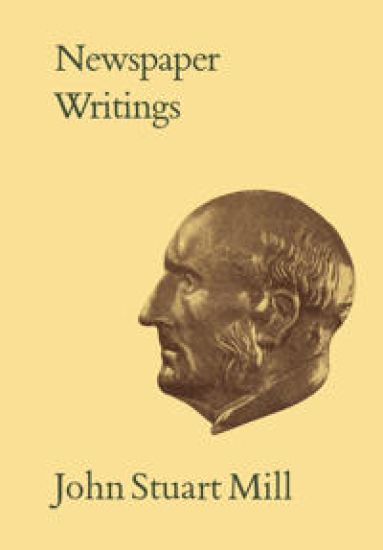
For just over fifty years John Stuart Mill contributed articles and letters to the newspapers, setting before the public a radical position on contemporary events. From 1822 to 1873, in newspapers as widely read as The Times and the Morning Chronicle, and as narrowly circulated as the True Sun and the New Times, he praised his friends and damned his opponents, while commenting on a while range of issues at home and abroad, from banking to Ireland, from wife-beating to land nationalization. His main series of newspaper writings concerned France (especially during the first four years of the Revolution of 1830) and Ireland (especially during December 1846 and January 1847, when various proposals for relief of the starving cottiers were being debated). Mill felt himself peculiarly fitted to explain French affairs and Irish solutions to the non-comprehending and wrong-headed English. But his pen was wielded wherever he say stupidity and narrowness, and he found them in astonishingly varied areas. He tried to explain to his obdurate countrymen the first principles of law reform, political economy, relations between the sexes, democracy, international law, and much more. Virtually none of these texts have been reprinted before this volume. The Introduction by Ann Robson sets the items in their historical and personal perspective, and draws out the implications for Mill's life and thought. The Textual Introduction by John Robson gives an account of the sources of the texts, and lays out principles and methods followed in the editing. The Mill that emerges from these pages is a fighting journalist, uninhibited, forthright, and often brilliantly satirical, testing his theoretical opinions in the real world, gradually maturing and developing a practical philosophy whose influence has been felt well into our own time.