Kirjojen hintavertailu. Mukana 11 342 296 kirjaa ja 12 kauppaa.

Kirjahaku

Etsi kirjoja tekijän nimen, kirjan nimen tai ISBN:n perusteella.

1000 tulosta hakusanalla Jon Stratton

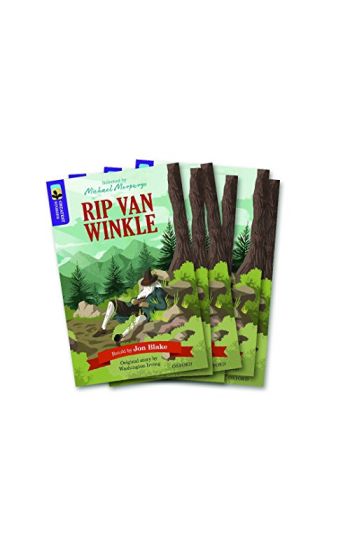
Oxford Reading Tree TreeTops Greatest Stories: Oxford Level 11: Rip Van Winkle Pack 6
Rip Van Winkle is a kind man with a very nasty wife! One afternoon, he meets a group of old-fashioned men high in the Catskill mountains, and tries an unusual drink which sends him straight to sleep ... When he awakes, Rip has grown a long beard but that isn't the only thing to have changed. What else will he discover when he returns home? Washington Irving's classic story about the man who falls asleep for twenty years will enchant a new generation of readers in this fabulous retelling. TreeTops Greatest Stories offers children some of the worlds best loved tales in a collection of timeless classics. Top children's authors and talented illustrators work together to bring to life our literary heritage for a new generation, engaging and delighting children. The books are carefully levelled, making it easy to match every child to the right book. Each book contains inside cover notes to help children explore the content, supporting their reading development. Teaching notes on Oxford Owl offer cross-curricular links and activities to support guided reading, writing, speaking and listening. This pack provides 6 copies of the same title.
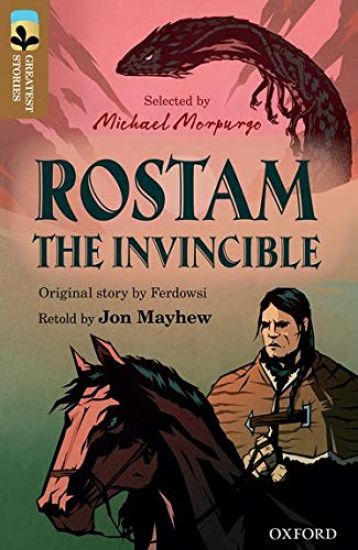
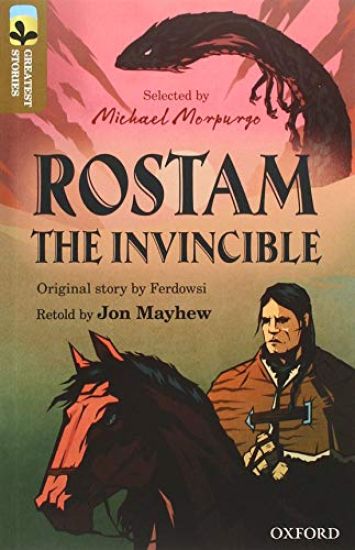
Oxford Reading Tree TreeTops Greatest Stories: Oxford Level 18: Rostam the Invincible
This thrilling tale is adapted from Shahnameh, the epic poem written by the Persian poet Ferdowsi in the 10th century. Rostam is the mightiest hero who has ever lived, and Rakhsh is his faithful horse - as strong as his master and quite a bit cleverer too. They have fought the fiercest creatures and most hideous monsters, but might have finally met their match... TreeTops Greatest Stories offers children some of the world's best-loved tales in a collection of timeless classics. Top children's authors and talented illustrators work together to bring to life our literary heritage for a new generation, engaging and delighting children. The books are carefully levelled, making it easy to match every child to the right book. Each book contains inside cover notes to help children explore the content, supporting their reading development. Teaching notes on Oxford Owl offer cross-curricular links and activities to support guided reading, writing, speaking and listening.
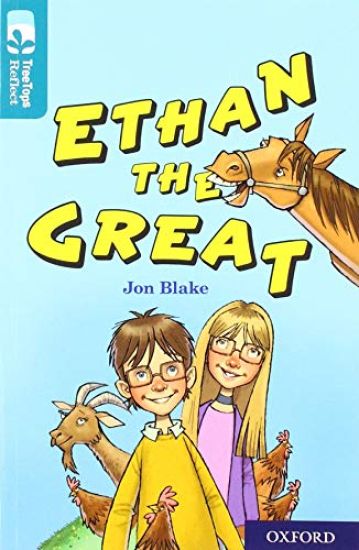
Oxford Reading Tree TreeTops Reflect: Oxford Level 16: Ethan the Great
Hi! I'm Ethan, and I want to tell you about my greatest adventure so far. It all started with me on my scooter (I've got cerebral palsy, so scooting is quicker than walking) and my best friend Nerys running along beside me. We were off to find some angry swans for her newspaper story. And it ended up with bobbing ducks, a sheep challenge and well, you'll have to wait and see! Reflect is a series of emotionally powerful books with realistic settings, carefully crafted to promote thoughtful discussions and develop higher-level reading comprehension. Written by top childrens authors and developed with Literacy expert and Series Editor Nikki Gamble, these are books you can trust to engage, entertain and support childrens personal development. The books are finely levelled, making it easy to match every child to stories with the right depth and complexity for them, and helping them to progress. Each book contains inside cover notes to help children deepen their understanding and support their reading comprehension. Teaching notes on Oxford Owl offer cross-curricular links to relationships education and support literacy skills.
Oxford Reading Tree TreeTops Greatest Stories: Oxford Level 18: Rostam the Invincible Pack 6
This thrilling tale is adapted from Shahnameh, the epic poem by the Persian poet Ferdowsi. Rostam is the mightiest hero who has ever lived, and Rakhsh is his faithful horse - as strong as his master and quite a bit cleverer too. They have fought the fiercest creatures and most hideous monsters, but might have finally met their match... TreeTops Greatest Stories offers children some of the world's best-loved tales in a collection of timeless classics. Top children's authors and talented illustrators work together to bring to life our literary heritage for a new generation, engaging and delighting children. The books are carefully levelled, making it easy to match every child to the right book. Each book contains inside cover notes to help children explore the content, supporting their reading development. Teaching notes on Oxford Owl offer cross-curricular links and activities to support guided reading, writing, speaking and listening. This pack provides 6 copies of the same title.
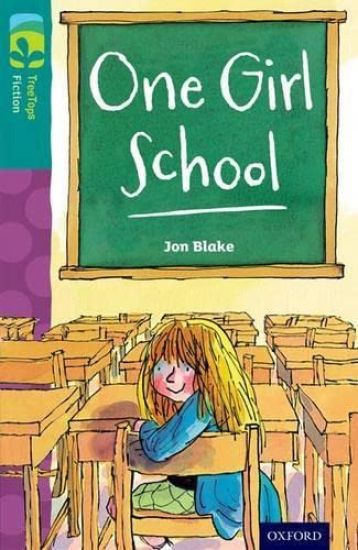
Oxford Reading Tree TreeTops Fiction: Level 16 More Pack A: One Girl School
Bernie moves to the countryside in One Girl School. On her first day at Marnover School she is the first to arriveshe is also the only pupil to arrive. Bernie finds herself in a desperate battle to save the school. But which side is Bernie on? TreeTops Fiction contains a wide range of quality stories enabling children to explore and develop their own reading tastes and interests. It contains stories from a variety of genres including humour, sci-fi, adventure, mystery and historical fiction. These exciting stories are ideal for introducing children to a wide selection of authors and illustrators. There is huge variety to ensure every reader finds books they will enjoy and can read. Books contain inside cover notes to support children in their reading. Help with children's reading development also available at www.oxfordowl.co.uk. The books are finely levelled, making it easy to match every child to the right book.
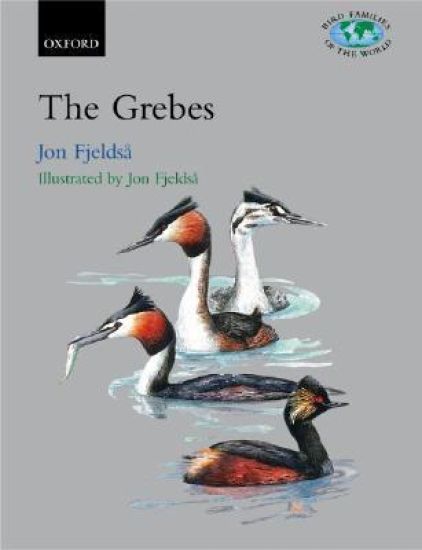
The Grebes

The Grebes

Jon Fjeldså

Oxford University Press
2004
sidottu
Those who are unfamiliar with grebes tend to think of them as odd ducks, but their strange behaviours reveal them to be fascinating and intriguing birds. Grebes are unusual and unique in many ways: their habit of feather-eating; their method of sunbathing; their special method of underwater propulsion; the unusual structure of their feet; their courtship behaviour; and their floating nests. As the birds are dependent upon shallow wetlands, they are strongly affected and threatened by our use of their habitats, leading to dwindling populations and even extinction of some species. In this new addition to the Bird Families of the World series Jon Fjeldså, a renowned expert on the grebes, provides an overview of the results of all the research that has been done on grebes. Part I contains a brief presentation of the grebe family, constraints of diving, the relationships between grebes and divers, and the morphology of grebes. Part II covers their biogeography, ecological distribution, feeding ecology, behaviour and communication, breeding biology, environmental threats, and conservation. Part III follows with 22 species accounts, including distribution maps. The plates section contains sixteen stunning paintings showing all the grebe species, by Jon Fjeldså. The Grebes, like its companion volumes in the series, will be an indispensable work of reference for ornithologists, whether professional or amateur.
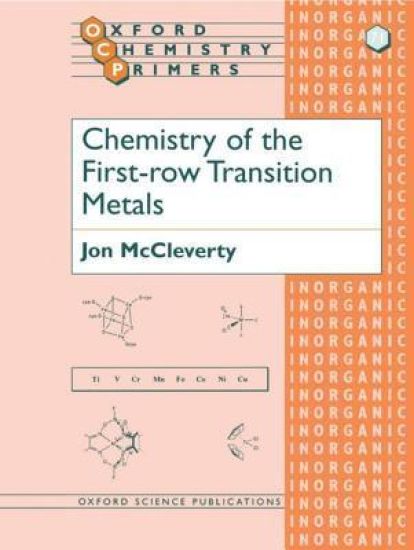
Chemistry of the First Row Transition Metals

Chemistry of the First Row Transition Metals

Jon McCleverty

Oxford University Press
1999
nidottu
The reactivity and structural properties of first row transition metals and their compounds depend on the electronic configuration of the d electrons of the metal. The book, which is intended for students who have had at least one year of inorganic chemistry, describes the most significant structures, reactions, and other important properties of co-ordination, organometallic and solid state compounds and also sketches the role of first row transition metals in biology. This is a largely factual text designed to build on or to link chemistry described in earlier Primers and the emphasis is on facts, but with explanations based on simple theory.
Bayesian Nets and Causality: Philosophical and Computational Foundations
Bayesian nets are widely used in artificial intelligence as a calculus for causal reasoning, enabling machines to make predictions, perform diagnoses, take decisions and even to discover causal relationships. But many philosophers have criticised and ultimately rejected the central assumption on which such work is based - the Causal Markov Condition. So should Bayesian nets be abandoned? What explains their success in artificial intelligence? This book argues that the Causal Markov Condition holds as a default rule: it often holds but may need to be repealed in the face of counterexamples. Thus Bayesian nets are the right tool to use by default but naively applying them can lead to problems. The book develops a systematic account of causal reasoning and shows how Bayesian nets can be coherently employed to automate the reasoning processes of an artificial agent. The resulting framework for causal reasoning involves not only new algorithms but also new conceptual foundations. Probability and causality are treated as mental notions - part of an agent's belief state. Yet probability and causality are also objective - different agents with the same background knowledge ought to adopt the same or similar probabilistic and causal beliefs. This book, aimed at researchers and graduate students in computer science, mathematics and philosophy, provides a general introduction to these philosophical views as well as an exposition of the computational techniques that they motivate.
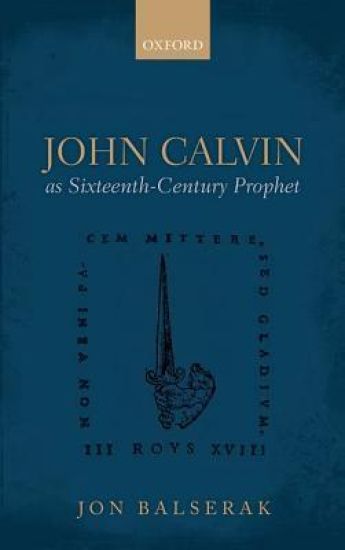
John Calvin as Sixteenth-Century Prophet

John Calvin as Sixteenth-Century Prophet

Jon Balserak

Oxford University Press
2014
sidottu
John Calvin as Sixteenth-Century Prophet examines Calvin's sense of vocation. Jon Balserak argues that Calvin believed himself to be a prophet "placed over nations and kingdoms to tear down and destroy, to build and to plant" (Jer 1: 10). With this authority, Calvin pursued an expansionist agenda which blended the religious, political, and social towards making France, upon which he turned his attentions especially after 1555, Protestant. Beginning with an analysis of the two trajectories of thought existing within Christian discourse on prophecy from the patristic to the Early Modern era, this study goes on to locate Calvin within a non-mystical, non-apocalyptic prophetic tradition that focused on scriptural interpretation. Balserak demonstrates how Calvin developed a plan to win France for the gospel; a plan which included the possibility of armed conflict. To pursue his designs, Calvin trained "prophets" who were sent into France to labor intensely to undermine the king's authority on the grounds that he supported idolatry, convince the French Reformed congregations that they were already in a war with him, and prepare them for a possible military uprising. An additional part of this plan saw Calvin search for a French noble willing to support the evangelical religion, even if it meant initiating a coup. Calvin began ruminating over these ideas in the 1550s or possibly earlier. In this analysis, the war which commenced in 1562 represents the culmination of Calvin's years of preparation.
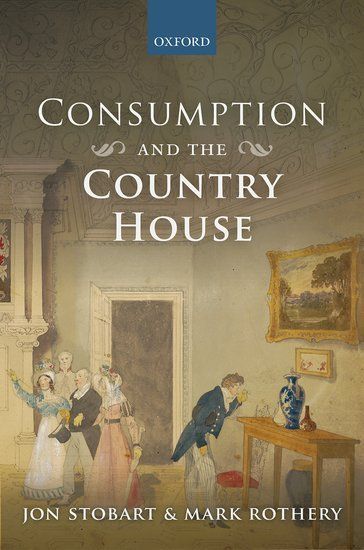
Consumption and the Country House

Consumption and the Country House

Jon Stobart; Mark Rothery

Oxford University Press
2016
sidottu
This study explores the consumption practices of the landed aristocracy of Georgian England. Focussing on three families and drawing on detailed analysis of account books, receipted bills, household inventories, diaries and correspondence, Consumption and the Country House charts the spending patterns of this elite group during the so-called consumer revolution of the eighteenth century. Generally examined through the lens of middling families, homes and motivations, this book explores the ways in which the aristocracy were engaged in this wider transformation of English society. Analysis centres on the goods that the aristocracy purchased, both luxurious and mundane; the extent to which they pursued fashionable modes and goods; the role that family and friends played in shaping notions of taste; the influence of gender on taste and refinement; the geographical reach of provisioning and the networks that lay behind this consumer activity, and the way this all contributed to the construction of the country house. The country house thus emerges as much more than a repository of luxury and splendour; it lay at the heart of complex networks of exchange, sociability, demand, and supply. Exploring these processes and relationships serves to reanimate the country house, making it an active site of consumption rather than simply an expression of power and taste, and drawing it into the mainstream of consumption histories. At the same time, the landed aristocracy are shown to be rounded consumers, driven by values of thrift and restraint as much as extravagant desires, and valuing the old as well as the new, not least as markers of their pedigree and heritance.
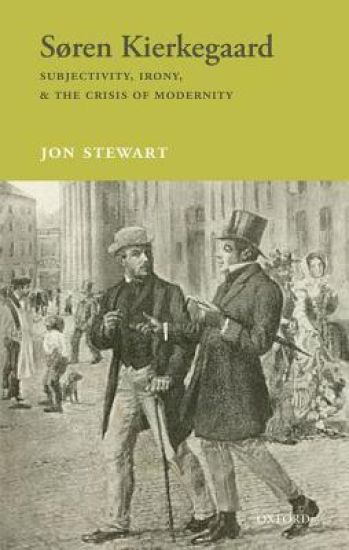
Søren Kierkegaard

Søren Kierkegaard

Jon Stewart

Oxford University Press
2015
sidottu
Søren Kierkegaard: Subjectivity, Irony, and the Crisis of Modernity examines the thought of Søren Kierkegaard, a unique figure, who has inspired, provoked, fascinated, and irritated people ever since he walked the streets of Copenhagen. At the end of his life, Kierkegaard said that the only model he had for his work was the Greek philosopher Socrates. This work takes this statement as its point of departure. Jon Stewart explores what Kierkegaard meant by this and to show how different aspects of his writing and argumentative strategy can be traced back to Socrates. The main focus is The Concept of Irony, which is a key text at the beginning of Kierkegaard's literary career. Although it was an early work, it nevertheless played a determining role in his later development and writings. Indeed, it can be said that it laid the groundwork for much of what would appear in his later famous books such as Either/Or and Fear and Trembling.
Calvinism

Calvinism

Jon Balserak

Oxford University Press
2016
nidottu
In this Very Short Introduction, Jon Balserak explores major ideas associated with the Calvinist system of thought. Beginning during the Protestant Reformation in cities like Zurich, Geneva, and Basel, Calvinismâalso known as Reformed Theologyâspread rapidly throughout Europe and the New World, eventually making its way to the African Continent and the East. Balserak examines how Calvinist thought and practice spread and took root, helping shape church and society. Much of contemporary thought, especially western thought, on everything from theology to civil government, economics, the arts, work and leisure, education, and the family has been influenced by Calvinism. Balserak explores this influence. He also examines common misconceptions and objections to Calvinism, and sets forth a Calvinist understanding of God, the world, humankind, and the meaning of life. ABOUT THE SERIES: The Very Short Introductions series from Oxford University Press contains hundreds of titles in almost every subject area. These pocket-sized books are the perfect way to get ahead in a new subject quickly. Our expert authors combine facts, analysis, perspective, new ideas, and enthusiasm to make interesting and challenging topics highly readable.
Me, Me, Me

Me, Me, Me

Jon Lawrence

Oxford University Press
2019
sidottu
Many commentators tell us that, in today's world, everyday life has become selfish and atomised--that individuals live only to consume. But are they wrong? In Me, Me, Me, Jon Lawrence re-tells the story of England since the Second World War through the eyes of ordinary people--including his own parents-- to argue that, in fact, friendship, family, and place all remain central to our daily lives, and whilst community has changed, it is far from dead. He shows how, in the years after the Second World War, people came increasingly to question custom and tradition as the pressure to conform to societal standards became intolerable. And as soon as they could, millions escaped the closed, face-to-face communities of Victorian Britain, where everyone knew your business. But this was not a rejection of community per se, but an attempt to find another, new way of living which was better suited to the modern world. Community has become personal and voluntary, based on genuine affection rather than proximity or need. We have never been better connected or able to sustain the relationships that matter to us. Me, Me, Me makes that case that it's time we valued and nurtured these new groups, rather than lamenting the loss of more 'real' forms of community--it is all too easy to hold on to a nostalgic view of the past.
Me, Me, Me

Me, Me, Me

Jon Lawrence

Oxford University Press
2023
nidottu
Many commentators tell us that, in today's world, everyday life has become selfish and atomised—that individuals live only to consume. But are they wrong? In Me, Me, Me, Jon Lawrence re-tells the story of England since the Second World War through the eyes of ordinary people—including his own parents— to argue that, in fact, friendship, family, and place all remain central to our daily lives, and whilst community has changed, it is far from dead. He shows how, in the years after the Second World War, people came increasingly to question custom and tradition as the pressure to conform to societal standards became intolerable. And as soon as they could, millions escaped the closed, face-to-face communities of Victorian Britain, where everyone knew your business. But this was not a rejection of community per se, but an attempt to find another, new way of living which was better suited to the modern world. Community has become personal and voluntary, based on genuine affection rather than proximity or need. We have never been better connected or able to sustain the relationships that matter to us. Me, Me, Me makes that case that it's time we valued and nurtured these new groups, rather than lamenting the loss of more 'real' forms of community—it is all too easy to hold on to a nostalgic view of the past.
Biological Science

Biological Science

Jon Scott; Gus Cameron; Anne Goodenough; Dawn Hawkins; Jenny Koenig; Martin Luck; Despo Papachristodoulou; Alison Snape; Kay Yeoman; Mark Goodwin

Oxford University Press
2022
nidottu
Biological Science: Exploring the Science of Life responds to the key needs of lecturers and their students by placing a clear central narrative, carefully-structured active learning, and confidence with quantitative concepts and scientific enquiry central to its approach. Written by a team of dedicated and passionate academics, and shaped by feedback from over 55 institutions, its straightforward narrative, reinforced by key concept overview videos for every chapter, communicate key ideas clearly: the right information is provided at the right time, and at the right depth. Its pause and think features, self-check quizzes, and graded end of chapter questions, augmented by flashcards of key terms, directly support active learning. The combination of narrative text and learning features promote a rich, active learning experience: read, watch, and do. Its combination of Quantitative Toolkits, Scientific Process panels, and the Life and its Exploration chapters provide more insight and support than any other general biology text; they prepare students to engage with this quantitative and experimental discipline with confidence, and set them on a path for success throughout their future studies. With coverage that spans the full scale of biological science - from molecule to ecosystem - and with an approach that fully supports flexible, self-paced learning, Biological Science: Exploring the Science of Life will set you on a path towards a deeper understanding of the key concepts in biology, and a greater appreciation of biology as a dynamic experimental science. Digital formats and resources Biological Science: Exploring the Science of Life is available for students and institutions to purchase in a variety of formats. The enhanced ebook is enriched with features that offer extra learning support: www.oxfordtextbooks.co.uk/ebooks - Key concepts videos support students from the start of every chapter and as they make their way through every Module. - Self-check questions at the end of each chapter section give students quick and formative feedback, building their confidence and comprehension as they study and revise. - Quantitative skills video screencasts help students to master the foundational skills required by this discipline. - Interactive figures give students the control they need to step through, and gain mastery over, key concepts. - Per-chapter flashcard glossaries help students to recall the key terms and concepts on which further study can be built.
Biological Science

Biological Science

Jon (Emeritus Professor of Bioscience Education Scott; Gus (Reader in Biomedical Science Education Cameron

Oxford University Press
2022
pokkari
A fresh approach to biology centred on a clear narrative, active learning, and confidence with quantitative concepts and scientific enquiry. Designed for flexible learning, it will give you a deeper understanding of the key concepts, and an appreciation of biology as a dynamic experimental science.
Søren Kierkegaard

Søren Kierkegaard

Jon Stewart

Oxford University Press
2018
nidottu
Søren Kierkegaard: Subjectivity, Irony, and the Crisis of Modernity examines the thought of Søren Kierkegaard, a unique figure, who has freeired, provoked, fascinated, and irritated people ever since he walked the streets of Copenhagen. At the end of his life, Kierkegaard said that the only model he had for his work was the Greek philosopher Socrates. This work takes this statement as its point of departure. Jon Stewart explores what Kierkegaard meant by this and to show how different aspects of his writing and argumentative strategy can be traced back to Socrates. The main focus is The Concept of Irony, which is a key text at the beginning of Kierkegaard's literary career. Although it was an early work, it nevertheless played a determining role in his later development and writings. Indeed, it can be said that it laid the groundwork for much of what would appear in his later famous books such as Either/Or and Fear and Trembling.
Sugar and Spice

Sugar and Spice

Jon Stobart

Oxford University Press
2016
nidottu
Consumers in eighteenth-century England were firmly embedded in an expanding world of goods, one that incorporated a range of novel foods (tobacco, chocolate, coffee, and tea) and new supplies of more established commodities, including sugar, spices, and dried fruits. Much has been written about the attraction of these goods, which went from being novelties or expensive luxuries in the mid-seventeenth century to central elements of the British diet a century or so later. They have been linked to the rise of Britain as a commercial and imperial power, whilst their consumption is seen as transforming many aspects of British society and culture, from mealtimes to gender identity. Despite this huge significance to ideas of consumer change, we know remarkably little about the everyday processes through which groceries were sold, bought, and consumed. In tracing the lines of supply that carried groceries from merchants to consumers, Sugar and Spice reveals not only how changes in retailing and shopping were central to the broader transformation of consumption and consumer practices, but also questions established ideas about the motivations underpinning consumer choices. It demonstrates the dynamic nature of eighteenth-century retailing; the importance of advertisements in promoting sales and shaping consumer perceptions, and the role of groceries in making shopping an everyday activity. At the same time, it shows how both retailers and their customers were influenced by the practicalities and pleasures of consumption. They were active agents in consumer change, shaping their own practices rather than caught up in a single socially-inclusive cultural project such as politeness or respectability.
An Avant-garde Theological Generation

An Avant-garde Theological Generation

Jon Kirwan

Oxford University Press
2018
sidottu
An Avant-garde Theological Generation examines the Fourvière Jesuits and Le Saulchoir Dominicans, theologians and philosophers who comprised the influential reform movement the nouvelle théologie. Led by Henri de Lubac, Jean Daniélou, Yves Congar, and Marie-Dominique Chenu, the movement flourished from the 1930s until its suppression in 1950. It aims to remedy certain historical deficiencies by constructing a history both sensitive to the wider intellectual, political, economic, and cultural milieu of the French interwar crisis, and that establishes continuity with the Modernist crisis and the First World War. Chapter One examines the modern French avant-garde generations that have shaped intellectual and political thought in France, providing context for a historical narrative of the nouvelle théologie. Chapters Two and Three examine the influential older generations that flourished from 1893 to 1914, such as the Dreyfus generation, the generation of Catholic Modernists, and two generations of older Jesuits and Dominicans, which were instrumental in the Fourvière Jesuits' development. Chapter Four explores the influence of the First World War and the years of the 1920s, during which the Jesuits and Dominicans were in religious and intellectual formation, relying heavily on unpublished letters and documents from the Jesuits archives in Paris (Vanves). Chapter Five analyses the crises of the interwar period and the emergence of the wider generation of 1930--to which the nouveaux théologiens belonged--and its intellectual thirst for revolution. Chapter Six examines the emergence of the ^ ressourcement thinkers during the tumultuous years of the 1930s. The decade of the 1940s, explored in Chapter Seven, saw the rise to prominence of the members of the generation of 1930, who, thanks to their participation in the resistance, emerged from the Second World War, with significant influence on the postwar French intellectual milieu. Finally, the monograph concludes in Chapter Eight with an examination of the triumph of French Left Catholicism and the nouvelle théologie during the 1960s at the Second Vatican Council.
Hegel's Interpretation of the Religions of the World

Hegel's Interpretation of the Religions of the World

Jon Stewart

Oxford University Press
2018
sidottu
In his Lectures on the Philosophy of Religion, Hegel treats the religions of the world under the rubric "the determinate religion." This is a part of his corpus that has traditionally been neglected since scholars have struggled to understand what philosophical work it is supposed to do. In Hegel's Interpretation of the Religions of the World, Jon Stewart argues that Hegel's rich analyses of Buddhism, Hinduism, Zoroastrianism, Judaism, Egyptian and Greek polytheism, and the Roman religion are not simply irrelevant historical material, as is often thought. Instead, they play a central role in Hegel's argument for what he regards as the truth of Christianity. Hegel believes that the different conceptions of the gods in the world religions are reflections of individual peoples at specific periods in history. These conceptions might at first glance appear random and chaotic, but there is, Hegel claims, a discernible logic in them. Simultaneously, a theory of mythology, history, and philosophical anthropology, Hegel's account of the world religions goes far beyond the field of philosophy of religion. The controversial issues surrounding his treatment of the non-European religions are still very much with us today and make his account of religion an issue of continued topicality in the academic landscape of the twenty-first century.