Kirjojen hintavertailu. Mukana 11 717 486 kirjaa ja 12 kauppaa.

Kirjahaku

Etsi kirjoja tekijän nimen, kirjan nimen tai ISBN:n perusteella.

1000 tulosta hakusanalla Joseph Atkinson

Joseph Smith's United Order: A Non-Communalistic Interpretation
Socialism was never a part of Mormon doctrine, but internal and external proponents of socialism have nonetheless been able convince many members (and outsiders), through perpetuating myths and legends, that it has been or is a part of church doctrine. The Mormon Church (The Church of Jesus Christ of Latter-day Saints) was organized in 1830 and immediately began moving westward from New York to Kirtland, Ohio, and Independence, Missouri, and, later, from about 1838 to 1845, to Nauvoo, Illinois. The next move was to Utah beginning in 1847. Numerous cooperative efforts were necessary at each stage to help the poorer and weaker members of the Church move along with the others. Some of its first converts had been members of communal societies before their contacts with the Mormons. Also, the enemies of the Church found an untrue but effective epithet against "those sheep-stealing Mormons" by calling their new organization "common stock" communalism or socialism, a damning charge in the political atmosphere of the time.Joseph Smith went to great efforts to speak and write against this falsehood, declaring that it had nothing to do with the church. His successor Brigham Young continued the practice of denouncing this false claim, declaring that such a doctrine could destroy the church, especially in its precarious Utah setting. Nonetheless, it appears that the external enemies of the church and some of its politically leftwing members have, by sheer weight of repetition, made it part of the unofficial lore of the church.The term "united order" came from the "united firm," one name for the early church business partnerships. The term "united order" also comes from the Brigham Young era of the church's history, and needs to be further explained in that unique context, as is done in the subsequent book, Brigham Youngs United Order. With no powers of self-government granted the Mormons for the first 22 years of their time in Utah, some unusual and creative temporary substitutes were invented.The official history of the church makes it clear that various practical methods were used to solve problems as they arose, many involving cooperation, as one might expect of any tight-knit religious body, but none required any doctrinaire overriding of the principle of private ownership of property, as the centralizing socialists would like to see. For one thing, that would be severely inconsistent with the constitution of the United States.In the first 8 years of the church's existence, it was not legally possible to organize it as a corporation as it is today. As an unsatisfactory but necessary stop-gap measure, a common-law business partnership was organized to carry on church business of all kinds. (The partners also constituted a temporary Quorum of the Twelve for ecclesiastical purposes.) In the normal accounting practices of partnerships, all partners are assumed to be agents of all the others, and also to share equally in the both the liabilities and profits of the business, including being personally liable for all the partnership's debts. There is thus no escape from full liability, but the use of silent (unknown) partners can give those unknown partners a small amount of financial protection. It is strange to see that misunderstandings of the British common law (and misunderstandings of many other events and circumstances as well) have been used in political and polemical efforts to justify pressing socialism into the canon of church doctrine, but socialism (centralized ownership and control of nearly everything) can never be part of a value system that emphasizes individual responsibility. It is no accident that Utah is mostly a conservative, Republican state. This apparent inconsistency deep within the doctrines of the church will likely lead to a whole set of difficulties as the church grows in size and influence. At some point this issue must be cleared up, and this book should help.
Poetry of Hope, Help, Healing and Humor: Joseph's Journey, Volume 1
Joseph Fram is a noted psychologist and administrator, now retired, who was the Superintendent of Yakima Valley School for 22 years. He is the father of two children and the grandfather of four. He now resides in Spokane, Washington.When Joe suffered through his diagnosis and painful treatment of cancer and then his subsequent divorce, his faith in God and his determination to live the life God had promised him brought him through a journey of hope, healing and help, which he now shares, with a little humor. Anyone who has suffered loss and relied on God for strength can identify with Joe's heart-felt poetry, and will be helped by the encouragement he offers.
Joseph's Journey: Psychological Concepts Expressed in Poetry
Psychological Concepts Expressed in Poetry: Joseph Fram offers psychological concepts and insights through his poetry, along with words of encouragement to comfort, and elements of refreshing humor, as his readers continue with him on this second segment of his journey.About the AuthorJoseph Fram was born and raised in Las Vegas, New Mexico. He served in the United States Army, then he finished college and got his Master's Degree in psychology in two years before moving to Seattle in 1957. He has lived in Washington State for the past 50 years and now resides in Spokane
Joseph and Mary

Joseph and Mary

Elvin C Myers

R. R. Bowker
2022
pokkari
The purpose of this book is to give a correct explanation of the birth of Christ with all the events and personnel involved. An accurate biblical account is a beautiful and important teaching God wants us to know and understand.
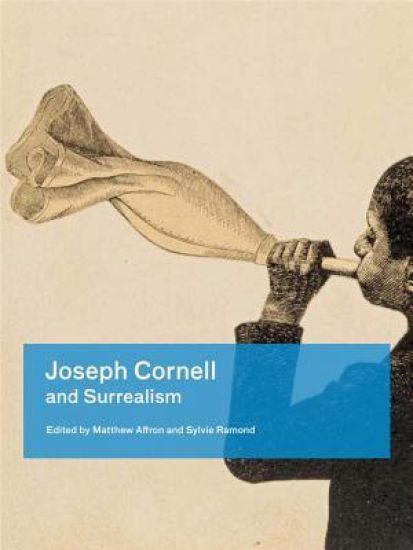
Joseph Cornell and Surrealism

Joseph Cornell and Surrealism

Fralin Museum of Art at the University of Virginia
2015
pokkari
Joseph Cornell (1903-1972), the American pioneer of collage, montage, and assemblage art, is sometimes regarded as a solitary star within the constellation of great Surrealists. The essays in Joseph Cornell and Surrealism consider connections between Cornell and the Surrealist group during the 1930s and 1940s, during Cornell's artistic development and the heyday of Surrealism in the United States. He shared with the Surrealists his basic conception of the visual image as the product of poetic juxtaposition. In his best-known works--the collages, small constructions of found objects, and classic shadow boxes--he took key Surrealist methods in new directions. The essays also examine Cornell's achievement in other formats, including his ground-breaking collage film and the open-ended and nonlinear archives of printed materials that he called "explorations," as well as the art, literature, music, and dance that nourished his unconventional artistic output.The essays in this volume were commissioned for the catalogue Joseph Cornell et les surrealistes a New York, published to accompany the exhibition of the same name that was co-organized by the Musee des Beaux-Arts de Lyon and The Fralin Museum of Art at the University of Virginia. Aside from the editors, the contributors are Stephen Bann, Emmanuel Guigon, Lynda Roscoe Hartigan, Jodi Hauptman, Howard Hussey, Segolene Le Men, Camille Leveque-Claudet, Patrick Mauries, Anne Morra, and Francois-Rene Martin.
Joseph's Wardrobe

Joseph's Wardrobe

Adauto Rezende

Rezende, Adauto
2024
pokkari
Joseph's Wardrobe: The Five Garments of LeadershipSubtitle: Unlocking Divine Training for Leaders and Their MissionsResilience in the Face of Adversity - A Story of TriumphChapter 1: The FoolJoseph proudly wears the colorful garment bestowed by his father, a symbol of his immaturity. This chapter delves into the challenges arising from lack of character formation, wisdom, and spiritual maturity. Despite initial shortcomings, the Lord guides the immature leader through preparatory phases.Chapter 2: The ServantEmbracing slavery as a means of character formation, this chapter explores the divine school of service. Through biblical examples of servant-leadership, readers understand the transformative power of humility and selflessness. Like the Son of Man, leaders are called not to be served, but to serve.Chapter 3: The PrisonerIn the depths of imprisonment, leaders discover the strength of perseverance. This chapter illustrates how challenges and frustrations refine interpersonal relationships and resilience. Through the fruit of the Spirit, leaders emerge stronger, navigating adversities with grace.Chapter 4: The RulerAs a governor, Joseph embodies humility in leadership. This chapter explores the predetermined stages orchestrated by the Lord, preparing leaders to fulfill divine purposes with sobriety and modesty. True leadership is rooted in humility before God and others.Chapter 5: The SeekerRedemption unveils the leader's unwavering faith. Despite trials in Canaan and Egypt, Joseph's greatest desire remains unshaken. This chapter reflects on the insufficiency of worldly treasures to fulfill the soul's longing, emphasizing the importance of faith in transcending earthly challenges. Joseph's Wardrobe unveils pivotal phases in the lives of leaders, showcasing their journey towards seemingly insurmountable goals. Offering invaluable guidance, this book empowers readers to leave a virtuous legacy for future generations. Through enhanced self-awareness and interpersonal skills, leaders maximize their potential for excellence and success.Filled with inspiration, Joseph's Wardrobe instills motivation to inspire others and address personal deficiencies. Readers discover indispensable tools for victorious trajectories and effective leadership, guided by themes of rejection, loss, restitution, redemption, and ultimate security.No matter the stage of their journey, this work offers a message of hope and miracles, guiding readers towards a fulfilling and impactful life.
Can't Forget The Motor City...: New Poems by Joseph Nicks
Yet another tattered and timeworn tale of the little guy trying to make his way in the big world, as told through a series of 40 poems that travel the long and yearning distances from 1960s/70s Detroit to 1980s/90s Long Beach, California and passing through the new millennium out into the Mojave Desert. It is the story of a lifelong battle with doubt, despair, and dissolution in the struggle to sense acutely, think clearly, breathe deeply, and be useful. Along the way the reader will encounter factories, labor, lay-offs, classrooms, late-night readings and writings, cars, motors, wrenches, highways, terrain, binoculars & field notes, words & music, and the biosphere from which it all originally emanated.
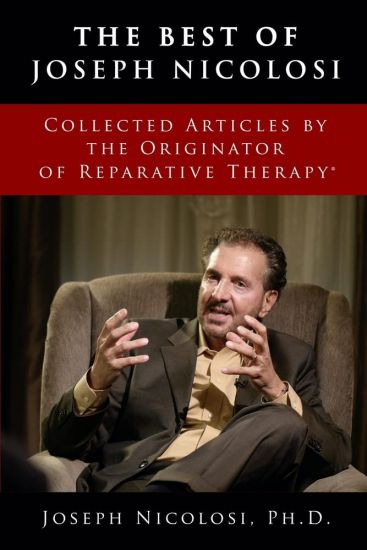
The Best of Joseph Nicolosi

The Best of Joseph Nicolosi

Joseph J Nicolosi; Linda A Nicolosi; David Pickup

Liberal Mind Publishers
2022
pokkari
For almost forty years, Dr. Joseph Nicolosi, Sr. assisted hundreds of clients with their goal to reduce their same-sex attractions and explore their heterosexual potential.He began this work in 1981 as the originator of reparative therapy(R). His pioneering work ended when he passed away suddenly in March of 2017. A licensed clinical psychologist, Dr. Nicolosi believed that our bodies tell us who we are, and that our bodies have made us for heterosexality. Dr. Nicolosi's research led him to conclude that homosexuality, is rooted in trauma; it is an attempt to "repair" a deep emotional wound that left the boy alienated from his own natural masculinity.Many contemporary therapists view the client's gay feelings as unchangeable and biologically rooted. But the ethical therapist will always look below the surface and ask "why," rather than locking the client into an unwanted gay self-identity.Dr. Nicolosi's clients often told him the following: "I know, on some deep level, that I'm a heterosexual man. But I'm troubled by these attractions that prevent me from being who I really am." Many of these men were victims of homosexual sexual abuse. Others felt alienated from their fathers and male peers, and grew up with an unfulfilled longing for male affection, attention and approval. That childhood deficit left them with attractions that they find compelling, but deeply problematic. Acting on their attractions interferes with their values, their marriages, and deeply held beliefs of who they really are. These men don't consider themselves "gay." They see themselves as heterosexual men with a homosexual problem. This book contains chapters on the origins and meaning of same-sex attraction, and describes how the process of self-understanding can lead to self-acceptance, emphasizing that the client must first accept himself as he is, before change is possible. The book then delves into the role of childhood trauma; the origins of transgenderism; mother-son boundary violations in the childhoods of homosexual men; and the damage inflicted on a child by a narcissistic parent. Other chapters reveal the dark side of the gay movement, Freud's beliefs about homosexuality, and the perspective of a poet and philosopher who says homosexuality is "against art."The Best of Joseph Nicolosi: Collected Articles by the Originator of Reparative Therapy, is the final book to come from the pen of a bold, original thinker. His work stands out as unique in this era of stifling "groupthink" within the psychological profession. Dr. Nicolosi's articles are supplemented here with a Foreword and two chapters by the author's widow, Linda A. Nicolosi, who also added two Case Stories by David Pickup, a distinguished therapist and successful practitioner of Nicolosi's Reparative Therapy. Mrs. Nicolosi worked for nearly four decades as Dr. Nicolosi's assistant and editor.