
Kirjahaku
Etsi kirjoja tekijän nimen, kirjan nimen tai ISBN:n perusteella.
1000 tulosta hakusanalla Judithe Little
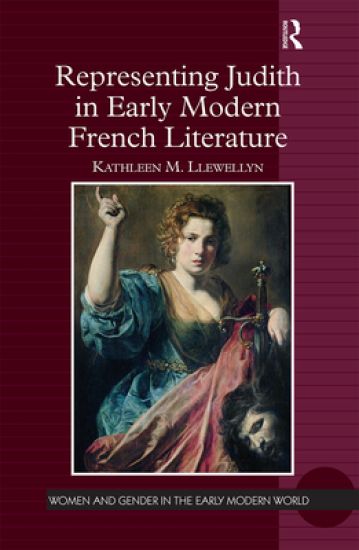
Representing Judith in Early Modern French Literature
Kathleen M. Llewellyn
Taylor Francis Ltd
2021
nidottu
Although attention to the Book of Judith and its heroine has grown in recent years, this is the first full-length study to focus on adaptations of the Bible’s Old Testament Book of Judith across a range of literary genres written in French during the early modern era. Author Kathleen Llewellyn bases her analysis on references to Judith in a number of early modern sermons as well as the ’Judith’ texts of four early modern writers. The texts include two theatrical dramas, Le Mystère de Judith et Holofernés (c. 1500), believed to have been written by Jean Molinet, and Le Miroir des vefves: Tragédie sacrée d'Holoferne & Judith by Pierre Heyns (1596), as well as two epic poems, La Judit (1574) by Guillaume de Salluste Du Bartas, and Gabrielle de Coignard’s Imitation de la victoire de Judich (1594). Llewellyn’s goal is to see Judith as she was envisioned by early modern French writers and their readers, and to understand how the sixteenth century shaped their view of the heroine. Noting aspects of that story that were emphasized by sixteenth-century authors, as well as elements that those writers altered to suit their purposes, she also examines the ways in which writers of this era made use of Judith’s story as a means to explore interests and concerns of early modern writers, readers, and spectators. Representing Judith in Early Modern French Literature provides a deeper understanding of early modern ideas regarding the role of women, the use of exemplary stories in preaching and teaching, theories of vision, and the importance of community in Renaissance France.

Lady Judith. A Tale of Two Continents. by Justin Mccarthy.
Justin McCarthy
University of Michigan Library
2006
pokkari
Although attention to the Book of Judith and its heroine has grown in recent years, this is the first full-length study to focus on adaptations of the Bible’s Old Testament Book of Judith across a range of literary genres written in French during the early modern era. Author Kathleen Llewellyn bases her analysis on references to Judith in a number of early modern sermons as well as the ’Judith’ texts of four early modern writers. The texts include two theatrical dramas, Le Mystère de Judith et Holofernés (c. 1500), believed to have been written by Jean Molinet, and Le Miroir des vefves: Tragédie sacrée d'Holoferne & Judith by Pierre Heyns (1596), as well as two epic poems, La Judit (1574) by Guillaume de Salluste Du Bartas, and Gabrielle de Coignard’s Imitation de la victoire de Judich (1594). Llewellyn’s goal is to see Judith as she was envisioned by early modern French writers and their readers, and to understand how the sixteenth century shaped their view of the heroine. Noting aspects of that story that were emphasized by sixteenth-century authors, as well as elements that those writers altered to suit their purposes, she also examines the ways in which writers of this era made use of Judith’s story as a means to explore interests and concerns of early modern writers, readers, and spectators. Representing Judith in Early Modern French Literature provides a deeper understanding of early modern ideas regarding the role of women, the use of exemplary stories in preaching and teaching, theories of vision, and the importance of community in Renaissance France.


Aunt Judith The Story of a Loving Life
Grace Beaumont
Createspace Independent Publishing Platform
2017
nidottu

Back Cover Text for Judy/ Judith Dear Reader: How often have you made decisions based on what your friends may think, or based on guidelines pre-set by society? Doesn't it seem that Christian ladies, especially those of the young adult age, have serious decisions to make as they strive to compete in today's world and yet remain faithful to God's Word? Perhaps, though, the question should be, "Should the Christian lady compete with society's way"? Are we supposed to compromise our salvation in order to 'fit in'? Who should we identify with? Judy/ Judith is a story that shows how easy it is for a lady to lose sight of herself as a Christian, and how to use scripture to get back to the most important thing-our relationship with our Lord and savior, Jesus Christ. Once that happens, everything else falls back into place, doesn't it? "But seek ye first the kingdom of God and His righteousness; and all these things shall be added unto you". - Matthew 6:33. About the author: Barbara Newkirk-Holmes is a missionary at Christ Outreach Ministries incorporated COGIC, in Chicago, Illinois. She has written other God-inspired booklets for her church, including You Don't Have To: The Gospel About Bondage, Live the Word, and Lean For Life. She continues to give glory to God and thanks to her family members, her spiritual mother, Dorothy Westbrook, Pastor Ollie Turner, and her spiritual family at Christ Outreach Ministries for their love, prayers and support.
"A rather perfect textbook at the right level. It opens up issues of transgender very well and is critical in just the right tone. Much needed in media and cultural studies." - Angela McRobbie, Goldsmiths Acknowledged as one of the most influential thinkers of modern times, an understanding of Judith Butler's work is ever more essential to an understanding of not just the landscape of cultural and critical theory, but of the world around us. Understanding Judith Butler, however, can be perceived as a complex and difficult undertaking. It needn't be. Using contemporary and topical examples from the media, popular culture and everyday life, this lively and accessible introduction shows you how the issues, concepts and theories in Butler's work function as socio-cultural practices. Giving due consideration to Butler's earlier and most recent work, and showing how her ideas on subjectivity, gender, sexuality and language overlap and interrelate, this book will give you a better understanding not only of Butler's work, but of its applications to modern-day social and cultural practices and contexts.
"A rather perfect textbook at the right level. It opens up issues of transgender very well and is critical in just the right tone. Much needed in media and cultural studies." - Angela McRobbie, Goldsmiths Acknowledged as one of the most influential thinkers of modern times, an understanding of Judith Butler's work is ever more essential to an understanding of not just the landscape of cultural and critical theory, but of the world around us. Understanding Judith Butler, however, can be perceived as a complex and difficult undertaking. It needn't be. Using contemporary and topical examples from the media, popular culture and everyday life, this lively and accessible introduction shows you how the issues, concepts and theories in Butler's work function as socio-cultural practices. Giving due consideration to Butler's earlier and most recent work, and showing how her ideas on subjectivity, gender, sexuality and language overlap and interrelate, this book will give you a better understanding not only of Butler's work, but of its applications to modern-day social and cultural practices and contexts.


The Judith Files
Balboa Press
2021
pokkari

The Judith Files
Balboa Press
2021
sidottu
The origin of the Book of Judith has been debated for thousands of years, and is often assumed to have been written in Greek as anti-Hellenic propaganda during the Maccabean Revolt. It isn't clear why an anti-Hellenic book would have been written in Greek by an Aramaic-speaking people, however, no ancient copies of it survive in Hebrew, Aramaic, or Phoenician (Samaritan / Judahite). There are Hebrew translations, however, they are dated to the middle ages, 1000 years after the oldest surviving copies of the Judith found in the Septuagint. The Greek translations are remarkably consistent compared to the radically different versions of the Book of Tobit in the surviving copies of the Septuagint.The name of the king in the book of Judith is named Nebuchadnezzar, which was the name of the king of Babylon, between 605 and 562 BC. However, other than the name of the king, no other elements of the story indicate the story originated with the Babylonians. Nebuchadnezzar did not fight the Medes, and could not have killed the king of Media, as the two countries were close allies at the time, and under King Cyaxares the Median Empire reached its peak. Nebuchadnezzar didn't launch a war against the Elamites, who in fact fell under the control of Cyaxares's Median Empire. As the name Nebuchadnezzar was used to replace Achiacharos in the book of Tobit, when the Sinaiticus version was simplified into the Vaticanus version, it's likely that the name Nebuchadnezzar was simply used to replaces an older name as well.There are several indicators in the book that point to the original king being Ashurbanipal, the king of Assyria between 668 and 627 BC. Ashurbanipal did fight two wars against Elam, and virtually annihilated the Elamites in the second war. Ashurbanipal also invaded Media, and during the fighting the Median king Phraortes was killed, allowing Ashurbanipal to claim victory, even though he didn't consolidate his victory and integrate Media back into the Assyrian Empire. When Ashurbanipal had launched the invasion of Media, in his 17th year, he ordered the local kings from across his empire to send troops to the war, but almost all refused, which was a general insurrection. Therefore, while committed to the war against Media, after defeating the Medians, he was eager to return to Assyria, and restore order to his empire.
Septuagint - Judith
Digital Ink Productions
2024
pokkari
The origin of the Book of Judith has been debated for thousands of years, and is often assumed to have been written in Greek as anti-Hellenic propaganda during the Maccabean Revolt. It isn't clear why an anti-Hellenic book would have been written in Greek by an Aramaic-speaking people, however, no ancient copies of it survive in Hebrew, Aramaic, or Phoenician (Samaritan / Judahite). There are Hebrew translations, however, they are dated to the middle ages, 1000 years after the oldest surviving copies of the Judith found in the Septuagint. The Greek translations are remarkably consistent compared to the radically different versions of the Book of Tobit in the surviving copies of the Septuagint.The name of the king in the book of Judith is named Nebuchadnezzar, which was the name of the king of Babylon, between 605 and 562 BC. However, other than the name of the king, no other elements of the story indicate the story originated with the Babylonians. Nebuchadnezzar did not fight the Medes, and could not have killed the king of Media, as the two countries were close allies at the time, and under King Cyaxares the Median Empire reached its peak. Nebuchadnezzar didn't launch a war against the Elamites, who in fact fell under the control of Cyaxares's Median Empire. As the name Nebuchadnezzar was used to replace Achiacharos in the book of Tobit, when the Sinaiticus version was simplified into the Vaticanus version, it's likely that the name Nebuchadnezzar was simply used to replaces an older name as well.There are several indicators in the book that point to the original king being Ashurbanipal, the king of Assyria between 668 and 627 BC. Ashurbanipal did fight two wars against Elam, and virtually annihilated the Elamites in the second war. Ashurbanipal also invaded Media, and during the fighting the Median king Phraortes was killed, allowing Ashurbanipal to claim victory, even though he didn't consolidate his victory and integrate Media back into the Assyrian Empire. When Ashurbanipal had launched the invasion of Media, in his 17ᵗʰ year, he ordered the local kings from across his empire to send troops to the war, but almost all refused, which was a general insurrection. Therefore, while committed to the war against Media, after defeating the Medians, he was eager to return to Assyria, and restore order to his empire.
Septuagint - Judith
Digital Ink Productions
2024
sidottu
The origin of the Book of Judith has been debated for thousands of years, and is often assumed to have been written in Greek as anti-Hellenic propaganda during the Maccabean Revolt. It isn't clear why an anti-Hellenic book would have been written in Greek by an Aramaic-speaking people, however, no ancient copies of it survive in Hebrew, Aramaic, or Phoenician (Samaritan / Judahite). There are Hebrew translations, however, they are dated to the middle ages, 1000 years after the oldest surviving copies of the Judith found in the Septuagint. The Greek translations are remarkably consistent compared to the radically different versions of the Book of Tobit in the surviving copies of the Septuagint.The name of the king in the book of Judith is named Nebuchadnezzar, which was the name of the king of Babylon, between 605 and 562 BC. However, other than the name of the king, no other elements of the story indicate the story originated with the Babylonians. Nebuchadnezzar did not fight the Medes, and could not have killed the king of Media, as the two countries were close allies at the time, and under King Cyaxares the Median Empire reached its peak. Nebuchadnezzar didn't launch a war against the Elamites, who in fact fell under the control of Cyaxares's Median Empire. As the name Nebuchadnezzar was used to replace Achiacharos in the book of Tobit, when the Sinaiticus version was simplified into the Vaticanus version, it's likely that the name Nebuchadnezzar was simply used to replaces an older name as well.There are several indicators in the book that point to the original king being Ashurbanipal, the king of Assyria between 668 and 627 BC. Ashurbanipal did fight two wars against Elam, and virtually annihilated the Elamites in the second war. Ashurbanipal also invaded Media, and during the fighting the Median king Phraortes was killed, allowing Ashurbanipal to claim victory, even though he didn't consolidate his victory and integrate Media back into the Assyrian Empire. When Ashurbanipal had launched the invasion of Media, in his 17ᵗʰ year, he ordered the local kings from across his empire to send troops to the war, but almost all refused, which was a general insurrection. Therefore, while committed to the war against Media, after defeating the Medians, he was eager to return to Assyria, and restore order to his empire.
Soeur Judith Guye Et l'École Normale Des Institutrices de Besançon
Jean-Marie Suchet
Hachette Livre - BNF
2016
pokkari
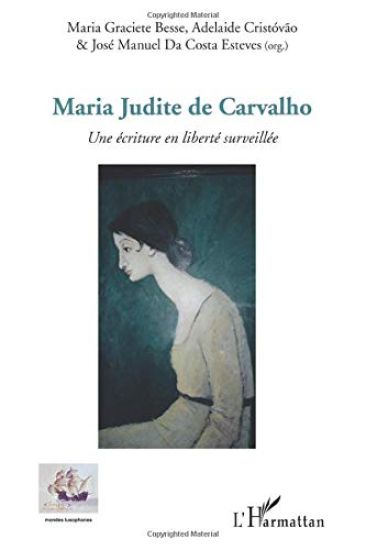
Maria Judite de Carvalho
José Manuel Da Costa Esteves; Maria-Graciete Besse
Editions L'Harmattan
2025
nidottu

Judith hat als femme fatale spektakuläre Auftritte in der Kunst der Neuzeit; im Mittelalter ist sie unter anderen Vorzeichen bekannt. Hier geht es um exemplarische Keuschheit und triumphierendes Gottvertrauen. Der Judithstoff wird zum Ausgangspunkt für drei zentrale Epochen von Bibeldichtungen. So profilieren die „Ältere“ und die „Jüngere Judith“ die frühmittelhochdeutsche Literatur und die „Judith von 1254“ eröffnet die für den Deutschen Orden geschriebenen Dichtungen. Nach Luthers Empfehlung, das apokryphe Buch als beispielhafte Tragödie zu lesen, wird die biblische Judithüberlieferung schließlich zum beliebtesten Propagandastoff des Dramas von der Reformation bis zu Opitz. Das Textkorpus eröffnet damit Perspektiven auf die Bedingungen volkssprachigen Schreibens in gruppenspezifischen Literaturen vom 12. bis 16. Jahrhundert.