Kirjojen hintavertailu. Mukana 12 459 402 kirjaa ja 12 kauppaa.

Kirjahaku

Etsi kirjoja tekijän nimen, kirjan nimen tai ISBN:n perusteella.

1000 tulosta hakusanalla KATHLEEN NORRIS

Why Don't You Just Talk to Him?

Why Don't You Just Talk to Him?

Kathleen R. Arnold

Oxford University Press Inc
2015
sidottu
Why Don't You Just Talk to Him? looks at the broad political contexts in which violence, specifically domestic violence, occurs. Kathleen Arnold argues that liberal and Enlightenment notions of the social contract, rationality and egalitarianism -- the ideas that constitute norms of good citizenship -- have an inextricable relationship to violence. According to this dynamic, targets of abuse are not rational, make bad choices, are unable to negotiate with their abusers, or otherwise violate norms of the social contract; they are, thus, second-class citizens. In fact, as Arnold shows, drawing from Nietzsche and Foucault's theories of power and arguing against much of the standard policy literature on domestic violence, the very mechanisms that purportedly help targets of domestic abuse actually work to compound the problem by exacerbating (or ignoring) the power differences between the abuser and the abused. The book argues that a key to understanding how to prevent domestic violence is seeing it as a political rather than a personal issue, with political consequences. It seeks to challenge Enlightenment ideas about intimacy that conceive of personal relationships as mutual, equal and contractual. Put another way, it challenges policy ideas that suggest that targets of abuse can simply choose to leave abusive relationships without other personal or economic consequences, or that there is a clear and consistent level of help once they make the choice to leave. Asking "Why Don't You Just Talk to Him?" is in reality a suggestion riven with contradictions and false choices. Arnold further explores these issues by looking at two key asylum cases that highlight contradictions within the government's treatment of foreigners and that of long-term residents. These cases expose problematic assumptions in the approach to domestic violence more generally. Exposing major injustices from the point of view of domestic violence targets, this book promises to generate further debate, if not consensus.

Religious Lessons

Religious Lessons

Kathleen Holscher

Oxford University Press Inc
2016
nidottu
Religious Lessons tells the story of Zellers v. Huff, a court case that challenged the employment of nearly 150 Catholic sisters in public schools across New Mexico in 1948. Known nationally as the "Dixon case," after one of the towns involved, it was the most famous in a series of midcentury lawsuits, all targeting what opponents provocatively dubbed "captive schools." Spearheaded by Protestants and Other Americans United for Separation of Church and State, the publicity campaign built around Zellers drew on centuries-old rhetoric of Catholic captivity to remind Americans about the threat of Catholic power in the post-War era, and the danger Catholic sisters dressed in full habits posed to American education. Americans at midcentury were reckoning with the U.S. Supreme Court's new mandate for a "wall of separation" between church and state. At no time since the nation's founding was the Establishment Clause studied so carefully by the nation's judiciary and its people. While Zellers never reached the Supreme Court, its details were familiar to hundreds of thousands of citizens who read about them in magazines and heard them discussed in church on Sunday mornings. For many Americans, Catholic and not, the scenario of sisters in veils teaching children embodied the high stakes of the era's church-state conflicts, and became an occasion to assess the implications of separation in their lives. Through close study of the Dixon case, Kathleen Holscher brings together the perspectives of legal advocacy groups, Catholic sisters, and citizens who cared about their schools. She argues that the captive school crusade was a transitional episode in the Protestant-Catholic conflicts that dominate American church-state history. Religious Lessons also goes beyond legal discourse to consider the interests of Americans--women religious included--who did not formally articulate convictions about the separation principle. The book emphasizes the everyday experiences, inside and outside classrooms, that defined the church-state relationship for these people, and that made these constitutional questions relevant to them.
Haunting Hands

Haunting Hands

Kathleen M. Cumiskey; Larissa Hjorth

Oxford University Press Inc
2017
sidottu
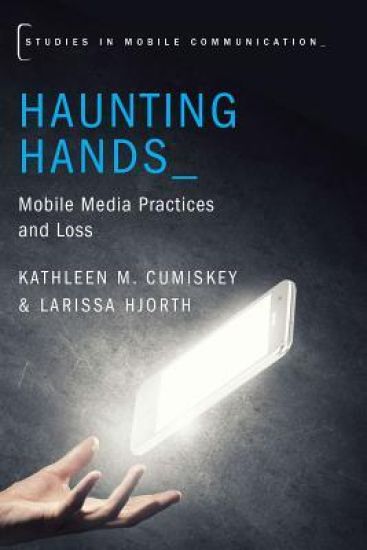
Haunting Hands looks closely at the consequences of digital media's ubiquitous presence in our lives, in particular the representing, sharing, and remembering of loss. From Facebook tribute pages during public disasters to the lingering digital traces on a smartphone of the deceased, the digital is both extending earlier memorial practices and creating new ways in which death and loss manifest themselves. The ubiquity of digital specters is particularly evident in mobile media spanning smartphones, iPads, iPhones, or tablets. Mobile media entangle various forms of social, online and digital media in specific ways that are both intimate and public, and yet the use of mobile media in contexts of loss has been relatively overlooked. Haunting Hands seeks to address this growing and important area by helping us to understand the relationship between life, death, and our digital after-lives.
Haunting Hands

Haunting Hands

Kathleen M. Cumiskey; Larissa Hjorth

Oxford University Press Inc
2017
nidottu
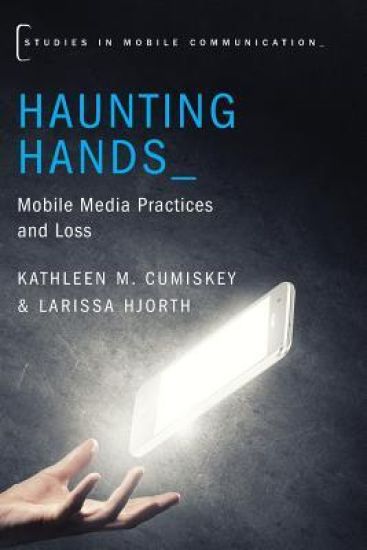
Haunting Hands looks closely at the consequences of digital media's ubiquitous presence in our lives, in particular the representing, sharing, and remembering of loss. From Facebook tribute pages during public disasters to the lingering digital traces on a smartphone of the deceased, the digital is both extending earlier memorial practices and creating new ways in which death and loss manifest themselves. The ubiquity of digital specters is particularly evident in mobile media spanning smartphones, iPads, iPhones, or tablets. Mobile media entangle various forms of social, online and digital media in specific ways that are both intimate and public, and yet the use of mobile media in contexts of loss has been relatively overlooked. Haunting Hands seeks to address this growing and important area by helping us to understand the relationship between life, death, and our digital after-lives.
Make Arts for a Better Life

Make Arts for a Better Life

Kathleen Van Buren; Brian Shrag

Oxford University Press Inc
2018
sidottu
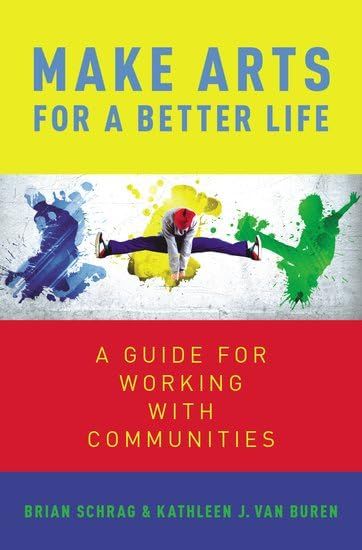
Make Arts for a Better Life: A Guide for Working with Communities provides a ground-breaking model for arts advocacy. Drawing upon methods and theories from disciplines such as ethnomusicology, anthropology, folklore, community development, and communication studies, the Guide presents an in-depth approach to researching artistic practices within communities and to developing arts-based projects that address locally-defined needs. Through clear methodology, case studies from around the world, and sample activities, the Guide helps move readers from arts research to project development to project evaluation. Woven into the discussions are critical reflections on the concept of a "better life" and ethical issues in arts advocacy. Accessible writing and visual cues ensure that readers can easily locate sections which may be particularly pertinent to their work, whether based on types of arts (music, drama, dance, oral verbal arts, visual arts) or professional positions (educators, scholars, project leaders). For additional resources, readers can access an accompanying website offering methodology "cheat sheets," sample research documents, and suggestions for educators, scholars, and project leaders.
Make Arts for a Better Life

Make Arts for a Better Life

Kathleen Van Buren; Brian Shrag

Oxford University Press Inc
2018
nidottu
Make Arts for a Better Life: A Guide for Working with Communities provides a ground-breaking model for arts advocacy. Drawing upon methods and theories from disciplines such as ethnomusicology, anthropology, folklore, community development, and communication studies, the Guide presents an in-depth approach to researching artistic practices within communities and to developing arts-based projects that address locally-defined needs. Through clear methodology, case studies from around the world, and sample activities, the Guide helps move readers from arts research to project development to project evaluation. Woven into the discussions are critical reflections on the concept of a "better life" and ethical issues in arts advocacy. Accessible writing and visual cues ensure that readers can easily locate sections which may be particularly pertinent to their work, whether based on types of arts (music, drama, dance, oral verbal arts, visual arts) or professional positions (educators, scholars, project leaders). For additional resources, readers can access an accompanying website offering methodology "cheat sheets," sample research documents, and suggestions for educators, scholars, and project leaders.
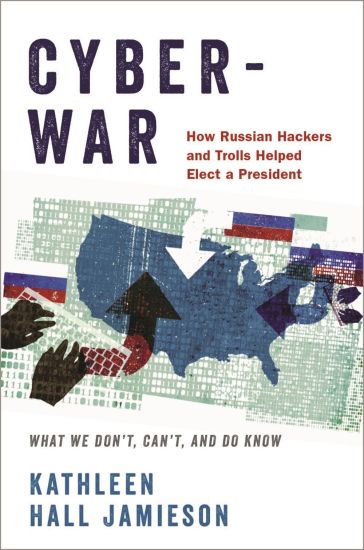
Cyberwar

Cyberwar

Kathleen Hall Jamieson

Oxford University Press Inc
2018
sidottu
The question of how Donald Trump won the 2016 election looms over his presidency. In particular, were the 78,000 voters who gave him an Electoral College victory affected by the Russian trolls and hackers? Trump has denied it. So too has Vladimir Putin. Others cast the answer as unknowable. Drawing on path-breaking work in which she and her colleagues isolated significant communication effects in the 2000 and 2008 presidential campaigns, the eminent political communication scholar Kathleen Hall Jamieson marshals the troll posts, unique polling data, analyses of how the press used the hacked content, and a synthesis of half a century of media effects research to argue that, although not certain, it is probable that the Russians helped elect the 45th president of the United States. In the process, Cyberwar tackles questions that include: How extensive was the troll messaging? What characteristics of the social media platforms did the Russians exploit? Why did the mainstream press rush the hacked content into the citizenrys newsfeeds? Was Clinton telling the truth when she alleged that the debate moderators distorted what she said in the leaked speeches? Did the Russian influence extend beyond social media and news to alter the behavior of FBI director James Comey? After detailing the ways in which the Russian efforts were abetted by the press, social media platforms, the candidates, party leaders, and a polarized public, Cyberwar closes with a warning: the country is ill-prepared to prevent a sequel.
Tales from Africa

Tales from Africa

Kathleen Arnott

Oxford University Press
2000
nidottu
In this book of tales from Africa there are stories about an evil-hearted shark, an extremely cunning hare, a very greedy spider, and the strongest man in the world. There are also answers to such questions as why the crab has no head, why the sun and moon live in the sky, and why flies buzz. Drawn from all parts of Africa, these stories illustrate the fierce sense of justice inherent in African peoples, their powers of patience and endurance, and their supreme ability as story-tellers.
Magic Time: Level 1: Workbook

Magic Time: Level 1: Workbook

Kathleen Kampa

Oxford University Press
2012
nidottu
This exciting two-level course is packed full of colourful picture scenes, games, music, and movement ideas to develop speaking, listening, and pre-writing and writing skills. Use Magic Time on its own, or combine it with English Time to create an eight-level course.
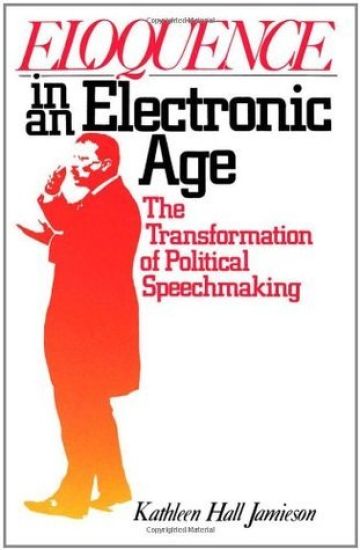
Eloquence in an Electronic Age

Eloquence in an Electronic Age

Kathleen Hall Jamieson

Oxford University Press Inc
1990
nidottu
In a book that blends anecdote with analysis, Kathleen Hall Jamieson--author of the award-winning Packaging the Presidency--offers a perceptive and often disturbing account of the transformation of political speechmaking. Jamieson addresses such fundamental issues about public speaking as what talents and techniques differentiate eloquent speakers from non-eloquent speakers. She also analyzes the speeches of modern presidents from Truman to Reagan and of political players from Daniel Webster to Mario Cuomo. Ranging from the classical orations of Cicero to Kennedy's "Ich bin ein Berliner" speech, this lively, well-documented volume contains a wealth of insight into public speaking, contemporary characteristics of eloquence, and the future of political discourse in America.
Presidential Debates

Presidential Debates

Kathleen Hall Jamieson; David S. Birdsell

Oxford University Press Inc
1990
nidottu
How important are presidential debates today? To answer this question, the authors place modern debates in their cultural and historical context, tracing their origins and development in the American political tradition, from the eighteenth century to the present, and concluding with some thoughtful suggestions for improving their current effectiveness.
Therapeutic Ways with Words

Therapeutic Ways with Words

Kathleen Warden Ferrara

Oxford University Press Inc
1994
sidottu
Most people know that therapists listen to people discuss their problems, and that they are paid for their services. Yet few people who have not undergone therapy know what actually goes on in these sessions, or have any idea about how talking to a stranger can be beneficial to one's mental health. What is therapeutic about therapeutic discourse? Why is the therapy hour such a powerful influence in peoples' lives if all they do is talk? Who talks, and what about? To answer some of these questions from a linguistic stand-point, Kathleen Ferrara analyses samples of psychotherapeutic discourse between several therapists and their clients. She focuses on cohesion and the joint construction of digalogue to get at her main concern of just how talk can be therapeutic, and at the same time addresses recent concerns in the study of conversation. Her thesis is that repetition and continuity are resources of language which speakers can recombine in various ways to create meaning within a given social context, and she looks at the many ways these cohesive devices are used in therapy speech. Therapeutic Ways with Words should appeal not only to linguists and people concerned with language in the professions, but to the large audience connected to psychotherapy. 'The scholarship reflected in the manuscript is not just sound, but creative; not just up-to-date, but up to the minute. Ferrara offers insightful treatments of data just begging for attention in light of recent developments in discourse analysis, and thus contributes cutting-edge results ... It represents the kind of research we need much more of in linguistics today." Neal Norrick, Professor of English-Linguistics, Northern Illinois University
Therapeutic Ways with Words

Therapeutic Ways with Words

Kathleen Warden Ferrara

Oxford University Press Inc
1994
nidottu
Most people know that therapists listen to people discuss their problems, and that they are paid for their services. Yet few people who have not undergone therapy know what actually goes on in these sessions, or have any idea about how talking to a stranger can be beneficial to one's mental health. What is therapeutic about therapeutic discourse? Why is the therapy hour such a powerful influence in peoples' lives if all they do is talk? Who talks, and what about? To answer some of these questions from a linguistic stand-point, Kathleen Ferrara analyses samples of psychotherapeutic discourse between several therapists and their clients. She focuses on cohesion and the joint construction of digalogue to get at her main concern of just how talk can be therapeutic, and at the same time addresses recent concerns in the study of conversation. Her thesis is that repetition and continuity are resources of language which speakers can recombine in various ways to create meaning within a given social context, and she looks at the many ways these cohesive devices are used in therapy speech. Therapeutic Ways with Words should appeal not only to linguists and people concerned with language in the professions, but to the large audience connected to psychotherapy. 'The scholarship reflected in the manuscript is not just sound, but creative; not just up-to-date, but up to the minute. Ferrara offers insightful treatments of data just begging for attention in light of recent developments in discourse analysis, and thus contributes cutting-edge results ... It represents the kind of research we need much more of in linguistics today." Neal Norrick, Professor of English-Linguistics, Northern Illinois University
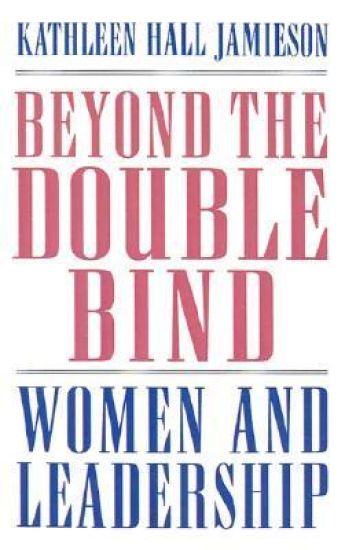
Beyond the Double Bind

Beyond the Double Bind

Kathleen Hall Jamieson

Oxford University Press Inc
1995
sidottu
Beyond the Double Bind traces how women have overcome a series of double binds - Catch 22's - which would seem to block them from success no matter what they do. Jamieson explores double binds such as uterus/brain, feminity/competence, equality/difference, and shows how women in all walks of life have moved beyond these traps and restrictions.