During the last 10 years, there has been a `revolution' in ecosystem modelling. The generality and predictive power of our models have increased in a way that was inconceivable 10 years ago. This book describes a new generation of practically useful models that predict as well as one can measure - if one measures well. And yet, they are driven by readily available driving variables and have a general structure that applies to most types of pollutants in aquatic systems. The major reason for this development is, in fact, the Chernobyl accident. Large quantities of radiocesium were released in April/May 1986 as a pulse. To follow the pulse of radiocesium through ecosystem pathways has meant that important fluxes and mechanisms, i.e., ecosystem structures, have been revealed. It is important to stress that many of these new structures and equations are valid not just for radiocesium, but for most types of contaminants, e.g. for metals, nutrients and organics. This means that the models, methods (of building and testing models) and equations described in this book for lakes and coastal areas should be of great interest also to other ecosystem modellers. This book will be of considerable interest to: students in radioecology, geosciences and biology; environmental engineers; consultants; administrators and scientists interested in the spread, biouptake and ecosystem effects of chemical pollutants in aquatic ecosystems.

Resource Management for Distributed Multimedia Systems addresses the problems and challenges of handling several continuous- media data streams in networked multimedia environments. The work demonstrates how resource management mechanisms can be integrated into a stream handling system. The resulting system includes functions for Quality of Service (QoS) calculations, scheduling, determination of resource requirements, and methods to reduce resource requirements. The work explains the following: a suitable system architecture and resource management scheme that allows for the provision and enforcement of QoS guarantee, resource scheduling mechanisms for CPU and buffer space, mechanisms to measure and collect resource requirements, methods to extend resource management to future scenarios by allowing the reservation of resources in advance and offering sealing mechanisms. . Resource Management for Distributed Multimedia Systems is a comprehensive view of resource management for a broad technical audience that includes computer scientists and engineers involved in developing multimedia applications.
EMU - A Swedish Perspective provides a comprehensive and up-to-date survey of the EMU project. The main advantages and disadvantages of a single currency are evaluated. A key feature of the analysis is the attempt to integrate economic and political aspects. The book is a revised version of the report by the Swedish Government Commission on the EMU. Although the analysis focuses on the consequences for Sweden of joining versus not joining the monetary union, it is highly relevant for the discussion in all EU countries. The book provides an in-depth analysis of how the demands on economic policy will be affected by the monetary union. Various chapters discuss monetary policy and inflation, fiscal policy, unemployment and labour markets, the transition to monetary union, and the exchange-rate arrangements between participants and non-participants. Other chapters analyse the importance of the EMU for European political integration, democratic aspects, and how membership in the monetary union will affect the possibilities for an individual member state to exert influence within the EU. EMU - A Swedish Perspective should be of interest to professional economists and political scientists, students, and all others who want to form an opinion about the monetary union on the basis of a balanced assessment of the consequences. EMU - A Swedish Perspective provides a comprehensive and up-to-date survey of the EMU project. The main advantages and disadvantages of a single currency are evaluated. A key feature of the analysis is the attempt to integrate economic and political aspects. The book is a revised version of the report by the Swedish Government Commission on the EMU. Although the analysis focuses on the consequences for Sweden of joining versus not joining the monetary union, it is highly relevant for the discussion in all EU countries.
At a time when Internet use is closely tracked and social networking sites supply data for targeted advertising, Lars Heide presents the first academic study of the invention that fueled today's information revolution: the punched card. Early punched cards helped to process the United States census in 1890. They soon proved useful in calculating invoices and issuing pay slips. As demand for more sophisticated systems and reading machines increased in both the United States and Europe, punched cards served ever-larger data-processing purposes. Insurance companies, public utilities, businesses, and governments all used them to keep detailed records of their customers, competitors, employees, citizens, and enemies. The United States used punched-card registers in the late 1930s to pay roughly 21 million Americans their Social Security pensions, Vichy France used similar technologies in an attempt to mobilize an army against the occupying German forces, and the Germans in 1941 developed several punched-card registers to make the war effort-and surveillance of minorities-more effective. Heide's analysis of these three major punched-card systems, as well as the impact of the invention on Great Britain, illustrates how different cultures collected personal and financial data and how they adapted to new technologies. This comparative study will interest students and scholars from a wide range of disciplines, including the history of technology, computer science, business history, and management and organizational studies.
During the last decade there has been increased awareness of the limitations of standard approaches to the study of development. When the focus is on variables and relationships, the individual is easily lost. This book describes an alternative, person-oriented approach in which the focus is on the individual as a functioning whole. The authors take as their theoretical starting points the holistic-interactionistic research paradigm expounded by David Magnusson and others, and the new developmental science in which connections and interactions between different systems (biological, psychological, social, etc.) are stressed. They present a quantitative methodology for preserving--to the maximum extent possible--the individual as a functioning whole that is largely based on work carried out in the Stockholm Laboratory for Developmental Science over the past 20 years. The book constitutes a complete introductory guide to the person-oriented approach. The authors lay out the underlying theory, a number of basic methods, the necessary computer programs, and an extensive empirical example. (The computer programs have been collected into a statistical package, SLEIPNER, that is freely accessible on the Internet. The empirical example deals with boys' school adjustment from a pattern perspective and covers both positive and negative adaptation.) Studying Individual Development in an Interindividual Context: A Person-Oriented Approach will be crucial reading for all researchers who seek to understand the complexities of human development and for their advanced students.
Schoultz examines the fundamental political cleavage between classical liberalism and the populist Peronist political movements in Argentina, identifying the socioeconomic structural features that led to this division and focusing on changes in social class composition that accompanied major demographic shifts and alterations in economic activity. He dominated the electoral process that liberals are able to control public policy only through ties to the military.A UNC Press Enduring Edition -- UNC Press Enduring Editions use the latest in digital technology to make available again books from our distinguished backlist that were previously out of print. These editions are published unaltered from the original, and are presented in affordable paperback formats, bringing readers both historical and cultural value.
Why is science often considered the opposite of literature? Lars O. Erikson examines the relationship between these two fields in eighteenth-century France and finds that the major intellectual and scientific transitions of the period can be better understood by paying attention to literary developments, particularly in genres not traditionally associated with learned societies. Erikson examines works by Diderot and Maupertuis and identifies a shared renegade spirit he calls ""essayistic science."" He demonstrates how the essay, a vague genre characterized by an openness to lay audiences, a self-reflective character, and an insistence on broad overviews, was used to react to a crisis in knowledge and to question the production of facts. Consequently, essayistic science does not deal with facts but with ""metafacts,"" breaking down scientific traditions and bridging objective science with subjective literature.
Starfall consists of three dramatic dialogues among real people in imagined settings. Anchoring each of the dialogues is the great Russian film director and theoretician Sergei Eisenstein, whose artistic theories (in all their formations and reformations) run throughout the book, illustrating the influences that affected the Soviet art world in the period between the two world wars. I "The Aquarians" Eisenstein meets Bertolt Brecht in the first-class compartment of a train heading from Berlin to Moscow in May 1932. They spend the night discussing and arguing about everything from the use of Renaissance magic in art to "some kind of Wagnerian Gesamtkunstwerk, " in which everything in art is connected. "The Sorcerer's Apprentices" takes place at a meeting held in Moscow on 14 April 1935, on the occasion of performances given during a visit by a noted Chinese actor, Mei Lan-Fang, and his troupe, the prime representatives of early twentieth-century "classical" Chinese theater. Conceived as a series of speeches by noted members of the Soviet theater and film circles (Eisenstein again), "The Sorcerer's Apprentices" contrasts the Russian theater with that of the Chinese, the German (antifascist, emigre theater of Brecht and Erwin Piscator), and even the avant-garde British drama (as presented by Gordon Craig). "Ash Wednesday, " set in the Moscow Planetarium in April 1940, has Eisenstein engaged in a dialogue with the philosopher, critic, and literary historian Mikhail Bakhtin. The speak about German culture - in particular Eisenstein's desire to stage Wagner's The Valkyrie, which Bakhtin appears to object to on both political and artistic grounds; the influence of astrology in Soviet literarycircles; and jazz music as a symbol of pure art.
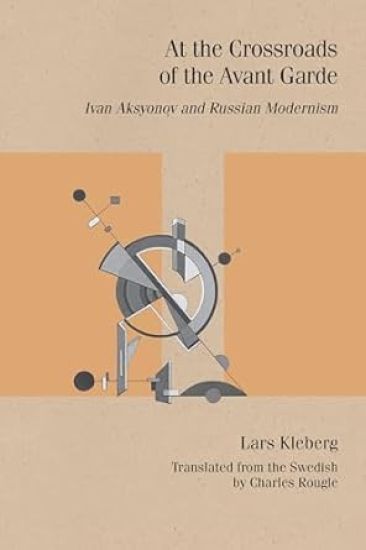
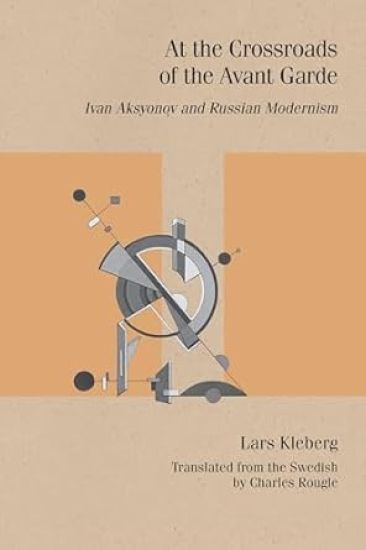
Rediscovering a lost luminary of modernism and the Russian avant-garde This kaleidoscopic biography offers readers a compelling microhistory of a revolutionary moment in art and politics through its portrait of an enigmatic but influential figure: Ivan Aksyonov authored the first book-length study about Pablo Picasso, translated Elizabethan drama, and was a literary adviser to Vsevolod Meyerhold, as well as a teacher of Sergei Eisenstein in Meyerhold's institute and an important critic, before dying in 1935. Lars Kleberg traces Aksyonov's influences, interlocutors, and creative output in multiple genres and media to bring a complicated and fascinating character back to life. Kleberg invites us to reconsider the avant-garde and to understand the political and artistic ferment of the revolutionary era and its aftermath in new, deeper ways.
A retired schoolteacher, dying of cancer, refuses to go to a hospital and remains at his home in the Swedish countryside, where he records his daily thoughts as the disease progresses
To readers familiar with Lars Gustafsson's work, the playful philosophizing of Sigsmund will come as no surprise, as he leisurely pulls together seeming fragments into a narrative of 1970s Berlin that at once looks back to Homer, Dante, and the Faust legend and ahead to space warfare and intergalactic travel, childhood memories of Sweden, Marxist-Leninism, sports competition, art, epistemology, daydreams--nothing is excluded from the purview of Gustafsson's lighthearted humanism. And behind it all broods the restless spirit of the author's alter ego, the warring king, Sigismund III of Poland (d. 1632).
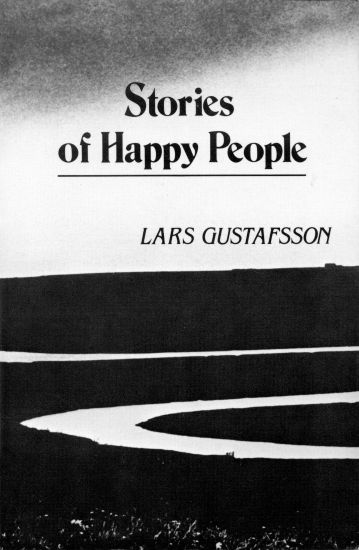
What is happiness in an age of packaged needs and liberated desires? Lars Gustafsson's Stories of Happy People is a collection of ten short fictions that maps the range of contentment, from inner joy to the edges of despair. "Uncle Sven and the Cultural Revolution" finds a politically indifferent Swedish research engineer, in Mao's China as an industrial consultant, surprised by his own imagination. "The Four Railroads of Iserlohn" lead to poignant, illusionary journeyings. The half-felt yearnings of displaced intellectuals, trying to break out of the stasis of their existence, are explored in "The Art of Surviving November," "What Does Not Kill Us, Tends to Make Us Stronger," and "The Fugitives Discover That They Knew Nothing." "A Water Story" is a sketch of the elusive staying power of love. The protected, private universes of the mentally retarded, the insane, and the senile are opened to view in "Greatness Strikes Where It Pleases," "The Bird in the Breast," and "Out of the Pain." In all of these stories, Gustafsson, one of Sweden's leading men of letters and philosophical writer par excellence, places lives of seeming smallness within the wider context of the culture and history of our hapless era.
Lars Gustafsson, one of Sweden’s leading men of letters, is known in the English-speaking world primarily for his novels and short stories, but he is also a distinguished poet with ten discrete volumes published to date in addition to the collective edition of his work for the years 1950-1980. In The Stillness of the World Before Bach: New Selected Poems, readers will recognize in Gustafsson’s verse the playful erudition and imaginative philosophizing that give his fiction its unique appeal. Gustafsson, writes editor Christopher Middleton, “has remained distinctively a poet, insofar as his novels and essays usually combine exploratory and fabulous features with keen observation, a fascination with character in conflict as the subjective (or existential) axis of history, and a delight in story for its own complex or simple sake.” The selections for The Stillness of the World Before Bach were made by Christopher Middleton of the University of Texas at Austin in close association with the author, with whom he also collaborated for his own versions of many of the poems. Other translations were contributed by Robin Fulton, Philip Martin Yvonne L. Sandstroem, and Harriett Watts.
In his newest novel, A Tiler's Afternoon, Lars Gustafsson invites us to share a day's work with Torsten Bergman, an aging, semi-retired tile-layer. On this particular day, Torsten arrives at an empty suburban villa, partially renovated and left unfinished. A master craftsman, he knows what to do and goes about his business, all the while reminiscing over his past, considering what may be left of his future, daydreaming about the mysterious Sophie K., the absent occupant of the villa's upstairs flat. No one checks on the work. With the close of the day comes Torsten's growing unease over hours spent on perhaps futile labor. "But at that moment there was a loud knocking at the door - no, more of a pounding than a knocking. It sounded as if by some strange coincidence the whole world had come to life again and was trying to get in." Like Samuel Beckett, Lars Gustafsson turns the plainest of circumstances into poignant universals. There are yet roads to travel after we say we cannot go on.
Lars Gustafsson is one of Sweden's leading and most prolific men of letters; a poet, philosopher, and fiction writer with dozens of books to his credit since his literary debut, at the age of twenty, in 1956. Although known in the English-speaking world primarily for his novels, Gustafsson is nevertheless one of the most frequently translated of contemporary Swedish poets. Elegies and Other Poems is a companion volume to The Stillness of the World before Bach (New Directions, 1988). As in that earlier volume, editor Christopher Middleton has made his selection from several of the poet's books and included his own translations as well as those of others, Yvonne Sandstroem, Bill Brookshire, and Philip Martin. Readers of Gustafsson's fiction will recognize in his verse the elegant mix of intellect and sheer play, the ruminations of a mind that apprehends humanity in the riddles of the universe.