
Kirjahaku
Etsi kirjoja tekijän nimen, kirjan nimen tai ISBN:n perusteella.
1000 tulosta hakusanalla Lawrence Woods



Spring (Lawrence Alma-Tadema) Ultra Lined Hardback Journal (Elastic Band Closure)
Paperblanks
2024
sidottu
In his Spring painting (1894), Lawrence Alma-Tadema represented the Victorian custom of sending children to collect flowers on May Day. By placing the scene in ancient Rome, he suggested the festival’s great antiquity through architectural details, dress, sculpture and musical instruments based on Roman originals.

Spring (Lawrence Alma-Tadema) Ultra Unlined Hardback Journal (Elastic Band Closure)
Paperblanks
2024
sidottu
In his Spring painting (1894), Lawrence Alma-Tadema represented the Victorian custom of sending children to collect flowers on May Day. By placing the scene in ancient Rome, he suggested the festival’s great antiquity through architectural details, dress, sculpture and musical instruments based on Roman originals.

Spring (Lawrence Alma-Tadema) Midi Lined Hardback Journal (Elastic Band Closure)
Paperblanks
2024
sidottu
In his Spring painting (1894), Lawrence Alma-Tadema represented the Victorian custom of sending children to collect flowers on May Day. By placing the scene in ancient Rome, he suggested the festival’s great antiquity through architectural details, dress, sculpture and musical instruments based on Roman originals.

Spring (Lawrence Alma-Tadema) Midi Unlined Hardback Journal (Elastic Band Closure)
Paperblanks
2024
sidottu
In his Spring painting (1894), Lawrence Alma-Tadema represented the Victorian custom of sending children to collect flowers on May Day. By placing the scene in ancient Rome, he suggested the festival’s great antiquity through architectural details, dress, sculpture and musical instruments based on Roman originals.

Spring (Lawrence Alma-Tadema) Mini Lined Hardback Journal (Elastic Band Closure)
Paperblanks
2024
sidottu
In his Spring painting (1894), Lawrence Alma-Tadema represented the Victorian custom of sending children to collect flowers on May Day. By placing the scene in ancient Rome, he suggested the festival’s great antiquity through architectural details, dress, sculpture and musical instruments based on Roman originals.
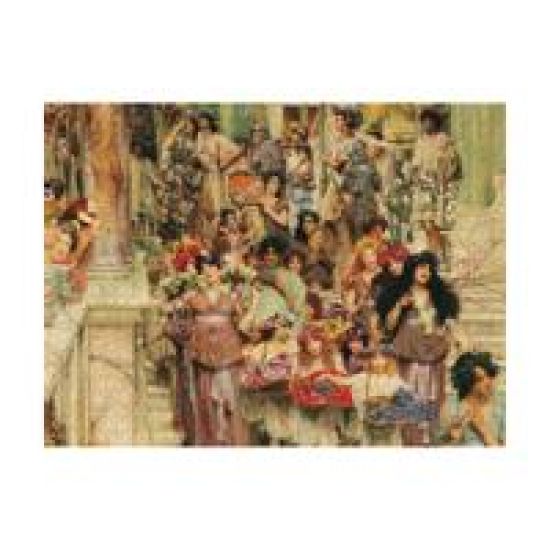
Spring (Lawrence Alma-Tadema) 1000 Piece Jigsaw Puzzle
Paperblanks
2024
peli
In his Spring painting (1894), Lawrence Alma-Tadema represented the Victorian custom of sending children to collect flowers on May Day. By placing the scene in ancient Rome, he suggested the festival’s great antiquity through architectural details, dress, sculpture and musical instruments based on Roman originals.

The most critical naval fighting during the War of 1812 took place, not on the high seas, but on the inland lakes of North America: the Great Lakes and Lake Champlain. Carrying between 12 and 22 cannon, the British and American sloops-of-war were ship-rigged, brig-rigged or schooner-rigged vessels. Lakes actions often involved two ships facing each other broadside to broadside, the best example of which was the battle of Lake Erie in 1813 where HMS Detroit led a Royal Navy squadron against the USS Lawrence-led US Navy.Featuring full-colour artwork, this lively study investigates the prolonged struggle between British and US sloops-of-war, highlighting the differences between the war on the lakes and the war on the oceans during the Age of Fighting Sail. It reveals the circumstances under which these ships were built, how they were armed, and the human story behind their construction and use in battle.
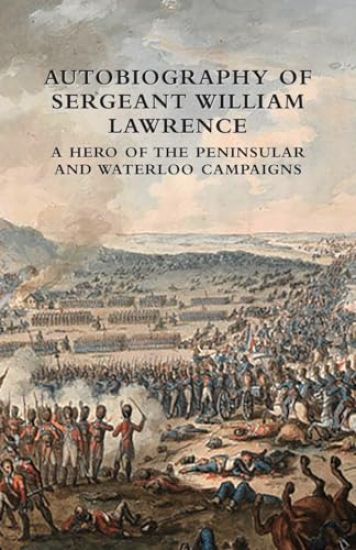
"I was so weak myself that I could scarcely walk, so I crawled on my hands and knees till I got out of the reach of the enemy's musketry. After proceeding for some way I fell in with Lord Wellington and his staff, who seeing me wounded, asked me which regiment I belonged to. I told them the Fortieth, and that I had been one of the forlorn hope."The military memoirs of one who enlisted in the 40th Foot (later 1st Bn South Lancs) in 1804 and was eventually discharged in 1821. He served in South America against the Spaniards, in Ireland, the Peninsula, the West Indies and in the Waterloo campaign, after which he married a French girl. A vivid account of life in the British Army in peace and war at the beginning of the 19th century. His experiences included being sentenced to 400 lashes for being absent without leave, and receiving 175 of them. After discharge he became landlord of a pub in Studland, Dorset.Sergeant Lawrence's fascinating memoir is one of the most important sources of information on life in the ranks during the Napoleonic Wars.
"I was so weak myself that I could scarcely walk, so I crawled on my hands and knees till I got out of the reach of the enemy's musketry. After proceeding for some way I fell in with Lord Wellington and his staff, who seeing me wounded, asked me which regiment I belonged to. I told them the Fortieth, and that I had been one of the forlorn hope."The military memoirs of one who enlisted in the 40th Foot (later 1st Bn South Lancs) in 1804 and was eventually discharged in 1821. He served in South America against the Spaniards, in Ireland, the Peninsula, the West Indies and in the Waterloo campaign, after which he married a French girl. A vivid account of life in the British Army in peace and war at the beginning of the 19th century. His experiences included being sentenced to 400 lashes for being absent without leave, and receiving 175 of them. After discharge he became landlord of a pub in Studland, Dorset.Sergeant Lawrence's fascinating memoir is one of the most important sources of information on life in the ranks during the Napoleonic Wars.
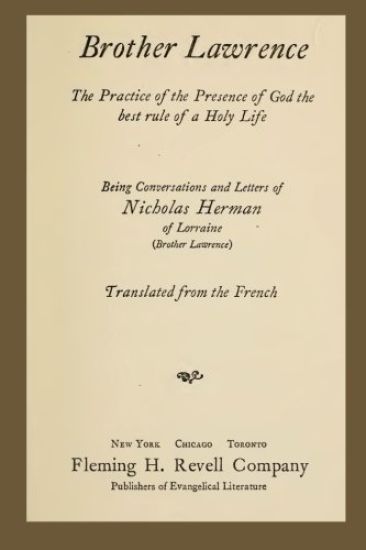
Brother Lawrence: The Practice of the Presence of God the Best Rule of a Holy Life: Being Conversations and Letter of Nicholas Herman of
Brother Lawrence; Nicholas Herman
Createspace Independent Publishing Platform
2012
nidottu
Brother Lawrence was born Nicolas Herman in H rim nil, near Lun ville in the region of Lorraine, located in modern day eastern France. Having felt he had received a revelation of the providence and power of God at the age of 18, within six years he joined the Discalced Carmelite Priory in Paris. In this intervening period he fought in the Thirty Years' War and later served as a valet. Nicolas entered the priory in Paris as a lay brother, not having the education necessary to become a cleric, and took the religious name, "Lawrence of the Resurrection". He spent almost all of the rest of his life within the walls of the priory, working in the kitchen for most of his life and as a repairer of sandals in his later years. Despite his lowly position in life and the priory, his character attracted many to him. He had a reputation for experiencing profound peace and visitors came to seek spiritual guidance from him. The wisdom he passed on to them, in conversations and in letters, would later become the basis for the book, The Practice of the Presence of God. Father Joseph de Beaufort, later vicar general to the Archbishop of Paris, compiled this work after Brother Lawrence died. It became popular among Catholics and Protestants alike, with John Wesley and A. W. Tozer recommending it to others. As a young man, Herman's poverty forced him into joining the army, which guaranteed him meals and a small stipend. During this period, Herman claimed an experience that set him on a unique spiritual journey. He considered it a supernatural clarity into a common sight, more so than as a supernatural vision. During the winter, Herman looked at a barren tree, stripped of leaves and fruit, and realized it awaited the sure hope of a springtime revival and summer abundance. Gazing at the tree, Herman grasped deeply the extravagance of God's grace and the unfailing sovereignty of divine providence. Like the tree, he felt seemingly dead, but held hope that God had life waiting for him, and the turn of seasons would bring fullness. At that moment, he said, that leafless tree "first flashed in upon my soul the fact of God," and a love for God that never ceased. Shortly after, an injury forced his retirement from the army, and after a stint as a footman, he sought a place where he could suffer for his failures. He thus entered the Discalced Carmelite monastery in Paris as Brother Lawrence. This is an out-of-print manuscript. All pages are intact and it has been carefully reviewed.
Before Lawrence v. Texas – The Making of a Queer Social Movement
Wesley G. Phelps
UNIVERSITY OF TEXAS PRESS
2023
sidottu
In 2003 the US Supreme Court overturned anti-sodomy laws across the country, ruling in Lawrence v. Texas that the Constitution protects private consensual sex between adults. To some, the decision seemed to come like lightning from above, altering the landscape of America's sexual politics all at once. In actuality, many years of work and organizing led up to the legal case, and the landmark ruling might never have happened were it not for the passionate struggle of Texans who rejected their state's discriminatory laws.Before Lawrence v. Texas tells the story of the long, troubled, and ultimately hopeful road to constitutional change. Wesley G. Phelps describes the achievements, setbacks, and unlikely alliances along the way. Over the course of decades, and at great risk to themselves, gay and lesbian Texans and their supporters launched political campaigns and legal challenges, laying the groundwork for Lawrence. Phelps shares the personal experiences of the people and couples who contributed to the legal strategy that ultimately overturned the state's discriminatory law. Even when their individual court cases were unsuccessful, justice seekers and activists collectively influenced public opinion by insisting that their voices be heard. Nine Supreme Court justices ruled, but it was grassroots politics that vindicated the ideal of equality under the law.
2024 Coral Horton Tullis Memorial Prize, Texas State Historical Association 2024 Award of Merit, The Philosophical Society of Texas Nonfiction Book PrizeThe grassroots queer activism and legal challenges that led to a landmark Supreme Court decision in favor of gay and lesbian equality. In 2003 the US Supreme Court overturned anti-sodomy laws across the country, ruling in Lawrence v. Texas that the Constitution protects private consensual sex between adults. To some, the decision seemed to come like lightning from above, altering the landscape of America’s sexual politics all at once. In actuality, many years of work and organizing led up to the legal case, and the landmark ruling might never have happened were it not for the passionate struggle of Texans who rejected their state’s discriminatory laws. Before Lawrence v. Texas tells the story of the long, troubled, and ultimately hopeful road to constitutional change. Wesley G. Phelps describes the achievements, setbacks, and unlikely alliances along the way. Over the course of decades, and at great risk to themselves, gay and lesbian Texans and their supporters launched political campaigns and legal challenges, laying the groundwork for Lawrence. Phelps shares the personal experiences of the people and couples who contributed to the legal strategy that ultimately overturned the state’s discriminatory law. Even when their individual court cases were unsuccessful, justice seekers and activists collectively influenced public opinion by insisting that their voices be heard. Nine Supreme Court justices ruled, but it was grassroots politics that vindicated the ideal of equality under the law.

Colonel Lawrence of Arabia: The Man Behind the Legend
Liddell Hart
Literary Licensing, LLC
2013
nidottu