Idiosyncratic looks at the stereotype of the red-blooded American man In his second photobook, American photographer Luke Smalley revisits the themes from his 2002 monograph Gymnasium. After receiving a degree in sports medicine from Pepperdine University and then working as both a model and personal trainer, Smalley became fascinated with the archetype of the athletic American male, and sought to explore its more playful side. His compositions were inspired by early 20th-century fitness manuals and high school yearbooks. In Exercise at Home, now reissued after being out of print since 2007, Smalley returns to his native Pennsylvania to consider the small-town interiors and landscapes that are the settings for his portraits of young athletes. Color photographs, inspired by a more innocent era, combine whimsy with the inexplicable. Smalley hires a local seamstress to construct a colossal medicine ball; he binds two boys together with a "harness" and leaves them in an empty room for a psychological game of tug-of-war, while somewhere nearby two others lead donkeys around the floor of a basketball court in a high school gym. Scale, time and content are altered to create the world Smalley inhabits. The lush colors of this new vision belie the viewer’s sense of dislocation. Luke Smalley (1955–2009) had his first photobook discovered in a hotel lobby by Dior Men’s fashion designer and artistic director Kim Jones. Smalley shot Jones’ first fashion line and went on to have a storied career in fashion photography. His images have appeared in the New York Times style section, Dazed and V, among others.
LukeCall me what you want to call me. Only one thing mattered and that's claiming the NFA heavyweight title once again. I don't trust people, which is why I have my crew, my manager, Lenny, and myself. That's all I need. At least that was until Syd walked into my gym.SydI'm here to train Luke. He's defensive and rarely lets anyone into his inner circle, but there's something between us that's undeniable. It's a spark neither one of us saw coming. Once secrets are revealed we're left fighting for more than Luke's shot at the title.The question remains, will the bond Luke and I have created be strong enough to carry us through to the other side?
Brought together by their love of vintage motorcycles, Luke and Holly have more than just an out of tune Indian Chief to deal with. The spurned Tanya wants revenge, and will stop at nothing to hurt Luke and all those he cares about. Note: Although this story does not involve time travel, folks who have read The Fairies Saga will recognize Benji who appears later in life as 'The Great Big Fairy.'
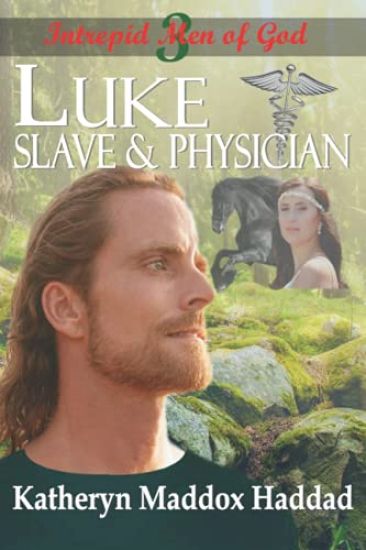
Luke is a part of the spoils of war after the famous Roman Battle of Baduhenna Wood of AD 28. With no sight of Luke's Nordic warrior father, Most Excellent Theophilus, knighted Roman tribune, takes Luke as his slave to be trained as his scribe and private physician. . As Theophilus is transferred to fortresses throughout Germanica, Luke sings his father's haunting song, hoping to find him some day. Along the way, he is betrothed to the beautiful Rashah. With Theophilus finally going into semi-retirement in Berea, Luke gains permission to climb nearby Mount Olympus to talk to the gods. His anger grows hot when he realizes they are not there and may not even exist. . Soon after, Luke goes to Troas and meets the Apostle Paul. Now as a Christian and having been given his freedom, he spends the next decade traveling with Paul and treating his many injuries. Theophilus becomes a Christian, and Luke promises to write for him an accurate accounting of Jesus' life. Upon Paul's death, Luke sets out to find and interview Jesus' apostles, now scattered around the world. . Come read of Luke and what might have been. . (At the end of the book are discussion questions for book clubs and Bible classes.)
Luke the Loving Dog: Luke Learns His Colors is a rhythmically written book to teach children, preschool age, how to learn their colors. Luke teaches the 10 basic colors children are taught in school, by encouraging them to join in and help him discover his colors in the scenery around him. This simple book can help young children explore their own environment while identifying the variety of colors they see on a daily basis.
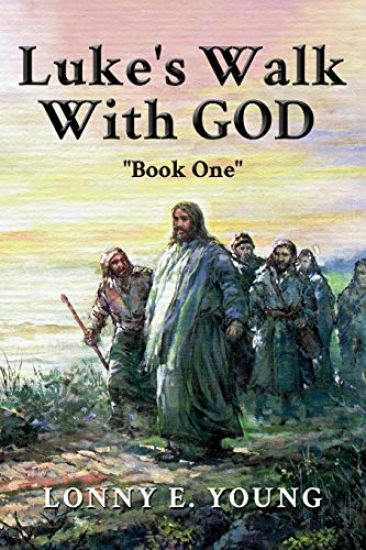
"Luke's Walk With God" is an effort to take a "devotional" walk with Jesus and His ministry. A verse by verse walk, through the notes and writings of Luke, walking along with Jesus and trying to experience our Lord's teachings through His many parables, watching His miracles, and trying to learning from His daily experiences.
Luke the Loving Dog /Luke Finds His Numbers is designed to help children learn their numbers along with introducing words such as Over, Under, High, and Low. The story is told in a rhythmic flow so children can learn their numbers easier. Luke looks for numbers 1 through 10 and meets a few friends along the way.
Lukan (his family and friends call him Luke) is a four-year-old rottweiler that believes in the values of character. Luke has friends and family that help him introduce the fourteen different characters that he shows on a daily basis. Luke feels it is important enough for children to learn these values early, so they can grow to be people who are kind, good, and with great character.
Join Luke, a spirited seven-year-old with cerebral palsy, on an imaginative adventure that showcases his boundless determination and creativity. Despite his physical challenges, Luke dreams of escaping on a thrilling journey involving trains, trees, and even corn and hot dogs This heartwarming tale celebrates the indomitable spirit of a real child who refuses to let anything hold him back.
Have you ever wondered how you could convey the wonder and beauty of human life to your child? This little story does just that Written, illustrated by local talent, this book will engage the imagination and delight little readers and listeners. Most importantly it points to GOD, the Creator, as the Author of Life. This is the day which the LORD hath made; we will rejoice and be glad in it. - Psalm 118:24
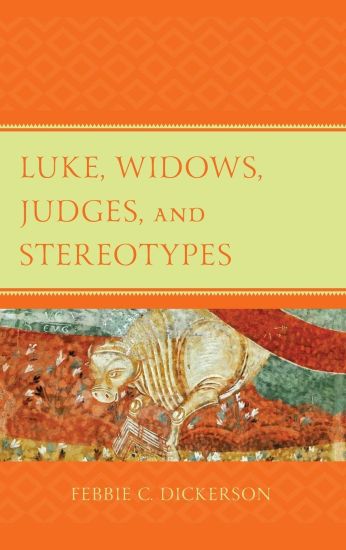
Biblical narratives are not simply sacred stories for religious communities: They are stories that provide transformative insight into cultural biases. By putting historical criticism and reception history into dialogue with womanist biblical hermeneutics, this book offers a provocative reading of Jesus’ parable about a widow who confronts a judge and obtains what she seeks by means of physical threat. Rather than simply reading the widow as the model for “one who prays always and does not lose heart” (Luke 18:1), Dickerson shows that, read in the context of Luke’s wider narrative, the widow is more likely demanding “vengeance” instead of justice. Dickerson argues that the Evangelist has domesticated this character and robbed her of both her agency and her moral ambiguity. Then, taking up African American stereotypes initially used to degrade, debase, and control, and reading them into and in light of the parable, Dickerson argues that African American women can both reclaim and find strength in the parabolic and stereotypical figures alike.
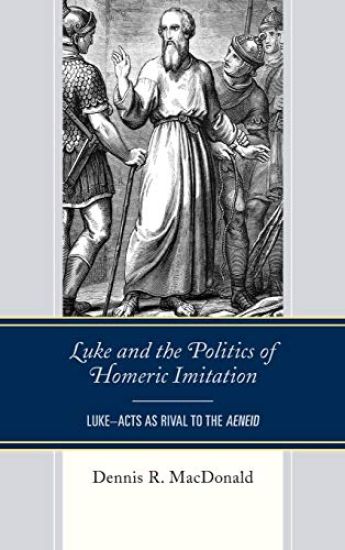
Luke and the Politics of Homeric Imitation: Luke–Acts as Rival to the Aeneid argues that the author of Luke–Acts composed not a history but a foundation mythology to rival Vergil’s Aeneid by adopting and ethically emulating the cultural capital of classical Greek poetry, especially Homer’s Iliad and Odyssey and Euripides's Bacchae. For example, Vergil and, more than a century later, Luke both imitated Homer’s account of Zeus’s lying dream to Agamemnon, Priam’s escape from Achilles, and Odysseus’s shipwreck and visit to the netherworld. Both Vergil and Luke, as well as many other intellectuals in the Roman Empire, engaged the great poetry of the Greeks to root new social or political realities in the soil of ancient Hellas, but they also rivaled Homer’s gods and heroes to create new ones that were more moral, powerful, or compassionate. One might say that the genre of Luke–Acts is an oxymoron: a prose epic. If this assessment is correct, it holds enormous importance for understanding Christian origins, in part because one may no longer appeal to the Acts of the Apostles for reliable historical information. Luke was not a historian any more than Vergil was, and, as the Latin bard had done for the Augustine age, he wrote a fictional portrayal of the kingdom of God and its heroes, especially Jesus and Paul, who were more powerful, more ethical, and more compassionate than the gods and heroes of Homer and Euripides or those of Vergil’s Aeneid.