Kirjojen hintavertailu. Mukana 12 016 292 kirjaa ja 12 kauppaa.

Kirjahaku

Etsi kirjoja tekijän nimen, kirjan nimen tai ISBN:n perusteella.

1000 tulosta hakusanalla Nigel 1906- Fitzgerald

Airport Marketing

Airport Marketing

Nigel Halpern; Anne Graham

Routledge
2021
sidottu
This accessible, up-to-date, comprehensive, and in-depth textbook introduces students and practitioners to the principles and practice of airport marketing as well as the major changes and future marketing challenges facing the airport sector. It applies principles of marketing within the airport industry, and examines airport marketing and its environment, how to define and measure the market for airport services, airport strategic marketing planning and individual elements of the airport marketing mix (product, price, distribution and promotion). The book integrates key elements of marketing theory with airport marketing in practice. Each chapter contains extensive industry examples for different types of airports from around the world to build on the theoretical base of the subject and show real-life applications. This new second edition has been updated to include: New and expanded content on branding and the passenger experience, marketing partnerships, engagement marketing and customer relationship management. Three brand new chapters on digital marketing, marketing for a more sustainable future, and crisis communications and marketing, in light of the Covid-19 pandemic. New, global case studies and examples throughout.This comprehensive textbook written by two airport marketing experts will be essential reading for air transport students and future managers.

Institutionalised Dissent

Institutionalised Dissent

Nigel Fletcher

TAYLOR FRANCIS LTD
2023
sidottu
This book provides a comprehensive analysis of a peculiar but now firmly established British institution— the Official Opposition— tracking its development since 1935.Despite its inherent importance to the conduct of politics and government, the Official Opposition as an institution remains poorly understood. The concept of ‘Loyal Opposition’ has become so entrenched in the Westminster parliamentary model that it is now taken for granted that the principal challengers to the government of the day are given significant official recognition by the state. Political dissent has become institutionalised and legitimised.Using previously unpublished archive material and candid interviews with former Leaders of the Opposition and their staff, the book examines the constraints and dilemmas facing the Official Opposition. Detailing the way successive opposition leaders have organised their staff and Shadow Cabinets, it highlights the practical difficulties they face in holding the government to account and preparing for government. The study concludes by arguing that the role of the Official Opposition is vital but ill- defined, that the inadequacy of its resources has impacted on its effectiveness, and that there are potentially serious challenges to it as a model.The book will be of key interest to scholars of British politics, British history, parliamentary and legislative studies, and government and democracy more generally.
Institutionalised Dissent

Institutionalised Dissent

Nigel Fletcher

TAYLOR FRANCIS LTD
2025
nidottu
This book provides a comprehensive analysis of a peculiar but now firmly established British institution— the Official Opposition— tracking its development since 1935.Despite its inherent importance to the conduct of politics and government, the Official Opposition as an institution remains poorly understood. The concept of ‘Loyal Opposition’ has become so entrenched in the Westminster parliamentary model that it is now taken for granted that the principal challengers to the government of the day are given significant official recognition by the state. Political dissent has become institutionalised and legitimised.Using previously unpublished archive material and candid interviews with former Leaders of the Opposition and their staff, the book examines the constraints and dilemmas facing the Official Opposition. Detailing the way successive opposition leaders have organised their staff and Shadow Cabinets, it highlights the practical difficulties they face in holding the government to account and preparing for government. The study concludes by arguing that the role of the Official Opposition is vital but ill- defined, that the inadequacy of its resources has impacted on its effectiveness, and that there are potentially serious challenges to it as a model.The book will be of key interest to scholars of British politics, British history, parliamentary and legislative studies, and government and democracy more generally.
The Humanities in Transition from Postmodernism into the Digital Age
The Humanities in Transition explores how the basic components of the digital age will have an impact on the most trusted theories of humanists. Over the past two generations, humanists have come to take basic postmodern theories for granted whether on language, knowledge or time. Yet Michel Foucault, Jacques Derrida and similar philosophers developed their ideas when the impact of this digital world could barely be imagined. The digital world, built on algorithms and massive amounts of data, operates on radically different principles. This volume analyzes these differences, demonstrating where an aging postmodernism cannot keep pace with today’s technologies. The book first introduces the major influence postmodern had on global thought before turning to algorithms, digital space, digital time, data visuals and the concept to digital forgeries. By taking a closer look at these themes, it establishes a platform to create more robust humanist theories for the third millennium. This book will appeal to graduate students and established scholars in the Digital Humanities who are looking for diverse and energetic theoretical approaches that can truly come to terms with the digital world.
Beyond the Workplace Zoo

Beyond the Workplace Zoo

Nigel Oseland

Routledge
2021
sidottu
This book begins by outlining the common design mistakes with the modern open plan office and the industry focus on cost that has resulted in the ill-fated Workplace Zoo. The requirements of office-based workers according to psychological theory and research are then explained. Dr Oseland references historical studies in psychophysics to describe how to design environmental conditions (acoustics, lighting, temperature, indoor air quality) that enhance performance by supporting basic physiological needs. More contemporary research in environmental psychology investigates how cognition affects our interpretation and response to physical stimuli depending on personality, context, attitude and other personal factors. This in turn informs individual requirements for the environmental conditions as well as group needs. Studies in evolutionary psychology and biophilia are also referenced. The latter part of the book turns to workplace solutions and focuses on how to plan, design and manage offices to accommodate our innate human needs now and in the future. The importance of designing for inclusivity is also recognised, including accommodating cultural, gender and generational differences along with designing spaces for neurodiversity. Dr Oseland’s proposed workplace solution the Landscaped Office is a revived and revised version of Bürolandschaft with a contemporary twist. The impact of workplace trends, such as agile working and hot-desking, is also explored and found to complement the workplace solution, resulting in the Agile Landscaped Office.This book is key reading for professionals, and post-graduate students, in business, interior design, architecture, surveying, facilities management, building services engineering, HR and organisational or environmental psychology.
Beyond the Workplace Zoo

Beyond the Workplace Zoo

Nigel Oseland

Routledge
2021
nidottu
This book begins by outlining the common design mistakes with the modern open plan office and the industry focus on cost that has resulted in the ill-fated Workplace Zoo. The requirements of office-based workers according to psychological theory and research are then explained. Dr Oseland references historical studies in psychophysics to describe how to design environmental conditions (acoustics, lighting, temperature, indoor air quality) that enhance performance by supporting basic physiological needs. More contemporary research in environmental psychology investigates how cognition affects our interpretation and response to physical stimuli depending on personality, context, attitude and other personal factors. This in turn informs individual requirements for the environmental conditions as well as group needs. Studies in evolutionary psychology and biophilia are also referenced. The latter part of the book turns to workplace solutions and focuses on how to plan, design and manage offices to accommodate our innate human needs now and in the future. The importance of designing for inclusivity is also recognised, including accommodating cultural, gender and generational differences along with designing spaces for neurodiversity. Dr Oseland’s proposed workplace solution the Landscaped Office is a revived and revised version of Bürolandschaft with a contemporary twist. The impact of workplace trends, such as agile working and hot-desking, is also explored and found to complement the workplace solution, resulting in the Agile Landscaped Office.This book is key reading for professionals, and post-graduate students, in business, interior design, architecture, surveying, facilities management, building services engineering, HR and organisational or environmental psychology.
Health and Social Care in the Digital World
This provocative and timely book examines the current state of primary care practice and outlines a new vision for the delivery of primary care services, primarily in the UK but also internationally. Encouraging a social compact between citizens, governments and the providers of care, the book describes how this will necessitate a redesign of the welfare sector to ensure it is 'fit for purpose' in the digital world. It explores the respective roles of the inverse care law and the rule of halves, systems theory and learning organisations, mutuality and active citizenship, and how these can be applied to improve service delivery. Key Features Offers an alternative approach to thinking and a challenge to leaders within primary care and to those with administrative responsibility for the sector Reflects the multiple challenges facing primary care, including the rise in frail elderly patients, increasing multi-morbidities, the impact of changing demography with migration and much more Sets these challenges in a context of increasing workforce pressures, including changing attitudes to professionalism, burnout and recruitment difficulties Outlines a road map for improvement, responding to current challenges around social care as well as digital/e-healthAimed at, and written for, all those committed to improving the future of the primary care sector in the UK and internationally, this important book will be of interest to students, clinicians, managers, commissioners, policy makers and service users.
Health and Social Care in the Digital World
This provocative and timely book examines the current state of primary care practice and outlines a new vision for the delivery of primary care services, primarily in the UK but also internationally. Encouraging a social compact between citizens, governments and the providers of care, the book describes how this will necessitate a redesign of the welfare sector to ensure it is 'fit for purpose' in the digital world. It explores the respective roles of the inverse care law and the rule of halves, systems theory and learning organisations, mutuality and active citizenship, and how these can be applied to improve service delivery. Key Features Offers an alternative approach to thinking and a challenge to leaders within primary care and to those with administrative responsibility for the sector Reflects the multiple challenges facing primary care, including the rise in frail elderly patients, increasing multi-morbidities, the impact of changing demography with migration and much more Sets these challenges in a context of increasing workforce pressures, including changing attitudes to professionalism, burnout and recruitment difficulties Outlines a road map for improvement, responding to current challenges around social care as well as digital/e-healthAimed at, and written for, all those committed to improving the future of the primary care sector in the UK and internationally, this important book will be of interest to students, clinicians, managers, commissioners, policy makers and service users.
The Humanities in Transition from Postmodernism into the Digital Age
The Humanities in Transition explores how the basic components of the digital age will have an impact on the most trusted theories of humanists. Over the past two generations, humanists have come to take basic postmodern theories for granted whether on language, knowledge or time. Yet Michel Foucault, Jacques Derrida and similar philosophers developed their ideas when the impact of this digital world could barely be imagined. The digital world, built on algorithms and massive amounts of data, operates on radically different principles. This volume analyzes these differences, demonstrating where an aging postmodernism cannot keep pace with today’s technologies. The book first introduces the major influence postmodern had on global thought before turning to algorithms, digital space, digital time, data visuals and the concept to digital forgeries. By taking a closer look at these themes, it establishes a platform to create more robust humanist theories for the third millennium. This book will appeal to graduate students and established scholars in the Digital Humanities who are looking for diverse and energetic theoretical approaches that can truly come to terms with the digital world.
Politically Incorrect Parenting

Politically Incorrect Parenting

Nigel Latta

Readhowyouwant
2010
pokkari
Do your kids sometimes make you feel your head is going to explode? Ever yelled at them until you were hoarse? Do you have days when you feel like making a run for the airport? For harassed parents struggling to understand why they end up screaming at their kids and tearing their hair out trying to make them understand that bad behaviour has inevitable consequences, this is the perfect book to help your family make it through the crucial first decade or so and still enjoy each other's company. Practical commonsense answers and real life examples, logical and realistic strategies, and innovative behaviour modification tools that work in the real world - all from a parent and family therapist who's seen almost everything there is to see and offers some hard - won battlefield wisdom. Written in down - to - earth language, this book needs to be handed out at birth, an essential guide for the struggling parent who knows family life can and should be better.
Savage and Bradgate: Business Law

Savage and Bradgate: Business Law

Nigel Savage; Robert Bradgate

LexisNexis UK
1993
nidottu
Savage and Bradgate: Business Law made a big impression upon its first appearance six years ago, with its comprehensive and up-to-date coverage of those principles of common law and statute law which regulate business activity in the United Kingdom. This new edition carries on the good work in its critical analysis of the purpose and functioning of the rules and legislation involved, placing emphasis on the rationale of the law and on the economic and political context within which it operates - all delivered in an uncluttered, straightforward style.
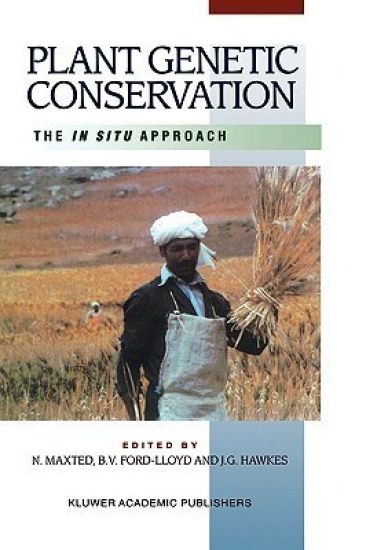
Plant Genetic Conservation

Plant Genetic Conservation

Nigel Maxted; B.V. Ford-Lloyd; J.G. Hawkes

Chapman and Hall
1997
sidottu
The recent development of ideas on biodiversity conservation was already being considered almost three-quarters of a century ago for crop plants and the wild species related to them, by the Russian geneticist N.!. Vavilov. He was undoubtedly the first scientist to understand the impor­ tance for humankind of conserving for utilization the genetic diversity of our ancient crop plants and their wild relatives from their centres of diversity. His collections showed various traits of adaptation to environ­ mental extremes and biotypes of crop diseases and pests which were unknown to most plant breeders in the first quarter of the twentieth cen­ tury. Later, in the 1940s-1960s scientists began to realize that the pool of genetic diversity known to Vavilov and his colleagues was beginning to disappear. Through the replacement of the old, primitive and highly diverse land races by uniform modem varieties created by plant breed­ ers, the crop gene pool was being eroded. The genetic diversity of wild species was equally being threatened by human activities: over-exploita­ tion, habitat destruction or fragmentation, competition resulting from the introduction of alien species or varieties, changes and intensification of land use, environmental pollution and possible climate change.
Plant Genetic Conservation

Plant Genetic Conservation

Nigel Maxted; B.V. Ford-Lloyd; J.G. Hawkes

Chapman and Hall
1997
nidottu
The recent development of ideas on biodiversity conservation was already being considered almost three-quarters of a century ago for crop plants and the wild species related to them, by the Russian geneticist N.!. Vavilov. He was undoubtedly the first scientist to understand the impor­ tance for humankind of conserving for utilization the genetic diversity of our ancient crop plants and their wild relatives from their centres of diversity. His collections showed various traits of adaptation to environ­ mental extremes and biotypes of crop diseases and pests which were unknown to most plant breeders in the first quarter of the twentieth cen­ tury. Later, in the 1940s-1960s scientists began to realize that the pool of genetic diversity known to Vavilov and his colleagues was beginning to disappear. Through the replacement of the old, primitive and highly diverse land races by uniform modem varieties created by plant breed­ ers, the crop gene pool was being eroded. The genetic diversity of wild species was equally being threatened by human activities: over-exploita­ tion, habitat destruction or fragmentation, competition resulting from the introduction of alien species or varieties, changes and intensification of land use, environmental pollution and possible climate change.
Regional Policy

Regional Policy

Nigel Copperthwaite

Routledge
1990
nidottu
The European Community has committed itself to promoting 'economic and social cohesion' across its regions. Its expenditure - via the 'structural funds' - for these purposes is set to double by 1993. A key component of such expenditure is the European Regional Development Fund, which is receiving increasing attention from local and regional representatives and officials, as well as from companies considering where to locate their businesses. The integrated development operations of the EC involve important new initiatives at the local level. This volume explains how the ERDF operates and its relationship to other sources of funding from the EC. It offers comprehensive and up-to-date information, in a readily accessible format. Section II summarises the key EC policy documents involved, and Section III gives a full listing of all the relevant documents across a range of different aspects.
International Trade Policy

International Trade Policy

Nigel Grimwade

Routledge
1996
sidottu
This volume provides an introduction to the basic theory behind international trade policy. The author analyses current policy issues within a theoretical framework. The book adopts a thematic approach, with each chapter examining a different issue - each of which is of central importance to contemporary trade policy. The book will be essential for all those who want to understand what governments do, in terms of trade policy and how they do it.
International Trade Policy

International Trade Policy

Nigel Grimwade

Routledge
1996
nidottu
This volume provides an introduction to the basic theory behind international trade policy. The author analyses current policy issues within a theoretical framework. The book adopts a thematic approach, with each chapter examining a different issue - each of which is of central importance to contemporary trade policy. The book will be essential for all those who want to understand what governments do, in terms of trade policy and how they do it.
Writing and Society

Writing and Society

Nigel Wheale

Routledge
1999
sidottu
Writing and Society is a stunning exploration of the relationship between the growth in popular literacy and the development of new readerships and the authors addressing them. It is the first single volume to provide a year-by-year chronology of political events in relation to cultural production.This overview of debates in literary critical theory and historiography includes facsimile pages with commentary from the most influential books of the period. The author describes and analyses:* the development of literacy by status, gender and region in Britain* structures of patronage and censorship* the fundamental role of the publishing industry* the relation between elite literary and popular cultures* and the remarkable growth of female literacy and publication.