
Kirjahaku
Etsi kirjoja tekijän nimen, kirjan nimen tai ISBN:n perusteella.
1000 tulosta hakusanalla Paul Tengesdal
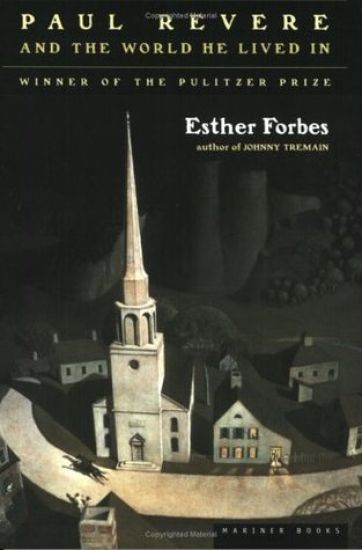
This vivid account of the life and times of Paul Revere was first published in 1942, to great acclaim and a Pulitzer Prize. An elegant storyteller and expert historian, Edith Forbes paints a memorable portrait of American colonial history and of this most legendary of revolutionary heroes, "not merely one man riding one horse on a certain lonely night of long ago, but a symbol to which his countrymen can yet turn.
In this book, Paul McCartney - the most prolific member of The Beatles, founder of Wings and enduring solo artist - speaks in his own words of his private life, his life as a singer, musician, composer and businessman, of how the greatest band in the world came to be, and how and why they broke up. Paul McCartney Now and Then is the inside story from the man himself. Includes commentary from Sir George Martin, Steve Miller, Pete Best, Brian Wilson, Peter Asher and others. Complimented throughout by rare, many previously unseen photos shot over a career spanning more than four decades. Robin Bextor is a well-known documentary film maker and writer who has formed a close relationship with Paul McCartney over the years. Tony Barrow, who coined the phrase "Fab Four," was head of The Beatles' Press Office from 1962-1968.


Paul Fitz-Henry; Or, a Few Weeks in Paris. a Narrative
Henry John Thornton
Trieste Publishing
2018
nidottu
New Testament. the Epistle of Paul the Apostle to the Galatians; Pp. 613-844
Paul The Apostle
Trieste Publishing
2018
nidottu
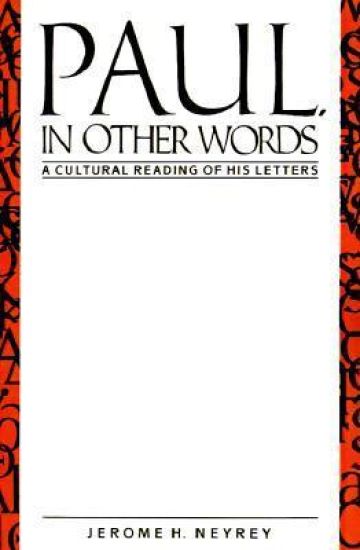
The focus of this book is an anthropological perspective that will open the writings of Paul to a challenging new range of questions and issues. Jerome Neyrey introduces the reader to critical access thorough a wholly convincing method of cultural-historical analysis. Paul comes alive in time and place. Biblical theologians and students will find ample stimulus in Neyrey's analysis of Paul.
Paul and the Rhetoric of Reconciliation
Margaret M. Mitchell
Westminster/John Knox Press,U.S.
1993
nidottu
This work casts new light on the genre, function, and composition of Paul's first letter to the Corinthians. Margaret Mitchell thoroughly documents her argument that First Corinthians was a single letter, not a combination of fragments, whose aim was to persuade the Corinthian Christian community to become unified.
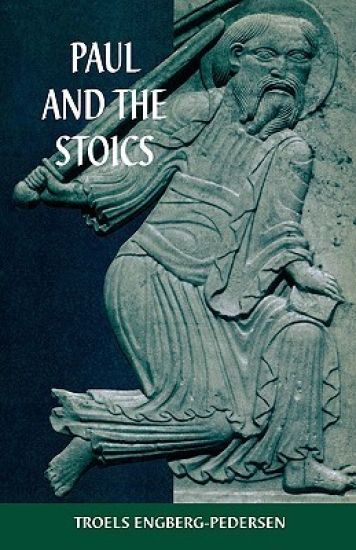
This book seeks to do for the study of Paul and Stoicism what E. P. Sanders did for Paul and Judaism. Instead of making a brick-by-brick analysis, Troels Engberg Pedersen provides the first comprehensive building-to-building comparison of how the two religious/philosophical systems functioned. The book moves through the major letters of Paul (e.g., Philippians, Galatians, and Romans), carefully documenting Paul's indebtedness to Stoic thought.
Paul and the Religious Experience of Reconciliation
Gilbert I. Bond
Westminster/John Knox Press,U.S.
2005
nidottu
In the ancient world as in contemporary times, religion provides a vital context in which people become who they are and establish themselves with a unique identity. This process of constructing the self is not only a psychological process and a phenomenological reality; it can also be a deeply religious experience.
Paul Beyond the Judaism-Hellenism Divide
Westminster/John Knox Press,U.S.
2001
nidottu
This volume does away with the traditional strategy of playing "Judaism" and "Hellenism" against each other as a context to understand Paul. This aim is reached in two ways: (1) in essays that display the ideological underpinnings of a "Jewish" and "Hellenistic" Paul in historical and modern scholarly interpretations of him, and (2) in essays that use case studies from the Corinthian correspondence that draw freely on "Jewish" and "Greco-Roman" contextual material to illuminate this Pauline phenomena.
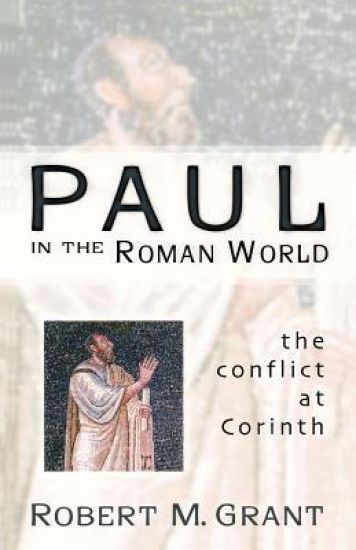
Though the apostle Paul wrote letters to many of the churches he founded, none of his extant letters reveal more about him, his missionary activity, and the community of faith he sought to pastor than 1 Corinthians. In 1 Corinthians, Paul tried to influence--even control--the church in the context of a city that had lasting memories of Greek democracy but the present realities of a Roman proconsul. This volume highlights Paul as apostle, missionary, and pastor against the backdrop of the Greco-Roman culture, economics, and politics.
Paul's messianism put him at the margins of Pharisaism, his preaching placed him in tension with the Synagogue, and his Gospel set him on the outer border of Hellenistic religion. This book explores the tensions and creativity that Paul's marginality let loose. In six short chapters, Roetzel explains Paul's complex relationship to first century Judaism and elements of the early church. In so doing, he tackles a great many of the most disputed areas of Pauline theology: How can we speak of Paul as a convert? How far did Paul accept the apocalyptic myth? What are we to make of Paul's theology of weakness? How far did Paul embrace pluralism? And how could Paul preach that Gentiles shared in God's election without excluding Jews?
Paul and the Anatomy of Apostolic Authority
John Howard Schutz
Westminster/John Knox Press,U.S.
2007
nidottu
John Howard Schutz's milestone analysis of Paul's authority shaped a generation of thought about Paul. This insightful work continues to be relevant to Pauline scholarship.The New Testament Library offers authoritative commentary on every book and major aspect of the New Testament, as well as classic volumes of scholarship. The commentaries in this series provide fresh translations based on the best available ancient manuscripts, offer critical portrayals of the historical world in which the books were created, pay careful attention to their literary design, and present a theologically perceptive exposition of the text.
Does Paul assume that Christians will remain in salvation? If so, on what basis? What, if anything, can disrupt this continuity, and to what extent can it do so? Using detailed exegetical analysis of the relevant texts, Judith Volf addresses what Paul believed about continuity in salvation and the importance of this theme for subsequent Christians.
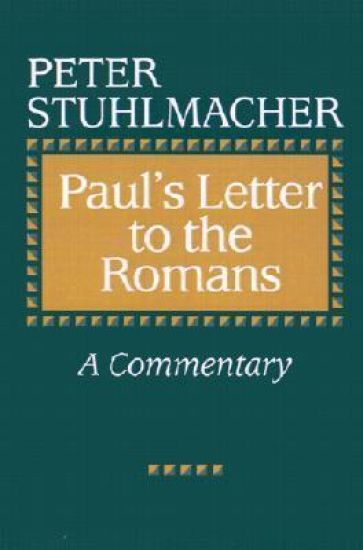
In this book, Peter Stuhlmacher stresses the Old Testament and postbiblical Jewish traditions as the primary backdrop to Paul's thought, as these traditions were known by Paul himself or mediated to him through Jesus and the early church. The themes of the righteousness of God and the corresponding justification of both Jews and Gentiles are viewed as the center of Romans. Finally, Stuhlmacher seeks to place the apostle's theology within its historical context. He overcomes the false dichotomy that has often characterized the study of Romans, mediating between the view that it is a general theological treatise that functions as Paul's last testament to his Christian faith, on the one hand, and the view that it is one particular and occasion-bound expression of Paul's thinking.
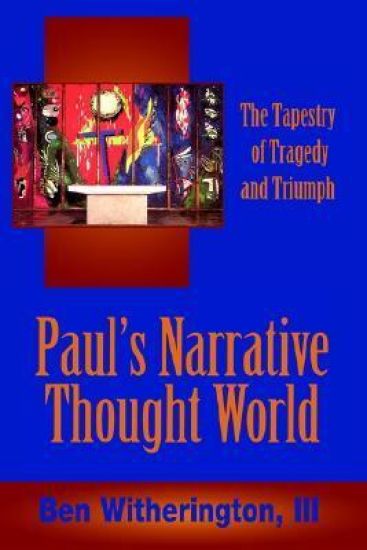
It is a common belief that Paul's letters are not stories but rather theological ideas and practical advice. Ben Witherington III thinks otherwise. He is convinced that all of Paul's ideas, arguments, practical advice, and social arrangements are ultimately grounded in stories, some found in the Hebrew Scriptures and some found in the oral tradition.