In just a few years of prosperity, between 1886 and 1891, a wave of railroad construction broke across the sparsely populated inland plain of the Pacific Northwest. Racing to secure strategic routes and sources of traffic, the railway promoters built an extensive and bewildering network of competing lines.Continuing the saga he started in To the Columbia Gateway: The Oregon Railway and the Northern Pacific, 1879-1884, author Peter J. Lewty describes the relationships between rival railroad companies and traces the expansion of the Northern Pacific and Union Pacific railway systems in the interior Northwest between 1885 and 1893. Recreating the prevailing atmosphere of optimism and excitement, he chronicles the construction of the Pacific extension of the Great Northern Railway and provides a lively portrait of railway operations on the last frontier of American settlement.Extensively documented and fast moving, Across the Columbia Plain is required reading for railroad enthusiasts and Northwest historians.
This book addresses the need for a firm scientific basis for decision-making in the cold-region pipeline construction industry. In clear language it describes the behavior of permafrost and its effects on structures and terrain, and gives revealing accounts of the political and international aspects of related issues. The enlarged second edition maintains the easy-to-read, well-illustrated format of the original, but is brought up to date with new information and a new emphasis. The author has served as a consultant to the Canadian government on the effects of cold climates on several large northern projects.
This volume is a pioneering effort to examine the social, demographic, and economic changes that befell the Jewish communities of Central Europe after the dissolution of the Habsburg Empire. It consists of studies researched and written especially for this volume by historians, sociologists, and economists, all specialists in modern Central European Jewish affairs.The era of national rivalry, economic crises, and political confusion between the two World Wars has been preceded by a pre-World War I epoch of Jewish emancipation and assimilation. During that period, Jewish minorities had been harbored from violent anti-Semitism by the Empire, and they became torchbearers of industrialization and modernization. This common destiny encouraged certain common characteristics in the three major components of the Empire, Austria, Hungary, and the Czech territories, despite the very different origins of the well over one million Jews in those three lands.The disintegration of the Habsburg Empire created three small, economically marginal national states, inimical to each other and at liberty to create their own policies toward Jews in accord with the preferences of their respective ruling classes. Active and openly discriminatory anti-Semitic measures resulted in Austria and Hungary. The only liberal heir country of the Empire was Czechoslovakia, although simmering anti-Semitism and below surface discrimination were widespread in Slovakia. While one might have expected Jewish communities to return to their pre-World War I tendencies to go their independent ways after the introduction of these policies, social and economic patterns which had evolved in the Habsburg era persisted until the Anschluss in Austria, German occupation in Czechoslovakia, and World War II in Hungary. Studies in this volume attest to continuing similarities among the three Jewish communities, testifying to the depth of the Empire's long lasting impact on the behavior of Jews in Central Europe.
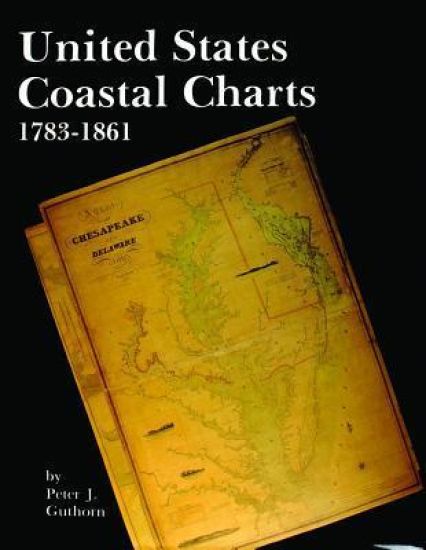
The years between the end of the American Revolution and the beginning of the Civil War were crucial ones in the history of American coastal charting. At the beginning, foreign charts, principally British, were available; and a few of American origin. The latter were largely copies of British charts, and a few were compiled by local shipmasters and pilots. The more successful publishers were able to compile hydrographic data using their own resources, and added corrections in new editions of their charts. A "survey of the coast" was initiated by Congress in 1807 under Thomas Jefferson's administration. Delays due to the War of 1812 and political disagreements slowed progress and the production of the first important chart, that of New York harbour, was not published until 1843. Private publishers filled an important void between the time the Coast Survey was initiated and the time they produced usable charts. Data on the private publishers has been collected for publication here for the first time. Nevertheless, the survey was to increase the availability of charts which were accurate within the framework of hydrographic knowledge at the time. The Coast Survey succeeded in charting the entire coastline by the beginning of the Civil War. This volume is the first definitive study of these charts.
A major book on the subject of heaven, this expanded edition examines the hunger for heaven that is so strong in all of us. Fascinating and upbeat, Heaven, the Heart's Deepest Longing thoroughly explores the psychological and theological dimensions of this search for total joy and for the ultimate reality that grounds it.
In the style of C. S. Lewis, Kreeft provides an unexcelled look at the nature of Heaven that offers readers a refreshingly clear, theologically sound, and always fascinating glimpse of that "undiscovered country." Kreeft's engaging and informative account thoughtfully answers intriguing questions about heaven that speaks to the mind and heart.
A shortened version of Kreeft's much larger Summa of the Summa, which in turn was a shortened version of the Summa Theologica. The reason for the double shortening is pretty obvious: the original runs some 4000 pages (The Summa of the Summa was just over 500.) The Summa is certainly the greatest, most ambitious, most rational book of theology ever written. In it, there is also much philosophy, which is selected, excerpted, arranged, introduced, and explained in footnotes here by Kreeft, a popular Thomist teacher and writer. St. Thomas Aquinas is universally recognized as one of the greatest philosophers who ever lived. His writings combine the two fundamental ideals of philosophical writing: clarity and profundity. He is a master of metaphysics and technical terminology, yet so full of both theoretical and practical wisdom. He is the master of common sense. The Summa Theologica is timeless, but particularly important today because of his synthesis of faith and reason, revelation and philosophy, and the Biblical and the classical Greco-Roman heritages. This little book is designed for beginners, either for classroom use or individually. It contains the most famous and influential passages of St. Thomas' philosophy with copious aids to understanding them.
Peter Kreeft brings his unique insights to this most important area of our spiritual lives. He claims he himself is still a beginner in prayer, and this book is for all those, like him, who feel that they are not good at praying but desire to become much better at it. Thus, Kreeft offers simple, but profound advice and practical steps for developing a prayer life based on the time-tested wisdom of the saints and great spiritual writers, especially the principles found in Brother Lawrence's classic, The Practice of the Presence of God. In short, straight-forward and unsentimental chapters, Kreeft covers all the key areas for understanding and developing that intimate form of communication with our Creator that we call prayer. He covers such areas as the necessity of prayer, various motives and methods, steps, patience, suffering, sin, faith, and grace.
For the first time in 400 years the Catholic Church has authorized an official universal catechism which instantly became an international best-seller, the Catechism of the Catholic Church. Using this official Catechism, the highly-regarded author and professor Peter Kreeft presents a complete compendium of all the major beliefs of Catholicism written in his readable and concise style. Since the Catechism of the Catholic Church was written for the express purpose of grounding and fostering catechisms based on it for local needs and ordinary readers, Kreeft does just that, offering a thorough summary of Catholic doctrine, morality, and worship in a popular format with less technical language. He presents a systematic, organic synthesis of the essential and fundamental Catholic teachings in the light of the Second Vatican Council and the whole of the Church's Tradition. This book is the most thorough, complete and popular catechetical summary of Catholic belief in print that is based on the universal Catechism.
Here is a brief, well-organized, and easy-to-follow introduction and overview of robust statistics. Huber focuses primarily on the important and clearly understood case of distribution robustness, where the shape of the true underlying distribution deviates slightly from the assumed model (usually the Gaussian law). An additional chapter on recent developments in robustness has been added and the reference list has been expanded and updated from the 1977 edition.
Managing People at Work is a comprehensive guide to the latest theory and research in the area of industrial and organizational psychology. Written for managers as well as business students, it presents easily understood concepts without using technical business jargon. The book focuses on both day-to-day and strategic problems in areas such as management styles, group decision making and organizational change. Information is enhanced with case studies, questionnaires, and exercises throughout the book. HR Magazine Managing People at Work is both a practical guide for managers and a valuable introduction to management issues for students in business, professional, and technical programs. Comprehensive in scope but easily accessible to a wide audience, the volume distills the latest theory and research in industrial and organizational psychology, presenting workable concepts and techniques with a minimum of jargon. The authors place particular emphasis on helping managers deal successfully with day-to-day and strategic problems in the workplace, examining issues such as appropriate management styles, group decision-making, organizational change, and more. Exercises, case studies, and questionnaires are included throughout to help managers further develop their skills. Divided into three principal parts, the volume moves from the micro aspects of managing people to the macro or organizational aspects of people management. In the first section, the authors concentrate on dealing with individuals by exploring personality and individual differences, motivation, leadership potential, and management styles. Part Two focuses on people working in groups and addresses questions about the differences between group and individual decision making, the effects of group decision making processes on individual motivation, the causes of intergroup conflict, and the ways in which conflict can be minimized. Organizational problems and the effects of organizational change are treated in Part Three, while a final chapter considers an important, yet usually neglected aspect of management: how to manage your boss. Numerous explanatory figures and tables accompany the text.
This new edition of Prayers of the Faithful from Catholic Book Publishing reflects both the themes of Pope John Paul II and the vision of Pope Benedict XVI. The style of the prayer anticipates the dignity, accuracy, and quality of the new ICEL translation of the Roman Missal. Edited by Bishop Peter J. Elliott, Prayers of the Faithful contains Intercessions for all Sundays, solemnities, major feasts, and other occasions along with valuable supplementary material, including an Introduction explaining the history, development, and structure of the General Intercessions and directives on how to announce them, as well as music for the General Intercessions. Prayers of the Faithful comes with a handy ribbon marker and is durably bound in red cloth.