Kirjojen hintavertailu. Mukana 12 279 299 kirjaa ja 12 kauppaa.

Kirjahaku

Etsi kirjoja tekijän nimen, kirjan nimen tai ISBN:n perusteella.

1000 tulosta hakusanalla Philo

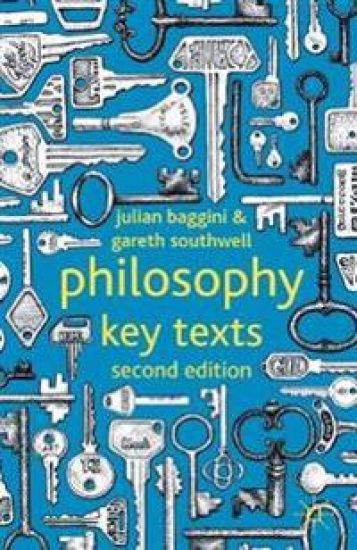
Philosophy: Key Texts

Philosophy: Key Texts

J. Baggini; G. Southwell

Palgrave Macmillan
2012
sidottu
Designed for complete beginners, Philosophy: Key Texts is an introduction to philosophy and gives a clear, readable overview of some of the major texts of Plato, Descartes, Hume, Mill and Nietzsche. As well as providing help in how to analyze these sources, the authors encourage the reader to question the arguments and positions presented.
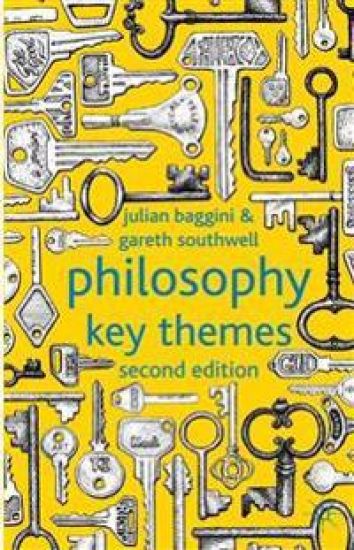
Philosophy: Key Texts

Philosophy: Key Texts

J. Baggini; G. Southwell

Palgrave Macmillan
2012
nidottu
Designed for complete beginners, Philosophy: Key Texts is an introduction to philosophy and gives a clear, readable overview of some of the major texts of Plato, Descartes, Hume, Mill and Nietzsche. As well as providing help in how to analyze these sources, the authors encourage the reader to question the arguments and positions presented.
Philosophy: Key Themes

Philosophy: Key Themes

J. Baggini; G. Southwell

Palgrave Macmillan
2012
sidottu
Philosophy: Key Themes is a beginner's guide to understanding and critiquing philosophical arguments. Each chapter introduces one of the major themes in philosophy. Baggini's approach combines explanation with summary while encouraging the reader to question the arguments and positions presented.
Philosophy: Key Themes

Philosophy: Key Themes

J. Baggini; G. Southwell

Palgrave Macmillan
2012
nidottu
Philosophy: Key Themes is a beginner's guide to understanding and critiquing philosophical arguments. Each chapter introduces one of the major themes in philosophy. Baggini's approach combines explanation with summary while encouraging the reader to question the arguments and positions presented.
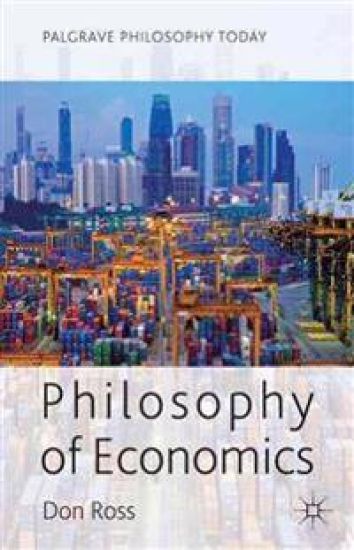
Philosophy of Economics

Philosophy of Economics

D. Ross

Palgrave Macmillan
2014
sidottu
Don Ross provides a concise and distinct introduction to the philosophy of economics for students in need of a short but engaging study of the main issues in the subject today. Ross offers his own provocative interpretation of the value of economics in science and public policy giving a unique perspective from a world authority.
Philosophy of Economics

Philosophy of Economics

D. Ross

Palgrave Macmillan
2014
nidottu
Don Ross provides a concise and distinct introduction to the philosophy of economics for students in need of a short but engaging study of the main issues in the subject today. Ross offers his own provocative interpretation of the value of economics in science and public policy giving a unique perspective from a world authority.
Philosophy of Epidemiology

Philosophy of Epidemiology

A. Broadbent

Palgrave Macmillan
2013
sidottu
Epidemiology is one of the fastest growing and increasingly important sciences. This thorough analysis lays out the conceptual foundations of epidemiology, identifying traps and setting out the benefits of properly understanding this fascinating and important discipline, as well as providing the means to do so.
Philosophy of Stem Cell Biology

Philosophy of Stem Cell Biology

M. Fagan

Palgrave Macmillan
2013
sidottu
This examination of stem cell biology from a philosophy of science perspective clarifies the field's central concept, the stem cell, as well as its aims, methods, models, explanations and evidential challenges. Relations to systems biology and clinical medicine are also discussed.
Philosophy After Darwin

Philosophy After Darwin

John Herman Randall Jr.

Columbia University Press
1977
sidottu
The sequel to Volumes I and II of John Herman Randall, Jr.'s acclaimed history of modern philosophy, The Career of Philosophy, This volume contains the completed chapters from Randall's unfinished Volume III and a selection of other essays examining the impact of Darwin's theory of evolution on following philosophical movements, including the reinterpretation of idealism in England and America, and the relation between religion and philosophy.
Philosophers on Art from Kant to the Postmodernists
Here, for the first time, Christopher Kul-Want brings together twenty-five texts on art written by twenty philosophers. Covering the Enlightenment to postmodernism, these essays draw on Continental philosophy and aesthetics, the Marxist intellectual tradition, and psychoanalytic theory, and each is accompanied by an overview and interpretation. The volume features Martin Heidegger on Van Gogh's shoes and the meaning of the Greek temple; Georges Bataille on Salvador Dali's The Lugubrious Game; Theodor W. Adorno on capitalism and collage; Walter Benjamin and Roland Barthes on the uncanny nature of photography; Sigmund Freud on Leonardo Da Vinci and his interpreters; Jacques Lacan and Julia Kristeva on the paintings of Holbein; Freud's postmodern critic, Gilles Deleuze on the visceral paintings of Francis Bacon; and Giorgio Agamben on the twin traditions of the Duchampian ready-made and Pop Art. Kul-Want elucidates these texts with essays on aesthetics, from Hegel and Nietzsche to Badiou and Ranciere, demonstrating how philosophy adopted a new orientation toward aesthetic experience and subjectivity in the wake of Kant's powerful legacy.
Philosophers on Art from Kant to the Postmodernists
Here, for the first time, Christopher Kul-Want brings together twenty-five texts on art written by twenty philosophers. Covering the Enlightenment to postmodernism, these essays draw on Continental philosophy and aesthetics, the Marxist intellectual tradition, and psychoanalytic theory, and each is accompanied by an overview and interpretation. The volume features Martin Heidegger on Van Gogh's shoes and the meaning of the Greek temple; Georges Bataille on Salvador Dali's The Lugubrious Game; Theodor W. Adorno on capitalism and collage; Walter Benjamin and Roland Barthes on the uncanny nature of photography; Sigmund Freud on Leonardo Da Vinci and his interpreters; Jacques Lacan and Julia Kristeva on the paintings of Holbein; Freud's postmodern critic, Gilles Deleuze on the visceral paintings of Francis Bacon; and Giorgio Agamben on the twin traditions of the Duchampian ready-made and Pop Art. Kul-Want elucidates these texts with essays on aesthetics, from Hegel and Nietzsche to Badiou and Ranciere, demonstrating how philosophy adopted a new orientation toward aesthetic experience and subjectivity in the wake of Kant's powerful legacy.
Philosophy in Turbulent Times

Philosophy in Turbulent Times

Elisabeth Roudinesco

Columbia University Press
2008
sidottu
For Elisabeth Roudinesco, a historian of psychoanalysis and one of France's leading intellectuals, Canguilhem, Sartre, Foucault, Althusser, Deleuze, and Derrida represent a "great generation" of French philosophers who accomplished remarkable work and lived incredible lives. These troubled and innovative thinkers endured World War II and the cultural and political revolution of the 1960s, and their cultural horizon was dominated by Marxism and psychoanalysis, though they were by no means strict adherents to the doctrines of Marx and Freud. Roudinesco knew many of these intellectuals personally, and she weaves an account of their thought through lived experience and reminiscences. Canguilhem, for example, was a distinguished philosopher of science who had a great influence on Foucault's exploration of sanity and madness-themes Althusser lived in a notorious personal drama. And in dramatizing the life of Freud for the screen, Sartre fundamentally altered his own philosophical approach to psychoanalysis. Roudinesco launches a passionate defense of Canguilhem, Sartre, Foucault, Althusser, Deleuze, and Derrida against the "new philosophers" of the late 1970s and 1980s, who denounced the work-and sometimes the private lives-of this great generation. Roudinesco refutes attempts to tar them, as well as the Marxist and left-wing tradition in general, with the brush of Soviet-style communism. In Freudian theory and the philosophy of radical commitment, she sees a bulwark against the kind of manipulative, pill-prescribing, and normalizing psychology that aims to turn individuals into mindless consumers. Intense, clever, and persuasive, Philosophy in Turbulent Times captivates with the dynamism of French thought in the twentieth century.
Philosophy in Turbulent Times

Philosophy in Turbulent Times

Elisabeth Roudinesco

Columbia University Press
2010
pokkari
For Elisabeth Roudinesco, a historian of psychoanalysis and one of France's leading intellectuals, Canguilhem, Sartre, Foucault, Althusser, Deleuze, and Derrida represent a "great generation" of French philosophers who accomplished remarkable work and lived incredible lives. These troubled and innovative thinkers endured World War II and the cultural and political revolution of the 1960s, and their cultural horizon was dominated by Marxism and psychoanalysis, though they were by no means strict adherents to the doctrines of Marx and Freud. Roudinesco knew many of these intellectuals personally, and she weaves an account of their thought through lived experience and reminiscences. Canguilhem, for example, was a distinguished philosopher of science who had a great influence on Foucault's exploration of sanity and madness-themes Althusser lived in a notorious personal drama. And in dramatizing the life of Freud for the screen, Sartre fundamentally altered his own philosophical approach to psychoanalysis. Roudinesco launches a passionate defense of Canguilhem, Sartre, Foucault, Althusser, Deleuze, and Derrida against the "new philosophers" of the late 1970s and 1980s, who denounced the work-and sometimes the private lives-of this great generation. Roudinesco refutes attempts to tar them, as well as the Marxist and left-wing tradition in general, with the brush of Soviet-style communism. In Freudian theory and the philosophy of radical commitment, she sees a bulwark against the kind of manipulative, pill-prescribing, and normalizing psychology that aims to turn individuals into mindless consumers. Intense, clever, and persuasive, Philosophy in Turbulent Times captivates with the dynamism of French thought in the twentieth century.
Philosophy and Animal Life

Philosophy and Animal Life

Stanley Cavell; Cora Diamond; John McDowell; Ian Hacking; Cary Wolfe

Columbia University Press
2008
sidottu
Philosophy and Animal Life offers a new way of thinking about animal rights, our obligation to animals, and the nature of philosophy itself. Cora Diamond begins with "The Difficulty of Reality and the Difficulty of Philosophy," in which she accuses analytical philosophy of evading, or deflecting, the responsibility of human beings toward nonhuman animals. Diamond then explores the animal question as it is bound up with the more general problem of philosophical skepticism. Focusing specifically on J. M. Coetzee's The Lives of Animals, she considers the failure of language to capture the vulnerability of humans and animals. Stanley Cavell responds to Diamond's argument with his own close reading of Coetzee's work, connecting the human-animal relation to further themes of morality and philosophy. John McDowell follows with a critique of both Diamond and Cavell, and Ian Hacking explains why Cora Diamond's essay is so deeply perturbing and, paradoxically for a philosopher, he favors poetry over philosophy as a way of overcoming some of her difficulties. Cary Wolfe's introduction situates these arguments within the broader context of contemporary continental philosophy and theory, particularly Jacques Derrida's work on deconstruction and the question of the animal. Philosophy and Animal Life is a crucial collection for those interested in animal rights, ethics, and the development of philosophical inquiry. It also offers a unique exploration of the role of ethics in Coetzee's fiction.
Philosophy and Animal Life

Philosophy and Animal Life

Stanley Cavell; Cora Diamond; John McDowell; Ian Hacking; Cary Wolfe

Columbia University Press
2009
pokkari
Philosophy and Animal Life offers a new way of thinking about animal rights, our obligation to animals, and the nature of philosophy itself. Cora Diamond begins with "The Difficulty of Reality and the Difficulty of Philosophy," in which she accuses analytical philosophy of evading, or deflecting, the responsibility of human beings toward nonhuman animals. Diamond then explores the animal question as it is bound up with the more general problem of philosophical skepticism. Focusing specifically on J. M. Coetzee's The Lives of Animals, she considers the failure of language to capture the vulnerability of humans and animals. Stanley Cavell responds to Diamond's argument with his own close reading of Coetzee's work, connecting the human-animal relation to further themes of morality and philosophy. John McDowell follows with a critique of both Diamond and Cavell, and Ian Hacking explains why Cora Diamond's essay is so deeply perturbing and, paradoxically for a philosopher, he favors poetry over philosophy as a way of overcoming some of her difficulties. Cary Wolfe's introduction situates these arguments within the broader context of contemporary continental philosophy and theory, particularly Jacques Derrida's work on deconstruction and the question of the animal. Philosophy and Animal Life is a crucial collection for those interested in animal rights, ethics, and the development of philosophical inquiry. It also offers a unique exploration of the role of ethics in Coetzee's fiction.
Philosophical Temperaments

Philosophical Temperaments

Peter Sloterdijk; Creston Davis

Columbia University Press
2013
sidottu
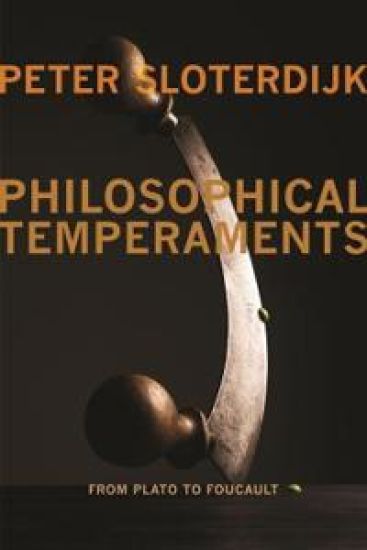
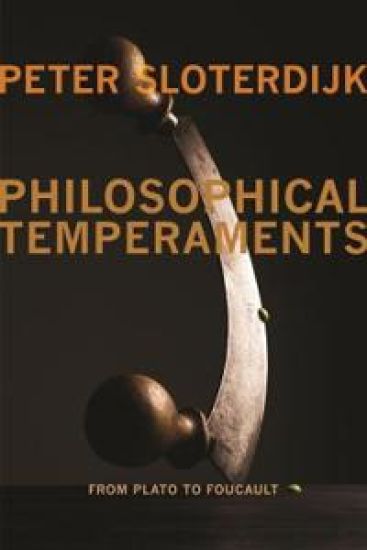
Peter Sloterdijk turns his keen eye to the history of western thought, conducting colorful readings of the lives and ideas of the world's most influential intellectuals. Featuring nineteen vignettes rich in personal characterizations and theoretical analysis, Sloterdijk's companionable volume casts the development of philosophical thinking not as a buildup of compelling books and arguments but as a lifelong, intimate struggle with intellectual and spiritual movements, filled with as many pitfalls and derailments as transcendent breakthroughs. Sloterdijk delves into the work and times of Aristotle, Augustine, Bruno, Descartes, Foucault, Fichte, Hegel, Husserl, Kant, Kierkegaard, Leibniz, Marx, Nietzsche, Pascal, Plato, Sartre, Schelling, Schopenhauer, and Wittgenstein. He provocatively juxtaposes Plato against shamanism and Marx against Gnosticism, revealing both the vital external influences shaping these intellectuals' thought and the excitement and wonder generated by the application of their thinking in the real world. The philosophical "temperament" as conceived by Sloterdijk represents the uniquely creative encounter between the mind and a diverse array of cultures. It marks these philosophers' singular achievements and the special dynamic at play in philosophy as a whole. Creston Davis's introduction details Sloterdijk's own temperament, surveying the celebrated thinker's intellectual context, rhetorical style, and philosophical persona.
Philosophical Temperaments

Philosophical Temperaments

Peter Sloterdijk; Creston Davis

Columbia University Press
2013
pokkari
Peter Sloterdijk turns his keen eye to the history of western thought, conducting colorful readings of the lives and ideas of the world's most influential intellectuals. Featuring nineteen vignettes rich in personal characterizations and theoretical analysis, Sloterdijk's companionable volume casts the development of philosophical thinking not as a buildup of compelling books and arguments but as a lifelong, intimate struggle with intellectual and spiritual movements, filled with as many pitfalls and derailments as transcendent breakthroughs. Sloterdijk delves into the work and times of Aristotle, Augustine, Bruno, Descartes, Foucault, Fichte, Hegel, Husserl, Kant, Kierkegaard, Leibniz, Marx, Nietzsche, Pascal, Plato, Sartre, Schelling, Schopenhauer, and Wittgenstein. He provocatively juxtaposes Plato against shamanism and Marx against Gnosticism, revealing both the vital external influences shaping these intellectuals' thought and the excitement and wonder generated by the application of their thinking in the real world. The philosophical "temperament" as conceived by Sloterdijk represents the uniquely creative encounter between the mind and a diverse array of cultures. It marks these philosophers' singular achievements and the special dynamic at play in philosophy as a whole. Creston Davis's introduction details Sloterdijk's own temperament, surveying the celebrated thinker's intellectual context, rhetorical style, and philosophical persona.
Philosophy's Big Questions

Philosophy's Big Questions

Columbia University Press
2021
sidottu
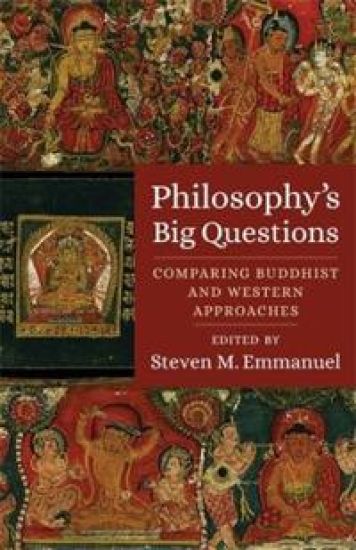
Certain questions have recurred throughout the history of philosophy. They are the big questions—about happiness and the good life, the limits of knowledge, the ultimate structure of reality, the nature of consciousness, the relation between causality and free will, the pervasiveness of suffering, and the conditions for a just and flourishing society—that thinkers in different cultures across the ages have formulated in their own terms in an attempt to make sense of their lives and the world around them.The essays in this book turn to the major figures and texts of the Buddhist tradition in order to expand and enrich our thinking on these enduring questions. Examining them from a comparative and cross-cultural perspective demonstrates the value of alternative ways of addressing philosophical problems, showing how different approaches can produce new and unexpected kinds of questions and answers. Engaging with the Buddhist tradition, this book shows, helps return philosophy to its practical as well as theoretical aim: not only understanding the world but also knowing how to live in it.Featuring striking and generative comparisons of Buddhist and Western thought, Philosophy’s Big Questions challenges our thinking in fundamental ways and offers readers new conceptual tools, methods, and insights for the pursuit of a good and happy life.
Philosophy's Big Questions

Philosophy's Big Questions

Columbia University Press
2021
pokkari
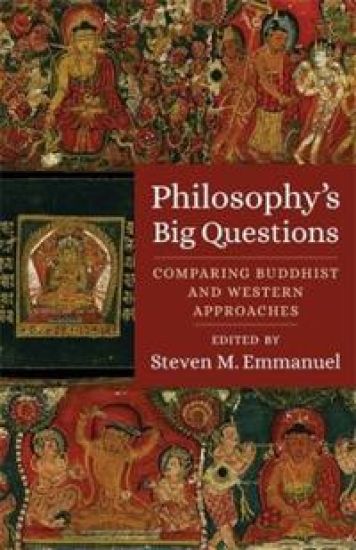
Certain questions have recurred throughout the history of philosophy. They are the big questions—about happiness and the good life, the limits of knowledge, the ultimate structure of reality, the nature of consciousness, the relation between causality and free will, the pervasiveness of suffering, and the conditions for a just and flourishing society—that thinkers in different cultures across the ages have formulated in their own terms in an attempt to make sense of their lives and the world around them.The essays in this book turn to the major figures and texts of the Buddhist tradition in order to expand and enrich our thinking on these enduring questions. Examining them from a comparative and cross-cultural perspective demonstrates the value of alternative ways of addressing philosophical problems, showing how different approaches can produce new and unexpected kinds of questions and answers. Engaging with the Buddhist tradition, this book shows, helps return philosophy to its practical as well as theoretical aim: not only understanding the world but also knowing how to live in it.Featuring striking and generative comparisons of Buddhist and Western thought, Philosophy’s Big Questions challenges our thinking in fundamental ways and offers readers new conceptual tools, methods, and insights for the pursuit of a good and happy life.