
Kirjahaku
Etsi kirjoja tekijän nimen, kirjan nimen tai ISBN:n perusteella.
1000 tulosta hakusanalla Randall Calhoun



Joe Davis's comfortable life as a humor blogger and low-level Twin Cities celebrity gets shaken up by his ex-girlfriend, Tess, and her problems at the office. Tess asks Joe for a simple favor: escort her to a swanky corporate party and make sure a jealous co-worker doesn't fold, spindle or mutilate Tess' person. Hoping to score karma points for their ugly break-up, Joe agrees. However, the party takes an ugly turn when Tess' boss does an eight-story half-gainer through a buffet table. And Tess winds up as the main suspect.With no one else to turn to, Tess asks for Joe's help. Despite being unqualified to take on any investigation more complicated than a search for his car keys, Joe agrees to the job. Armed only with sarcasm and a gaggle of idiot friends, he manages to piece together a conspiracy involving murder, fraud, adultery and, worse, office politics. But as he gets closer to the truth, Joe is left to wonder: is Tess a victim of this conspiracy? Or its mastermind? And just who's winning this break-up?
Iinnovate: A Guide for Engaging in the Innovation Economy
Randall J. Ottinger
Leader-2-Leader Publishing Company
2016
nidottu

Inviting Muslims To Christ: Including Quotations and Commentary from the Bible and Quran
Randall L. Ireland
Middle East Religious Studies Foundation
2017
sidottu
People considering bankruptcy should seek legal help. Bankruptcy typically involves following complex rules and procedures as well as filing many documents with the court. A mistake could result in certain debts not being discharged or other important long-term financial consequences.Today, bankruptcy is used by many honest, hard-working people who took on too much debt, may have lost a job, had uninsured medical bills, or experienced other financial problems. For these people, bankruptcy provides a fresh start. If you have financial problems, call me to learn about the benefits and other aspects of filing bankruptcy.
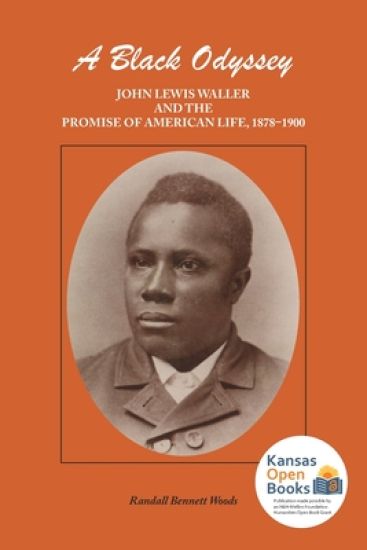
This book focuses on the career of a single individual—an ambitious, resourceful Black American—and his efforts to realize personal fulfillment in a racist world.No Black American was more determined to realize the promise of American life following the Civil War, nor more frustrated by his inability to do so than John Lewis Waller. Waller, whose first twelve years were spent in slavery, overcame his humble beginnings to become a politician, lawyer, journalist, and diplomat. Nevertheless, his life provides a case study of a middle class black caught between a desire to work within the existing political and economic framework and a need to reject a milieu that was becoming increasingly racist.Waller spent his childhood as a slave in Missouri, and his adolescence on a farm in Iowa. Circumstances and personal ambition combined to allow Waller to acquire a trade—barbering—and a profession—lawyering—in the 1870s. In 1878 he migrated to frontier Kansas, where he practiced law, edited a newspaper, rose to a position of leadership in the black community, and became an important figure in the state Republican party. His political career ended abruptly in 1890, however, when the Republicans rejected his bid to be nominated as the party’s candidate for state auditor. Convinced that his defeat was due to the rising tide of racism throughout the nation, he turned his attentions abroad.Waller was particularly susceptible to the lure of overseas empire because he had spent much of his adult life in the midst of a community of people who had succumbed to the myth of a “promised land,” who were convinced that the Black person would be best able to realize his potential in economically under-developed regions not yet exploited and controlled by the white man. In 1891 President Benjamin Harrison appointed Waller United States consul to the east African island of Madagascar. By 1894 Waller had obtained a huge land grant there for the founding of a black utopia. He hoped to establish a plantation-colony that would simultaneously advance his personal fortunes, serve as an investment opportunity for aspiring black capitalists, and constitute a refuge for oppressed Afro-Americans who wished to immigrate. He was thwarted once again by racism, however—this time in the guise of French imperialism. Viewing Waller and his plans as a threat to their hegemony in Madagascar, French authorities quashed the concession, arrested Waller on a charge of being a spy, and sentenced him to twenty years in prison. There followed a full-scale diplomatic confrontation between the United States and France. Waller was released after serving ten months in a French prison, but only after the Cleveland administration agreed to discredit him to the point where he would seem guilty as charged.In his early manhood John Lewis Waller had realized that because he was a Negro personal achievement could not be separated from racial advancement. Responding to that perception, he spent a lifetime searching for a frontier where blacks could enjoy the blessings of democracy and capitalism, and yet be free of the blight of racism. Unlike the vast majority of American Blacks of his time, Waller was able to articulate his dreams, have an impact on the larger, white dominated environment, and realize his individual potential to a remarkable degree. Nevertheless, his dreams were ultimately dashed by racism. His sad but fascinating story deserves the careful attention of all students of politics and race relations during the complex post-Civil War year.
The Roosevelt Foreign-Policy Establishment and the "Good Neighbor
Randall Bennett Woods
UNIVERSITY PRESS OF KANSAS
2021
nidottu
The Good Neighbor Policy was tested to the breaking point by Argentina-U.S. relations during World War II. In part, its durability had depended both upon the willingness of all American republics to join with the United States in resisting attempts by extrahemispheric sources to intervene in New World affairs and upon continuity within the United States foreign-policy establishment. During World War II, neither prerequisite was satisfied, Argentina chose to pursue a neutralist course, and the Latin American policy of the United States became the subject of a bitter bureaucratic struggle within the Roosevelt administration. Consequently, the principles of nonintervention and noninterference, together with “absolute respect for the sovereignty of all states,” ceased to be the guideposts of Washington’s hemispheric policy.In this study, Randall Bennett Woods argues persuasively that Washington’s response to Argentine neutrality was based more on internal differences—individual rivalries and power struggles between competing bureaucratic empires—than on external issues or economic motives. He explains how bureaucratic infighting within the U.S. government, entirely irrelevant to the issues involved, shaped important national policy toward Argentina.Using agency memoranda, State Department records, notes on conversations and interviews, memoirs, and personal archives of the participants, Woods looks closely at the rivalries that swayed the course of Argentine-American relations. He describes the personal motives and goals of men such as Sumner Welles, Cordell Hull, Henry Morgenthau, Harry Dexter White, Henry A. Wallace, and Milo Perkins. He delineates various cliques within the State Department, including the contending groups of Welles Latin Americanists and Hull internationalists—and describes the power struggles between the State Department, the Treasury Department, the Board of Economic Welfare, the Caribbean Defense Command, and other agencies. Of special interest to students of contemporary history will be Woods’s discussion of the careers and views of Juan Peron and Nelson Rockefeller—for American policy contributed in no small way to Peron’s rise, and Rockefeller was the man chiefly responsible for the U.S. rapprochement with Argentina in 1944–45. Woods also gives special attention to the impact of the Wilsonian tradition—especially its contradictions—on policy formation. The last chapter, dealing with Argentina’s admission to the U.N., sheds some light on the origins of the Cold War.Wood’s investigation of the Argentine problem makes a significant contribution toward the understanding of U.S.-Latin American relations in the era of the Good Neighbor Policy, and provides new insights into the evolution of hemispheric policy as a whole during World War II. It reflects the growing emphasis on bureaucratic politics as a principal determinant of U.S. diplomacy.

The perfect introduction to the life and art of Georgia O'Keeffe.
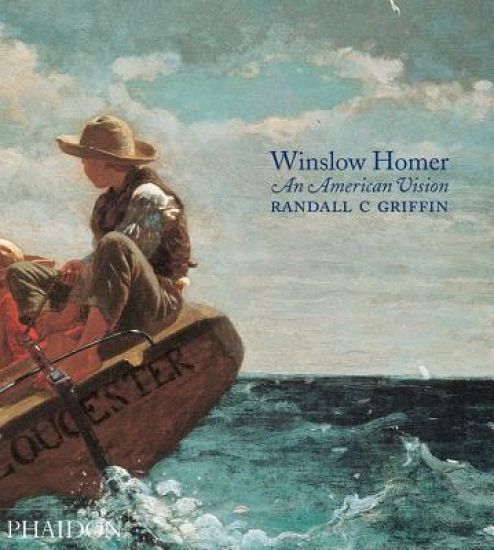
The peerless and comprehensive survey of this important American artist, now available in paperback for the first time This thoroughly researched, immensely readable study on Winslow Homer, one of America's most significant and prolific painters, presents a full account of his life and work and offers a fresh and provocative reassessment of his place in the history of late nineteenth-century art. Homer's work is popular and accessible, and Griffin's text, with its solid documentation, original research and fresh interpretations, has become an essential survey of Homer and his creative output.
The One Resource with All the Facts You hear about Israel in the news regularly, but beyond the many opinions and preconceptions, do you really know what to make of the conflicts and controversies in the Middle East? What Should We Think About Israel? exposes the main current issues and provides well-researched objective facts to help you learn the truth about Israel’s past, present, and future. This compilation from experts including Walter Kaiser, Jr., David Brickner, Mitch Glaser, Michael Brown, Arnold Fructenbaum, and Steven Ger, will help you answer the tough questions:What is the history of the strife and suffering that continues in Israeli and Palestinian territories—and what are the potential solutions?What are the significant and long-term implications of locating the US Embassy in Jerusalem?Why is the Holocaust still such a big deal nearly 75 years after it happened?What is the Boycott, Divestment, Sanctions movement all about?What is being done to restore relations between Jews and Arabs?Learn from respected scholars how to look past the heated debates and discern for yourself what is important to know about Israel, and how that affects you today.

Based on the popular Slugs & Bugs songs, books, and show, this family devotional sets 52 Bible verses to music, helping children sing their way to learning and memorizing key Scripture throughout the year. Kids love to sing, and singer-songwriter Randall Goodgame loves to create catchy tunes that help children learn God’s Word. Each week, you and your kids will encounter a new Scripture verse set to music, with corresponding devotions that help you dig deeper into God’s Word. Each colorfully illustrated chapter includes a QR code leading to a video where your family will learn the song that goes with each verse. This is a great tool for incorporating Scripture into your family’s weekly routine and for your children to remember the verses they’re learning each week. Sing the Bible! creatively combines worship and Bible study for the whole family. Start singing the Bible today.
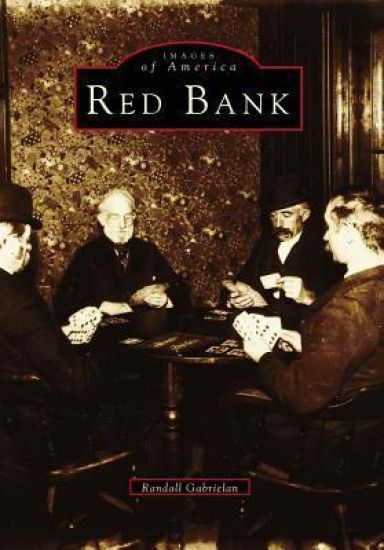
Red Bank is a riverfront town that used its location on the water to grow rapidly between the 1830s and 1850s.The arrival of the railroad in the 1860s accelerated the development of this already-thriving community, and today, the waterfront and business district continue to prosper, as Red Bank itself remains a proud and tight-knit community. Including many rare and previously unpublished photographs, with samples of the work done by early Red Bank photographers Charles Foxwell and Andrew Coleman, this fascinating visual history is a tribute to the people who built Red Bank into the diverse and dynamic community that it is today, and to the photographers who captured moments in time so that we might better understand our past.
How can citizens be persuaded to voluntarily obey good laws? Randall Baldwin Clark addresses this question by looking at one of the oldest works ever to pose it: Plato's Laws. The Law Most Beautiful and Best explores one of the most striking metaphors in the Laws: the suggestion that the gentle and persuasive bedside manner that characterizes rational medicine should serve as the model for political persuasion. Clark's careful reading of the Laws challenges traditional interpretations of this metaphor, emphasizing instead the way the dialogue subtly reasserts the efficacy of the magical arts. Just as the Athenian stranger treats his patients with a combination of rational and irrational therapies, so too must the philosophical reader—should he wish to preserve his city's health—be willing to avail himself of both the gentle persuasion of reasoned discourse and the enchanting coercion of irrational rhetoric. Both a close examination of the Laws and a thoughtful approach to an ageless political dilemma, The Law Most Beautiful and Best is essential reading for scholars interested in jurisprudence, classics, rhetoric, and political science.
America and China: Asia-Pacific Rim Hegemony in the Twenty-first Century places a historical context around the remarkable changes in international relations taking place in this region during the first decade of this millennium. While many institutions established after World War II are being re-examined, the United States' key allies in the region, Australia, Japan, and South Korea, publicly acknowledge that their relations with the United States are still strong. However, the balance of power has shifted dramatically in the region as China has experienced a meteoric rise in economic clout and military power. Randall Doyle examines this epic transition within the Asia-Pacific Rim region by drawing on the research and thought of regional analysts, politicians, scholars, and think-tanks. America and China is the definitive study of this important (and still ongoing) period of world history.