Kirjojen hintavertailu. Mukana 12 459 402 kirjaa ja 12 kauppaa.

Kirjahaku

Etsi kirjoja tekijän nimen, kirjan nimen tai ISBN:n perusteella.

1000 tulosta hakusanalla Roberto Gutierrez Laboy

Holes and Other Superficialities

Holes and Other Superficialities

Roberto Casati; Varzi Achille C.

MIT PRESS LTD
1995
pokkari
This fascinating investigation on the borderlines of metaphysics, everyday geometry, and the theory of perception seeks to answer two basic questions: Do holes really exist? And if so, what are they? Holes are among entities that down-to-earth philosophers would like to expel from their ontological inventory. Casati and Varzi argue in favor of their existence and explore the consequences of this unorthodox approach--odd as these might appear. They examine the ontology of holes, their geometry, their part-whole relations, their identity, their causal role, and the ways we perceive them.A Bradford Book
The Voice in the Machine

The Voice in the Machine

Roberto Pieraccini; Lawrence Rabiner

MIT Press
2012
pokkari
An examination of more than sixty years of successes and failures in developing technologies that allow computers to understand human spoken language.Stanley Kubrick's 1968 film 2001: A Space Odyssey famously featured HAL, a computer with the ability to hold lengthy conversations with his fellow space travelers. More than forty years later, we have advanced computer technology that Kubrick never imagined, but we do not have computers that talk and understand speech as HAL did. Is it a failure of our technology that we have not gotten much further than an automated voice that tells us to "say or press 1"? Or is there something fundamental in human language and speech that we do not yet understand deeply enough to be able to replicate in a computer? In The Voice in the Machine, Roberto Pieraccini examines six decades of work in science and technology to develop computers that can interact with humans using speech and the industry that has arisen around the quest for these technologies. He shows that although the computers today that understand speech may not have HAL's capacity for conversation, they have capabilities that make them usable in many applications today and are on a fast track of improvement and innovation.Pieraccini describes the evolution of speech recognition and speech understanding processes from waveform methods to artificial intelligence approaches to statistical learning and modeling of human speech based on a rigorous mathematical model-specifically, Hidden Markov Models (HMM). He details the development of dialog systems, the ability to produce speech, and the process of bringing talking machines to the market. Finally, he asks a question that only the future can answer: will we end up with HAL-like computers or something completely unexpected?
Waste

Waste

Roberto Simanowski

MIT Press
2018
pokkari
On Facebook and fake news, selfies and self-consciousness, selling our souls to the Internet, and other aspects of the digital revolution.With these engaging and provocative essays, Roberto Simanowski considers what new media has done to us. Why is digital privacy being eroded and why does society seem not to care? Why do we escape from living and loving the present into capturing, sharing and liking it? And how did we arrive at a selfie society without self-consciousness?Simanowski, who has been studying the Internet and social media since the 1990s, goes deeper than the conventional wisdom. For example, on the question of Facebook's responsibility for the election of Donald Trump, he argues that the problem is not the "fake news" but the creation of conditions that make people susceptible to fake news. The hallmark of the Internet is its instantaneousness, but, Simanowski cautions, speed is the enemy of depth. On social media, he says, "complex arguments are jettisoned in favor of simple slogans, text in favor of images, laborious explorations at understanding the world and the self in favor of amusing banalities, deep engagement in favor of the click." Simanowski wonders if we have sold our soul to Silicon Valley, as Faust sold his to the Devil; credits Edward Snowden for making privacy a news story; looks back at 1984, 1984, and Apple's famous sledgehammer commercial; and considers the shitstorm, mapping waves of Internet indignation-including one shitstorm that somehow held Adidas responsible for the killing of dogs in Ukraine. "Whatever gets you through the night," sang John Lennon in 1974. Now, Simanowski says, it's Facebook that gets us through the night; and we have yet to grasp the implications of this.
The Death Algorithm and Other Digital Dilemmas
Provocative takes on cyberbullshit, smartphone zombies, instant gratification, the traffic school of the information highway, and other philosophical concerns of the Internet age.In The Death Algorithm and Other Digital Dilemmas, Roberto Simanowski wonders if we are on the brink of a society that views social, political, and ethical challenges as technological problems that can be fixed with the right algorithm, the best data, or the fastest computer. For example, the "death algorithm " is programmed into a driverless car to decide, in an emergency, whether to plow into a group of pedestrians, a mother and child, or a brick wall. Can such life-and-death decisions no longer be left to the individual human? In these incisive essays, Simanowski asks us to consider what it means to be living in a time when the president of the United States declares the mainstream media to be an enemy of the people-while Facebook transforms the people into the enemy of mainstream media. Simanowski describes smartphone zombies (or "smombies") who remove themselves from the physical world to the parallel universe of social media networks; calls on Adorno to help parse Trump's tweeting; considers transmedia cannibalism, as written text is transformed into a postliterate object; compares the economic and social effects of the sharing economy to a sixteen-wheeler running over a plastic bottle on the road; and explains why philosophy mat become the most important element in the automotive and technology industries.
AI Assistants

AI Assistants

Roberto Pieraccini

MIT Press
2021
nidottu
An accessible explanation of the technologies that enable such popular voice-interactive applications as Alexa, Siri, and Google Assistant.Have you talked to a machine lately? Asked Alexa to play a song, asked Siri to call a friend, asked Google Assistant to make a shopping list? This volume in the MIT Press Essential Knowledge series offers a nontechnical and accessible explanation of the technologies that enable these popular devices. Roberto Pieraccini, drawing on more than thirty years of experience at companies including Bell Labs, IBM, and Google, describes the developments in such fields as artificial intelligence, machine learning, speech recognition, and natural language understanding that allow us to outsource tasks to our ubiquitous virtual assistants.Pieraccini describes the software components that enable spoken communication between humans and computers, and explains why it's so difficult to build machines that understand humans. He explains speech recognition technology; problems in extracting meaning from utterances in order to execute a request; language and speech generation; the dialog manager module; and interactions with social assistants and robots. Finally, he considers the next big challenge in the development of virtual assistants: building in more intelligence--enabling them to do more than communicate in natural language and endowing them with the capacity to know us better, predict our needs more accurately, and perform complex tasks with ease.
The Visual World of Shadows

The Visual World of Shadows

Roberto Casati; Patrick Cavanagh

MIT PRESS LTD
2023
pokkari
How the perception of shadows, studied by vision scientists and visual artists, reveals the inner workings of the visual system. In The Visual World of Shadows, Roberto Casati and Patrick Cavanagh examine how the perception of shadows, as studied by vision scientists and visual artists, reveals the inner workings of the visual system. Shadows are at once a massive problem for vision--which must distinguish them from objects or material features of objects--and a resource, signaling the presence, location, shape, and size of objects. Casati and Cavanagh draw up an inventory of information retrievable from shadows, showing their amazing variety. They present an overview of the visual system, distinguishing between measurement and inference. They discuss the shadow mission, the work done by the visual brain to parse, and perhaps discard, the information from shadows; shadow ownership, the association of a shadow with the object that casts it; shadow labeling, the visual system's ability to tell shadows from nonshadows; and the shadow concept, our knowledge about shadows as a category. Casati and Cavanagh then apply the theoretical apparatus they have developed for shadows to other phenomena: illumination, reflection, and transparency. Finally, they examine the art of the shadow, paying tribute to artists' exploration of shadow, analyzing a series of artworks (reproduced in color) from a rich and fascinating art historical corpus.
Carnivals, Rogues, and Heroes

Carnivals, Rogues, and Heroes

Roberto DaMatta

University of Notre Dame Press
1991
nidottu
Encompassing half the continent of South America, Brazil is one of the most modern, complex, and misunderstood nations. Renowned Brazilian anthropologist Roberto DaMatta takes the misconceptions and offers a fresh, provocative interpretation of the complexity of social structure in Brazil. Using the tools of comparative social anthropology, DaMatta seeks to understand his native country by examining the values, attitudes, and systems that shape the identity of Brazil and its people. He probes the dilemma between the highly authoritarian, hierarchical aspects of Brazilian society and the concurrent desire for equality, democracy, and harmony in that same society. DaMatta leads us on a fascinating exploration into the the world of Brazilian carnivals, rogues, and heroes, and in so doing uncovers a deeper meaning of the rituals, symbols, and dramatizations unique to Brazil and its multifaceted society.
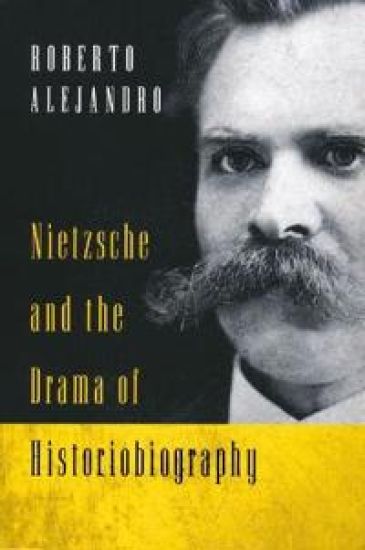
Nietzsche and the Drama of Historiobiography

Nietzsche and the Drama of Historiobiography

Roberto Alejandro

University of Notre Dame Press
2011
nidottu
In this extraordinary contribution to Nietzsche studies, Robert Alejandro offers an original interpretation of Friedrich Nietzsche's philosophy viewed as a complete whole. Alejandro painstakingly traces the different ways in which Nietzsche reconfigured and shifted his analyses of morality and of the human condition, until he was content with the final result: nothing was dispensable; everything was necessary. This is a philosophy of reconciliation—hardly nihilism—and it is a perspective that is not adequately addressed elsewhere in the literature on Nietzsche. Alejandro traces the evolution of Nietzsche's thought by identifying the different layers of his philosophy, expressed in a complex array of stories and historical narratives. Alejandro analyzes the different stories of Nietzsche, places those stories within a tradition of genealogical theorizing, and interprets both the stories and the genealogy in terms of one of Nietzsche's unique features, his use of "historiobiography." According to Alejandro, historiobiography blends the idea of an attunement with all history and one's awareness of this attunement. As a mode of philosophizing, historiobiography allows Nietzsche to view all human history as if it runs through his own life and thoughts. Alejandro argues that Nietzsche deployed three strategies to find relief from his sense of the meaninglessness of life: his magnified concept of what he himself represented in human history, his doctrine of the eternal recurrence, and his philosophy of reconciliation.
Nietzsche and the Drama of Historiobiography

Nietzsche and the Drama of Historiobiography

Roberto Alejandro

UNIVERSITY OF NOTRE DAME PRESS
2022
sidottu
In this extraordinary contribution to Nietzsche studies, Robert Alejandro offers an original interpretation of Friedrich Nietzsche's philosophy viewed as a complete whole. Alejandro painstakingly traces the different ways in which Nietzsche reconfigured and shifted his analyses of morality and of the human condition, until he was content with the final result: nothing was dispensable; everything was necessary. This is a philosophy of reconciliation—hardly nihilism—and it is a perspective that is not adequately addressed elsewhere in the literature on Nietzsche. Alejandro traces the evolution of Nietzsche's thought by identifying the different layers of his philosophy, expressed in a complex array of stories and historical narratives. Alejandro analyzes the different stories of Nietzsche, places those stories within a tradition of genealogical theorizing, and interprets both the stories and the genealogy in terms of one of Nietzsche's unique features, his use of "historiobiography." According to Alejandro, historiobiography blends the idea of an attunement with all history and one's awareness of this attunement. As a mode of philosophizing, historiobiography allows Nietzsche to view all human history as if it runs through his own life and thoughts. Alejandro argues that Nietzsche deployed three strategies to find relief from his sense of the meaninglessness of life: his magnified concept of what he himself represented in human history, his doctrine of the eternal recurrence, and his philosophy of reconciliation.
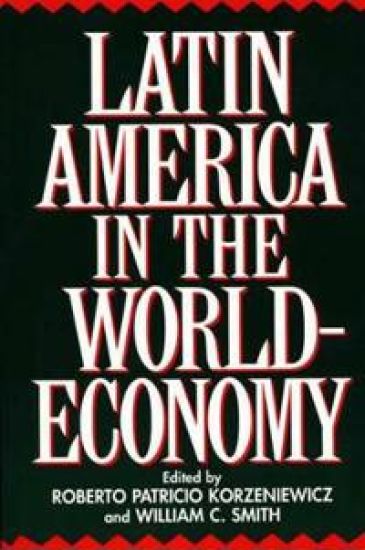
Latin America in the World-Economy

Latin America in the World-Economy

Roberto Korzeniewicz; William C. Smith

Praeger Publishers Inc
1996
nidottu
Latin America is in the midst of dramatic transformations. Stabilization and structural adjustment programs are dismantling state regulation of the economy. Democratic transitions are pointing toward the emergence of new institutional arrangements. Democratization and market-oriented economic restructuring pose major questions concerning new social configurations combining rising levels of poverty, low intensity citizenship, environmental degradation, and enduring legacies of elite privilege and authoritarianism. Analyzing these and related issues, this volume contributes to a world-system perspective suggesting that the region is experiencing a great transformation characterized by a deepening differentiation between state, enterprises, and households. Emergent patterns of competition and organizational change are discussed along with the social consequences of restructuring and the potential for political transformation.
The American Century?

The American Century?

Roberto Rabel

Praeger Publishers Inc
2002
sidottu
Few would dispute that the United States had been the world's most influential nation since Henry Luce first popularized the notion of an American Century in 1941. The significance of the influence, however, remains a subject of hot debate. This collection brings together international scholars who offer differing views on American international dominance in the past century and the prospects for its continuation into this one. These range from positive assessments of the role of the United States in forging a global community and in operating as a relatively benign global hegemon to a scathing critique of Washington policy makers for failing to reverse the ethically corrosive impact of the Cold War on American diplomatic practice.American global influence has not been synonymous with omnipotence. The United States is not impervious to external influences and has itself been transformed by the forces of globalization—a phenomenon viewed by some as synonymous with Americanization. These essays highlight the notion that the phrase American Century implies the diffusion internationally of liberal capitalist principles. This book suggests that the role of the United States in diffusing those principles is at the heart of the debate about the significance of American global influence, whether in retrospect or in prospect. Includes the views of Asian, Antipodean, and American Scholars.
Alejo Carpentier

Alejo Carpentier

Roberto González Echevarría

University of Texas Press
1991
nidottu
Alejo Carpentier was one of the greatest Latin American novelists of the twentieth century, as well as a musicologist, journalist, cultural promoter, and diplomat. His fictional world issues from an encyclopedic knowledge of the history, art, music, and literature of Latin America and Europe. Carpentier’s novels and stories are the enabling discourse of today’s Latin American narrative, and his interpretation of Latin American history has been among the most influential. Carpentier was the first to provide a comprehensive view of Caribbean history that centered on the contribution of Africans, above and beyond the differences created by European cultures and languages. Alejo Carpentier: The Pilgrim at Home, first published in 1977 and updated for this edition, covers the life and works of the great Cuban novelist, offering a new perspective on the relationship between the two.González Echevarría offers detailed readings of the works La música en Cuba, The Kingdom of This World, The Lost Steps, and Explosion in a Cathedral. In a new concluding chapter, he takes up Carpentier’s last years, his relationship with the Cuban revolutionary regime, and his last two novels, El arpa y la sombra and La consagración de la primavera, in which Carpentier reviewed his life and career.
Zapotec Science

Zapotec Science

Roberto J. González

University of Texas Press
2001
pokkari
2003 — Julian Steward Award – Anthropology & Environment Section, American Anthropological Association2002 — A CHOICE Outstanding Academic BookHow Zapotec agricultural and dietary theories and practices constitute a valid local science. Zapotec farmers in the northern sierra of Oaxaca, Mexico, are highly successful in providing their families with abundant, nutritious food in an ecologically sustainable fashion, although the premises that guide their agricultural practices would be considered erroneous by the standards of most agronomists and botanists in the United States and Europe. In this book, Roberto González convincingly argues that in fact Zapotec agricultural and dietary theories and practices constitute a valid local science, which has had a reciprocally beneficial relationship with European and United States farming and food systems since the sixteenth century. González bases his analysis upon direct participant observation in the farms and fields of a Zapotec village. By using the ethnographic fieldwork approach, he is able to describe and analyze the rich meanings that campesino families attach to their crops, lands, and animals. González also reviews the history of maize, sugarcane, and coffee cultivation in the Zapotec region to show how campesino farmers have intelligently and scientifically adapted their farming practices to local conditions over the course of centuries. By setting his ethnographic study of the Talea de Castro community within a historical world systems perspective, he also skillfully weighs the local impact of national and global currents ranging from Spanish colonialism to the 1910 Mexican Revolution to NAFTA. At the same time, he shows how, at the turn of the twenty-first century, the sustainable practices of "traditional" subsistence agriculture are beginning to replace the failed, unsustainable techniques of modern industrial farming in some parts of the United States and Europe.
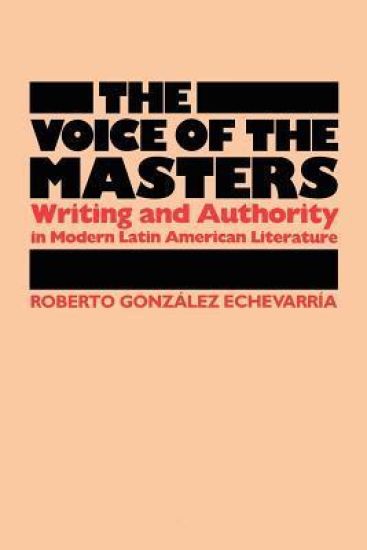
The Voice of the Masters

The Voice of the Masters

Roberto González Echevarría

University of Texas Press
1985
pokkari
By one of the most original and learned critical voices in Hispanic studies- a timely and ambitious study of authority as theme and authority as authorial strategy in modern Latin American literature. An ideology is implicit in modern Latin American literature, argues Roberto GonzÁlez EchevarrÍa, through which both the literature itself and criticism of it define what Latin American literature is and how it ought to be read. In the works themselves this ideology is constantly subjected to a radical critique, and that critique renders the ideology productive and in a sense is what constitutes the work. In literary criticism, however, too frequently the ideology merely serves as support for an authoritative discourse that seriously misrepresents Latin American literature. In The Voice of the Masters, GonzÁlez EchevarrÍa attempts to uncover the workings of modern Latin American literature by creating a dialogue of texts, a dynamic whole whose parts are seven illuminating essays on seminal texts in the tradition. As he says, "To have written a sustained, expository book ... would have led me to make the same kind of critical error that I attribute to most criticism of Latin American literature.... I would have naively assumed an authoritative voice while attempting a critique of precisely that critical gesture." Instead, major works by Barnet, Cabrera Infante, Carpentier, CortÁzar, Fuentes, Gallegos, GarcÍa MÁrquez, Roa Bastos, and RodÓ are the object of a set of independent deconstructive (and reconstructive) readings. Writing in the tradition of Derrida and de Man, GonzÁlez EchevarrÍa brings to these readings both the penetrative brilliance of the French master and a profound understanding of historical and cultural context. His insightful annotation of Cabrera Infante's "Meta-End," the full text of which is presented at the close of the study, clearly demonstrates these qualities and exemplifies his particular approach to the text.
Love and the Law in Cervantes

Love and the Law in Cervantes

Roberto Gonzalez Echevarria

Yale University Press
2011
pokkari
The consolidation of law and the development of legal writing during Spain’s Golden Age not only helped that country become a modern state but also affected its great literature. In this fascinating book, Roberto González Echevarría explores the works of Cervantes, showing how his representations of love were inspired by examples of human deviance and desire culled from legal discourse. González Echevarría describes Spain’s new legal policies, legislation, and institutions and explains how, at the same time, its literature became filled with love stories derived from classical and medieval sources. Examining the ways that these legal and literary developments interacted in Cervantes’s work, he sheds new light on Don Quixote and other writings.
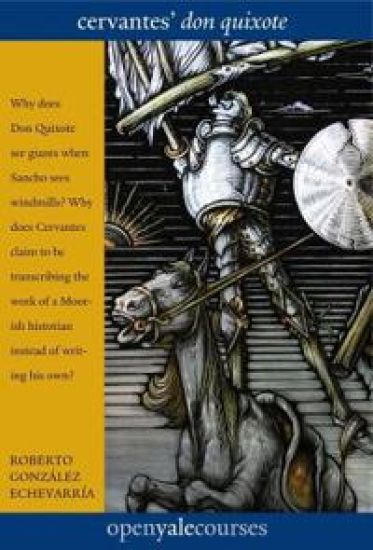
Cervantes' "Don Quixote"

Cervantes' "Don Quixote"

Roberto Gonzalez Echevarria

Yale University Press
2015
pokkari
The novel Don Quixote, written in the late sixteenth and early seventeenth century by Miguel de Cervantes Saavedra, is widely considered to be one of the greatest fictional works in the entire canon of Western literature. At once farcical and deeply philosophical, Cervantes’ novel and its characters have become integrated into the cultures of the Western Hemisphere, influencing language and modern thought while inspiring art and artists such as Richard Strauss and Pablo Picasso. Based on Professor Roberto González Echevarría’s popular open course at Yale University, this essential guide to the enduring Spanish classic facilitates a close reading of Don Quixote in the artistic and historical context of renaissance and baroque Spain while exploring why Cervantes’ masterwork is still widely read and relevant today. González Echevarría addresses the novel’s major themes and demonstrates how the story of an aging, deluded would-be knight-errant embodies that most modern of predicaments: the individual’s dissatisfaction with the world in which he lives, and his struggle to make that world mesh with his desires.
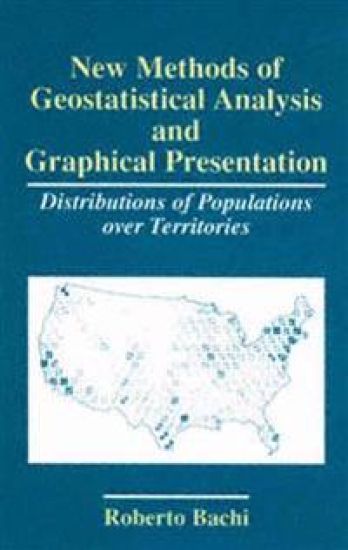
New Methods of Geostatistical Analysis and Graphical Presentation

New Methods of Geostatistical Analysis and Graphical Presentation

Roberto Bachi

Kluwer Academic/Plenum Publishers
1999
sidottu
From the Foreword: `The chief aim of this book is to present the reader with an integrated system of methods dealing with geographical statistics (`geostatistics') and their applications. It sums up developments based on the vast experience accumulated by Professor Bachi over several decades of research. Interest in the quantitative locational aspects of geography and in the common ground of geography and statistics has grown rapidly, involving an ever-increasing spectrum of scientific disciplines ... the present volume will fill a genuine need - as a textbook, as a reference work, and as a practical aid for geographers, applied statisticians, demographers, ecologists, regional planners, economists, professional staff of official statistical agencies, and others.' - E. Peritz, G. Nathan, N. Kadmon.
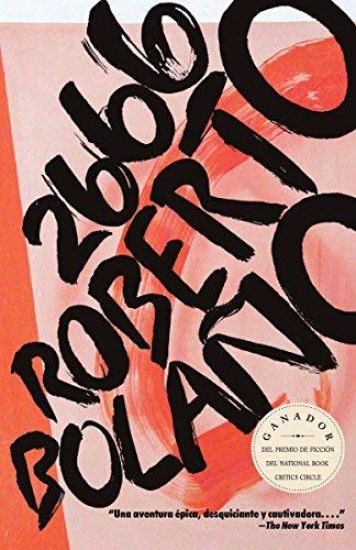
2666 (Spanish Edition)

2666 (Spanish Edition)

Roberto Bolaño

Vintage Espanol
2017
nidottu
Uno de los mejores libros del Siglo XXI seg n el New York Times Uno de los 10 libros del a o del New York Times Book Review Cuatro acad micos tras la pista de un enigm tico escritor alem n; un periodista de Nueva York en su primer trabajo en M xico; un fil sofo viudo; un detective de polic a enamorado de una esquiva mujer --estos son algunos de los personajes arrastrados hasta la ciudad fronteriza de Santa Teresa, donde en la ltima d cada han desaparecido cientos de mujeres. Publicada p stumamente, la ltima novela de Roberto Bola o no s lo es su mejor obra y una de las mejores del siglo XXI, sino uno de esos excepcionales libros que trascienden a su autor y a su poca para formar parte de la literatura universal. ENGLISH DESCRIPTIONOne of the New York Times's 100 Best Books of the 21st Century A NATIONAL BOOK CRITICS CIRCLE AWARD WINNERNew York Times Book Review 10 Best Books of 2008 Time Magazine's Best Book of 2008 Los Angeles Times Best Books of 2008 San Francisco Chronicle's 50 Best Fiction Books of 2008 Seattle Times Best Books of 2008 New York Magazine Top Ten Books of 2008 Three academics on the trail of a reclusive German author; a New York reporter on his first Mexican assignment; a widowed philosopher; a police detective in love with an elusive older woman--these are among the searchers drawn to the border city of Santa Teresa, where over the course of a decade hundreds of women have disappeared. In the words of The Washington Post, "With 2666, Roberto Bola o joins the ambitious overachievers of the twentieth-century novel, those like Proust, Musil, Joyce, Gaddis, Pynchon, Fuentes, and Vollmann, who push the novel far past its conventional size and scope to encompass an entire era, deploying encyclopedic knowledge and stylistic verve to offer a grand, if sometimes idiosyncratic, summation of their culture and the novelist's place in it. Bola o has joined the immortals."
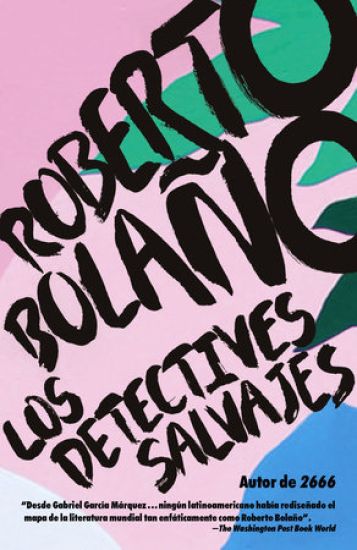
Los Detectives Salvajes / The Savage Detectives: Spanish-Language Edition of the Savage Detectives
Uno de los mejores libros del Siglo XXI seg n el New York Times "Una obra maestra". --The New Yorker Arturo Belano y Ulises Lima, dos quijotes modernos, salen tras las huellas de Ces rea Tinajero, la misteriosa escritora desaparecida en M xico en los a os posteriores a la revoluci n. Esa b squeda --el viaje y sus consecuencias-- se prolonga durante veinte a os, bifurc ndose a trav s de numerosos personajes y continentes, Con escenarios como M xico, Nicaragua, Estados Unidos, Francia y Espa a, y personajes entre los que destacan un fot grafo espa ol a punto de la desesperaci n, un neonazi, un torero mexicano jubilado que vive en el desierto, una estudiante francesa lectora de Sade, una prostituta adolescente en permanente huida, un abogado gallego herido por la poes a y un editor mexicano perseguido por unos pistoleros, Los detectives salvajes es una novela donde hay de todo: amores y muertes, asesinatos y fugas, manicomios y universidades, desapariciones y apariciones. Los detectives salvajes es la novela que lanz a Roberto Bola o a la fama literaria internacional antes de que 2666 estableciera su reputaci n para siempre. El libro gan el Premio Herralde de Novela y el Premio R mulo Gallegos, y fue uno de los libros del a o para The Washington Post, Los Angeles Times y The New York Times Book Review.ENGLISH DESCRIPTIONOne of the New York Times's 100 Best Books of the 21st Century A National BestsellerNew Year's Eve, 1975: Arturo Belano and Ulises Lima, founders of the visceral realist movement in poetry, leave Mexico City in a borrowed white Impala. Their quest: to track down the obscure, vanished poet Ces rea Tinajero. A violent showdown in the Sonora desert turns search to flight; twenty years later Belano and Lima are still on the run. The explosive first long work by "the most exciting writer to come from south of the Rio Grande in a long time" (Ilan Stavans, Los Angeles Times), The Savage Detectives follows Belano and Lima through the eyes of the people whose paths they cross in Central America, Europe, Israel, and West Africa. This chorus includes the muses of visceral realism, the beautiful Font sisters; their father, an architect interned in a Mexico City asylum; a sensitive young follower of Octavio Paz; a foul-mouthed American graduate student; a French girl with a taste for the Marquis de Sade; the great-granddaughter of Leon Trotsky; a Chilean stowaway with a mystical gift for numbers; the anorexic heiress to a Mexican underwear empire; an Argentinian photojournalist in Angola; and assorted hangers-on, detractors, critics, lovers, employers, vagabonds, real-life literary figures, and random acquaintances. A polymathic descendant of Borges and Pynchon, Roberto Bola o traces the hidden connection between literature and violence in a world where national boundaries are fluid and death lurks in the shadow of the avant-garde. The Savage Detectives is a dazzling original, the first great Latin American novel of the twenty-first century.