Observera att förlaget som ger ut denna produkt baserar innehållet i sina produkter på fria källor som Wikipedia. Boken är med stor sannolikhet endast ett utdrag ur dessa informationskällor, alltså inte en vanlig bok i den bemärkelsen.
Observera att förlaget som ger ut denna produkt baserar innehållet i sina produkter på fria källor som Wikipedia. Boken är med stor sannolikhet endast ett utdrag ur dessa informationskällor, alltså inte en vanlig bok i den bemärkelsen.
Observera att förlaget som ger ut denna produkt baserar innehållet i sina produkter på fria källor som Wikipedia. Boken är med stor sannolikhet endast ett utdrag ur dessa informationskällor, alltså inte en vanlig bok i den bemärkelsen.
Observera att förlaget som ger ut denna produkt baserar innehållet i sina produkter på fria källor som Wikipedia. Boken är med stor sannolikhet endast ett utdrag ur dessa informationskällor, alltså inte en vanlig bok i den bemärkelsen.
Observera att förlaget som ger ut denna produkt baserar innehållet i sina produkter på fria källor som Wikipedia. Boken är med stor sannolikhet endast ett utdrag ur dessa informationskällor, alltså inte en vanlig bok i den bemärkelsen.
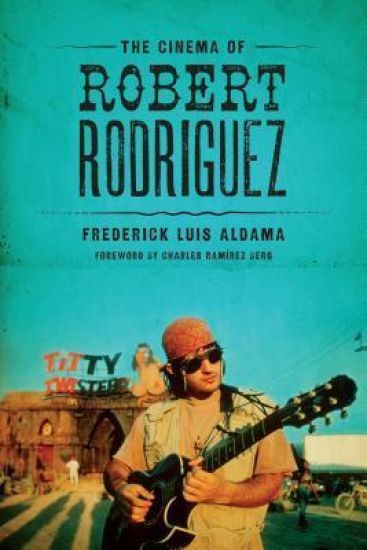
Robert Rodriguez stands alone as the most successful U.S. Latino filmmaker today, whose work has single-handedly brought U.S. Latino filmmaking into the mainstream of twenty-first-century global cinema. Rodriguez is a prolific (eighteen films in twenty-one years) and all-encompassing filmmaker who has scripted, directed, shot, edited, and scored nearly all his films since his first breakout success, El Mariachi, in 1992. With new films constantly coming out and the launch of his El Rey Network television channel, he receives unceasing coverage in the entertainment media, but systematic scholarly study of Rodriguez’s films is only just beginning.The Cinema of Robert Rodriguez offers the first extended investigation of this important filmmaker’s art. Accessibly written for fans as well as scholars, it addresses all of Rodriguez’s feature films through Spy Kids 4 and Machete Kills, and his filmmaking process from initial inspiration, to script, to film (with its myriad visual and auditory elements and choices), to final product, to (usually) critical and commercial success. In addition to his close analysis of Rodriguez’s work, Frederick Luis Aldama presents an original interview with the filmmaker, in which they discuss his career and his relationship to the film industry. This entertaining and much-needed scholarly overview of Rodriguez’s work shines new light on several key topics, including the filmmaker’s creative, low-cost, efficient approach to filmmaking; the acceptance of Latino films and filmmakers in mainstream cinema; and the consumption and reception of film in the twenty-first century.
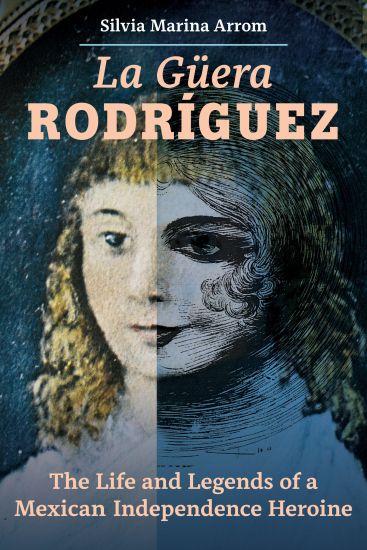
Fact is torn from fiction in this first biography of Mexico’s famous independence heroine, which also traces her subsequent journey from history to myth. María Ignacia Rodríguez de Velasco y Osorio Barba (1778–1850) is an iconic figure in Mexican history. Known by the nickname “La Güera Rodríguez” because she was so fair, she is said to have possessed a remarkably sharp wit, a face fit for statuary, and a penchant for defying the status quo. Charming influential figures such as Simon Bolívar, Alexander von Humboldt, and Agustín de Iturbide, she utilized gold and guile in equal measure to support the independence movement—or so the stories say. In La Güera Rodríguez, Silvia Marina Arrom approaches the legends of Rodríguez de Velasco with a keen eye, seeking to disentangle the woman from the myth. Arrom uses a wide array of primary sources from the period to piece together an intimate portrait of this remarkable woman, followed by a review of her evolving representation in Mexican arts and letters that shows how the legends became ever more fanciful after her death. How much of the story is rooted in fact, and how much is fiction sculpted to fit the cultural sensibilities of a given moment in time? In our contemporary moment of unprecedented misinformation, it is particularly relevant to analyze how and why falsehoods become part of historical memory. La Güera Rodriguez will prove an indispensable resource for those searching to understand late-colonial Mexico, the role of women in the independence movement, and the use of historic figures in crafting national narratives.
English / Deutsch UNLAND engl. wastelandIn the summer term of 2013 Professor Ren Francisco Rodriquez from our partner university Instituto Superior de Arte in Havana (ISA) was our guest in Halle, offering a workshop to students of both the art and design faculty. We had met Ren Francisco a year earlier in Havanna on a wasteland close to the city, were he was constructing a 'temporary city' with his students for the Havana Biennial. We had already heard of his teaching method 'Desde Una Pedagog a Pragmatica', or short DUPP, in which he intently explores and searches for the relationship between art and life, or design and everyday necessities, with a fixed group of students over a longer period of time. The students investigate their desires, develop visions and ideas and then implement them collectively in temporary or permanent artistic works. They often do this in collaboration with the residents of Havana. In a country shaped by shortage and poverty, working artistically poses a challenge. It requires fantasy and the ability to improvise and associate freely, not to mention an organizational talent, social skills and strategic thinking when it comes to mastering bureaucratic obstacles or acquiring materials. Thus, Ren Francisco's teaching does not only focus on artistic design and form as such, but encompasses an innovative and holistic method for implementing artistic interventions in the urban and social context. The workshop in Halle took place under less precarious signs, and-due to the shortness of time and the fact that the event took place alongside all other study obligations-could not be performed with such consistency. Nonetheless, it tied in directly with many of the discussions and questions we have here in Halle with our students and that have gained importance in the public art discourse of the last years: How do we want to live? How can our actions have a lasting effect? How can we engage in and actively shape societal reality? What could a societal sculpture look like? During the workshop, the students developed a series of performances, interventions, and installations in the public space. This collection of works documents all individual and joint projects and insight gained during the workshop. PROF. ANDREA ZAUMSEILUNLAND Im Sommersemester 2013 leitete Ren Francisco Rodriguez, Professor an unserer Partnerhochschule Instituto Superior de Arte in Havanna (ISA), bei uns an der Hochschule einen Workshop, an dem Studierende aus verschiedenen Klassen beider Fachbereiche teilnahmen. Kennen gelernt hatten wir Ren Francisco ein Jahr zuvor in Havanna, auf einer Baustelle auf einer Brache, wo er mit einer Gruppe von Studierenden des ISA eine "tempor re Stadt" f r die Biennale von Havanna baute. Wir hatten bereits von seinem p dagogischen Ansatz geh rt, DESDE UNA PEDAGOG A PRAGMATICA, kurz DUPP genannt, demzufolge er mit einer jeweils festen Gruppe Studierender ber einen l ngeren Zeitraum hinweg konsequent die Verbindung von Kunst und Leben, die Verkn pfung von Gestaltung und allt glichen Notwendigkeiten sucht. Die Studierenden erforschen, zum Teil zusammen mit den Bewohnerinnen und Bewohnern der Stadt, W nsche, entwickeln Visionen und realisieren gemeinsam tempor re oder auch dauerhafte k nstlerische Transformationen. In einem Land wie Kuba, das auch von Mangel und Armut gepr gt ist, ist dies eine besondere Herausforderung. Phantasie, Assoziations- und Improvisationsverm gen, Planungsf higkeit, soziale Kompetenz und strategisches Denken in Bezug auf b rokratische H rden und Materialbeschaffung sind nur einige der Anforderungen, die an seine Studenten gestellt werden. Seine Lehre bezieht sich demzufolge nicht nur auf das Gestalten an sich, sondern umfasst eine innovative und ganzheitliche Methode zur Umsetzung k nstlerischer Interventionen im st dtischen und sozialen Raum (...) Performances, Interventionen und Installati