

Kirjahaku
Etsi kirjoja tekijän nimen, kirjan nimen tai ISBN:n perusteella.
1000 tulosta hakusanalla S. Englander
John Cassell's Illustrated History of England
Hutson Street Press
2025
sidottu
John Cassell's Illustrated History of England
Hutson Street Press
2025
pokkari
The Gentleman's Magazine (london, England)
Hutson Street Press
2025
pokkari

![Sir John Froissart's Chronicles Of England, France, Spain And The Adjoining Countries, Tr. By T. Johnes. [&c.]](/covers/9781024945874.jpg)
Sir John Froissart's Chronicles Of England, France, Spain And The Adjoining Countries, Tr. By T. Johnes. [&c.]
Jean Froissart
Hutson Street Press
2025
sidottu
![Sir John Froissart's Chronicles Of England, France, Spain And The Adjoining Countries, Tr. By T. Johnes. [&c.]](/covers/9781024949513.jpg)
Sir John Froissart's Chronicles Of England, France, Spain And The Adjoining Countries, Tr. By T. Johnes. [&c.]
Jean Froissart
Hutson Street Press
2025
pokkari
A Student's History of England, From the Earliest Times to 1885
Samuel Rawson 1829-1902 Gardiner
Hutson Street Press
2025
sidottu
Delve into the rich tapestry of English history with Samuel Rawson Gardiner's "A Student's History of England, From the Earliest Times to 1885, Volume 2." This meticulously researched volume provides a comprehensive overview of England's past, making it an invaluable resource for students and history enthusiasts alike. Gardiner's work offers a detailed examination of key events, figures, and societal shifts that have shaped the nation. Originally published in the late 19th century, this book retains its relevance as a foundational text for understanding the historical context of modern England. Discover the narrative that has informed generations of scholars and continues to enlighten readers today. This work has been selected by scholars as being culturally important, and is part of the knowledge base of civilization as we know it. This work was reproduced from the original artifact, and remains as true to the original work as possible. Therefore, you will see the original copyright references, library stamps (as most of these works have been housed in our most important libraries around the world), and other notations in the work. This work is in the public domain in the United States of America, and possibly other nations. Within the United States, you may freely copy and distribute this work, as no entity (individual or corporate) has a copyright on the body of the work. As a reproduction of a historical artifact, this work may contain missing or blurred pages, poor pictures, errant marks, etc. Scholars believe, and we concur, that this work is important enough to be preserved, reproduced, and made generally available to the public. We appreciate your support of the preservation process, and thank you for being an important part of keeping this knowledge alive and relevant.
A Student's History of England, From the Earliest Times to 1885
Samuel Rawson 1829-1902 Gardiner
Hutson Street Press
2025
pokkari

Having a conscience distinguishes humans from the most advanced AI systems. Acting in good conscience, consulting one’s conscience, and being conscience-wracked are all aspects of human intelligence that involve reckoning (deriving general laws from particular inputs and vice versa), and judgement (contemplating the relationship of the reckoning system to the world). While AI developers have mastered reckoning, they are still working towards the creation of judgement. This book sheds light on the reckoning and judgement of conscience by demonstrating how these concepts are explored in Everyman, Doctor Faustus, The Merchant of Venice, and Hamlet. Academic, student, or general-interest readers discover the complexity and multiplicity of the early modern concept of conscience, which is informed by the scholastic intellectual tradition, juridical procedures of the court of Chancery, the practical advice of Protestant casuistry, and Reformation theology. The aims are to examine the rubrics for thinking through, regulating, and judging actions that define the various consciences of Shakespeare’s day, to use these rubrics to interpret questions of truth and action in early modern plays, and to offer insights into what it is about conscience that developers want to grasp to eliminate the difference between human and non-human intelligences, and achieve true AI.
Having a conscience distinguishes humans from the most advanced AI systems. Acting in good conscience, consulting one’s conscience, and being conscience-wracked are all aspects of human intelligence that involve reckoning (deriving general laws from particular inputs and vice versa), and judgement (contemplating the relationship of the reckoning system to the world). While AI developers have mastered reckoning, they are still working towards the creation of judgement. This book sheds light on the reckoning and judgement of conscience by demonstrating how these concepts are explored in Everyman, Doctor Faustus, The Merchant of Venice, and Hamlet. Academic, student, or general-interest readers discover the complexity and multiplicity of the early modern concept of conscience, which is informed by the scholastic intellectual tradition, juridical procedures of the court of Chancery, the practical advice of Protestant casuistry, and Reformation theology. The aims are to examine the rubrics for thinking through, regulating, and judging actions that define the various consciences of Shakespeare’s day, to use these rubrics to interpret questions of truth and action in early modern plays, and to offer insights into what it is about conscience that developers want to grasp to eliminate the difference between human and non-human intelligences, and achieve true AI.
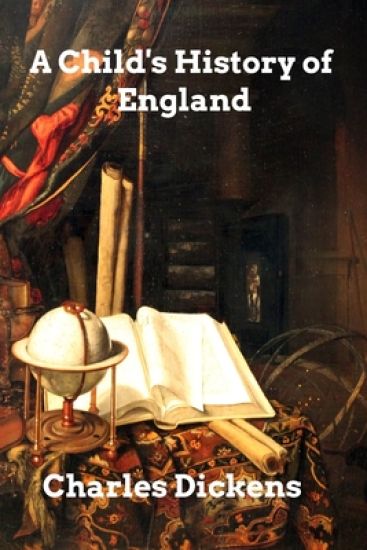
A Child's History of England is a book by Charles Dickens. It first appeared in serial form in Household Words, running from 25 January 1851 to 10 December 1853. Dickens also published the work in book form in three volumes: the first volume on 20 December 1851, the second on 25 December 1852 and the third on 24 December 1853. 1] Although the volumes were published in December, each was postdated the following year. They bore the titles: Volume I. - England from the Ancient Times, to the Death of King John (1852) Volume II. - England from the Reign of Henry the Third, to the Reign of Richard the Third (1853) Volume III. - England from the Reign of Henry the Seventh to the Revolution of 1688 (1854) Dickens dedicated the book to "My own dear children, whom I hope it may help, bye and bye, to read with interest larger and better books on the same subject". The history covered the period between 50 BC and 1689, ending with a chapter summarising events from then until the accession of Queen Victoria. In a letter to his friend Douglas William Jerrold, Dickens confessed that he was composing the book so that he could prevent his children from embracing conservatism
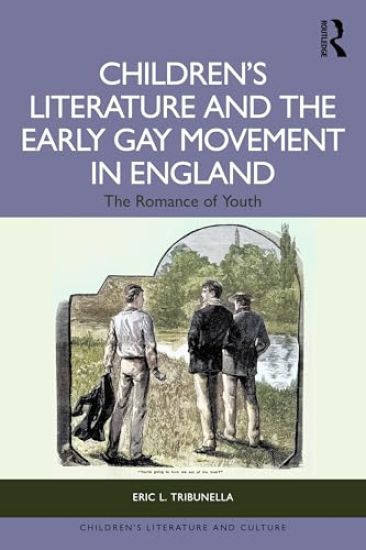
Uranian Children’s Literature and the Early Gay Movement in England
Eric L. Tribunella
TAYLOR FRANCIS LTD
2026
sidottu
Uranian Children’s Literature and the Early Gay Movement in England: The Romance of Youth considers how writers associated with the Uranian poets, Order of Chaeronea, and British Society for the Study of Sex Psychology (BSSSP)—among the earliest efforts to organize on behalf of same-sex love in England beginning in the mid-1890s—used boys’ fiction to imagine a world in which same-sex romantic bonds could be possible. Some of the central figures in the early gay movement in England wrote for children or influenced others who did, and these juvenile writings both contributed to a larger discourse of homosexual emancipation and addressed the interests of Uranian youth. Uranian writers and members of the Order of Chaeronea and BSSSP recognized how the conditions of modern life posed distinct challenges to shaping the character of boys, and they used children’s literature and the rhetoric of chivalry to propose solutions to the boy problem and promote their vision of a homosexual future. This volume provides the first book-length account of the role of children’s literature in the early gay movement in England, including works by E.E. Bradford, George Cecil Ives, J.M Barrie, Laurence Housman, Kenneth Ingram, and Beverley Nichols.

Paul Hentzner's Travels In England, During The Reign Of Queen Elizabeth (1797)
Paul Hentzner
KESSINGER PUBLISHING CO
2009
pokkari