Sebastian is one handsome fox - and he really, really loves to take selfies. But somehow, no matter how camera-ready he is, his pictures always lack a certain something. And he can’t put his paw on exactly what. So Sebastian sets off on an elaborate quest to take the perfect selfie, dashing from a glamorous red carpet in Hollywood to the vast expanse of the Grand Canyon. He even zooms to the Moon! Still, none of Sebastian’s photos make him happy. Could it be that the secret to his special selfie is right where he started - at home, with his friends?
Official Souvineer Cartoon & Coloring Book of the Central Coast by Pulitzer Prize Nominee Joe King "This is an outsiders view from the inside of life and living on California's Central Coast. It gives you a real sense of what you will find and what to expect when you are fortunate enough to live in or visit this charming and beautiful area of the Golden State. It's silly, honest, informative, irreverent and Joe does a great job of poking fun at every conceivable situation, least of all himself. You will see yourself as one or more of the characters enjoying the sites - Just be warned that reading this book will make you wish you were there " -IDODREAMS/Amazon.com ***** "The cartoons reveal the ambiance of the area, adding credibility to his other local cartoons. They prove he is an insider... having street cred adds import addressing local concerns... and quality of life. -Stuart Rapeport/AAEC ***** "Future generations will finally recognize his moustachioed genius..." -JP Trostle/AAEC ***** "Joe is a national treasure I'm a marketing expert and cite Joe King as a great example of a very clever artistic person who understands well how to put together the marketing puzzle pieces so he can earn a living solely as a creator of joy and insight. Cartoonist Joe King's indie books are part of his overall positioning (branding) as an illustrator, cartoonist, book designer and marketing producer. His syndicated cartoon strip is published in California newspapers, his caricatures are treasured artwork..." -Bruce Batchelor/Agio Publishing
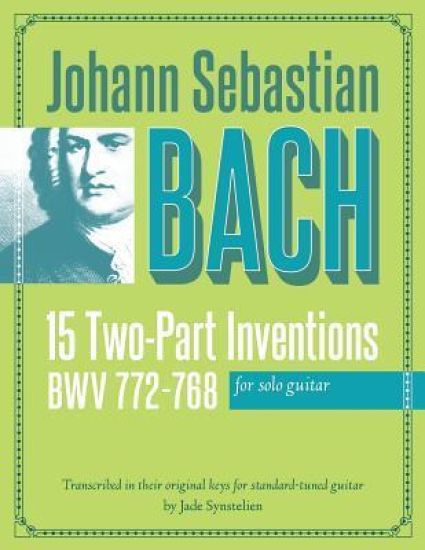
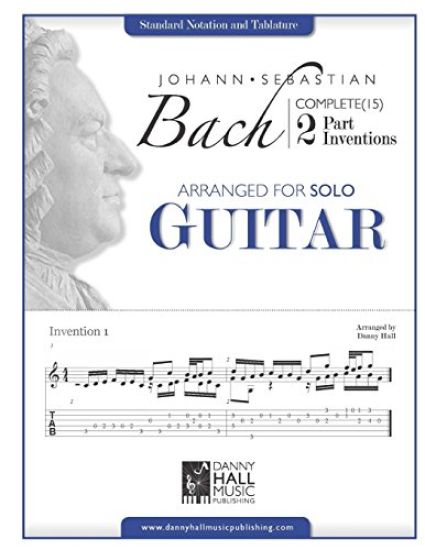
J.S. Bach's 15 Two-Part Inventions transcribed in their original keys for standard-tuned solo guitar without losing the continuity or integrity of either the upper or lower lines. All the intervals, accidentals, and ornaments are transcribed according to Bach's original handwritten manuscripts. *For advanced (or ambitious) guitarists.*
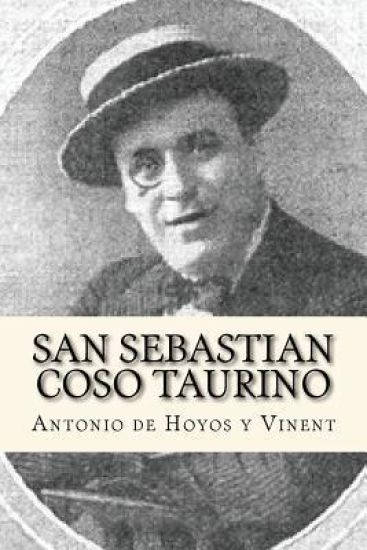
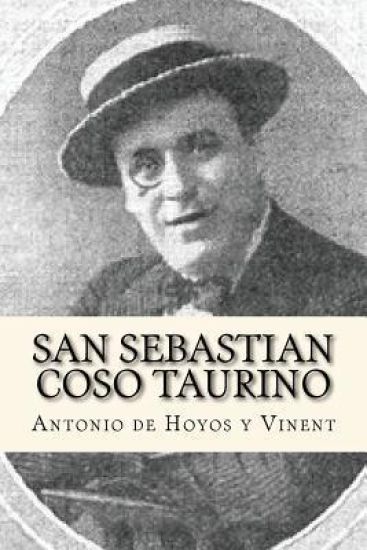
"San Sebasti n coso taurino", de Antonio de Hoyos y Vinent. Antonio de Hoyos y Vinent fue un periodista y narrador espa ol, perteneciente a la corriente est tica del Decadentismo (1885-1940)
Bach's Suites Violoncello Solo senza Basso are thought to have been composed during 1717-1723, when Bach served as Kapellmeister in K then. Although no manuscript in Bach's own hand has survived, there is a manuscript in the hand of Bach's second wife Anna Magdalena Bach.This is the historical source from which this arrangement has been made. Bach's Cello Suite VI, BWV 1012, is in the key of D major, and this arrangement keeps the original key. A low D tuning of the 6th string is used throughout all the movements of the suite. This adds a rich sonority, and by extending the bass range, allows for a more authentic rendering of melodic lines, and also preserves much of the original voicing of chords.
I wrote these poems in the summer of 2015 by hand in a little black sketch book. They are mostly random but somehow stick together. A lot of them were written in the early morning after work. There is no rhyme or reason to them except for that which you the reader creates. Thank you for taking the time to read this work.
De familia aristocr tica recibi una esmerada educaci n en Viena, Oxford y Madrid. Hered el mayorazgo, pero su homosexualidad, que no se ocup en ocultar, y sus defectos, que hoy pasar an por virtudes, le convirtieron en una oveja negra para la parte menos tolerante de la buena sociedad (su madre le retirar el saludo por haber colgado en el sal n su colecci n de retratos de j venes p giles), aunque no para su amiga e introductora en el mundillo literario, Emilia Pardo Baz n.
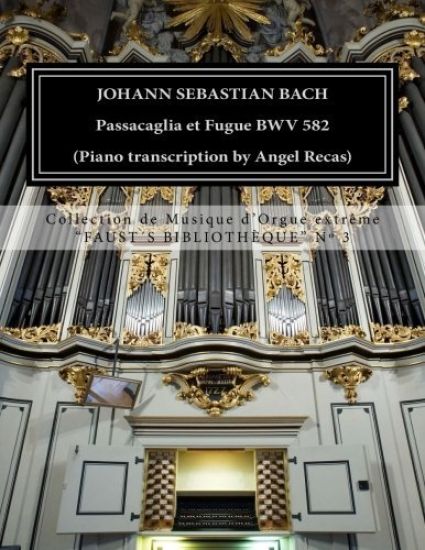
"In principio erat rhythmus et rhythmum erat Bach" (En el principio era el ritmo y el ritmo era Bach). As , de esta manera ligeramente parafraseada y tan expl citamente contundente, se expresaba el gran pianista Hans von B low, celeb rrimo director de orquesta, alumno predilecto de Liszt, y uno de los mayores pianistas que ha dado la historia musical interpretativa del piano, acerca de la fundamental trascendencia de la figura de Johann Sebastian Bach en la historia de la m sica. Ser a en 1848 cuando el pianista y compositor h ngaro Franz Liszt, posiblemente el mayor virtuoso que hab a dado la historia de la m sica se instalar a en Weimar, dejando atr s una impresionante y prol fica carrera como virtuoso, los a os que en su biograf a habr an de llamarse Ann es de P lerinage. En Weimar, en este hist rico principado alem n, en octubre de 1842 Liszt ya hab a sido nombrado como "Kapellmeister in au erordentlichen Diensten" (Maestro de capilla de servicios extraordinarios), y seria all al fijar su residencia en 1848 donde permanecer a, siendo nombrado adem s director del gran Teatro de la pera de Weimar, la joya musical de la bell sima aunque un poco provinciana y decadente por entonces ciudad de Goethe y Schiller. En la inmortal ciudad de Weimar, que se convertir a en esos a os de estancia lisztiana en uno de los centros art sticos de peregrinaje musical de toda Europa. Liszt poco pod a sospechar que, en cierta forma, de manera inconsciente, estaba tomando el testigo e incluso el legado hist rico musical, reviviendo la gran tradici n organ stica heredada desde Bach y que llegaba hasta las pocas m ticas y oscuramente legendarias del viejo Buxtehude y del mism simo Pachebel. Ser a esta herencia a trav s de organistas (muchos de ellos alumnos propios o colaboradores de Liszt en aquellos a os de estancia en Weimar) como Alexander Winterberger, Julius Reubke, Alexander Wilhelm Gottschalg, Christian Bernhard Sulze y entre todos el gran organista y te rico Johann Gottlob T pfer, cuya influencia en Liszt ser a decisiva. Sin apenas ser consciente de ello, Liszt abrir a, a principios de la d cada de 1850, el camino y las premisas est tico-musicales de este neog tico rom ntico alem n a los autores e interpretes que posteriormente seguir an sus pasos; ya bien a trav s del rgano rom ntico; T pfer, Winterberger, Reubke, Gottschalg, Rheinberger, Gigout, Vierne, Widor, Guillou etc...o mediante un nuevo estilo pian stico que se podr a definir est ticamente como de pianismo neog tico rom ntico; Tausig, Busoni, Reger, Godowsky, Horowitz, Lewenthal, Nyiregyhazi, Feinberg etc... La Passacaglia y fuga BWV 582 es posiblemente una de las piezas compuestas para rgano del compositor alem n Johann Sebastian Bach m s dif ciles y valoradas de todo el repertorio organ stico. Se la podr a considerar, con toda justicia y tal vez junto con algunas piezas de Max Reger o de Charles-Marie Widor, como una de las piezas cumbres, y t cnicamente culminantes, de todo el cat logo escrito para rgano. Parece ser que habr a sido compuesta en una poca temprana del desarrollo art stico creativo en la carrera del m sico. Sin duda, las caracter sticas y las premisas est tico musicales de la creaci n de una escuela pian stica g tica rom ntica, y que tiene sus ra ces en la Alemania del norte y sus maestros organ sticos del pasado, y m s concretamente en la figura compositiva de Johan Sebastian Bach. Esta transcripci n que presentamos dentro de esta colecci n, est dedicada a la memoria de Ferrucio Busoni, verdadero Fausto-organ stico, quien ejemplifica a la perfecci n el ideal de artista recreador y en cierta forma creador del estilo neo-g tico pian stico. Esta transcripci n se inspira en la escritura caracter stica de las transcripciones pian stico-organ sticas del gran maestro Ferrucio Busoni.