Homegrown Music offers an introductory primer for newcomers to bluegrass and provides a novel perspective for fans already captivated by the music. Award-winning bluegrass writer Stephanie P. Ledgin writes about topics ranging from the music's predecessors to its innovators to contemporary figures. Interviews with legends like Earl Scruggs, Ralph Stanley, and Nitty Gritty Dirt Band provide candid insights and invaluable eyewitness history. Delving into instrumentation, songs, the festival experience, "parking lot picking," and other topics, the book gives neophytes and enthusiasts alike new perspectives on the music. Twenty-five photographs taken by the author and a foreword by bluegrass superstar Ricky Skaggs further enrich the guide while a special section features an extensive bluegrass resource guide to print, audiovisual, and Internet materials.
Much of the scholarship on second-wave feminism has focused on divisions within the women's movement and its narrow conception of race and class, but the contributors to this volume remind readers that feminists in the 1960s and 1970s also formed many strong partnerships, often allying themselves with a diverse range of social justice efforts on a local grassroots level. These essays focus on coalitions and alliances in which feminists and other activists joined forces to address crucial social justice issues such as reproductive rights, the peace movement, women's health, Christianity and other religions, and neighborhood activism, as well as alliances crossing boundaries of race, class, political views, and sexual identity. The contributors bring fresh perspectives to feminist history by calling attention to how women struggled to include and represent diverse women without minimizing the difficulties of conceptualizing a singular feminism. Contributors are Maria Bevacqua, Tamar Carroll, Marisa Chappell, Andrea Estepa, Sara M. Evans, Amy Farrell, Stephanie Gilmore, Cynthia Harrison, Elizabeth Kaminski, Wendy Kline, Premilla Nadasen, Caryn Neumann, Anne M. Valk, and Emily Zuckerman.
Drawing on a wealth of ethnographic detail, Stephanie Bjork offers the first study on the messy role of clan or tribe in the Somali diaspora, and the only study on the subject to include women's perspectives. Somalis Abroad illuminates the ways clan is contested alongside ideas of autonomy and gender equality, challenged by affinities towards others with similar migration experiences, transformed because of geographical separation from family members, and leveraged by individuals for cultural capital. Challenging prevailing views in the field, Bjork argues that clan-informed practices influence everything from asylum decisions to managing money. The practices also become a pattern that structures important relationships via constant--and unwitting--effort.
A PopMatters Best Non-Fiction Book of 2020 From the 1930s to the 1960s, the booming popularity of country music threw a spotlight on a new generation of innovative women artists. These individuals blazed trails as singers, musicians, and performers even as the industry hemmed in their potential popularity with labels like woman hillbilly, singing cowgirl, and honky-tonk angel. Stephanie Vander Wel looks at the careers of artists like Patsy Montana, Rose Maddox, and Kitty Wells against the backdrop of country music's golden age. Analyzing recordings and appearances on radio, film, and television, she connects performances to real and imagined places and examines how the music sparked new ways for women listeners to imagine the open range, the honky-tonk, and the home. The music also captured the tensions felt by women facing geographic disruption and economic uncertainty. While classic songs and heartfelt performances might ease anxieties, the subject matter underlined women's ambivalent relationships to industrialism, middle-class security, and established notions of femininity.
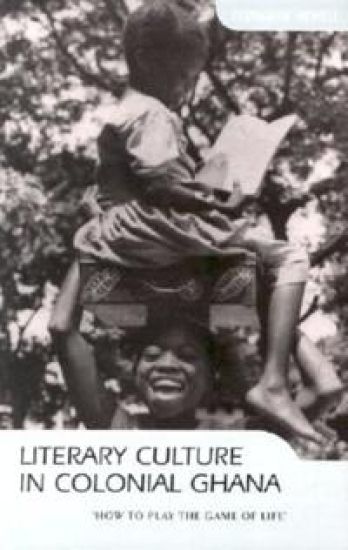
". . . a book that will break new ground in African cultural studies. . . . [it] will appeal not only to literary scholars but also to social historians and cultural anthropologists." —Karin Barber Focusing on the broad educational aims of the colonial administration and missionary societies, Stephanie Newell draws on newspaper archives, early unofficial texts, and popular sources to uncover how Africans used literacy to carve out new cultural, social, and economic spaces for themselves. Newly literate Africans not only shaped literary tastes in colonial Africa but also influenced how and where English was spoken; established standards for representations of gender, identity, and morality; and created networks for African literary production, dissemination, and reception throughout British West Africa. Newell reveals literacy and reading as powerful social forces that quickly moved beyond the missionary agenda and colonial regulation. A fascinating literary, social, and cultural history of colonial Ghana, Literary Culture in Colonial Ghana sheds new light on understandings of the African colonial experience and the development of postcolonial cultures in West Africa.
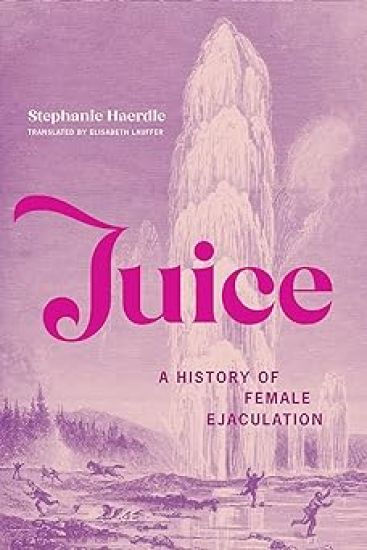
The fascinating, little-known history of female sex fluids through the millennia.For over 2000 years, vulval sex fluids were understood to be a natural part of female pleasure, only to become disputed or categorically erased in the twentieth century. Today what do we really know about female ejaculation and squirting? What does the research show, and why are so many details unknown? In Juice, Stephanie Haerdle investigates the cultural history of female genital effluence across the globe and searches for answers as to why female ejaculation—which, according to some reports, is experienced by up to 69 percent of all women and those who have vulvas upon climaxing—has been banished to the margins as just another male sex fantasy.Haerdle charts female juices from the earliest explanations in the erotic writings of China and India, to interpretations of the fluids by physicians, philosophers, and poets in the Middle Ages and early modern period, to their denial, contestation, and suppression in late nineteenth-century Europe. As she shows, the history of ejaculation and squirting is a history of women, their desires, and the worship and denigration of the female body, as well as the cultural concepts of pleasure, sexuality, procreation, the body, masculinity, and femininity. By examining the fantasies and fears that have long accompanied them, Juice restores female gushes to their rightful place in our collective understanding so that they can once again be recognized, named, and experienced.
This collection of poems explores wayfaring, both in a spiritual sense and in the sense of knowledge navigation in an information age. It explores American history, encompassing writing and identity in the figures of Emily Dickinson and Willard Gibbs, the country's first mathematical physicist.
The question of how to understand Bruegel’s art has cast the artist in various guises: as a moralizing satirist, comedic humanist, celebrator of vernacular traditions, and proto-ethnographer. Stephanie Porras reorients these apparently contradictory accounts, arguing that the debate about how to read Bruegel has obscured his pictures’ complex relation to time and history. Rather than viewing Bruegel’s art as simply illustrating the social realities of his day, Porras asserts that Bruegel was an artist deeply concerned with the past. In playing with the boundaries of the familiar and the foreign, history and the present, Bruegel’s images engaged with the fraught question of Netherlandish history in the years just prior to the Dutch Revolt, when imperial, religious, and national identities were increasingly drawn into tension. His pictorial style and his manipulation of traditional iconographies reveal the complex relations, unique to this moment, among classical antiquity, local history, and art history. An important reassessment of Renaissance attitudes toward history and of Renaissance humanism in the Low Countries, this volume traces the emergence of archaeological and anthropological practices in historical thinking, their intersections with artistic production, and the developing concept of local art history.
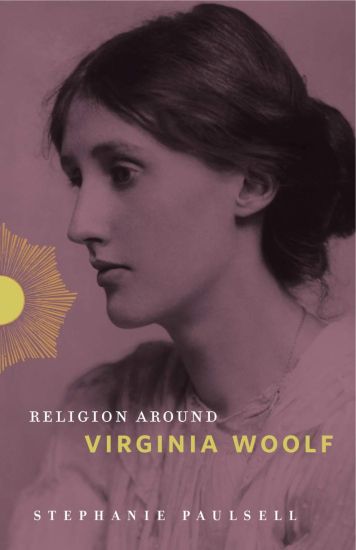
Virginia Woolf was not a religious person in any traditional sense, yet she lived and worked in an environment rich with religious thought, imagination, and debate. From her agnostic parents to her evangelical grandparents, an aunt who was a Quaker theologian, and her friendship with T. S. Eliot, Woolf’s personal circle was filled with atheists, agnostics, religious scholars, and Christian converts. In this book, Stephanie Paulsell considers how the religious milieu that Woolf inhabited shaped her writing in unexpected and innovative ways.Beginning with the religious forms and ideas that Woolf encountered in her family, friendships, travels, and reading, Paulsell explores the religious contexts of Woolf’s life. She shows that Woolf engaged with religion in many ways, by studying, reading, talking and debating, following controversies, and thinking about the relationship between religion and her own work. Paulsell examines the ideas about God that hover around Woolf’s writings and in the minds of her characters. She also considers how Woolf, drawing from religious language and themes in her novels and in her reflections on the practices of reading and writing, created a literature that did, and continues to do, a particular kind of religious work.A thought-provoking contribution to the literature on Woolf and religion, this book highlights Woolf’s relevance to our post-secular age. In addition to fans of Woolf, scholars and general readers interested in religious and literary studies will especially enjoy Paulsell’s well-researched narrative.
Virginia Woolf was not a religious person in any traditional sense, yet she lived and worked in an environment rich with religious thought, imagination, and debate. From her agnostic parents to her evangelical grandparents, an aunt who was a Quaker theologian, and her friendship with T. S. Eliot, Woolf’s personal circle was filled with atheists, agnostics, religious scholars, and Christian converts. In this book, Stephanie Paulsell considers how the religious milieu that Woolf inhabited shaped her writing in unexpected and innovative ways.Beginning with the religious forms and ideas that Woolf encountered in her family, friendships, travels, and reading, Paulsell explores the religious contexts of Woolf’s life. She shows that Woolf engaged with religion in many ways, by studying, reading, talking and debating, following controversies, and thinking about the relationship between religion and her own work. Paulsell examines the ideas about God that hover around Woolf’s writings and in the minds of her characters. She also considers how Woolf, drawing from religious language and themes in her novels and in her reflections on the practices of reading and writing, created a literature that did, and continues to do, a particular kind of religious work.A thought-provoking contribution to the literature on Woolf and religion, this book highlights Woolf’s relevance to our post-secular age. In addition to fans of Woolf, scholars and general readers interested in religious and literary studies will especially enjoy Paulsell’s well-researched narrative.
What It Feels Like interrogates an underexamined reason for our failure to abolish rape in the United States: the way we communicate about it. Using affective and feminist materialist approaches to rhetorical criticism, Stephanie Larson examines how discourses about rape and sexual assault rely on strategies of containment, denying the felt experiences of victims and ultimately stalling broader claims for justice.Investigating anti-pornography debates from the 1980s, Violence Against Women Act advocacy materials, sexual assault forensic kits, public performances, and the #MeToo movement, Larson reveals how our language privileges male perspectives and, more deeply, how it is shaped by systems of power—patriarchy, white supremacy, ableism, and heteronormativity. Interrogating how these systems work to propagate masculine commitments to “science” and “hard evidence,” Larson finds that US culture holds a general mistrust of testimony by women, stereotyping it as “emotional.” But she also gives us hope for change, arguing that testimonies grounded in the bodily, material expression of violation are necessary for giving voice to victims of sexual violence and presenting, accurately, the scale of these crimes. Larson makes a case for visceral rhetorics, theorizing them as powerful forms of communication and persuasion.Demonstrating the communicative power of bodily feeling, Larson challenges the long-held commitment to detached, distant, rationalized discourses of sexual harassment and rape. Timely and poignant, the book offers a much-needed corrective to our legal and political discourses.
What It Feels Like interrogates an underexamined reason for our failure to abolish rape in the United States: the way we communicate about it. Using affective and feminist materialist approaches to rhetorical criticism, Stephanie Larson examines how discourses about rape and sexual assault rely on strategies of containment, denying the felt experiences of victims and ultimately stalling broader claims for justice.Investigating anti-pornography debates from the 1980s, Violence Against Women Act advocacy materials, sexual assault forensic kits, public performances, and the #MeToo movement, Larson reveals how our language privileges male perspectives and, more deeply, how it is shaped by systems of power—patriarchy, white supremacy, ableism, and heteronormativity. Interrogating how these systems work to propagate masculine commitments to “science” and “hard evidence,” Larson finds that US culture holds a general mistrust of testimony by women, stereotyping it as “emotional.” But she also gives us hope for change, arguing that testimonies grounded in the bodily, material expression of violation are necessary for giving voice to victims of sexual violence and presenting, accurately, the scale of these crimes. Larson makes a case for visceral rhetorics, theorizing them as powerful forms of communication and persuasion.Demonstrating the communicative power of bodily feeling, Larson challenges the long-held commitment to detached, distant, rationalized discourses of sexual harassment and rape. Timely and poignant, the book offers a much-needed corrective to our legal and political discourses.
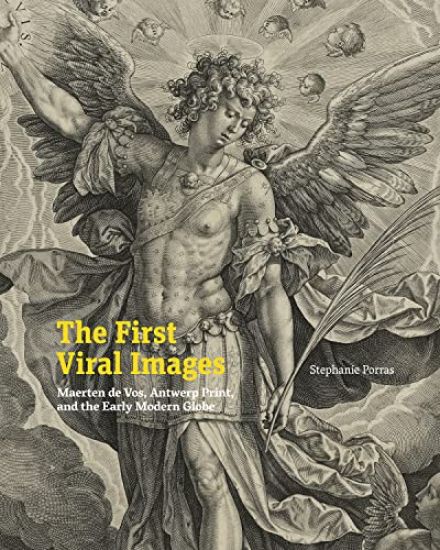
As a social phenomenon and a commonplace of internet culture, virality provides a critical vocabulary for addressing questions raised by the global mobility and reproduction of early modern artworks. This book uses the concept of virality to study artworks’ role in the uneven processes of early modern globalization.Drawing from archival research in Asia, Europe, and the Americas, Stephanie Porras traces the trajectories of two interrelated objects made in Antwerp in the late sixteenth century: Gerónimo Nadal’s Evangelicae historiae imagines, an illustrated devotional text published and promoted by the Society of Jesus, and a singular composition by Maerten de Vos, St. Michael the Archangel. Both were reproduced and adapted across the early modern world in the seventeenth century. Porras examines how and why these objects traveled and were adopted as models by Spanish and Latin American painters, Chinese printmakers, Mughal miniaturists, and Filipino ivory carvers. Reassessing the creative labor underpinning the production of a diverse array of copies, citations, and reproductions, Porras uses virality to elucidate the interstices of the agency of individual artists or patrons, powerful gatekeepers and social networks, and economic, political, and religious infrastructures. In doing so, she tests and contests several analytical models that have dominated art-historical scholarship of the global early modern period, putting pressure on notions of copying, agency, context, and viewership. Vital and engaging, The First Viral Images sheds new light on how artworks, as agents of globalization, navigated and contributed to the emerging and intertwined global infrastructures of Catholicism, commerce, and colonialism.
As a social phenomenon and a commonplace of internet culture, virality provides a critical vocabulary for addressing questions raised by the global mobility and reproduction of early modern artworks. This book uses the concept of virality to study artworks’ role in the uneven processes of early modern globalization.Drawing from archival research in Asia, Europe, and the Americas, Stephanie Porras traces the trajectories of two interrelated objects made in Antwerp in the late sixteenth century: Gerónimo Nadal’s Evangelicae historiae imagines, an illustrated devotional text published and promoted by the Society of Jesus, and a singular composition by Maerten de Vos, St. Michael the Archangel. Both were reproduced and adapted across the early modern world in the seventeenth century. Porras examines how and why these objects traveled and were adopted as models by Spanish and Latin American painters, Chinese printmakers, Mughal miniaturists, and Filipino ivory carvers. Reassessing the creative labor underpinning the production of a diverse array of copies, citations, and reproductions, Porras uses virality to elucidate the interstices of the agency of individual artists or patrons, powerful gatekeepers and social networks, and economic, political, and religious infrastructures. In doing so, she tests and contests several analytical models that have dominated art-historical scholarship of the global early modern period, putting pressure on notions of copying, agency, context, and viewership. Vital and engaging, The First Viral Images sheds new light on how artworks, as agents of globalization, navigated and contributed to the emerging and intertwined global infrastructures of Catholicism, commerce, and colonialism.
This volume explores American attitudes toward affirmative action policies through an extensive study of a national sample of university faculty. By examining views about affirmative action in academia within a framework that outlines the larger issues involved in using affirmative action to promote equality of opportunity for historical victims of discrimination, Stephanie Witt offers new insights into the competing values in American society which the policy of affirmative action serves to bring into conflict. She finds important differences in the perceptions of white males as opposed to those of protected categorical groups in regard to affirmative action, findings which suggest that further progress toward gender and racial equality via affirmative action may be slow in coming. The analysis also includes an extended treatment of the impact of recent Supreme Court decisions on affirmative action.Witt begins by providing a general overview of the policy of affirmative action as expressed in the official statements and policy clarifications supplied by the U.S. Commission on Civil Rights. She then examines the historical progress--or lack thereof--made in increasing the numbers of women and minority faculty in American universities in recent decades. Two chapters explore the conflict between competing values of individualism and egalitarianism which are thrown into sharp relief by affirmative action policies. The remaining chapters are devoted to an in-depth analysis of the empirical data derived from the study. Witt's results indicate that the objective self-interest of the respondent--whether he or she is a white male or a member of a protected minority--is the most predictive factor of his or her views toward affirmative action policies. Policymakers as well as scholars in women's studies and ethnic studies will find Witt's work a sobering assessment of the progress that can be expected from affirmative action programs.
This collection of essays examines the relationship of women of color's armed resistance to their aesthetic struggles, tension and transformation in feminist practice, and the impact of the gender-based design of state-sponsored terror, human rights debates, and the economic development for women of color.Athey brings together new scholarship testing the possibility of transnational feminist action and theorizing historical and contemporary aspects of resistance for women of color. Included are essays by and about women of Africa, India, and the Americas, including women of African American, Chicana, Puerto Rican, and Yaqui origins. Essays examine regional and historical contexts to demonstrate the central role of women of color in armed resistance struggle and in sustaining cultures of resistance, despite the fact that the agency, speech, and writing of women of color have received the least attention in studies of resistance.Contributors challenge thinking across many disciplines: sociology, literary and cultural studies, history, political science, and education. Resistance struggles examined include women in armed struggle for national self-determination, political and economic struggle for human rights and against state-sponsored repression; and women sustaining political and cultural resistance against specific religious, feminist, or nationalist doctrines, and against the repression of multiple forms of political, sexual, intellectual, and artistic expression.