This book discusses how and why historical measurement units developed, and reviews useful methods for making conversions as well as situations in which dimensional analysis can be used. It starts from the history of length measurement, which is one of the oldest measures used by humans. It highlights the importance of area measurement, briefly discussing the methods for determining areas mathematically and by measurement. The book continues on to detail the development of measures for volume, mass, weight, time, temperature, angle, electrical units, amounts of substances, and light intensity. The seven SI/metric base units are highlighted, as well as a number of other units that have historically been used as base units. Providing a comprehensive reference for interconversion among the commonly measured quantities in the different measurement systems with engineering accuracy, it also examines the relationships among base units in fields such as mechanical/thermal,electromagnetic and physical flow rates and fluxes using diagrams.
This open access Brief introduces the basic principles of control theory in a concise self-study guide. It complements the classic texts by emphasizing the simple conceptual unity of the subject. A novice can quickly see how and why the different parts fit together. The concepts build slowly and naturally one after another, until the reader soon has a view of the whole. Each concept is illustrated by detailed examples and graphics. The full software code for each example is available, providing the basis for experimenting with various assumptions, learning how to write programs for control analysis, and setting the stage for future research projects. The topics focus on robustness, design trade-offs, and optimality. Most of the book develops classical linear theory. The last part of the book considers robustness with respect to nonlinearity and explicitly nonlinear extensions, as well as advanced topics such as adaptive control and model predictive control. New students, as well as scientists from other backgrounds who want a concise and easy-to-grasp coverage of control theory, will benefit from the emphasis on concepts and broad understanding of the various approaches.Electronic codes for this title can be downloaded from https://extras.springer.com/?query=978-3-319-91707-8
Despite Alasdair MacIntyre being known as an academic who has made many notable contributions to a range of areas in philosophy, his thinking on education is not as well-known and/or properly understood by most audiences and readerships that predominantly reside in educational contexts. With this in mind, this book aims to provide a critique of MacIntyre’s thinking about education, and hence commences with a central theme found in MacIntyre’s extensive corpus concerning the fragmentation and disunification of ideas found in our culture and society that stems both from the rejection of metaphysics and what it means to be a human being living within the context of history. According to MacIntyre, part of the problem why this has occurred is due to educational institutions, particularly universities failing to resist the pressure exerted from industry and the state to conform. Unfortunately, this has resulted in a type of intellectual dissensus where the shared conceptions of rationalenquiry and the role of reason have been replaced by pluralistic notions of private and personal choices concerning the good, and a disillusionment with reason that is ultimately exhibited as apathy and conformism. In order to overcome this apathy and conformism found in our culture and society, MacIntyre’s educational project is concerned with the cultivation of rationality; however, this is not an easy undertaking because it involves students being confronted with alternative – sometimes rather hostile – rival traditions so they both come to see rival points of view and understand that each tradition, including their own, does not come from a neutral or value-neutral standpoint. To MacIntyre, dialectical encounters between traditions is a crucial starting point of a good education, but for intellectual and academic progress to be made, rational enquiry needs to be grounded in a shared understanding of first principles that aims at truth and rational vindication. It is this shift in thinking that is of interest in the latter part of this book, particularly MacIntyre’s views around tradition-orientated communities of practice. Here, MacIntyre is concerned with the praxis of his educational project and the crucial role tradition-orientated communities play in the cultivation of independent reasoners who are capable of seeing the interconnectedness between different forms of knowledge that can lead us to an informed discovery of both the truth, and of the good, but most importantly exhibit virtuous dispositions which are vital to good practical reasoning.
Hype, hope, or horror? This work is a vivid look at nanotechnology, written by an insider and experienced science writer. The variety of new products and technologies that will spin out of nanoscience is limited only by the imagination of the scientists, engineers and entrepreneurs drawn to this new field. Steve Edwards concentrates on the reader's self interest: no military gadgets, wild fantasies of horror nanobot predators and other sci-fi stuff, but presents a realistic view of how this new field of technology will affect people in the near future. He is in close contact with many pioneers in nanotechnology, and includes their backgrounds to allow readers, especially college students considering a career in the field, to better imagine themselves in such positions. However, technology does not develop in a vacuum, and this book also looks at the social, political and economic changes attendant upon the development of nanotechnology. It is for the science-interested general public as well as chemists, students, lecturers, chemical organizations, materials scientists, journalists, politicians, industry, physicists, and biologists.
In an age when more and more items. are made to be quickly disposable or soon become obsolete due to either progress or other man caused reasons it seems almost anachronistic to write a book in the classical sense. A mathematics book becomes an indespensible companion, if it is worthy of such a relation, not by being rapidly read from cover to cover but by frequent browsing, consultation and other occasional use. While trying to create such a work I tried not to be encyclopedic but rather select only those parts of each chosen topic which I could present clearly and accurately in a formulation which is likely to last. The material I chose is all mathematics which is interesting and important both for the mathematician and to a large extent also for the mathematical physicist. I regret that at present I could not give a similar account on direct integrals and the representation theory of certain classes of Lie groups. I carefully kept the level of presentation throughout the whole book as uniform as possible. Certain introductory sections are kept shorter and are perhaps slightly more detailed in order to help the newcomer prog ress with it at the same rate as the more experienced person is going to proceed with his study of the details.
Einleitung; ADHS (Klinik, Ursachen, Diagnostische Kriterien, Emotionale Dysregulation, Therapie, Medikamentöse Behandlung); Die Entwicklung einer kognitiven Verhaltenstherapie zur Behandlung der ADHS bei Erwachsenen (die Entwicklung dieses Behandlungsprogramms, kognitivverhaltenstherapeutisch orientiertes Modell der Funktionsstörungen bei ADHS des Erwachsenenalters, wissenschaftliche Evaluation des Programms); Inhalt und Struktur des Programms; Die Module des Therapieprogramms (Modul 1: Psychoedukation, Organisation und Planung, Prioritäten setzen; Modul 2: Umgang mit der Ablenkbarkeit; Modul 3: Kognitive Umstrukturierung, Funktionales Denken; Modul 4: Emotionsregulation; Modul 5: Umgang mit Vermeidungsverhalten)
"I dagens framväxande hälso- och sjukvårdssystem finns en tilltagande konsensus om att evidensbaserad behandling är det mest ansvarsfulla arbetssättet för alla som arbetar med psykisk hälsa... Nu har vi fått den första evidensbaserade behandlingen för ADHD hos vuxna, utarbetad av en grupp ledande kliniska forskare på Massachusetts General Hospital i Boston... Varje kliniker som i sitt arbete möter människor med den vanligt förekommande symtombilden kommer vilja lägga till den här interventionen till sin verktygslåda, antingen som ett komplement till medicinering, eller som ett behandlingsalternativ i de närmare 50 procent av fallen där medicinering är relativt ineffektivt." David H Barlow, chefredaktör, Treatments that Work ADHD hos vuxna är en vanligt förkommande funktionsnedsättning, och majoriteten av de individer som medicinerar har kvar symtom som kräver extra färdigheter och strategier för att hanteras. Förutom den behandling som beskrivs i den här bokserien har det fram tills idag inte funnits några utprövade psykologiska interventioner för vuxna med ADHD. Tillsammans med den tillhörande klienthandboken erbjuder denna terapeutmanual effektiva behandlingstekniker som följer empiriskt understödda strategier för behandling. Med hjälp av praktiska steg-för-steg-instruktioner ger den klinikern effektiva metoder för att lära klienten vetenskapligt testade färdigheter som visat sig hjälpa vuxna att hantera ADHD. Sammantaget innehåller terapeutmanualen och klienthandboken all den information och det material som behövs för att ge behandlingen inom ramen för en individuell KBT-terapi. Bokserien har en tillhörande hemsida, www.oup.com/us/ttw. Där går det att ladda ner kliniska verktyg och material som kan vara till hjälp och stöd för klienten och terapeuten. Sagt om boken: "Den tydliga och koncisa terapeutmanualen erbjuder allt som kliniskt verksamma behöver veta om denna systematiska, evidensbaserade behandling vid ADHD hos vuxna... Manualen är oumbärlig för varje kliniker som behandlar vuxna med ADHD." Martin M Antony, Ph.D., ABPP, Handledare vid Anxiety Treatment Research Center, St. Josephs Healthcare, Hamilton, och professor i psykiatri och neurovetenskap, McMaster University, Hamilton, Ontario, Kanada "Författarna har utvärderat effekten av behandlingen i en randomiserad kontrollerad studie med vuxna som trots medicinering upplevde kvarvarande funktionsnedsättning. Terapeutmanualen och den tillhörande klienthandboken kommer att vara mycket användbar för terapeuter i arbetet med att hjälpa klienterna att utveckla oumbärliga kompensatoriska färdigheter" Wendy S. Freeman, Ph.D., biträdande lektor vid institutionen för psykologi, University of Manitoba "Detta är ett banbrytande arbete - det är den första empiriskt grundade behandlingen för ADHD hos vuxna... Kliniker och deras ADHD-patienter kommer att kunna dra nytta av det tydliga, koncisa, rättframma och lättimplementerade steg-för-steg-formatet." Russel A. Barkley, Ph.D., professor i psykiatri, SUNY Upstate Medical University, Syracusa, NY "Inom ett område fullt av otestade påståenden, vägledning vars effekt inte är vetenskapligt belagd, samt kraftigt begränsat forskningsstöd ger det här paketet en behandling som kliniker kan använda med tillförsikt då den är empiriskt testad." Richard Gallagher, Ph.D., biträdande lektor i psykiatri, New York University School of Medicine
"Just den här behandlingen beskriver den första evidensbaserade effektiva psykologiska interventionen för ADHD hos vuxna. I den här behandlingen kommer du att få lära dig färdigheter som direkt angriper de tre kategorier av symtom som gör det svårt att leva med ADHD som vuxen. Dessa kategorier innefattar att vara impulsiv och lättdistraherad samt att ha svårigheter att organisera och planera. Behandlingen kan på ett effektivt sätt kombineras med medicinering, eller, för de 50 procent av medicinerande för vilka läkemedel endast ger begränsad hjälp, kan den vara tillräcklig som enda insats." David H Barlow, chefredaktör, Treatments that Work Vuxna som lider av uppmärksamhets/hyperaktivitetsstörning (ADHD) vet att det kan få påtagliga negativa konsekvenser på arbetsplatsen, för självförtroendet och i interaktionen med familj och vänner. Trots att vissa läkemedel varit effektiva vid behandling av ADHD hos vuxna har majoriteten av de som medicinerat kvar symtom som behöver hanteras med kompletterande färdigheter och strategier. Tillsammans med den behandling som beskrivs i den tillhörande terapeutmanualen erbjuder denna klienthandbok effektiva och praktiska färdigheter som testats vetenskapligt och visat sig hjälpa vuxna hantera symtom på ADHD. Behandlingen är upplagd så att klienten steg för steg, session för session går igenom den information och det material som är nödvändigt för att genomgå behandlingen inom ramen för en individuell KBT-terapi. Klienten kan aktivt delta i terapin genom att hjälpa till att individanpassa behandlingsstrategierna och genom att utvärdera sina framsteg. Allt för att sträva mot att lära sig att bättre hantera sin ADHD. Bokserien har en tillhörande hemsida, www.oup.com/us/ttw. Där går det att ladda ner kliniska verktyg och material som kan vara till hjälp och stöd för klienten och terapeuten. Sagt om boken: "Trots att läkemedelsbehandling ofta är effektivt vid ADHD har det psykologiska perspektivet som beskrivs i den här praktiska klienthandboken visat sig minska symtom utöver den effekt man sett vid medicinering. Dr. Safren och hans kollegor presenterar sin vetenskapligt utvärderade behandling för ADHD hos vuxna i ett steg-för-steg-format som med lätthet kan användas av vem som helst som lider av funktionsnedsättningen... jag rekommenderar varmt denna bok!" Martin M Antony, Ph.D., ABPP, Handledare vid Anxiety Treatment Research Center, St. Josephs Healthcare, Hamilton, och professor i psykiatri och neurovetenskap, McMaster University, Hamilton, Ontario, Kanada "Detta är en banbrytande bok... I denna manual kommer patienten att hitta användbar information om funktionsnedsättningen, och minst lika viktigt, en vetenskapligt testad taktik för att hantera ADHD och de svårigheter som kan uppstå i samband med den. Tack till Dr. Safren, Sprich, Perlman, och Otto." Russel A. Barkley, Ph.D., professor i psykiatri, SUNY Upstate Medical University, Syracusa, NY "Jag har väntat på en bok som denna! Dr. Safren och hans kollegor har lyckats med den svåra uppgiften att skriva en informativ, praktisk och uppmuntrande bok som kommer att hjälpa vuxna med ADHD att få ut så mycket som möjligt av sessionerna med sin terapeut... Vuxna med ADHD kommer att märka att boken är en användbar resurs för att utveckla och hålla fast vid strategier som kan bidra till att minska påverkan av ADHD på det dagliga livet." Wendy S. Freeman, Ph.D., biträdande lektor vid institutionen för psykologi, University of Manitoba "Dr. Safren och hans kollegor har tillämpat kritiskt tänkande och framsteg inom kognitiv beteendeterapi för att skapa ett behandlingspaket som ökar organisatoriska färdigheter, minskar distraherbarhet och förbättrar interpersonellt och emotionellt fungerande." Richard Gallagher, Ph.D., biträdande lektor i psykiatri, New York University School of Medicine
This book is a comprehensive guide to acute exacerbation of respiratory diseases. It examines the onset and severity of different diseases, helping clinicians diagnose and treat disorders appropriately. With contributions from international experts in the field, each chapter is dedicated to a different condition including Chronic Obstructive Pulmonary Disease (COPD), Asthma, Cystic Fibrosis, Sarcoidosis and Hypersensitivity Pneumonitis. Separate chapters cover acute exacerbation following lung transplantation, and the diagnosis and management of acute drug-induced lung disease.
Laboratory physical models are a valuable tool for coastal engineers. Physical models help us to understand the complex hydrodynamic processes occurring in the nearshore zone and they provide reliable and economic engineering design solutions.This book is about the art and science of physical modeling as applied in coastal engineering. The aim of the book is to consolidate and synthesize into a single text much of the knowledge about physical modeling that has been developed worldwide.This book was written to serve as a graduate-level text for a course in physical modeling or as a reference text for engineers and researchers engaged in physical modeling and laboratory experimentation. The first three chapters serve as an introduction to similitude and physical models, covering topics such as advantages and disadvantages of physical models, systems of units, dimensional analysis, types of similitude and various hydraulic similitude criteria applicable to coastal engineering models.Practical application of similitude principles to coastal engineering studies is covered in Chapter 4 (Hydrodynamic Models), Chapter 5 (Coastal Structure Models) and Chapter 6 (Sediment Transport Models). These chapters develop the appropriate similitude criteria, discuss inherent laboratory and scale effects and overview the technical literature pertaining to these types of models. The final two chapters focus on the related subjects of laboratory wave generation (Chapter 7) and measurement and analysis techniques (Chapter 8).
Laboratory physical models are a valuable tool for coastal engineers. Physical models help us to understand the complex hydrodynamic processes occurring in the nearshore zone and they provide reliable and economic engineering design solutions.This book is about the art and science of physical modeling as applied in coastal engineering. The aim of the book is to consolidate and synthesize into a single text much of the knowledge about physical modeling that has been developed worldwide.This book was written to serve as a graduate-level text for a course in physical modeling or as a reference text for engineers and researchers engaged in physical modeling and laboratory experimentation. The first three chapters serve as an introduction to similitude and physical models, covering topics such as advantages and disadvantages of physical models, systems of units, dimensional analysis, types of similitude and various hydraulic similitude criteria applicable to coastal engineering models.Practical application of similitude principles to coastal engineering studies is covered in Chapter 4 (Hydrodynamic Models), Chapter 5 (Coastal Structure Models) and Chapter 6 (Sediment Transport Models). These chapters develop the appropriate similitude criteria, discuss inherent laboratory and scale effects and overview the technical literature pertaining to these types of models. The final two chapters focus on the related subjects of laboratory wave generation (Chapter 7) and measurement and analysis techniques (Chapter 8).
Principles of Economics is designed for a two-semester principles of economics sequence. The text has been developed to meet the scope and sequence of most introductory courses. At the same time, the book includes a number of innovative features designed to enhance student learning. Instructors can also customize the book, adapting it to the approach that works best in their classroom. Coverage and Scope To develop Principles of Economics, we acquired the rights to Timothy Taylor's second edition of Principles of Economics and solicited ideas from economics instructors at all levels of higher education, from community colleges to Ph.D.-granting universities. They told us about their courses, students, challenges, resources, and how a textbook can best meet the needs of both instructors and students. The result is a book that covers the breadth of economics topics and also provides the necessary depth to ensure the course is manageable for instructors and students alike. And to make it more applied, we have incorporated many current topics. We hope students will be interested to know just how far-reaching the recent recession was (and still is), for example, and why there is so much controversy even among economists over the Affordable Care Act (Obamacare). The Keystone Pipeline, OccupyWall Street, minimum wage debates, and the appointment of the United States' first female Federal Reserve chair, Janet Yellen, are just a few of the other important topics covered. The pedagogical choices, chapter arrangements, and learning objective fulfillment were developed and vetted with feedback from educators dedicated to the project. They thoroughly read the material and offered critical and detailed commentary. The outcome is a balanced approach to micro and macro economics, to both Keynesian and classical views, and to the theory and application of economics concepts. New 2015 data are incorporated for topics that range from average U.S. household consumption in Chapter 2 to the total value of all home equity in Chapter 17. Current events are treated in a politically-balanced way as well.
Principles of Macroeconomics has been developed to meet the scope and sequence of most introductory macroeconomics courses. At the same time, the book includes a number of innovative features designed to enhance student learning. Instructors can also customize the book, adapting it to the approach that works best in their classroom. Coverage and Scope To develop Principles of Macroeconomics, we acquired the rights to Timothy Taylor's second edition of Principles of Economics and solicited ideas from economics instructors at all levels of higher education, from community colleges to Ph.D.-granting universities. They told us about their courses, students, challenges, resources, and how a textbook can best meet their and their students' needs. The result is a book that covers the breadth of economics topics and also provides the necessary depth to ensure the course is manageable for instructors and students alike. And to make it more applied, we have incorporated many current topics. We hope students will be interested to know just how far-reaching the recent recession was (and still is). The housing bubble and housing crisis, Zimbabwe's hyperinflation, global unemployment, and the appointment of the United States' first female Federal Reserve chair, Janet Yellen, are just a few of the other important topics covered. The pedagogical choices, chapter arrangements, and learning objective fulfillment were developed and vetted with feedback from educators dedicated to the project. They thoroughly read the material and offered critical and detailed commentary. The outcome is a balanced approach to macroeconomics, to both Keynesian and classical views, and to the theory and application of economics concepts. New 2015 data are incorporated for topics, such as the average U.S. household consumption in Chapter 2. Current events are treated in a politically-balanced way as well.
Principles of Microeconomics has been developed to meet the scope and sequence of most introductory microeconomics courses. At the same time, the book includes a number of innovative features designed to enhance student learning. Instructors can also customize the book, adapting it to the approach that works best in their classroom. Coverage and Scope To develop Principles of Microeconomics, we acquired the rights to Timothy Taylor's second edition of Principles of Economics and solicited ideas from economics instructors at all levels of higher education, from community collegesto Ph.D.-granting universities. They told us about their courses, students, challenges, resources, and how a textbook can best meet the needs of both instructors and students. The result is a book that covers the breadth of economics topics and also provides the necessary depth to ensure the course is manageable for instructors and students alike. And to make it more applied, we have incorporated many current topics. We hope students will be interested to know just how far-reaching the recent recession was (and still is), for example, and why there is so much controversy even among economists over the Affordable Care Act (Obamacare). The Keystone Pipeline, Occupy Wall Street, and minimum wage debates are just a few of the other important topics covered. The pedagogical choices, chapter arrangements, and learning objective fulfillment were developed and vetted with feedback from educators dedicated to the project. They thoroughly read the material and offered critical and detailed commentary. The outcome is a balanced approach to microeconomics, particularly to the theory and application of economics concepts. New 2015 data are incorporated for topics that range from average U.S. household consumption in Chapter 2 to the total value of all home equity in Chapter 17. Current events are treated in a politically-balanced way as well.
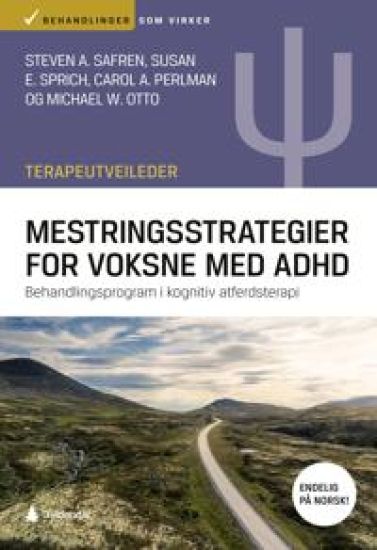
De karakteristiske ADHD-symptomene – hyperaktivitet, impulsivitet og konsentrasjonsvansker – kan være like hemmende for voksne som for barn. Selv om medisiner kan være effektive i behandlingen av ADHD hos voksne, har de fleste fortsatt symptomer som gjør at de trenger bestemte ferdigheter og strategier for å håndtere dem. I Mestringsstrategier for voksne med ADHD beskrives stegvise, detaljerte fremgangsmåter for å kartlegge og behandle ADHD hos voksne. Boken er strukturert gjennom et forløp på tolv behandlingstimer og består av tre moduler: (1) psykoedukasjon / organisering og planlegging, (2) håndtering av avledbarhet og (3) kognitiv restrukturering (hensiktsmessig tankegang). I tillegg er det egne deler om prokrastinering og om hvordan man kan involvere ektefelle, partner eller familiemedlemmer i behandlingen.
Can you actually have a good life with the absence of friends? Thomas Sanders treasures peace and quiet more than gold-and he's worked hard to ensure his empty house stays that way. But lately, his carefully curated calm is under siege, thanks to a mysterious brown paper package, a cinnamon roll war, and a town full of lovable eccentrics. From gossipy neighbors to a nitwit named Charlotte Davens-and even his chatty, recently deceased wife-Thomas is dragged into an emotional whirlwind he never asked for. The Emotional Evolution of Thomas Sanders is a heartwarming, hilarious tale of unlikely friendships, small-town chaos, and one man's reluctant journey toward connection.