John Stuart Blackie Biography He was born in Glasgow, on Charlotte Street, the son of Aberdeen banker, Alexander Blackie (d.1846) and Helen Stodart. He was educated at the New Academy and afterwards at the Marischal College, in Aberdeen, where his father was manager of the Commercial Bank. After attending classes at Edinburgh University (1825-1826), Blackie spent three years at Aberdeen as a student of theology. In 1829 he went to Germany, and after studying at G ttingen and Berlin (where he came under the influence of Heeren, Otfried M ller, Schleiermacher, Neander and B ckh) he accompanied Bunsen to Italy and Rome. The years spent abroad extinguished his former wish to enter the Church, and at his father's desire he gave himself up to the study of law. Johann Wolfgang von Goethe German: 28 August 1749 - 22 March 1832) was a German writer and statesman. His body of work includes epic and lyric poetry written in a variety of metres and styles; prose and verse dramas; memoirs; an autobiography; literary and aesthetic criticism; treatises on botany, anatomy, and colour; and four novels. In addition, numerous literary and scientific fragments, more than 10,000 letters, and nearly 3,000 drawings by him exist. A literary celebrity by the age of 25, Goethe was ennobled by the Duke of Saxe-Weimar, Karl August in 1782 after first taking up residence there in November 1775 following the success of his first novel, The Sorrows of Young Werther. He was an early participant in the Sturm und Drang literary movement. During his first ten years in Weimar, Goethe served as a member of the Duke's privy council, sat on the war and highway commissions, oversaw the reopening of silver mines in nearby Ilmenau, and implemented a series of administrative reforms at the University of Jena. He also contributed to the planning of Weimar's botanical park and the rebuilding of its Ducal Palace, which in 1998 were together designated a UNESCO World Heritage Site.
Francis Stuart (1902-2000) published 25 novels, including 'Black List, Section H' (King Penguin). He was critically acclaimed as a young poet and writer by W.B Yeats among other notable literary figures; however, his wartime broadcasts from Berlin for Hitler's Third Reich immediately established lifelong controversy with Nazi collaboration, issues of criminality and dissidence which permeate his writings. He and his Polish lover, Madeleine Meissner were arrested by the French in Post-War Freiburg where he wrote 'The Freiburg Trilogy'.His life events read like the epic novel of a flawed hero. His father's suicide when Stuart was an infant became a family secret which he discovered during his marriage at age seventeen to Maud Gonne's daughter, Iseult, a former lover of Ezra Pound's. The marriage engulfed him in Irish Republicanism as soldier and gunrunner in the Civil War. He established a reputation as international novelist and aristocratic squire of Laragh Castle (Ireland) where he became a racehorse owner, chicken farmer, drinker, gambler and womaniser. His lifestyle ended on moving to Nazi Germany in 1940 (after a lecture tour there in 1939) organised through the German Ambassador Edouard Hempel. Stuart worked with German Intelligence (Abwehr), and also met members of the anti-Nazi Rote Kapelle'. As broadcaster and lecturer, he reached outcast status becoming a vagrant in post-war Europe. Having left his family in 1940, when his wife Iseult died in the 1950s he married Madeleine in London while they both under Inland Security surveillance. Stuart's return to Ireland in the 1960s meant losing his London Jewish publisher, Victor Gollancz. There followed two decades in the literary underground until his adoption as mascot by the ultra-conservative Arts Council group known as Aosd na. 'Enmeshed' in this group and dependent on them as funding cartel, he struggled for artistic freedom as covertly depicted in his later novels such as A Hole in the Head and The High Consistory. He consistently repudiated Nazism at the behest of the Irish Media yet remained a 'hostage' of Aosd na and their imposed establishment. The eclipse of his work by affiliation with Hitler remains, whereas he claimed that as 'criminal author' his vision had reached full utterance. In this Revised Edition, previously expunged material in the 2007 Liffey Press edition is restored with an exploratory Foreword relating to Stuart and Aosd na. There is a lengthy New Introduction appraising Stuart by Kiely who personally knew him over twenty years.'Stuart's labyrinthine life will hardly find a more detailed expos '-David O'Donoghue The Sunday Business Post'Stuart predicted the course his life would take in his pre-war novels'-Tony Bailie The Irish News'Fascinatingly accurate echo of the controversial writer's own eerie voice'-Brian Lynch The Irish Times'The biographer's congenial access to Stuart lends authentic immediacy'-Richard T. Murphy New Hibernia Review
On Liberty is a philosophical work by English philosopher John Stuart Mill, originally intended as a short essay. The work, published in 1859, applies Mill's ethical system of utilitarianism to society and the state. Mill attempts to establish standards for the relationship between authority and liberty. He emphasizes the importance of individuality which he conceived as a prerequisite to the higher pleasures-the summum bonum of Utilitarianism. Furthermore, Mill criticized the errors of past attempts to defend individuality where, for example, democratic ideals resulted in the "tyranny of the majority"
Helen Stuart Campbell (born Helen Stuart; July 5, 1839 - July 22, 1918) was a social reformer and pioneer in the field of home economics. She wrote several important studies about women trapped in poverty, and the role that effective home economics could play in lifting women and families out of poverty.She was born in Lockport, New York to Jane E. (n e Campbell) and Homer H. Stuart. (She later changed her surname to favor her mother's maiden name.) She studied in Warren, Rhode Island and Bloomington, New Jersey. She worked as a professor of economics at the University of Wisconsin from 1893-96, and then as a professor of domestic science at Kansas State Agricultural College from 1896-97
John Stuart Mill's book Utilitarianism is a philosophical defense of utilitarianism in ethics. The essay first appeared as a series of three articles published in Fraser's Magazine in 1861; the articles were collected and reprinted as a single book in 1863. It went through four editions during Mill's lifetime with minor additions and revisions. Although Mill includes discussions of utilitarian ethical principles in other works such as On Liberty and The Subjection of Women, Utilitarianism contains Mill's only major discussion of the fundamental grounds for utilitarian ethical theory.
Elizabeth Stuart Phelps Ward (August 31, 1844 - January 28, 1911) was an early feminist American author and intellectual who challenged traditional Christian beliefs of the afterlife, challenged women's traditional roles in marriage and family, and advocated clothing reform for women. In 1868, three years after the Civil War ended, she published The Gates Ajar, which depicted the afterlife as a place replete with the comforts of domestic life and where families would be reunited-along with family pets-through eternity.
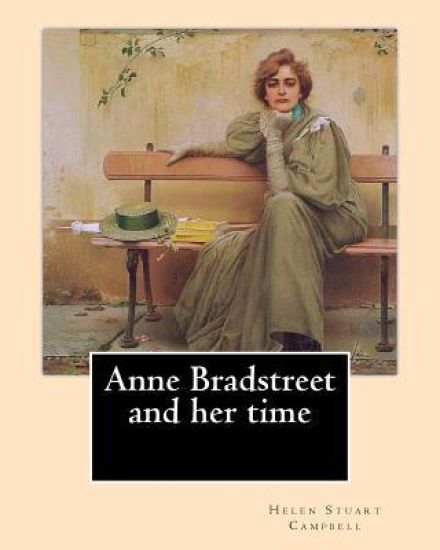
Anne Bradstreet was the first American female writer as well as the first American female poet to have her works published.Anne Bradstreet (March 20, 1612 - September 16, 1672), n e Dudley, was the most prominent of early English poets of North America and first writer in England's North American colonies to be published. She is the first Puritan figure in American Literature and notable for her large corpus of poetry, as well as personal writings published posthumously. Born to a wealthy Puritan family in Northampton, England, Bradstreet was a well-read scholar especially affected by the works of Du Bartas. A mother of eight children and the wife of a public officer in the New England community, Bradstreet wrote poetry in addition to her other duties. Her early works read in the style of Du Bartas, but her later writings develop into her unique style of poetry which centers on her role as a mother, her struggles with the sufferings of life, and her Puritan faith...... Helen Stuart Campbell (born Helen Stuart; pen name, "Mrs. Helen Weeks"; July 5, 1839 - July 22, 1918) was a social reformer and pioneer in the field of home economics. She wrote several important studies about women trapped in poverty, and the role that effective home economics could play in lifting women and families out of poverty. Biography: She was born in Lockport, New York to Jane E. (n e Campbell) and Homer H. Stuart. (She later changed her surname to favor her mother's maiden name.) She studied in Warren, Rhode Island and Bloomington, New Jersey. She worked as a professor of economics at the University of Wisconsin from 1893-96, and then as a professor of domestic science at Kansas State Agricultural College from 1896-97. Publications: In the 1860s and 70s, she wrote stories and children's books under the name "Mrs. Helen Weeks". In later life, divorced from husband Dr. Grenville Weeks, Campbell - her new pen name - wrote novels and nonfiction works dealing with home economics and relationships between the individual, the home, the workplace, physical well-being, and childhood. She was active in many organizations that advocated female empowerment and associated with many intellectuals and original thinkers, including writer Charlotte Perkins Gilman. Much of her writing was engaging and vigorous. Her pieces exposed Gilded Age social inequities and public health failures. She was the author of a biography of 17th century colonial American poet, Anne Bradstreet.
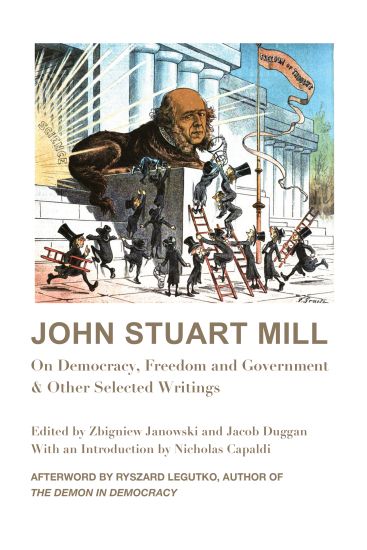
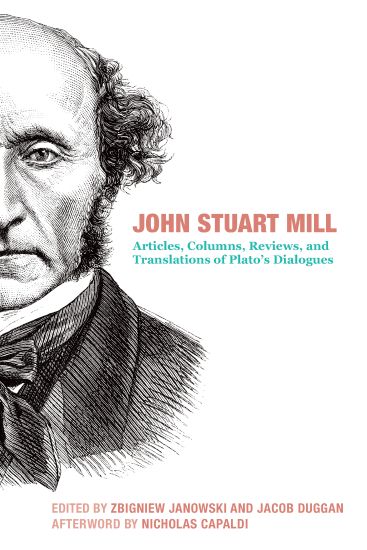
In addition to “On Liberty” and “On Representative Government,” this new selection of Mill’s writings includes, among others, a number of less known of his writings, such as: “Civilization,” “Perfectibility,” “The Negro Question,” “On Education,” “On Aristocracy,” “On Marriage,” “On Free Press,” “Socialism,” Mill’s review of Tocqueville’s “Democracy in America,” his letters to Tocqueville, and several other writings. If one can use a somewhat exaggerated language, Mill’s writings are to liberal-democracy what Marx and Engels’ writings were to Communism. Both systems gave expression to 19th century man’s longing for equality and justice, both promised to liberate him from the shackles of oppression, authority and tradition. Instead of liberating man, Communism created the most brutal system in human history, and its spectacular fall in 1989 is one of history’s greatest events. Western world today shows that liberal-democracy is no longer a benign doctrine, which advocates free market, minimum state and individual liberties, but, like Communism, is an all-encompassing ideology which forces an individual to abdicate his freedom and soul in favor of a Communist-like collective. As many critics of real Socialism could see the seeds of totalitarianism in the writings of Marx and Engels, so one can see the seeds of liberal totalitarianism in Mill’s writings. This new edition is intended to help readers to understand why democratic-liberalism came so close to its 19th century ideological rival.
This is the second volume, following the well-received edition of Mill’s writing essential to understanding the liberal tradition. His commentary on a full spectrum of issues gives further insight into the strengths and vulnerabilities of liberal democratic theory in practice. Rare and difficult to locate material is here brought to attention and made available. The contribution of Mill’s most authoritative biographer, Nicholas Capaldi, is a singular and unmatched highlight. The tenor of St. Augustine’s Press volumed on Mill is distinct in its intention to place his work in the framework of political philosophy and the conversation of the viability of liberalism as a tradition of thought.