

Kirjahaku
Etsi kirjoja tekijän nimen, kirjan nimen tai ISBN:n perusteella.
1000 tulosta hakusanalla Theodor Gettinger

Theodor Fontanes Der Stechlin und Ahmadou Kouroumas En attendant le vote des bêtes sauvages
Wilfried Aristide Dally
Königshausen Neumann
2026
pokkari

Theodor Storms Novelle Aquis submersus (1876)
Königshausen Neumann
2025
nidottu
Theodor Storm fährt nach Würzburg und erreicht seinen Sohn nicht, obwohl er mit ihm spricht
Ingrid Bachér
Dittrich Verlag
2013
sidottu

Theodor Fontane: Kriegsgefangen - Erlebtes 1870 & Reisebriefe vom Kriegsschauplatz
Theodor Fontane
e-artnow
2023
nidottu
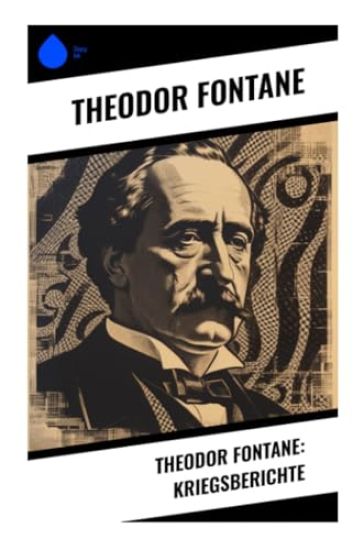
Theodor Fontane: Kriegsberichte
Sharp Ink
2023
pokkari

Theodor Fontane: Gedichte. Vollständige Neuausgabe
Liwi Literatur- Und Wissenschaftsverlag
2025
pokkari

Theodor Fontane: Gedichte. Vollständige Neuausgabe
Liwi Literatur- Und Wissenschaftsverlag
2025
sidottu

Theodor Fontane and the European Context
BRILL
2001
nidottu
On the centenary of Fontane’s death and at the turn of the century these essays take a new look at this supreme chronicler of Prussia and of the Germany that emerges after 1871. Written by scholars from different countries and disciplines, they focus on novels and theatre reviews from the perspectives of philosophy, sociology, comparative literature and translation theory, and in the contexts of topography and painting. Connections and crosscurrents emerge to reveal new aspects of Fontane’s poetics and to produce contrasting but complementary readings of his novels. He appears in the company of predecessors and contemporaries, such as Scott, Thackeray, Saar, Ibsen, Turgenev, but also in that of writers he has rarely, if ever, been seen beside, such as E.T.A. Hoffmann, Stendhal, Trollope, Henry James and Edith Wharton, Beckett and Faulkner. The historical novel and the social position of women are each a recurring focus of interest. Fontane emerges as receptive to other voices, as a precursor of developments in modern narrative, and confirmed as the novelist who brings the nineteenth-century German novel closest to the broad traditions of European realism.
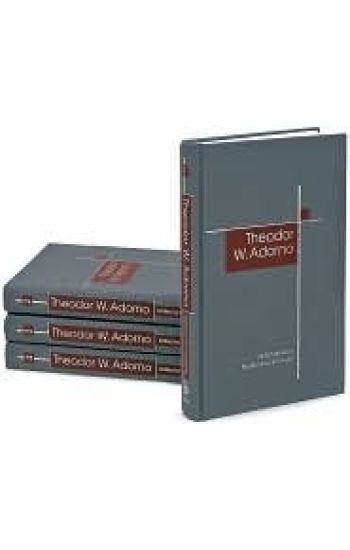
Theodor W. Adorno
SAGE Publications Inc
2004
muu
Theodor W.Adorno was one of the towering intellectuals of the twentieth century. His contributions cover such a myriad of fields, including the sociology of culture, social theory, the philosophy of music, ethics, art and aesthetics, film, ideology, the critique of modernity and musical composition, that it is difficult to assimilate the sheer range and profundity of his achievement. His celebrated friendship with Walter Benjamin has produced some of the most moving and insightful correspondence on the origins and objects of the Frankfurt School of Critical Theory. This unprecedented collection, devised and assembled by one of Europe's rising social theorists, distills the best from published assessments and responses to Adorno's oeuvre. The collection is divided into 4 volumes: Volume 1: Philosophy, Ethics and Critical Theory Part 1: Negative Dialectics Included here are contributions on the concept of totality in the writings of Adorno and Lukacs; Adorno and Bourgeois Philosophy; the relationship between Adorno and Kierkegaard; Adorno's Critique of Idealism; Adorno and Linguistics; Adono and Habermas. Part 2: Ethics and Redemption This is comprised of contributions on Adorno and Truth; Adorno's Inverse Theology; and Adorno and the Ineffable Part 3: Critical Theory, Ideology Critique and Social Science Included here are contributions on Adorno's relation to the Positivist Dispute; the Popper-Adorno Controversy; Adorno and Empirical Research; and Hermeneutics and Critical Theory. Volume 2: Aesthetic Theory Part 1: Art and Politics in 'Aesthetic Theory' This includes material on the De-Aestheticization of Art; Adorno, Utopia and Mimesis; Adorno and autonomous art; Adorno and Dialectics; Adorno, Marxism and Art; Art and Criticism in Adorno's Aesthetics; Adorno's concept of the Avant-Garde. Part 2: Philosophy of Music This includes contributions on Adorno's music and social criticism; Adorno and nostalgia; Adorno, Heidegger and the meaning of music; Adorno and Wagner. Part 3: On Jazz The material included here addresses questions of Adorno and Popular Music; Adorno's encounter with jazz; Adorno, Jazz and Society; and the reasons for Adorno's apparent hatred of jazz. Volume 3: Social Theory & The Critique of Modernity Part 1: On 'The Dialectic of Enlightenment' Included here are chapters on the dialectic of enlightenment and post-functionalist thought; dialectic of enlightenment as genealogy critique; the relationship between the dialectic of enlightenment, modernity and postmodernity; Adorno's critique of progress; Adorno and theories of subjectivity; and the dialectic of enlightenment and rationality. Part 2: Anti-Semitism This consists of material on Adorno and Horkheimer; and Adorno and Public Sphere Part 3: Popular Culture and Capitalism Included here are contributions on Adorno and Sport; Adorno's alleged left-wing elitism; Adorno's critique of astrology and the Occult; Benjamin and Adorno on Disney; Adorno, Totalitarianism and the Welfare State; and Adorno and Mass Society. Volume 4: Cultural Theory and the Postmodern Challenge Part 1: 'Damaged Life': Exile in America This section includes Leo Lowenthal's insightful recollections of Adorno; Adorno and the primal history of subjectivity; Adorno and Los Angeles; Adorno's relation to American culture; and Adorno's exile in England. Part 2: Film Theory This section includes chapters on Adorno and the Culture Industry; Benjamin, Adorno and Contemporary Film Theory; Adorno, Aesthetics and the Social. Part 3: Wellmer and Adorno Included here are papers on Aesthetic, Psychic and Social Synthesis in Adorno and Wellmer; and New German Aesthetic Theory after Adorno. Part 4: Jameson on Adorno Included here are papers on Jameson, Adorno and the persistence of the Utopian; and a Marxism for Postmodernism Part 5: Modernism and Postmodernism This section contains papers on Adorno, Foucault and the Modern Intellectual; Adorno, Foucault and Two forms of the Critique of Modernity; Adorno and the Habermas-Lyotard Debate; Adorno, Postmodernism and Edward Said; Adorno, Heidegger and Postmodernism; Adorno and the Decline of the Modern Age; The literary process of modernism; Adorno, Tradition and the Postmodern Part 5: The Feminist Response Included here are contributions on Adorno and Judith Butler; Adorno, Art Theory and Feminist Practice; and Gender in the writings of Adorno and Horkheimer. The collection comes with a superb Introduction to Adorno by Gerard Delanty which elucidates the main contributions of this penetrating and enduring thinker. Comprehensive and consistently illuminating, the collection includes the thought on Adorno from some of the most distinguished commentators on social theory. Included here are selections from the writings of Susan Buck-Morss, Martin Jay, Agnes Heller; David Frisby; Johann Arnason; Richard Wolin; Andrew Bowie; Robert Hulnot-Kentor; Leo Lowenthal; Richard Rorty Axel Honneth; Albrecht Wellmer; and Jurgen Habermas. The result is a peerless research resource allowing readers to delve into all aspects of Adorno's extraordinary accomplishments in social thought, philosophy and cultural criticism. It will be required reading for students of the Frankfurt School, Marxism, Critical Theory, Philosophy of Art and Aesthetics and Social Theory.

Theodor Fontanes «Stine» Eine Entzauberte «Zauberfloete»?
G H Hertling
Herbert Cie Lang AG, Buchhandlung Antiquariat
1982
nidottu
Fontanes tiefe Verbundenheit zu W.A. Mozart und zu dessen klassischem Erbe wird sowohl textanalytisch als auch geistesgeschichtlich nachgewiesen. Kompositorisch sowie ideengehaltlich vergleicht der Verfasser -Stine- (1890) mit der -Zauberflote- (1791) und sieht diese Werke, trotz scheinbarer Diskrepanzen, als kunstlerische und weltanschauliche Manifeste am Abend zweier Jahrhunderte - als Verkundungen reinen Menschentums, das von neuen Zeiterscheinungen und kulturkritischen Umwertungsversuchen bedroht war. Die Studie erschliesst, dass auch Fontanes aus dem klassischen Idealismus geborener Glaube an ein zukunftiges, freisinniges und vorurteilsfreies Menschentum trotz heftigster -Neuwerte-Prophezeiungen- unerschuttert blieb."
Theodor Daublers Nordlicht: Drei Studien Uber Die Elemente, Den Geist Und Die Aktualitat Des Werkes
Carl Schmitt
Duncker Humblot
2009
nidottu

Theodor Storm und seine Eltern
Schmidt, Erich Verlag
2023
sidottu

Theodor Fontane - Autonomie Und Telegraphie in Den Gesellschaftsromanen
Christian Thomas
Logos Verlag Berlin
2015
nidottu
Das "Subjekt", dessen Verschwinden schon in der "Gelehrtenrepublik" des achtzehnten Jahrhunderts beklagt wurde, droht im spaten neunzehnten Jahrhundert von der Medientechnik und ihren Kommunikationsformen manipuliert und aufgesogen zu werden. Angesichts dieser Lage registriert der spate Fontane nicht lediglich die medialen Errungenschaften seiner Epoche, sondern thematisiert in seiner literarischen Gestaltung eines Autonomiekonflikts sowohl Bedrohung als auch Bedeutung und Potentiale der in die technische Kommunikation eingebundenen Subjekte. Fontanes dabei speziell auf die Telegraphie gerichtete Aufmerksamkeit wird angesichts der "revolutionaren" und weitreichenden Auswirkungen dieser Technik verstandlich.
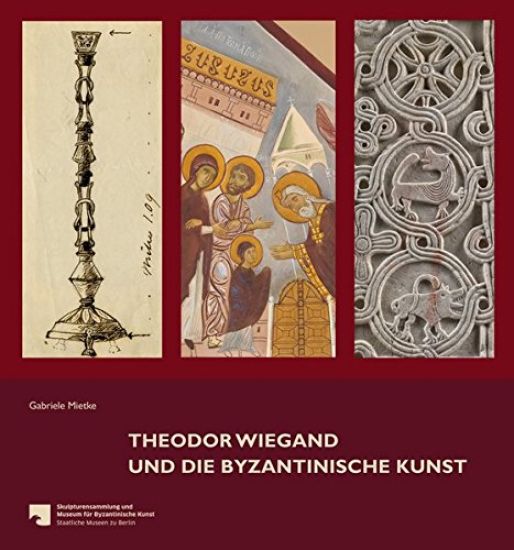
Der Katalog zu einer Kabinettausstellung im Museum fur Byzantinische Kunst in Berlin gibt erstmals einen Uberblick uber das Engagement Theodor Wiegands, des beruhmten klassischen Archaologen, auch fur die Byzantinische Kunst. Ein einleitender Aufsatz fasst Wiegands wichtige Rolle fur den Aufbau der Fruhchristlich-Byzantinischen Sammlung, dem heutigen Museum fur Byzantinische Kunst in Berlin, und seine Forschungen zu Themen der byzantinischen Archaologie zusammen. Daran schlieaen sich 54 durchgehend farbig bebilderte Katalogbeitrage zu biografischen Zeugnissen sowie einer Auswahl der Objekte, die mit seiner Hilfe fur die Berliner Sammlung erworben wurde.