These selections from the many writings of Thomas Sowell over a period of a half century cover social, economic, cultural, legal, educational, and political issues. The sources range from Dr. Sowell's letters, books, newspaper columns, and articles in both scholarly journals and popular magazines. The topics range from late-talking children to "tax cuts for the rich," baseball, race, war, the role of judges, medical care, and the rhetoric of politicians. These topics are dealt with by sometimes drawing on history, sometimes drawing on economics, and sometimes drawing on a sense of humour.
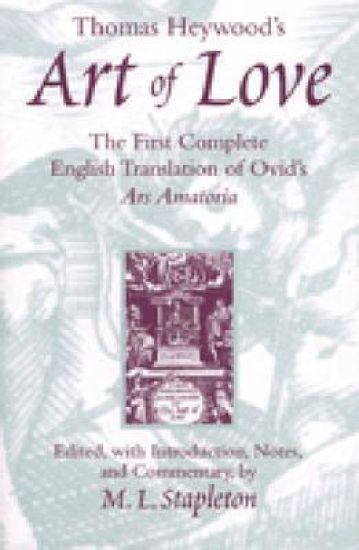
Thomas Heywood (ca 1573-1641) was a major Renaissance playwright who wrote or collaborated on over two hundred plays. Loues Schoole was one of his many nondramatic works that shows his fascination with antiquity. It was the standard English translation of the Ars in the seventeenth century, so popular that it was pirated almost as soon as he had written it--then printed, sold, reprinted, and resold in England and the Netherlands. It was not attributed to him during his lifetime, and he was not allowed to share in the profits that its (considerable) sales generated, two things that rankled him for the rest of his life. This is understandable because it is an excellent translation into English heroic verse, accurate without stuffiness, colloquial without indecorousness. Twenty years after Heywood's death, Loues Schoole was pirated yet again and went to six different editions during the Restoration (1662-84).The present edition represents the first instance in which the translation has been edited in a scholarly manner. Besides a full Introduction that accounts for the history of Loues Schoole, Ovid in the English Renaissance, and the editorial method, each of the three books of the poem includes a Commentary that provides cross-references within the text; glosses for unusual, archaic, or regional forms peculiar to Heywood's English; annotations from sourcebooks that Heywood used to identify or understand characters from classical history, literature, and mythology; and explanations for any emendations the editor deemed necessary. In his efforts to make the Ars a seventeenth-century poem, Heywood contemporizes Ovid's references to dress, behavior, courtship, marriage, games, theater, agriculture, horsemanship, war, literature --all of which the Commentary explains at great length.Loues Schoole will find readership in these areas: early modern history, literature, and culture; classical studies; Renaissance drama; the history of sexuality; and translation theory.M. L. Stapleton is Associate Professor of English and Philosophy, Stephen F. Austin State University.
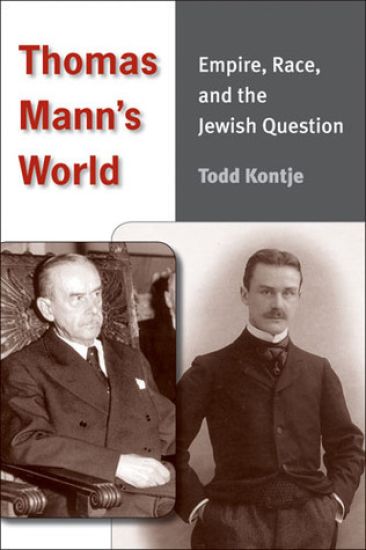
Praise for Todd Kontje". . . a refreshing example of what literary discourse can teach us about national identity, even historical events and trends---those aspects of a nation's evolving heritage and tradition usually reserved for other disciplines."---Colloquia Germanica"Kontje has pulled off the amazing feat of a grand narrative: from the epic literature of the Middle Ages to very recent texts on the emerging multicultural Germany. Kontje's grand narrative, it should be noted, is not at all simplistic or reductionistic. He gets at the individual texts in complex ways . . . he displays an enviable erudition and scholarship, tracing lines through centuries when most scholars today limit themselves to narrow specialties."---Russell Berman, Stanford UniversityExactly how Thomas Mann's significance registers with the scholarly and general public has been subject to change. For many, Mann retains the aura of the "good German," the Nobel Laureate who was the most vocal leader of the exile community against Hitler and the Third Reich. His diaries, however, contain some rather nasty comments about Mann's many Jewish friends and acquaintances, inspiring a renewed look at the negative Jewish stereotypes in his fiction. The man once venerated as a voice of reason and cosmopolitan tolerance against racist bigotry has been eviscerated as a clandestine anti-Semite.Thomas Mann's World is a comprehensive reevaluation of Mann as the representative German author of the Age of Empire, placing Mann's comments about Jews and the Jewish characters in his fiction in the larger context of his attentiveness to racial difference, both in the world at large and in himself. Kontje argues that Mann is a worldly author---not in the benign sense that he was an eloquent spokesman for a pan-European cosmopolitanism who had witnessed the evils of nationalism gone mad, although he was that, too---but in the sense of a writer whose personal prejudices reflected those of the world around him, a writer whose deeply autobiographical fiction expressed not only the concerns of the German nation, as he liked to claim, but also of the world in an era of imperial conquest and global conflict.Todd Kontje is Professor of German and Comparative Literature and Chair of the German Department at the University of California, San Diego. He is the author of German Orientalisms (University of Michigan Press, 2004).Jacket photographs: Thomas Mann, approximately 1900 and 1955, reproduced with the generous permission of the Buddenbrookhaus, Kulturstiftung Hansestadt Lübeck.
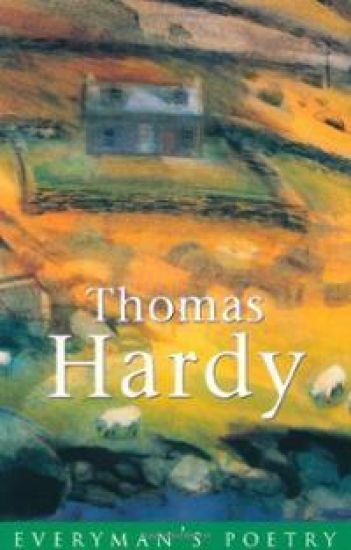
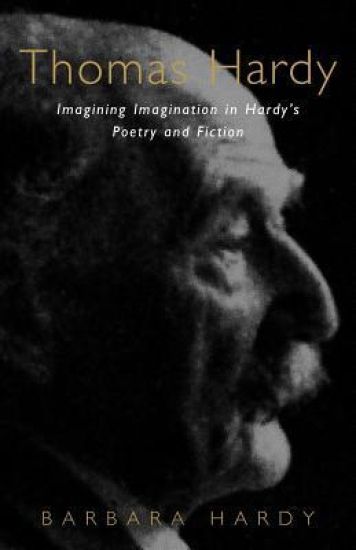
The author offers close readings of Thomas Hardy's poetry and novels, regarding these as expressive forms of everyday and professional acts of the imagination. Hardy is placed in the long tradition of writers who subject is not art but imagination and whose most interesting aesthetic introspection+as, like those of Jane Austen and George Eliot, are oblique or sub-textual. So what the reader follows here is Hardy's imagining of imagination in his elegies and nature poems and in his major characters from Gabriel Oak to Tess and Jude.The themes and forms examined by Barbara Hardy include narrative, conversation, gossip, memory, gender, poetry of place and imaginative thresholds. Altogether the study is a lucid and accessible introduction, which locates Hardy's place in the tradition of English literature.
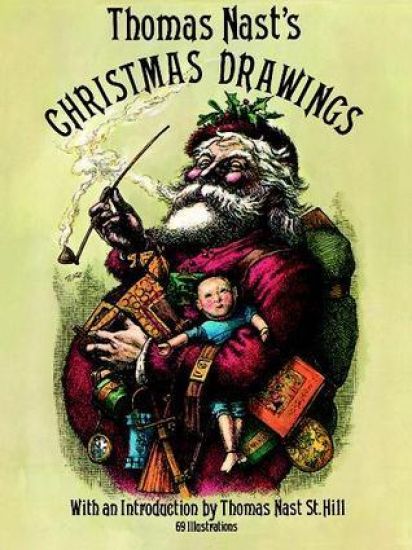
Sixty-six Yuletide illustrations -- almost all holiday drawings -- by one of America's foremost illustrators and the creator of the popular Santa Claus image. Finely detailed drawings of St. Nick, sleigh rides, reindeer, "The Night Before Christmas," North Pole, and more are all depicted in this seasonal collection.
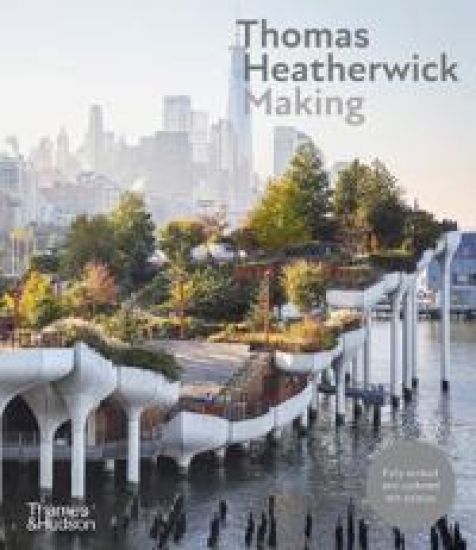
Featuring sixteen new projects and fresh photography, this updated and revised book remains the definitive publication on the internationally acclaimed designer Thomas Heatherwick. How do you create a car that cleans the air? Construct a building that helps you heal? Humanize space to improve life on earth? Turn a paper mill into a gin distillery? Let every country in the Olympic Games take part in making and lighting the Olympic Cauldron? Design a building using an electron microscope? Produce a new bus for London that uses less fuel? Make someone eat your business card? Making is an extraordinary compendium of the work of Thomas Heatherwick and his studio since its founding 30 years ago. Fully updated and revised, and now in its third edition, this is the definitive publication on one of the world’s most exceptional designers. With more than 600 pages, 116 projects and hundreds of photographs, drawings and sketches, this essential monograph will be an inspirational resource for designers, makers and curious minds.
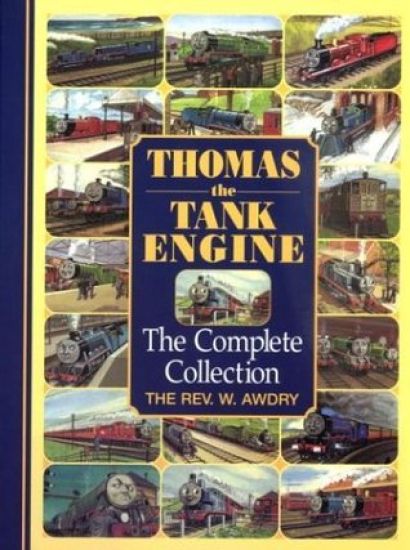
All twenty-six of the late Reverend W. Awdry's classic Thomas the Tank books are compiled in one beautiful gift volume, complete with an introduction by the author himself, to honor the fiftieth anniversary of this beloved character.
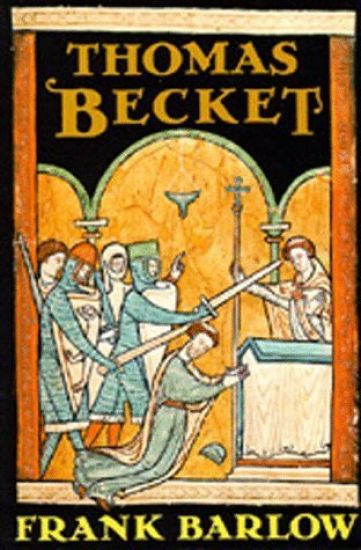
On 29 December 1170, Thomas Archbishop of Canterbury was brutally murdered in his cathedral by four knights from the household of his former friend and patron, King Henry II. The horror that the killing inspired and the miraculous cures performed at Thomas's tomb transfigured him into one of the most popular saints in Western Christendom, and Canterbury became one of the greatest pilgrim shrines in the West. Yet these were unexpected results. Thomas's extraordinary career had been, and remains, controversial. The transformation of a handsome, attractive, and worldly courtier into a zealous prelate, a bitter exile and finally a martyr was for many hard to understand. In this brilliant new biography, based on the original sources and informed by the most recent scholarship, Frank Barlow reconstructs Thomas's physical environment and entourage at various stages of his career, exploring the nuances and irregularities in the story that have been ignored in other studies.
This title is part of UC Press's Voices Revived program, which commemorates University of California Press’s mission to seek out and cultivate the brightest minds and give them voice, reach, and impact. Drawing on a backlist dating to 1893, Voices Revived makes high-quality, peer-reviewed scholarship accessible once again using print-on-demand technology. This title was originally published in 1963.
This title is part of UC Press's Voices Revived program, which commemorates University of California Press’s mission to seek out and cultivate the brightest minds and give them voice, reach, and impact. Drawing on a backlist dating to 1893, Voices Revived makes high-quality, peer-reviewed scholarship accessible once again using print-on-demand technology. This title was originally published in 1962.
This title is part of UC Press's Voices Revived program, which commemorates University of California Press’s mission to seek out and cultivate the brightest minds and give them voice, reach, and impact. Drawing on a backlist dating to 1893, Voices Revived makes high-quality, peer-reviewed scholarship accessible once again using print-on-demand technology. This title was originally published in 1962.
This title is part of UC Press's Voices Revived program, which commemorates University of California Press’s mission to seek out and cultivate the brightest minds and give them voice, reach, and impact. Drawing on a backlist dating to 1893, Voices Revived makes high-quality, peer-reviewed scholarship accessible once again using print-on-demand technology. This title was originally published in 1963.
This is a major new study of Thomas Aquinas, the most influential philosopher of the Middle Ages. The book offers a clear and accessible guide to the central project of Aquinas’ philosophy: the understanding of human nature. Robert Pasnau sets the philosophy in the context of ancient and modern thought, and argues for some groundbreaking proposals for understanding some of the most difficult areas of Aquinas’ thought: the relationship of soul to body, the workings of sense and intellect, the will and the passions, and personal identity. Structured around a close reading of the treatise on human nature from the Summa theologiae and deeply informed by a wide knowledge of the history of philosophy and contemporary philosophy, this study will offer specialists a series of novel and provocative interpretations, while providing students with a reference commentary on one of Aquinas’ core texts.
Some of Macaulay's letters were printed in nineteenth-century memoirs, but a 'Complete Letters' of this eminent Victorian has long been needed. Professor Pinney is editing the whole body of surviving letters by Macaulay, giving accurate texts and textual and explanatory notes. The letters are in chronological order, grouped by historical theme and phases of Macaulay's life. The first two volumes deal with his childhood, career at Cambridge, early legal career and early political career, and end with him about to leave for India. The letters are lively because Macaulay (as lawyer, essayist, historian, politician, administrator, poet) was a man of enormous energy and very wide interests. They will add greatly to our sense of early Victorian political and cultural life as well as to our understanding of Macaulay himself.
Some of Macaulay's letters were printed in nineteenth-century memoirs, but a 'Complete Letters' of this eminent Victorian has long been needed. Professor Pinney is editing the whole body of surviving letters by Macaulay, giving accurate texts and textual and explanatory notes. The letters are in chronological order, grouped by historical theme and phases of Macaulay's life. The first two volumes deal with his childhood, career at Cambridge, early legal career and early political career, and end with him about to leave for India. The letters are lively because Macaulay (as lawyer, essayist, historian, politician, administrator, poet) was a man of enormous energy and very wide interests. They will add greatly to our sense of early Victorian political and cultural life as well as to our understanding of Macaulay himself.
The third volume of Thomas Pinney's acclaimed edition of Macaulay's letters brings the work to its halfway point. This volume begins with Macaulay preparing to sail for India as a member of the supreme Council, covers his Indian career, his return to England, renewed election to Parliament and appointment to the Whig Cabinet; it ends with the defeat of Melbourne's ministry. Many of the letters are previously unpublished, and are notable for their brisk and vivid style, clear and readable as was all Macaulay's prose. They throw particular light on his Indian years, in which Macaulay played a significant part in liberalising movement begun by Bentinck. The period also took Macaulay through several personal crises, brought about by the death of one favourite sister and the marriage of another. In these letters too Macaulay often concerns himself with his continuing literary career.
The fourth volume of Thomas Pinney's acclaimed edition of Macaulay's letters covers the period between September 1841 and December 1848, in which Macaulay is shown keeping up an active political life as MP for Edinburgh and member of Lord John Russell's Whig Cabinet. At the same time his literary reputation is extended by The Lays of Ancient Rome, the collected Essays, and, at the end of the period spanned by this volume, the triumphant publication of the first two volumes of the History of England. In the same years Macaulay was enjoying perhaps the most satisfactory period of his private life: we see him comfortably established in the Albany, enjoying the society of his sister and her family, taking part as a leading figure in Whig political and literary circles, and confidently at work on the book which was to crown his fame.
The years covered in this fifth volume of Macaulay's letters were a striking mixture of triumph and loss. The publication of the first part of The History of England at the end of 1848 set Macaulay at the top of his fame, not merely in England, but on the Continent and in America. Honours came pouring in, and the sales of his books began to make him a rich man. The publication of the second part of the History in 1855 was a publishing event of unparalleled magnitude: 25,000 copies were subscribed at once in England, and four times that number were quickly sold in the United States. To add to his triumph, the people of Edinburgh, who had so rudely and unexpectedly rejected him in 1847 as their representative in parliament, now recanted; though Macaulay refused even to appear before them, they insisted upon returning him to parliament, and did so in 1852.
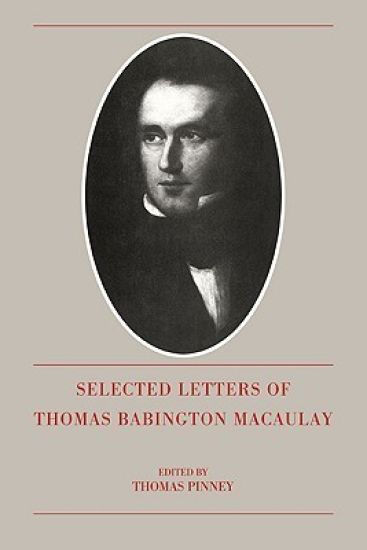
A personal view of England, from the Napoleonic Wars to the high tide of mid-Victorian prosperity, is recorded in these letters of one of the Victorian era's greatest figures. Historian, essayist, poet, orator, statesman, Macaulay saw and recorded - and frequently had part in - some of the most important events of his time. The abolition of slavery and the slave trade, the passage of the Reform Bill, the reform of Indian government, and the struggle over the Corn Laws are among the public interests of Macaulay's letters. At the same time they present a lively picture of the style and behaviour of Macaulay's time as he saw it in many different scenes: among the Evangelicals of Clapham, at Cambridge, amidst the society of Holland House, in Parliament, at the country houses of the grand Whigs, and among the literary, legal and political circles of Victorian London.