
Kirjahaku
Etsi kirjoja tekijän nimen, kirjan nimen tai ISBN:n perusteella.
475 tulosta hakusanalla Wainwright Nicholas B.

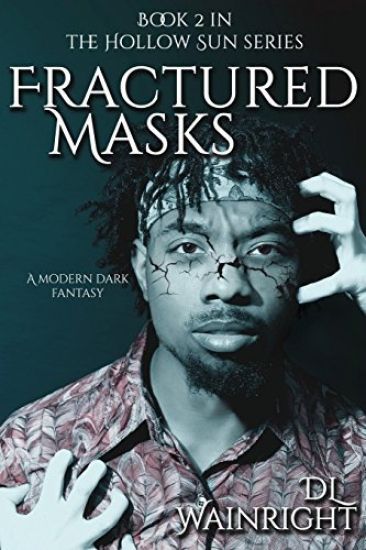
There are no such things as monsters. At least, that's what Lucy had believed until she saw one eating a man's face. There is a reason the truth has been buried, however, and Lucy and her friends Eva, Jim and Gunter find themselves doing their own bloody part to keep it that way. But there are more secrets yet to be discovered, some of which may test their friendship and tear them apart. As danger and death press closer, they struggle to determine who can truly be trusted.

We all have a darkness within us that we must never let out.An unsettling presence has taken to stalking G nter's family in Japan, and is intent on drawing that darkness out into the open. Old friends become rivals, hidden desire claws its way to the surface, and loss hangs heavy and oppressive. The only way to right the wrongs is to walk a dangerous path, paved with pain and blood.The third book in The Hollow Sun series, Paper Lanterns pecks away at the crumbling illusion of reality, seeking to sort the truth from the lies.


WINNER OF THE 2022 SELFIES BOOK AWARD - BEST INDEPENDENTLY PUBLISHED ADULT FICTION If you could travel back in time to see any concert, who would you go to see? Caroline Tangent's husband, Jon has invented a time machine so they can visit iconic gigs in history: Woodstock, David Bowie, Edith Piaf in 1930's Paris - an inexhaustible bucket-list. But they can't tell anyone they're doing so. As their trips to the past continue, they begin to realise how it could change a devastating moment from their own past. But for Caroline, it's clear they don't want the same outcome. Until, on one trip, one of them does something unthinkable which will change both their lives forever. For fans of Matt Haig, Claire North and Audrey Niffenegger.

Your sense of smell is a fundamental part of life as most of us know it.So what happens when it disappears? When Paola Totaro lost her sense of smell to Covid in March 2020, she found herself trapped in a sensory vacuum. In a quest for answers, she embarked on a journey of discovery to unravel the mysteries -and eccentricities - of the fifth sense. From the theories of ancient philosophers to the cutting-edge laboratories of 21st-century neuroscience, On the Scent explores the mysteries of our ʻCinderellaʼ sense. It offers a unique glimpse into the world of those born without smell as well as those who lose it; exploring how smell can be a key indicator of declining physical health; and offering up the latest research that can offer hope to the millions of people worldwide who have suffered sensory loss. "Enthralling, moving, and elegantly written."-Peter Godfrey-Smith, author of Other Minds "An engaging read . . . packed with insights and observations that bring this topic to life for everyone."-Professor Barry Smith, Centre for the Study of the Senses "Destined to be a bible for anyone who has lost their sense of smell."-Chrissi Kelly, AbScent"This book will profoundly change the way you think about your ability to smell and how its loss affects our lives."-Fiona Fox, Director of the Science and Media Centre and author of Beyond the Hype
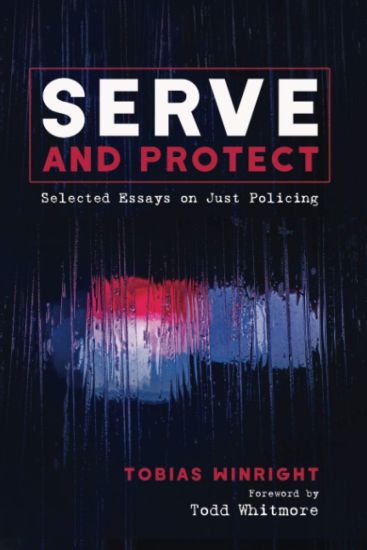
This collection of essays on policing and the use of force, while written over the course of the last twenty-five years, remains relevant and timely. Although issues in policing and questions about excessive force and brutality have been addressed by criminologists, sociologists, philosophers, and criminal justice ethicists, only a handful of theological ethicists treat this pressing matter. While the Christian moral tradition has a voluminous record of theological attention to violence and nonviolence, war and peace, there is a dearth of references to policing. And most considerations of criminal justice issues by Christians and their churches concentrate on prison reform, or abolition, and the death penalty, but not policing. These essays, authored by a theological ethicist possessing professional experience in law enforcement, seek to fill this curious gap. They offer a framework for moral reasoning concerning the justification for police use of force and the just application of such force, and they propose just policing as a model that is consonant with promoting a just peace in communities and society. In addition, they explore the implications of such an approach for wider, international questions about just war, terrorism, the responsibility to protect, and post-war justice.

This collection of essays on policing and the use of force, while written over the course of the last twenty-five years, remains relevant and timely. Although issues in policing and questions about excessive force and brutality have been addressed by criminologists, sociologists, philosophers, and criminal justice ethicists, only a handful of theological ethicists treat this pressing matter. While the Christian moral tradition has a voluminous record of theological attention to violence and nonviolence, war and peace, there is a dearth of references to policing. And most considerations of criminal justice issues by Christians and their churches concentrate on prison reform, or abolition, and the death penalty, but not policing. These essays, authored by a theological ethicist possessing professional experience in law enforcement, seek to fill this curious gap. They offer a framework for moral reasoning concerning the justification for police use of force and the just application of such force, and they propose just policing as a model that is consonant with promoting a just peace in communities and society. In addition, they explore the implications of such an approach for wider, international questions about just war, terrorism, the responsibility to protect, and post-war justice.
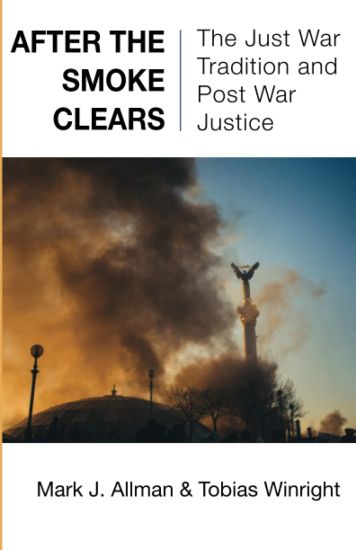
While most studies of just war focus on the rationale for going to war and the conduct of the war, this important book examines the period after the conflict. What must be done to restore justice? In the words of the authors, 'Victory' is declared by presidents and other leaders, yet all too often no just peace is to be found in the wake of today's conflicts. . . . After the smoke clears, the powers that be may declare 'mission accomplished' when, as Ezekiel long ago said, there really is no peace.

While most studies of just war focus on the rationale for going to war and the conduct of the war, this important book examines the period after the conflict. What must be done to restore justice? In the words of the authors, 'Victory' is declared by presidents and other leaders, yet all too often no just peace is to be found in the wake of today's conflicts. . . . After the smoke clears, the powers that be may declare 'mission accomplished' when, as Ezekiel long ago said, there really is no peace.
Desert Agriculture; E176
N. L. (Neville Lewis) 1901- McFarlane; G. L. (George L. ). Winright
Hassell Street Press
2021
nidottu

California Desert Agriculture; C464
N. L. (Neville Lewis) 1901- McFarlane; G. L. (George L. ). Winright; R. S. Ayers
Hassell Street Press
2021
nidottu
This work has been selected by scholars as being culturally important and is part of the knowledge base of civilization as we know it.This work is in the public domain in the United States of America, and possibly other nations. Within the United States, you may freely copy and distribute this work, as no entity (individual or corporate) has a copyright on the body of the work.Scholars believe, and we concur, that this work is important enough to be preserved, reproduced, and made generally available to the public. To ensure a quality reading experience, this work has been proofread and republished using a format that seamlessly blends the original graphical elements with text in an easy-to-read typeface.We appreciate your support of the preservation process, and thank you for being an important part of keeping this knowledge alive and relevant.
California Desert Agriculture
N. L. (Neville Lewis) 1901- McFarlane; R. S. Ayers; G. L. (George L. ). Winright
Hassell Street Press
2021
sidottu
This work has been selected by scholars as being culturally important and is part of the knowledge base of civilization as we know it.This work is in the public domain in the United States of America, and possibly other nations. Within the United States, you may freely copy and distribute this work, as no entity (individual or corporate) has a copyright on the body of the work.Scholars believe, and we concur, that this work is important enough to be preserved, reproduced, and made generally available to the public. To ensure a quality reading experience, this work has been proofread and republished using a format that seamlessly blends the original graphical elements with text in an easy-to-read typeface.We appreciate your support of the preservation process, and thank you for being an important part of keeping this knowledge alive and relevant.

California Desert Agriculture
N. L. (Neville Lewis) 1901- McFarlane; R. S. Ayers; G. L. (George L. ). Winright
Hassell Street Press
2021
nidottu
This work has been selected by scholars as being culturally important and is part of the knowledge base of civilization as we know it.This work is in the public domain in the United States of America, and possibly other nations. Within the United States, you may freely copy and distribute this work, as no entity (individual or corporate) has a copyright on the body of the work.Scholars believe, and we concur, that this work is important enough to be preserved, reproduced, and made generally available to the public. To ensure a quality reading experience, this work has been proofread and republished using a format that seamlessly blends the original graphical elements with text in an easy-to-read typeface.We appreciate your support of the preservation process, and thank you for being an important part of keeping this knowledge alive and relevant.