Kirjojen hintavertailu. Mukana 12 390 323 kirjaa ja 12 kauppaa.

Kirjahaku

Etsi kirjoja tekijän nimen, kirjan nimen tai ISBN:n perusteella.

1000 tulosta hakusanalla Alison Case

Biochemistry and Molecular Biology

Biochemistry and Molecular Biology

Alison Snape; Despo Papachristodoulou; William H. Elliott; Daphne C. Elliott

Oxford University Press
2018
nidottu
Now in its sixth edition, Biochemistry and Molecular Biology provides the perfect balance between detail and conceptual understanding. Maintaining the much-praised clarity of previous editions, this edition incorporates both new techniques and pivotal discoveries in a succinct, easy-to-digest way, using updated figures and diagrams to help explain complex processes. Updated content on the manipulation of DNA and genes reflects the rapid introduction of new methods in contemporary research, and incorporates up-to-date discussions of recent developments such as gene editing. Chapter summaries are logically laid out, forming bulleted lists which provide students with a consolidation of difficult concepts and progressively guide them through the specifics whilst keeping the big picture in mind. Additional 'find out more' sections provide helpful problem-solving support and the further reading is divided into types to cater for broader learning needs. With an integrated approach covering both biochemistry and molecular biology, complemented by frequent diagrams and clear explanations, and all presented in a wider cellular context, this text is the perfect introduction for any student new to the subject. Online Resources: The online resources to accompany this text include: For registered adopters of the book: · Figures from the book available to download For students: · Further reading organised by chapter · An extensive bank of multiple-choice questions to support self-directed learning · Links to 3D molecular structures in Protein Data Bank

Democratic Dialogue and the Constitution

Democratic Dialogue and the Constitution

Alison L Young

Oxford University Press
2017
sidottu
Constitutions divide into those that provide for a constitutionally protected set of rights, where courts can strike down legislation, and those where rights are protected predominantly by parliament, where courts can interpret legislation to protect rights, but cannot strike down legislation. The UK's Human Rights Act 1998 is regarded as an example of a commonwealth model of rights protections. It is justified as a new form of protection of rights which promotes dialogue between the legislature and the courts - dialogue being seen not just as a better means of protecting rights, but as a new form of constitutionalism occupying a middle ground between legal and political constitutionalism. This book argues that there is no clear middle ground for dialogue to occupy, with most theories of legal and political constitutionalism combining legal and political protections, as well as providing an account of interactions between the legislature and the judiciary. Nevertheless, dialogue has a role to play. It differs from legal and political constitutionalism in terms of the assumptions on which it is based and the questions it asks. It focuses on analysing mechanisms of inter-institutional interactions, and assessing when these interactions can provide a better protection of rights, facilitate deliberation, engage citizens, and act as an effective check and balance between institutions of the constitution. This book evaluates dialogue in the UK constitution, assessing the protection of human rights through the Human Rights Act 1998, the common law, and EU law. It also evaluates court-court dialogue between the UK court, the European Court of Justice, and the European Court of Human Rights. The conclusion evaluates the implications of the proposed British Bill of Rights and the referendum decision to leave the European Union.
Vincent de Paul, the Lazarist Mission, and French Catholic Reform
Vincent de Paul, the Lazarist Mission, and French Catholic Reform offers a major re-assessment of the thought and activities of the most famous figure of the seventeenth-century French Catholic Reformation, Vincent de Paul. Confronting traditional explanations for de Paul's prominence in the dévot reform movement that emerged in the wake of the Wars of Religion, the volume explores how he turned a personal vocational desire to evangelize the rural poor of France into a congregation of secular missionaries, known as the Congregation of the Mission or the Lazarists, with three inter-related strands of pastoral responsibility: the delivery of missions, the formation and training of clergy, and the promotion of confraternal welfare. Alison Forrestal further demonstrates that the structure, ethos, and works that de Paul devised for the Congregation placed it at the heart of a significant enterprise of reform that involved a broad set of associates in efforts to transform the character of devotional belief and practice within the church. The central questions of the volume therefore concern de Paul's efforts to create, characterize, and articulate a distinctive and influential vision for missionary life and work, both for himself and for the Lazarist Congregation, and Forrestal argues that his prominence and achievements depended on his remarkable ability to exploit the potential for association and collaboration within the dévot environment of seventeenth-century France in enterprising and systematic ways. This is the first study to assess de Paul's activities against the wider backdrop of religious reform and Bourbon rule, and to reconstruct the combination of ideas, practices, resources, and relationships that determined his ability to pursue his ambitions. A work of forensic detail and complex narrative, Vincent de Paul, the Lazarist Mission, and French Catholic Reform is the product of years of research in ecclesiastical and state archives. It offers a wholly fresh perspective on the challenges and opportunities entailed in the promotion of religious reform and renewal in seventeenth-century France.
The Return of Alsace to France, 1918-1939

The Return of Alsace to France, 1918-1939

Alison Carrol

Oxford University Press
2018
sidottu
In 1918, the end of the First World War triggered the return of Alsace and Lorraine to France after almost fifty years of annexation into the German Empire. Enthusiastic crowds in Paris and Alsace celebrated the return of the 'lost provinces,' but return proved far more difficult than expected. Over the following two decades, politicians, administrators, industrialists, cultural elites, and others grappled with the question of how to make the region French again. Differences of opinion emerged, and reintegration rapidly descended into a multi-faceted struggle as voices at the Parisian centre, the Alsatian periphery, and outside France's borders offered their views on how to introduce French institutions and systems into its lost borderland. Throughout these discussions, the border itself shaped the process of reintegration, by generating contact and tensions between populations on the two sides of the boundary line, and by shaping expectations of what it meant to be French and Alsatian. Borderland is the first comprehensive account of the return of Alsace to France which treats the border as a driver of change. It draws upon national, regional, and local archives to follow the difficult process of Alsace's reintegration into French society, culture, political and economic systems, and legislative and administrative institutions. It connects the microhistory of the region with the 'macro' levels of national policy, international relations, and transnational networks, and with the cross-border flows of ideas, goods, people, and cultural products that shaped daily life in Alsace as its population grappled with the meaning of return to France. In revealing the multiple voices who contributed to the region's reintegration, it underlines the ways in which regional populations and cross-border interactions have forged modern nations.
Fictive Orders and Feminine Religious Identities, 1200-1600
Any visitor to Belgium or the Netherlands is immediately struck by the number of convents and beguinages (begijnhoven) in both major cities and small towns. Their number and location in urban centres suggests that the women who inhabited them once held a prominent role. Despite leaving a visible mark on cities in Europe, much of the story of these women - known variously as beguines, tertiaries, klopjes, recluses, and anchoresses - remains to be told. Instead of aspiring to live as traditional religious, they transcended normative assumptions about religion and gender and had a very real impact on their religious and secular worlds. The sources for their tale are often fragmentary and difficult to interpret. However, careful scrutiny allows their voices to be heard. Drawing on an array of sources including religious rules, sermons, hagiographic vitae, and rapiaria, Fictive Orders and Feminine Religious Identities traces the story of pious laywomen between the thirteenth and sixteenth centuries. It both emphasizes the innovative roles of women who transcended established forms of institutional religious life and reveals the ways in which historiographical habits have obscured the dynamic and fluid nature of their histories. By highlighting the development of irregular and extraregular communities and tracing the threads of monasticisation that wove their way around pious laywomen, this book draws attention to the vibrant and dynamic culture of feminine lay piety that persisted from the later middle ages onwards.
The Prodigal Son in English and American Literature

The Prodigal Son in English and American Literature

Alison M. Jack

Oxford University Press
2018
sidottu
The Parable of the Prodigal Son is one of the best-known stories in the Bible. It has captured the imagination of commentators, preachers and writers. Alison M. Jack explores the reconfiguring of the character of the Prodigal Son and his family in literature in English. She considers diverse literary periods and genres in which the paradigm is particularly prevalent, such as Elizabethan literature, the work of Shakespeare, the novels of female Victorian writers, the American short story tradition, novels focused on the lives of ordained ministers, and the poetry of Elizabeth Bishop and Iain Crichton Smith. Drawing on scholarship from biblical and literary studies, this study demonstrates the remarkable potency of the parable in generating new, and at times contradictory, meanings in different contexts. Historical and literary criticism are brought into dialogue to explore this remarkably resilient and nimble character as he dances through drama, novels and poetry across the centuries.
God & the Gothic

God & the Gothic

Alison Milbank

Oxford University Press
2018
sidottu
God and the Gothic: Romance and Reality in the English Literary Tradition provides a complete reimagining of the Gothic literary canon to examine its engagement with theological ideas, tracing its origins to the apocalyptic critique of the Reformation female martyrs, and to the Dissolution of the monasteries, now seen as usurping authorities. A double gesture of repudiation and regret is evident in the consequent search for political, aesthetic, and religious mediation, which characterizes the aftermath of the Glorious Revolution and Whig Providential discourse. Part one interprets eighteenth-century Gothic novels in terms of this Whig debate about the true heir, culminating in Ann Radcliffe's melancholic theology which uses distance and loss to enable a new mediation. Part two traces the origins of the doppelgänger in Calvinist anthropology and establishes that its employment by a range of Scottish writers offers a productive mode of subjectivity, necessary in a culture equally concerned with historical continuity. In part three, Irish Gothic is shown to be seeking ways to mediate between Catholic and Protestant identities through models of sacrifice and ecumenism, while in part four nineteenth-century Gothic is read as increasingly theological, responding to materialism by a project of re-enchantment. Ghost story writers assert the metaphysical priority of the supernatural to establish the material world. Arthur Machen and other Order of the Golden Dawn members explore the double and other Gothic tropes as modes of mystical ascent, while raising the physical to the spiritual through magical control, and the M. R. James circle restore the sacramental and psychical efficacy of objects.
Global Standard Setting in Internet Governance

Global Standard Setting in Internet Governance

Alison Harcourt; George Christou; Seamus Simpson

Oxford University Press
2020
sidottu
The book addresses representation of the public interest in Internet standard developing organisations (SDOs). Much of the existing literature on Internet governance focuses on international organisations such as the United Nations (UN), the Internet Governance Forum (IGF) and the Internet Corporation for Assigned Names and Numbers (ICANN). The literature covering standard developing organisations has to date focused on organisational aspects. This book breaks new ground with investigation of standard development within SDO fora. Case studies centre on standards relating to privacy and security, mobile communications, Intellectual Property Rights (IPR) and copyright. The book lifts the lid on internet standard setting with detailed insight into a world which, although highly technical, very much affects the way in which citizens live and work on a daily basis. In doing this it adds significantly to the trajectory of research on Internet standards and SDOs that explore the relationship between politics and protocols. The analysis contributes to academic debates on democracy and the internet, global self-regulation and civil society, and international decision-making processes in unstructured environments. The book advances work on the Multiple Streams Framework (MS) by applying it to decision-making in non-state environments, namely SDOs which have long been dominated by private actors. The book is aimed at academic audiences in political science, computer science, communications, and science and technology studies as well as representatives from civil society, the civil service, government, engineers and experts working within SDO fora. It will also be accessible to students at the postgraduate and undergraduate levels.
Being Born

Being Born

Alison Stone

Oxford University Press
2019
sidottu
All human beings are born and all human beings die. In these two ways we are finite: our lives begin and our lives come to an end. Historically philosophers have concentrated attention on our mortality--and comparatively little has been said about being born and how it shapes our existence. Alison Stone sets out to overcome this oversight by providing a systematic philosophical account of how being born shapes our condition as human beings. Drawing on both feminist philosophy and existentialist concerns about the structure of meaningful human existence, Stone offers an original perspective on human existence. She explores how human existence is shaped by the way that we are born. Taking natality into account transforms our view of human existence and illuminates how many of its aspects are connected with our birth. These aspects include dependency, the relationality of the self, vulnerability, reception and inheritance of culture and history, embeddedness in social power, situatedness, and radical contingency. Considering natality also sheds new light on anxiety, mortality, and the temporality of human life. This book therefore bears on death and the meaning of life, as well as many debates in feminist and continental philosophy.
Islam on Campus

Islam on Campus

Alison Scott-Baumann; Mathew Guest; Shuruq Naguib; Sariya Cheruvallil-Contractor; Aisha Phoenix

Oxford University Press
2020
sidottu
Islam on Campus explores how Islam is represented, perceived, and lived within higher education in Britain. It considers the changing nature of university life, and the place of religion within it. Even while many universities maintain ambiguous or affirming orientations to religious institutions for reasons to do with history and ethos, much western scholarship has presumed higher education to be a strongly secularising force. This framing has resulted in religion often being marginalised or ignored as a cultural irrelevance by the university sector. However, recent times have seen higher education increasingly drawn into political discourses that problematize religion in general, and Islam in particular, as an object of risk. Using the largest data set yet collected in the UK, Islam on Campus explores university life and the ways in which ideas about Islam and Muslim identities are produced, experienced, perceived, appropriated, and objectified. The volume considers the role universities and Muslim higher education institutions play in the production, reinforcement, and contestation of emerging narratives about religious difference. This is a culturally nuanced treatment of universities as sites of knowledge production, and contexts for the negotiation of perspectives on culture and religion among an emerging generation. This collaborative study demonstrates the urgent need to release Islam from its official role as the othered, or the feared. When universities achieve this we will be able to help students of all affiliations and of none to be citizens of the campus in preparation for being citizens of the world.
The Documentary Imagination in Twentieth-Century French Literature
The Documentary Imagination in Twentieth-Century French Literature identifies a documentary impulse in French literature that emerges at the end of the nineteenth century and culminates in a proliferation of factual writings in the twenty-first. Focusing on the period bookended by these two moments, it highlights the enduring concern with factual reference in texts that engage either with current events or the historical archive. Specifically, it considers a set of ideas and practices centered on the conceptualization and use of documents. In doing so, it contests the widespread narrative that twentieth-century French literature abandons the realist enterprise, and argues that writers instead renegotiate the realist legacy outside, or at the margins of, the fictional space of the novel. Analyzing works by authors including Gide, Breton, Aragon, Yourcenar, Duras, and Modiano, the book defines a specific documentary mode of literary representation that records, assembles, and investigates material traces of reality. The document is a textual, visual, or material piece of evidence repurposed through its visual insertion, textual transcription, or description within a literary work. It is a fact, but it also becomes a figure, standing for literature's confrontation with the real. The documentary imagination involves a fantasy of direct access to a reality that speaks for itself. At the same time, it gives rise to concrete textual practices that open up new directions for literature, by interrogating the construction and interpretation of facts.
The Oxford Handbook of Criminology

The Oxford Handbook of Criminology

Alison Liebling; Shadd Maruna; Lesley McAra

Oxford University Press
2023
nidottu
With contributions from leading authorities, this is the definitive guide to current criminological theory, research, and policy. The Oxford Handbook of Criminology provides a comprehensive collection of chapters covering the core and emerging topics studied on criminology courses, indispensable to students, academics, and professionals alike. · 43 chapters written by over 85 leading academics exploring relevant theory, cutting-edge research, policy developments, and current debates, encouraging students to appreciate the diverse and interdisciplinary nature of criminological discourse · Includes detailed references to aid further research · Chapters updated to reflect recent cases, statistics, and scholarship, as well as significant current events such as Covid-19 and social justice movements. · New chapters added presenting research on topical issues including victimology, hate crime, desistance, cybercrime, atrocity crimes, convict criminology, security and smart cities, prison abolitionism, comparative criminology, sex offending, and network criminology. Digital formats and resources The seventh edition is available for students and institutions to purchase in a variety of formats, and is supported by online resources. - The e-book offers a mobile experience and convenient access along with functionality tools, navigation features and links that offer extra learning support: www.oxfordtextbooks.co.uk/ebooks - The accompanying online resources include essay questions and links to useful websites for each chapter, along with guidance on answering essay questions and access to chapters from previous editions.
Women on Philosophy of Art

Women on Philosophy of Art

Alison Stone

Oxford University Press
2024
sidottu
Women on Philosophy of Art is the first study of women's philosophies of art in long nineteenth-century Britain. It looks at seven women spanning the time from the Enlightenment to the beginning of modernism. They are Anna Barbauld, Joanna Baillie, Harriet Martineau, Anna Jameson, Frances Power Cobbe, Emilia Dilke, and Vernon Lee. The central issue that concerned them was how art related to morality and religion. Baillie and Martineau treated art as an agency of moral instruction, whereas Dilke and Lee argued that art must be made for beauty's sake. Barbauld, Jameson, and Cobbe thought that beauty and religion were linked, while other women believed that art and religion must be decoupled. Other topics explored are gender and genius, tragedy, literary realism, why we enjoy the sufferings of fictional characters, the hierarchy of the art-forms, whether art can transcend its historical circumstances, and critical issues around the artistic canon. Examining the print culture that made these women's interventions possible, this book shows that these women were doing a particular kind of philosophy of art, which was interdisciplinary and closely tied to artistic criticism and practice. The book traces how these seven women influenced one another, as well as engaging with their male contemporaries. But unlike their male interlocutors, these women have been unjustly left out of narratives about the history of aesthetics. By including these women, we can enrich and broaden our understanding of the history of philosophy of art.
Germany 1858-1990: Hope, Terror and Revival

Germany 1858-1990: Hope, Terror and Revival

Alison Kitson

Oxford University Press
2001
nidottu
This book combines extended period cover with detailed study of sources on key issues and topics 'Document Exercises', offer opportunities for assessment and exam practice. Covering almost 150 years between unification and reunification, with a particular emphasis on the interwar years. This book encourages students to think for themselves around the issues that have affected German history and to consider important historical debates and controversies.
The Beloved Self

The Beloved Self

Alison Hills

Oxford University Press
2010
sidottu
The Beloved Self is about the holy grail of moral philosophy, an argument against egoism that proves that we all have reasons to be moral. Part One introduces three different versions of egoism. Part Two looks at attempts to prove that egoism is false, and shows that even the more modest arguments that do not try to answer the egoist in her own terms seem to fail. But in part Three, Hills defends morality and develops a new problem for egoism, an epistemological problem. She shows that it is not epistemically rational to believe the most plausible versions of egoism. The first part of the book will be most relevant to those interested in moral theory, as it contains detailed discussions of recent interpretations of virtue ethics and especially of Kant's moral theory. The second and third part of the book turn to epistemology, particularly moral epistemology, and include an account of the relationship between knowledge and action, a new theory of moral understanding, and a discussion of the epistemically rational response to various kinds of disagreement. Hills also defends a new account of virtue and of morally worthy action.
Blackstone's Guide to the Charities Act 2006

Blackstone's Guide to the Charities Act 2006

Alison Maclennan

Oxford University Press
2007
nidottu
The new Act radically overhauls existing law, setting out a modern framework for charities and not-for-profit organisations. This new Blackstone's Guide provides the full text of the long-awaited Charities Act, together with an expert chapter by chapter commentary. The commentary logically follows the structure of the Act, and provides a careful analysis of its key changes, notably: the expansion of heads of charitable purpose; measures to facilitate charity merger; new support for charity trustees (eg, relief from liability for honest mistakes); and the introduction of a new independent Charity Appeal Tribunal. The Blackstone's Guide Series delivers concise and accessible books covering the latest legislative changes and amendments. Published soon after enactment, they offer timely and expert commentary on the meaning and effects of the legislation, plus a copy of the Act itself. The Guides are a cost-effective solution to key information needs and are the perfect companion for any practitioner needing to get up to speed with the latest changes.
Osteoporosis

Osteoporosis

Alison J. Black; Rena Sandison; David M. Reid

Oxford University Press
2009
nidottu
Osteoporosis affects an estimated 3 million people in the UK. The condition causes the bones to become more fragile and therefore more prone to fractures, along with pain, a loss of movement and an inability to perform daily tasks. One in two women and one in five men in the UK will suffer a fracture after the age of 50. Aimed at patients and carers, this book covers topics such as who is affected, what the risk factors are, and how patients can prevent or lessen the effects. The book looks forward to advances in diagnosis and treatment and how they have improved health outcomes of patients. Written by a leading osteoporosis specialist and Scientific Advisory Committee Member of the National Osteoporosis Society, this addition to the Facts series is a comprehensive guide to understanding and coping with this debilitating disease.
Prisons and their Moral Performance

Prisons and their Moral Performance

Alison Liebling; Helen Arnold

Oxford University Press
2004
sidottu
This book constitutes a critical case study of the modern search for public sector reform. It includes a detailed account of a study aimed at developing a meaningful way of evaluating difficult-to-measure moral dimensions of the quality of prisons. Penal practices, values, and sensibilities have undergone important transformations over the period 1990-2003. Part of this transformation included a serious flirtation with a liberal penal project that went wrong. A significant factor in this unfortunate turn of events was a lack of clarity, by those working in and managing prisons, about important terms such as 'justice', 'liberal', and 'care', and how they might apply to daily penal life. Official measures of the prison seem to lack relevance to many who live and work in prison and to their critics. The author proposes that a truer test of the quality of prison life is what staff and prisoners have to say about those aspects of prison life that 'matter most': relationships, fairness, order, and the quality of their treatment. The book attempts a detailed analysis and measurement of these dimensions in five prisons. It finds significant differences between establishments in these areas of prison life, and some departures from the official vision of the prison supported by the performance framework. The information revolution has generated unprecedented levels of knowledge about individual prisons, as well as providing a management reach into establishments from a distance, and a capacity for 'chronic revision', that was unimaginable fifty years ago. Another major transformation - the modernisation project - brought with it a new, but flawed, 'craft' of performance monitoring and measurement aimed at solving some of the problems of prison management. This book explores the arrival and the impact of this concept of performance and the links apparently forged between managerialism and moral values.
Prisons and their Moral Performance

Prisons and their Moral Performance

Alison Liebling; Helen Arnold

Oxford University Press
2005
nidottu
This book constitutes a critical case study of the modern search for public sector reform. It includes a detailed account of a study aimed at developing a meaningful way of evaluating difficult-to-measure moral dimensions of the quality of prisons. Penal practices, values, and sensibilities have undergone important transformations over the period 1990-2003. Part of this transformation included a serious flirtation with a liberal penal project that went wrong. A significant contributory factor in this unfortunate turn of events was a lack of clarity, by those working in and managing prisons, about important terms such as 'justice', 'liberal', and 'care', and how they might apply to daily penal life. Official measures of the prison service seem to lack relevance to many who live and work in prison and to their critics. The author proposes that a truer test of the quality of prison life is what staff and prisoners have to say about those aspects of prison life that 'matter most': relationships, fairness, order, and the quality of their treatment by those above them. The book attempts a detailed analysis and measurement of these dimensions in five prisons. It finds significant differences between establishments in these areas of prison life, and some departures from the official vision of the prison supported by the performance framework. The information revolution has generated unprecedented levels of knowledge about individual prisons, as well as providing a management reach into establishments from a distance, and a capacity for 'chronic revision', that was unimaginable fifty years ago. Another major transformation - the modernisation project - brought with it a new, but flawed, 'craft' of performance monitoring and measurement aimed at solving some of the problems of prison management. This book explores the arrival and the impact of this concept of performance and the links apparently forged between managerialism and moral values.
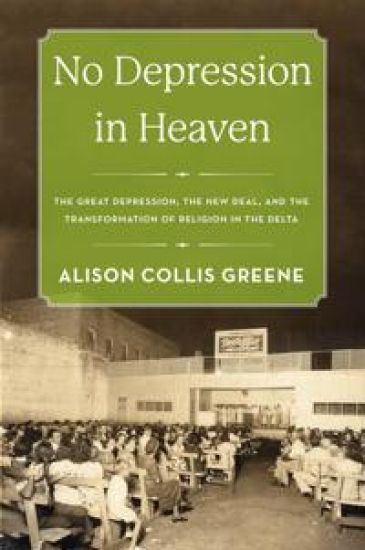
No Depression in Heaven

No Depression in Heaven

Alison Collis Greene

Oxford University Press Inc
2016
sidottu
In No Depression in Heaven, Alison Collis Greene demonstrates how the Great Depression and New Deal transformed the relationship between church and state. Grounded in Memphis and the Delta, this book traces the collapse of voluntarism, the link between southern religion and the New Deal, and the gradual alienation of conservative Christianity from the state. At the start of the Great Depression, churches and voluntary societies provided the only significant source of aid for those in need in the South. Limited in scope, divided by race, and designed to control the needy as much as to support them, religious aid collapsed under the burden of need in the early 1930s. Hungry, homeless, and out-of-work Americans found that they had nowhere to turn at the most desolate moment of their lives. Religious leaders joined a chorus of pleas for federal intervention in the crisis and a permanent social safety net. They celebrated the New Deal as a religious triumph. Yet some complained that Franklin Roosevelt cut the churches out of his programs and lamented their lost moral authority. Still others found new opportunities within the New Deal. By the late 1930s, the pattern was set for decades of religious and political realignment. More than a study of religion and politics, No Depression in Heaven uncovers the stories of men and women who endured the Depression and sought in their religious worlds the spiritual resources to endure material deprivation. Its characters are rich and poor, black and white, mobile sharecroppers and wealthy reformers, enamored of the federal government and appalled by it. Woven into this story of political and social transformation are stories of southern men and women who faced the greatest economic disaster of the twentieth century and tried to build a better world than the one they inhabited.