Kirjojen hintavertailu. Mukana 11 342 296 kirjaa ja 12 kauppaa.

Kirjahaku

Etsi kirjoja tekijän nimen, kirjan nimen tai ISBN:n perusteella.

1000 tulosta hakusanalla Allen Wikgren

Charles Darwin. By: Grant Allen

Charles Darwin. By: Grant Allen

Grant Allen

Createspace Independent Publishing Platform
2016
nidottu
Allen was born near Kingston, Canada West (known as Ontario after Confederation) - the second son of Catharine Ann Grant and the Rev. Joseph Antisell Allen, a Protestant minister from Dublin, Ireland. His mother was a daughter of the fifth Baron of Longueuil. He was educated at home until, at age 13, he and his parents moved to the United States, then to France and finally to the United Kingdom. 3] He was educated at King Edward's School in Birmingham and at Merton College in Oxford, both in the United Kingdom. After graduation, Allen studied in France, taught at Brighton College in 1870-71 and in his mid-twenties became a professor at Queen's College, a black college in Jamaica. Despite citation needed] his religious father, Allen became an agnostic and a socialist. After leaving his professorship, in 1876 he returned to England, where he turned his talents to writing, gaining a reputation for his essays on science and for literary works. A 2007 book by Oliver Sacks cites with approval one of Allen's early articles, 'Note-Deafness' (a description of what became known as amusia, published in 1878 in the learned journal Mind). His first books dealt with scientific subjects, and include Physiological sthetics (1877) and Flowers and Their Pedigrees (1886). He was first influenced by associationist psychology as expounded by Alexander Bain and by Herbert Spencer, the latter often considered by whom?] the most important individual in the transition from associationist psychology to Darwinian functionalism. In Allen's many articles on flowers and on perception in insects, Darwinian arguments replaced the old Spencerian terms, leading to a radically new vision of plant life that influenced HG Wells and helped transform later botanical research. On a personal level, a long friendship that started when Allen met Spencer on his return from Jamaica grew uneasy over the years. Allen wrote a critical and revealing biographical article on Spencer that was published after Spencer's death.
Anglo-Saxon Britain. By: Grant Allen

Anglo-Saxon Britain. By: Grant Allen

Grant Allen

Createspace Independent Publishing Platform
2016
nidottu
Allen was born near Kingston, Canada West (known as Ontario after Confederation) - the second son of Catharine Ann Grant and the Rev. Joseph Antisell Allen, a Protestant minister from Dublin, Ireland.His mother was a daughter of the fifth Baron of Longueuil. He was educated at home until, at age 13, he and his parents moved to the United States, then to France and finally to the United Kingdom. 3] He was educated at King Edward's School in Birmingham and at Merton College in Oxford, both in the United Kingdom. After graduation, Allen studied in France, taught at Brighton College in 1870-71 and in his mid-twenties became a professor at Queen's College, a black college in Jamaica. Despite citation needed] his religious father, Allen became an agnostic and a socialist. After leaving his professorship, in 1876 he returned to England, where he turned his talents to writing, gaining a reputation for his essays on science and for literary works. A 2007 book by Oliver Sacks cites with approval one of Allen's early articles, 'Note-Deafness' (a description of what became known as amusia, published in 1878 in the learned journal Mind). His first books dealt with scientific subjects, and include Physiological sthetics (1877) and Flowers and Their Pedigrees (1886). He was first influenced by associationist psychology as expounded by Alexander Bain and by Herbert Spencer, the latter often considered by whom?] the most important individual in the transition from associationist psychology to Darwinian functionalism. In Allen's many articles on flowers and on perception in insects, Darwinian arguments replaced the old Spencerian terms, leading to a radically new vision of plant life that influenced HG Wells and helped transform later botanical research. On a personal level, a long friendship that started when Allen met Spencer on his return from Jamaica grew uneasy over the years. Allen wrote a critical and revealing biographical article on Spencer that was published after Spencer's death.
The British barbarians: a hill-top NOVEL By: Grant Allen

The British barbarians: a hill-top NOVEL By: Grant Allen

Grant Allen

Createspace Independent Publishing Platform
2016
nidottu
Allen was born near Kingston, Canada West (known as Ontario after Confederation) - the second son of Catharine Ann Grant and the Rev. Joseph Antisell Allen, a Protestant minister from Dublin, Ireland. His mother was a daughter of the fifth Baron of Longueuil. He was educated at home until, at age 13, he and his parents moved to the United States, then to France and finally to the United Kingdom. 3] He was educated at King Edward's School in Birmingham and at Merton College in Oxford, both in the United Kingdom. After graduation, Allen studied in France, taught at Brighton College in 1870-71 and in his mid-twenties became a professor at Queen's College, a black college in Jamaica. Despite citation needed] his religious father, Allen became an agnostic and a socialist. After leaving his professorship, in 1876 he returned to England, where he turned his talents to writing, gaining a reputation for his essays on science and for literary works. A 2007 book by Oliver Sacks cites with approval one of Allen's early articles, 'Note-Deafness' (a description of what became known as amusia, published in 1878 in the learned journal Mind). His first books dealt with scientific subjects, and include Physiological sthetics (1877) and Flowers and Their Pedigrees (1886). He was first influenced by associationist psychology as expounded by Alexander Bain and by Herbert Spencer, the latter often considered by whom?] the most important individual in the transition from associationist psychology to Darwinian functionalism. In Allen's many articles on flowers and on perception in insects, Darwinian arguments replaced the old Spencerian terms, leading to a radically new vision of plant life that influenced HG Wells and helped transform later botanical research. On a personal level, a long friendship that started when Allen met Spencer on his return from Jamaica grew uneasy over the years. Allen wrote a critical and revealing biographical article on Spencer that was published after Spencer's death.
Anglo-Saxon Britain. By: Grant Allen: History Anglo-Saxon period, 449-1066

Anglo-Saxon Britain. By: Grant Allen: History Anglo-Saxon period, 449-1066

Grant Allen

Createspace Independent Publishing Platform
2016
nidottu
Charles Grant Blairfindie Allen (February 24, 1848 - October 25, 1899) was a Canadian science writer and novelist, and a proponent of the theory of evolution.Allen was born near Kingston, Canada West (known as Ontario after Confederation) - the second son of Catharine Ann Grant and the Rev. Joseph Antisell Allen, a Protestant minister from Dublin, Ireland.His mother was a daughter of the fifth Baron of Longueuil. He was educated at home until, at age 13, he and his parents moved to the United States, then to France and finally to the United Kingdom.He was educated at King Edward's School in Birmingham and at Merton College in Oxford, both in the United Kingdom.After graduation, Allen studied in France, taught at Brighton College in 1870-71 and in his mid-twenties became a professor at Queen's College, a black college in Jamaica. Despite citation needed] his religious father, Allen became an agnostic and a socialist. After leaving his professorship, in 1876 he returned to England, where he turned his talents to writing, gaining a reputation for his essays on science and for literary works. A 2007 book by Oliver Sacks cites with approval one of Allen's early articles, 'Note-Deafness' (a description of what became known as amusia, published in 1878 in the learned journal Mind). His first books dealt with scientific subjects, and include Physiological esthetics (1877) and Flowers and Their Pedigrees (1886). He was first influenced by associationist psychology as expounded by Alexander Bain and by Herbert Spencer, the latter often considered by whom?] the most important individual in the transition from associationist psychology to Darwinian functionalism. In Allen's many articles on flowers and on perception in insects, Darwinian arguments replaced the old Spencerian terms, leading to a radically new vision of plant life that influenced HG Wells and helped transform later botanical research. On a personal level, a long friendship that started when Allen met Spencer on his return from Jamaica grew uneasy over the years. Allen wrote a critical and revealing biographical article on Spencer that was published after Spencer's death.After assisting Sir W. W. Hunter in his Gazeteer of India in the early 1880s, Allen turned his attention to fiction, and between 1884 and 1899 produced about 30 novels. In 1895, his scandalous book titled The Woman Who Did, promulgating certain startling views on marriage and kindred questions, became a bestseller. The book told the story of an independent woman who has a child out of wedlock.In his career, Allen wrote two novels under female pseudonyms. One of these, the short novel The Type-writer Girl, he wrote under the name Olive Pratt Rayner. Another work, The Evolution of the Idea of God (1897), propounding a theory of religion on heterodox citation needed] lines, has the disadvantage original research?] of endeavoring to explain everything by one theory. This "ghost theory" was often seen by whom?] as a derivative of Herbert Spencer's theory. However, it was well known and brief references to it appear in a review by Marcel Mauss, Durkheim's nephew, in the articles of William James and in the works of Sigmund Freud. The young G. K. Chesterton wrote on what he considered the flawed premise of the idea, arguing that the idea of God preceded human mythologies, rather than developing from them. Chesterton said of Grant Allen's book on the evolution of the idea of God "it would be much more interesting if God wrote a book on the evolution of the idea of Grant Allen".
The evolutionist at large. By: Grant Allen: Evolution, Natural history

The evolutionist at large. By: Grant Allen: Evolution, Natural history

Grant Allen

Createspace Independent Publishing Platform
2016
nidottu
Charles Grant Blairfindie Allen (February 24, 1848 - October 25, 1899) was a Canadian science writer and novelist, and a proponent of the theory of evolution. Allen was born near Kingston, Canada West (known as Ontario after Confederation) - the second son of Catharine Ann Grant and the Rev. Joseph Antisell Allen, a Protestant minister from Dublin, Ireland.His mother was a daughter of the fifth Baron of Longueuil. He was educated at home until, at age 13, he and his parents moved to the United States, then to France and finally to the United Kingdom.He was educated at King Edward's School in Birmingham and at Merton College in Oxford, both in the United Kingdom.After graduation, Allen studied in France, taught at Brighton College in 1870-71 and in his mid-twenties became a professor at Queen's College, a black college in Jamaica.Despite citation needed] his religious father, Allen became an agnostic and a socialist. After leaving his professorship, in 1876 he returned to England, where he turned his talents to writing, gaining a reputation for his essays on science and for literary works. A 2007 book by Oliver Sacks cites with approval one of Allen's early articles, 'Note-Deafness' (a description of what became known as amusia, published in 1878 in the learned journal Mind). His first books dealt with scientific subjects, and include Physiological sthetics (1877) and Flowers and Their Pedigrees (1886). He was first influenced by associationist psychology as expounded by Alexander Bain and by Herbert Spencer, the latter often considered by whom?] the most important individual in the transition from associationist psychology to Darwinian functionalism. In Allen's many articles on flowers and on perception in insects, Darwinian arguments replaced the old Spencerian terms, leading to a radically new vision of plant life that influenced HG Wells and helped transform later botanical research. On a personal level, a long friendship that started when Allen met Spencer on his return from Jamaica grew uneasy over the years. Allen wrote a critical and revealing biographical article on Spencer that was published after Spencer's death. After assisting Sir W. W. Hunter in his Gazeteer of India in the early 1880s, Allen turned his attention to fiction, and between 1884 and 1899 produced about 30 novels. In 1895, his scandalous book titled The Woman Who Did, promulgating certain startling views on marriage and kindred questions, became a bestseller. The book told the story of an independent woman who has a child out of wedlock.In his career, Allen wrote two novels under female pseudonyms. One of these, the short novel The Type-writer Girl, he wrote under the name Olive Pratt Rayner. Another work, The Evolution of the Idea of God (1897), propounding a theory of religion on heterodox citation needed] lines, has the disadvantage original research?] of endeavoring to explain everything by one theory. This "ghost theory" was often seen by whom?] as a derivative of Herbert Spencer's theory. However, it was well known and brief references to it appear in a review by Marcel Mauss, Durkheim's nephew, in the articles of William James and in the works of Sigmund Freud. The young G. K. Chesterton wrote on what he considered the flawed premise of the idea, arguing that the idea of God preceded human mythologies, rather than developing from them. Chesterton said of Grant Allen's book on the evolution of the idea of God "it would be much more interesting if God wrote a book on the evolution of the idea of Grant Allen".
The woman who did. By: Grant Allen: A NOVEL (World's classic's)

The woman who did. By: Grant Allen: A NOVEL (World's classic's)

Grant Allen

Createspace Independent Publishing Platform
2016
nidottu
Charles Grant Blairfindie Allen (February 24, 1848 - October 25, 1899) was a Canadian science writer and novelist, and a proponent of the theory of evolution. Allen was born near Kingston, Canada West (known as Ontario after Confederation) - the second son of Catharine Ann Grant and the Rev. Joseph Antisell Allen, a Protestant minister from Dublin, Ireland.His mother was a daughter of the fifth Baron of Longueuil. He was educated at home until, at age 13, he and his parents moved to the United States, then to France and finally to the United Kingdom.He was educated at King Edward's School in Birmingham and at Merton College in Oxford, both in the United Kingdom.After graduation, Allen studied in France, taught at Brighton College in 1870-71 and in his mid-twenties became a professor at Queen's College, a black college in Jamaica.Despite citation needed] his religious father, Allen became an agnostic and a socialist. After leaving his professorship, in 1876 he returned to England, where he turned his talents to writing, gaining a reputation for his essays on science and for literary works. A 2007 book by Oliver Sacks cites with approval one of Allen's early articles, 'Note-Deafness' (a description of what became known as amusia, published in 1878 in the learned journal Mind). His first books dealt with scientific subjects, and include Physiological sthetics (1877) and Flowers and Their Pedigrees (1886). He was first influenced by associationist psychology as expounded by Alexander Bain and by Herbert Spencer, the latter often considered by whom?] the most important individual in the transition from associationist psychology to Darwinian functionalism. In Allen's many articles on flowers and on perception in insects, Darwinian arguments replaced the old Spencerian terms, leading to a radically new vision of plant life that influenced HG Wells and helped transform later botanical research. On a personal level, a long friendship that started when Allen met Spencer on his return from Jamaica grew uneasy over the years. Allen wrote a critical and revealing biographical article on Spencer that was published after Spencer's death. After assisting Sir W. W. Hunter in his Gazeteer of India in the early 1880s, Allen turned his attention to fiction, and between 1884 and 1899 produced about 30 novels. In 1895, his scandalous book titled The Woman Who Did, promulgating certain startling views on marriage and kindred questions, became a bestseller. The book told the story of an independent woman who has a child out of wedlock.In his career, Allen wrote two novels under female pseudonyms. One of these, the short novel The Type-writer Girl, he wrote under the name Olive Pratt Rayner. Another work, The Evolution of the Idea of God (1897), propounding a theory of religion on heterodox citation needed] lines, has the disadvantage original research?] of endeavoring to explain everything by one theory. This "ghost theory" was often seen by whom?] as a derivative of Herbert Spencer's theory. However, it was well known and brief references to it appear in a review by Marcel Mauss, Durkheim's nephew, in the articles of William James and in the works of Sigmund Freud. The young G. K. Chesterton wrote on what he considered the flawed premise of the idea, arguing that the idea of God preceded human mythologies, rather than developing from them. Chesterton said of Grant Allen's book on the evolution of the idea of God "it would be much more interesting if God wrote a book on the evolution of the idea of Grant Allen".
The colours of flowers as illustrated in the British flora. By: Grant Allen: Flowers -- Color, Plants -- Color
Charles Grant Blairfindie Allen (February 24, 1848 - October 25, 1899) was a Canadian science writer and novelist, and a proponent of the theory of evolution. Allen was born near Kingston, Canada West (known as Ontario after Confederation) - the second son of Catharine Ann Grant and the Rev. Joseph Antisell Allen, a Protestant minister from Dublin, Ireland.His mother was a daughter of the fifth Baron of Longueuil. He was educated at home until, at age 13, he and his parents moved to the United States, then to France and finally to the United Kingdom.He was educated at King Edward's School in Birmingham and at Merton College in Oxford, both in the United Kingdom.After graduation, Allen studied in France, taught at Brighton College in 1870-71 and in his mid-twenties became a professor at Queen's College, a black college in Jamaica.Despite citation needed] his religious father, Allen became an agnostic and a socialist. After leaving his professorship, in 1876 he returned to England, where he turned his talents to writing, gaining a reputation for his essays on science and for literary works. A 2007 book by Oliver Sacks cites with approval one of Allen's early articles, 'Note-Deafness' (a description of what became known as amusia, published in 1878 in the learned journal Mind). His first books dealt with scientific subjects, and include Physiological sthetics (1877) and Flowers and Their Pedigrees (1886). He was first influenced by associationist psychology as expounded by Alexander Bain and by Herbert Spencer, the latter often considered by whom?] the most important individual in the transition from associationist psychology to Darwinian functionalism. In Allen's many articles on flowers and on perception in insects, Darwinian arguments replaced the old Spencerian terms, leading to a radically new vision of plant life that influenced HG Wells and helped transform later botanical research. On a personal level, a long friendship that started when Allen met Spencer on his return from Jamaica grew uneasy over the years. Allen wrote a critical and revealing biographical article on Spencer that was published after Spencer's death. After assisting Sir W. W. Hunter in his Gazeteer of India in the early 1880s, Allen turned his attention to fiction, and between 1884 and 1899 produced about 30 novels. In 1895, his scandalous book titled The Woman Who Did, promulgating certain startling views on marriage and kindred questions, became a bestseller. The book told the story of an independent woman who has a child out of wedlock.In his career, Allen wrote two novels under female pseudonyms. One of these, the short novel The Type-writer Girl, he wrote under the name Olive Pratt Rayner. Another work, The Evolution of the Idea of God (1897), propounding a theory of religion on heterodox citation needed] lines, has the disadvantage original research?] of endeavoring to explain everything by one theory. This "ghost theory" was often seen by whom?] as a derivative of Herbert Spencer's theory. However, it was well known and brief references to it appear in a review by Marcel Mauss, Durkheim's nephew, in the articles of William James and in the works of Sigmund Freud. The young G. K. Chesterton wrote on what he considered the flawed premise of the idea, arguing that the idea of God preceded human mythologies, rather than developing from them. Chesterton said of Grant Allen's book on the evolution of the idea of God "it would be much more interesting if God wrote a book on the evolution of the idea of Grant Allen".
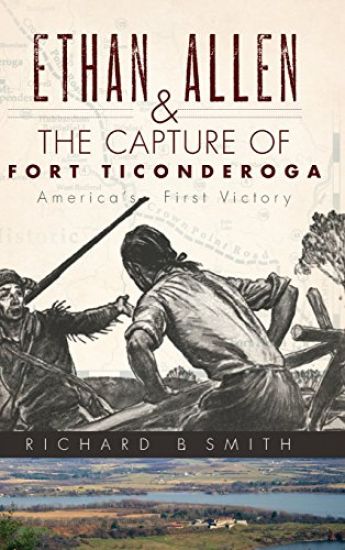
Ethan Allen & the Capture of Fort Ticonderoga

Ethan Allen & the Capture of Fort Ticonderoga

Richard B. Smith

History Press Library Editions
2010
sidottu
In April 1775, a small band of men set out from Hartford and traveled swiftly north toward the shore of Lake Champlain, recruiting men to their expedition along the way. Within only a few days, this loyal group of volunteers arrived in Vermont and, joining forces with Ethan Allen and his legendary Green Mountain Boys, launched a daring attack to capture more than one hundred cannons stored at Fort Ticonderoga. In this comprehensive look at "America's First Victory," Richard Smith traces the Patriots' route from Connecticut, through the towns of western Massachusetts and the Berkshire hills and north to Bennington, Vermont, and Lake Champlain. He chronicles the rival expedition led by Benedict Arnold, his confrontation with Allen and the surprise attack that changed the course of the American Revolution.
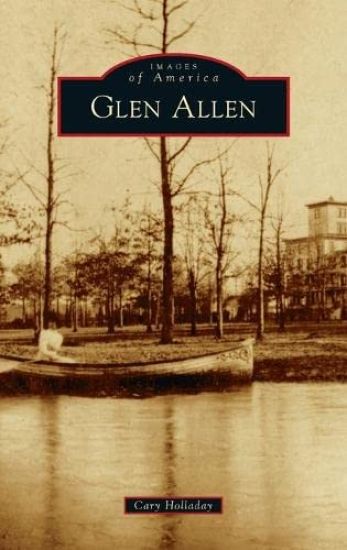
Glen Allen

Glen Allen

Cary Holladay

ARCADIA PUB (SC)
2022
sidottu
Glen Allen, a suburb of Richmond, began as a farming community and today is rich in history and legend. Walkerton, a famous tavern, was built around 1825. Rail service arrived in the 1830s, and the previously unnamed settlement became known as Mountain Road Crossing, Allen's Station, and finally Glen Allen. Then came John Cussons, an English adventurer, soldier, and entrepreneur. In the 1880s, he built Forest Lodge, a magnificent hotel and 1,000-acre park where celebrities reveled in splendor. In 1892, Virginia Randolph, a visionary African American educator, established a school that served generations of Black youth. With fascinating scenes of daily life, Glen Allen traces the community's history from its early rural years to the crisis it faced in the 1980s; its landmarks were in decline and its future at stake. Yet Glen Allen emerged with thriving new cultural, recreational, and tourism venues--a triumphant retake on its renowned hospitality of two centuries ago.
Carla Allen's: The Embrace of Suicide

Carla Allen's: The Embrace of Suicide

Carla R. Allen

Createspace Independent Publishing Platform
2023
nidottu
Marlene Sanders is a woman of grace, integrity, and endurance. At least, that is what everyone saw. No one knew of the battle, the struggle that raged within. She genuinely believed that everyone had their inner beauty; no matter what story her eyes would tell about a person, all Marlene saw was a beautiful and glorious person. She always tried to be courteous and have kind words with everyone she met. Embrace the Suicide is a story about a woman who finds a way to keep her light shining despite her inner thoughts and feeling. Feelings of hopelessness, boredom, and thoughts that there had to be so much more, but no one seemed to understand or have the help she needed; Marlene struggled to understand the whys and hows to hold on, but in the end, did she have what it took to live her life or would she leave this existence behind? A short read that leaves you wanting more.
Glenn Allen's Anthology

Glenn Allen's Anthology

Glenn Allen Ditman

Createspace Independent Publishing Platform
2017
nidottu
A collection of short children's stories your kids will love from the tale of a kindergartener and his challenging teacher to the tale of a proud a boastful bird and the loving actions of a group of forest animals at the season of Christmas.