Kirjahaku
Etsi kirjoja tekijän nimen, kirjan nimen tai ISBN:n perusteella.
1000 tulosta hakusanalla Blake Butler

Anne Blake; the Heart and the World; the Patrician's Daughter; Strathmore
Westland Marston
Kessinger Pub
2009
pokkari



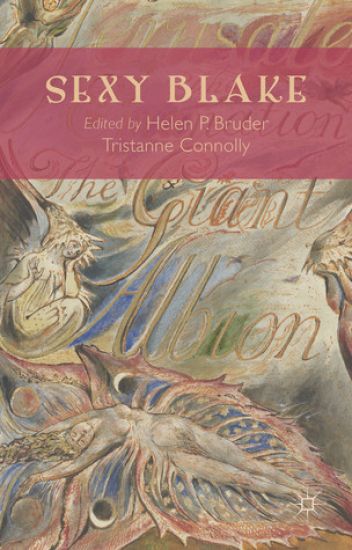
Sexy Blake
Palgrave Macmillan
2013
sidottu
This book lays bare numerous sexy Blakes, arguing for both chastity and pornography, violence and domination as well as desire and redemption, and also journeying in the realms of conceptual sex and conceptual art. Fierce tussles over the body in, and the body of, the poet-artist's work celebrate Blakean attractions and repulsions.

Sung closely examines William Blake’s extant engraved copper plates and arrives at a new interpretation of his working process. Sung suggests that Blake revised and corrected his work more than was previously thought. This belies the Romantic ideal that the acts of conception and execution are simultaneous in the creative process.
William Blake’s work demonstrates two tendencies that are central to social media: collaboration and participation. Not only does Blake cite and adapt the work of earlier authors and visual artists, but contemporary authors, musicians, and filmmakers feel compelled to use Blake in their own creative acts. This book identifies and examines Blake’s work as a social and participatory network, a phenomenon described as zoamorphosis, which encourages — even demands — that others take up Blake’s creative mission. The authors rexamine the history of the digital humanities in relation to the study and dissemination of Blake’s work: from alternatives to traditional forms of archiving embodied by Blake’s citation on Twitter and Blakean remixes on YouTube, smartmobs using Blake’s name as an inspiration to protest the 2004 Republican National Convention, and students crowdsourcing reading and instruction in digital classrooms to better understand and participate in Blake’s world. The book also includes a consideration of Blakean motifs that have created artistic networks in music, literature, and film in the twentieth and the twenty-first centuries, showing how Blake is an ideal exemplar for understanding creativity in the digital age.
First appearing in 1981, this book was the first full-length study of the Songs of Innocence and Experience to be published in almost fifteen years. The book provides detailed readings of each poem and its accompanying design, to redirect attention to the nature and achievement of the book as a whole, to Songs as a single, carefully unified work of verbal and visual art. Particularly close attention is paid, not only to the designs Blake etched to accompany his poems, but also to the many books and treatises for and about children to which, it is argued, Songs alludes or is indebted. Like so many important works of this period, Songs is shown to be autobiographical in nature, one of Blake’s attempts to order and account for the conflicts and crises of his own art and life. Its story is that of an artist’s growth into and out of vision, and of his gradual realization of the dangers and deficiencies of the prophetic mode.

First published in 1986, this book starts from the premise that Blake’s poem Jerusalem is in effect his defence of human imagination. The formal categories are literary but the aim is the philosophical one of Creating a System. The philosophic meaning emerges from the structure since its form is that of an epic poem. The argument proceeds plate by plate and topologically within each plate of the illuminated text, but does not aim to answer every last question about Jerusalem- only to show how the system is created. The author demonstrates how Blake interprets, modifies, and incorporates certain principles and their consequences to fashion an epic in which he opposes the prevailing aesthetic system and constructs his own.
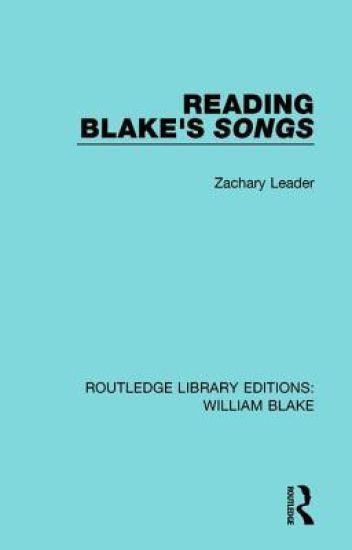
First appearing in 1981, this book was the first full-length study of the Songs of Innocence and Experience to be published in almost fifteen years. The book provides detailed readings of each poem and its accompanying design, to redirect attention to the nature and achievement of the book as a whole, to Songs as a single, carefully unified work of verbal and visual art. Particularly close attention is paid, not only to the designs Blake etched to accompany his poems, but also to the many books and treatises for and about children to which, it is argued, Songs alludes or is indebted. Like so many important works of this period, Songs is shown to be autobiographical in nature, one of Blake’s attempts to order and account for the conflicts and crises of his own art and life. Its story is that of an artist’s growth into and out of vision, and of his gradual realization of the dangers and deficiencies of the prophetic mode.

First published in 1986, this book starts from the premise that Blake’s poem Jerusalem is in effect his defence of human imagination. The formal categories are literary but the aim is the philosophical one of Creating a System. The philosophic meaning emerges from the structure since its form is that of an epic poem. The argument proceeds plate by plate and topologically within each plate of the illuminated text, but does not aim to answer every last question about Jerusalem- only to show how the system is created. The author demonstrates how Blake interprets, modifies, and incorporates certain principles and their consequences to fashion an epic in which he opposes the prevailing aesthetic system and constructs his own.
Nancy Blake Letters To A Western Cousin (1864)
Ruth Natalie Cromwell
KESSINGER PUBLISHING, LLC
2010
sidottu


The Orange Association Unmasked! Mr. Blake's Great Speech (1884)
Edward Blake
KESSINGER PUBLISHING, LLC
2010
sidottu