How far from our imperfect human selves have we traveled? How shall we recover what is left, live within our man-made technologies built to be more powerful than us, and still keep a sense of humor? In the depths of an illness that would ultimately claim his life, the beloved poet and professor Brett Foster offered a parting gift, Extravagant Rescues, a sublime collection of poetry that lays bare the human and poetic brilliance of a man immersed in capturing human beings’ mortal splendor and frailty within their own technology and flaws.The poems ask questions with hymn-like couplets, in a language of the gospel of empathy. We are allowed to rethink our choices, question and be wary of our machinery, and, in the end, with metaphors that channel feelings of loss, humor, and compassion, we are reminded “to come, and dream, with eyes wide open / and set within the vessels of our waking selves, / of ever more intricate schemes, extravagant rescues.”
The nation’s capital has been home to a rich basketball tradition that began more than 80 years ago with a start-up league in the 1920s and continues today with the Washington Wizards. Under Hall of Fame coach and general manager Red Auerbach, the Washington Capitols reached the finals of the Basketball Association of America in just their third year of existence, and such renowned players as Wes Unseld, Chris Webber, and Michael Jordan have all played for a Washington, DC, area team. In The Bullets, the Wizards, and Washington, DC, Basketball, Brett L. Abrams and Raphael Mazzone chronicle the area’s history of professional basketball, from the sport’s origins as a regional game up through the present day as a multi-billion dollar business. This book captures the highs and lows of the Bullets, the Wizards, and all the other basketball teams in Washington’s history. The authors meticulously researched newspaper and magazine articles, as well as archival material from the Basketball Hall of Fame, to give a complete and comprehensive history of the DC teams. Their findings illuminate the owners, players, and rivalries, and also provide insight into the events, trades, and most significant games that occurred throughout the history of professional basketball in the DC area. A fascinating look at the history of professional basketball in our nation’s capital, The Bullets, the Wizards, and Washington, DC, Basketball will appeal to all fans of the sport.
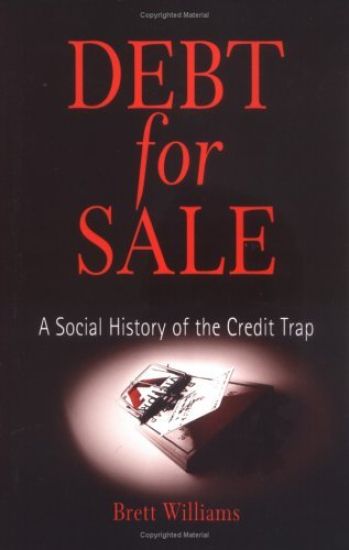
Credit and debt appear to be natural, permanent facets of Americans' lives, but a debt-based economy and debt-financed lifestyles are actually recent inventions. In 1951 Diners Club issued a plastic card that enabled patrons to pay for their meals at select New York City restaurants at the end of each month. Soon other "charge cards" (as they were then known) offered the convenience for travelers throughout the United States to pay for hotels, food, and entertainment on credit. In the 1970s the advent of computers and the deregulation of banking created an explosion in credit card use-and consumer debt. With gigantic national banks and computer systems that allowed variable interest rates, consumer screening, mass mailings, and methods to discipline slow payers with penalties and fees, middle-class Americans experienced a sea change in their lives. Given the enormous profits from issuing credit, banks and chain stores used aggressive marketing to reach Americans experiencing such crises as divorce or unemployment, to help them make ends meet or to persuade them that they could live beyond their means. After banks exhausted the profits from this group of people, they moved into the market for college credit cards and student loans and then into predatory lending (through check-cashing stores and pawnshops) to the poor. In 2003, Americans owed nearly $8 trillion in consumer debt, amounting to 130 percent of their average disposable income. The role of credit and debt in people's lives is one of the most important social and economic issues of our age. Brett Williams provides a sobering and frank investigation of the credit industry and how it came to dominate the lives of most Americans by propelling the social changes that are enacted when an economy is based on debt. Williams argues that credit and debt act to obscure, reproduce, and exacerbate other inequalities. It is in the best interest of the banks, corporations, and their shareholders to keep consumer debt at high levels. By targeting low-income and young people who would not be eligible for credit in other businesses, these companies are able quickly to gain a stranglehold on the finances of millions. Throughout, Williams provides firsthand accounts of how Americans from all socioeconomic levels use credit. These vignettes complement the history and technical issues of the credit industry, including strategies people use to manage debt, how credit functions in their lives, how they understand their own indebtedness, and the sometimes tragic impact of massive debt on people's lives.
Between North and South chronicles the three-decade-long struggle over segregated schooling in Delaware, a key border state and important site of civil rights activism and white reaction. Historian Brett Gadsden begins by tracing the origins of a long litigation campaign by NAACP attorneys who translated popular complaints about the inequities in Jim Crow schooling into challenges to racial proscriptions in public education. Their legal victories subsequently provided the evidentiary basis for the Supreme Court's historic decision in Brown v. Board of Education, marking Delaware as a center of civil rights advancements. Gadsden's further examination of a novel metropolitan approach to address the problem of segregation in city and suburban schools, wherein proponents highlighted the web of state-sponsored discrimination that produced interrelated school and residential segregation, reveals the strategic creativity of civil rights activists. He shows us how, even in the face of concerted white opposition, these activists continued to advance civil rights reforms into the 1970s, secured one of the most progressive busing remedies in the nation, and created a potential model for desegregation efforts across the United States. Between North and South also explores how activists on both sides of the contest in this border state-adjacent to the Mason-Dixon line-helped create, perpetuate, and contest ideas of southern exceptionalism and northern innocence. Gadsden offers instead a new framework in which "southern-style" and "northern-style" modes of racial segregation and discrimination are revealed largely as regional myths that civil rights activists and opponents alternately evoked and strategically deployed to both advance and thwart reform.
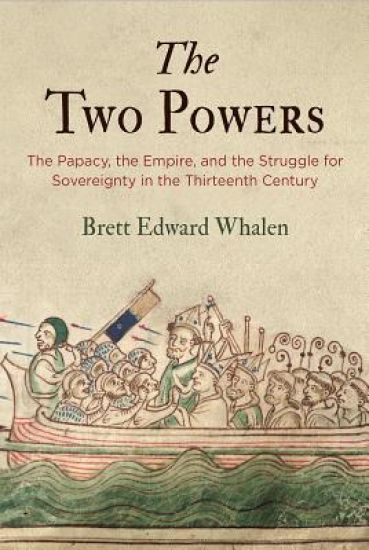
Historians commonly designate the High Middle Ages as the era of the "papal monarchy," when the popes of Rome vied with secular rulers for spiritual and temporal supremacy. Indeed, in many ways the story of the papal monarchy encapsulates that of medieval Europe as often remembered: a time before the modern age, when religious authorities openly clashed with emperors, kings, and princes for political mastery of their world, claiming sovereignty over Christendom, the universal community of Christian kingdoms, churches, and peoples. At no point was this conflict more widespread and dramatic than during the papacies of Gregory IX (1227-1241) and Innocent IV (1243-1254). Their struggles with the Hohenstaufen Emperor Frederick II (1212-1250) echoed in the corridors of power and the court of public opinion, ranging from the battlefields of Italy to the streets of Jerusalem. In The Two Powers, Brett Edward Whalen has written a new history of this combative relationship between the thirteenth-century papacy and empire. Countering the dominant trend of modern historiography, which focuses on Frederick instead of the popes, he redirects our attention to the papal side of the historical equation. By doing so, Whalen highlights the ways in which Gregory and Innocent acted politically and publicly, realizing their priestly sovereignty through the networks of communication, performance, and documentary culture that lay at the unique disposal of the Apostolic See. Covering pivotal decades that included the last major crusades, the birth of the Inquisition, and the unexpected invasion of the Mongols, The Two Powers shows how Gregory and Innocent's battles with Frederick shaped the historical destiny of the thirteenth-century papacy and its role in the public realm of medieval Christendom.
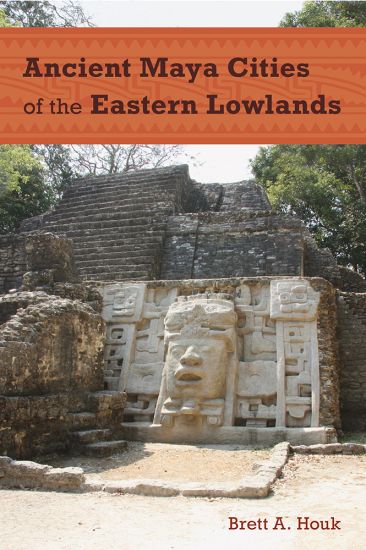
For more than a century researchers have studied Maya ruins, and sites like Tikal, Palenque, Copan, and Chichen Itza have shaped our understanding of the Maya. Yet cities of the eastern lowlands of Belize, an area that was home to a rich urban tradition that persisted and evolved for almost 2,000 years, are treated as peripheral to these great Classic period sites. The hot and humid climate and dense forests are inhospitable and make preservation of the ruins difficult, but this oft-ignored area reveals much about Maya urbanism and culture. Using data collected from different sites throughout the lowlands, including the Vaca Plateau and the Belize River Valley, Brett Houk presents the first synthesis of these unique ruins and discusses methods for mapping and excavating them. Considering the sites through the analytical lenses of the built environment and ancient urban planning, Houk vividly reconstructs their political history, considers how they fit into the larger political landscape of the Classic Maya, and examines what they tell us about Maya city building.
For more than a century researchers have studied Maya ruins, and sites like Tikal, Palenque, Copán, and Chichén Itzá have shaped our understanding of the Maya. Yet the lowlands of Belize, which were once home to a rich urban tradition that persisted and evolved for almost 2,000 years, are treated as peripheral to these great Classic period sites. The hot and humid climate and dense forests are inhospitable and make preservation of the ruins difficult, but this oft-ignored area reveals much about Maya urbanism and culture.Using data collected from different sites throughout the Maya lowlands, including the Vaca Plateau and the Belize River Valley, Brett Houk presents the first synthesis of these unique monuments and discusses methods for mapping and excavating. Considering the sites through the theoretical lenses of the built environmentand ancient urban planning, Houk vividly reconstructs their political history, how they fit into the larger political landscape of the Classic Maya, and how the ancient cities fell apart over time.
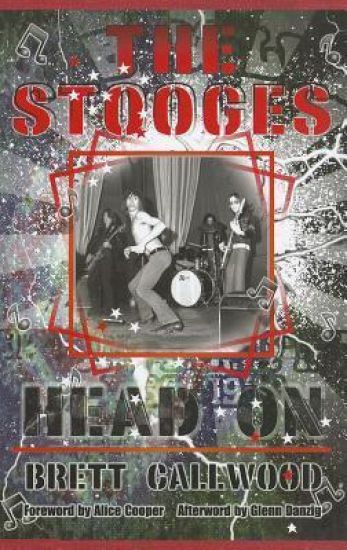
If the MC5 were Detroit's political spokesmen for the disenchanted youth of the 1960s, then the Stooges were the loutish kids, heckling from the back of the room. While conventional wisdom says they could barely play their instruments, the Stooges left an indelible mark on the world of punk rock, and the band's initial three albums-The Stooges, Fun House and Raw Power-are bona fide classics. In The Stooges: Head On author Brett Callwood treats the band's story not just as an early chapter in the career of its famous front man, Iggy Pop, but from the Stooges' beginnings at the end of the 1960s, to its end in the early 1970s, and to its reunion in 2003 through the present.In compiling this exhaustive account of the band's history, Callwood interviewed all of the central and sometimes Stooges members, including Iggy Pop, Ron and Scott Asheton, James Williamson, Mike Watt, Steve Mackay, and Scott Thurston, and largely lets the band tell its own story in numerous long quotes. Callwood details the band's genesis as teenage friends in Ann Arbor, their time living together in their legendary party houses in the 1960s, and the recording of the three original Stooges albums. He examines the addition of James Williamson to the band on Raw Power and how it changed the band's sound and dynamic, along with the band's fateful meeting with David Bowie on its first British tour. As Iggy broke out as a solo artist during the 1970s and 1980s, Callwood charts the Asheton brothers' post-Stooges experiences, with Ron's turns in The New Order, Destroy All Monsters, and Dark Carnival, and Scott Asheton's time with the Farleys and Sonic's Rendezvous Band. He also provides an overview of Iggy's solo career, the seeds of a reunion that were planted with a collaboration on Iggy's Skull Ring album, and the eventual reformation of the band and the recording of their fourth album, The Weirdness, in 2004.Originally published in the U.K. in 2007, The Stooges: Head On has been revised to expand on the original story and also to consider Ron Asheton's untimely death in 2009 and his musical legacy, the band's fate without Ron, and the Stooges' long-overdue introduction into the Rock and Roll Hall of Fame in 2010. Fans of the Stooges and those interested in the roots of punk music will enjoy this intimate and informative volume.
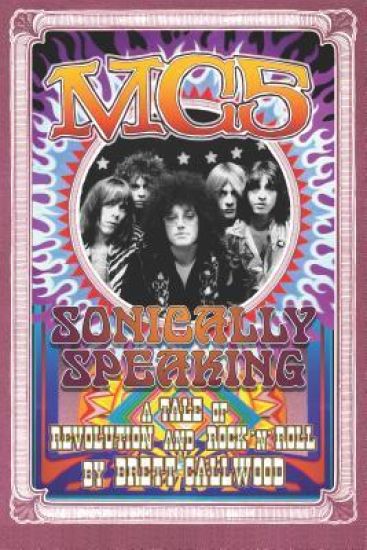
Along with the Stooges, the Velvet Underground, and the New York Dolls, the MC5 are recognized in music circles as one of the bands that paved the way for punk rock. While the group did not reach the heights of national celebrity or financial success during their seven years together, their musical legacy has never been more celebrated—with recently reissued recordings and documentary footage, as well as an unlikely reunion tour. In MC5: Sonically Speaking, author Brett Callwood delves into the MC5’s story from the band’s beginnings in 1960s Detroit to its 1972 break-up, the post-MC5 fates of its members, and the eventual reunion that cemented its legacy. Callwood interviews the band’s surviving members and close associates to create a compelling firsthand picture of the MC5’s history and its music. He introduces readers to the band’s original members, Rob Tyner, Wayne Kramer, Fred “Sonic” Smith, Michael Davis, and Dennis Thompson, and links the power of the MC5 phenomenon to its early days as the raucous house band of Detroit’s legendary Grande Ballroom. Callwood also traces the MC5’s revolutionary political bent through their relationship with friend—and later, manager—John Sinclair, their firsthand experience of the 1967 Detroit riots, and the formation of Sinclair’s White Panther Party. Callwood surveys the three classic albums that came out of the band’s blend of political protest and hard driving rock ‘n’ roll, and he details the later projects of the ex-MC5 members, including Sonic’s Rendezvous Band, the influential art-punk band Destroy All Monsters, and Wayne Kramer’s solo recordings. He also recounts their personal struggles with drugs, incarceration, and estrangement from one another, as well as the untimely deaths of Smith and Tyner in the 1990s. With the remaining members of the MC5 still making music and coming off a hugely successful string of performances as the DKT/MC5 in the last decade, Callwood proves that the band’s story and their music are as intriguing and relevant as ever. Anyone interested in musical history, Detroit rock ‘n’ roll, or American popular culture of the 1960s and beyond will appreciate this candid and fascinating look at the MC5, which was originally published in the UK and is available for the first time in the US in this updated version.
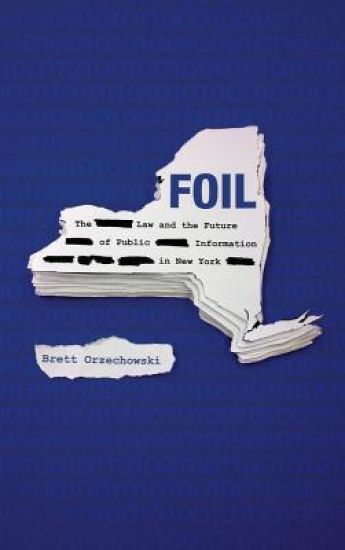
The Freedom of Information Law allows any person to request and obtain, without explanation or justification, existing, identifiable, and unpublished governmental records, including documents, data, and video. Signed into law in New York in 1974, FOIL remains a powerful public panacea in unlocking information and maintaining vital transparency in our state government. Databases detailing public employee compensation, online viewing of highway department agreements and school district superintendents contracts, and text message exchanges all disclosed and made public through FOIL requests are now common, as the last decade has ushered in an increased demand for public information.Orzechowski guides readers through the creation of the law and the concept of open government in the twenty-first century, offering a foundational understanding of how the legislation works, who is exempt, and how the law was created for every citizen of New York State. Dozens of perspectives from state senators to a Pulitzer Prize winner to watchdog organizations outline the impact of New York State's law. Orzechowski examines the drafting of current legislation to strengthen the existing law and offers perspectives from those who are confronted with the real challenges of accessing public information every day: journalists, attorneys, and citizens. This exploration of FOIL, including narrative, scholarly examination, and how-to guides, serves as a tour of a law that continues to impact residents across the state.
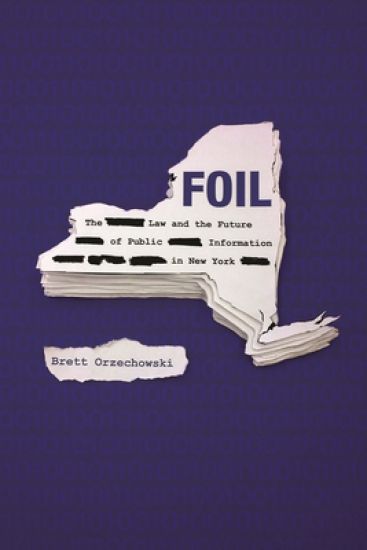
The Freedom of Information Law allows any person to request and obtain, without explanation or justification, existing, identifiable, and unpublished governmental records, including documents, data, and video. Signed into law in New York in 1974, FOIL remains a powerful public panacea in unlocking information and maintaining vital transparency in our state government. Databases detailing public employee compensation, online viewing of highway department agreements and school district superintendents contracts, and text message exchanges all disclosed and made public through FOIL requests are now common, as the last decade has ushered in an increased demand for public information.Orzechowski guides readers through the creation of the law and the concept of open government in the twenty-first century, offering a foundational understanding of how the legislation works, who is exempt, and how the law was created for every citizen of New York State. Dozens of perspectives from state senators to a Pulitzer Prize winner to watchdog organizations outline the impact of New York State's law. Orzechowski examines the drafting of current legislation to strengthen the existing law and offers perspectives from those who are confronted with the real challenges of accessing public information every day: journalists, attorneys, and citizens. This exploration of FOIL, including narrative, scholarly examination, and how-to guides, serves as a tour of a law that continues to impact residents across the state.
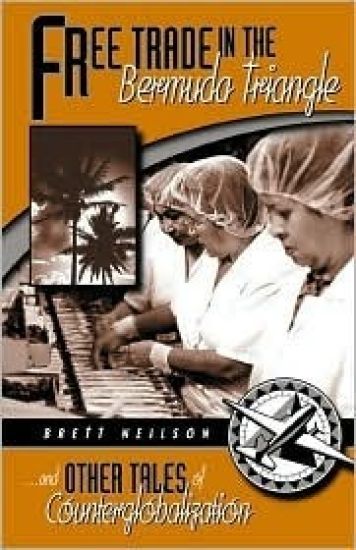
Shangri-La, the Bermuda Triangle, Transylvania, the Golden Triangle—far-flung in popular conception, these anomalous places nonetheless occupy the same mysterious zone, a mythography of unruly cartographic practices. And because this mythography becomes associated with a particular area of the earth's surface, it may well suggest an alternative means of mapping the world, dissociated from the dominant geographical paradigms of nation-state, economic region, and the global/local marketing nexus. Large-scale nonnational geographical spaces that find their genesis in popular feeling, mystery, and belief, these four sites provide Brett Neilson with the basis not only for rethinking the current global reorganization of space and time but also for questioning the dominant narrative by which globalization marks the victory of capitalism. Free Trade in the Bermuda Triangle moves between analysis of popular fantasies and engagement with on-the-ground realities, weaving together topics as diverse as airplane disasters off the U.S. Atlantic coast, the global drug trade, vampire culture in postsocialist Europe, and the search for utopia in Chinese-occupied Tibet. The study of globalization is largely a solemn affair, occupied with increasing economic polarities, environmental degradation, and global insecurity. Free Trade in the Bermuda Triangle maintains a critical focus on these sobering issues but at the same time asks how popular pleasure and enjoyment can create viable alternatives to the current global order. Neilson takes seriously the proposition that capitalism must be contested at its own level of generality, finding provisional grounds for resistance in nonlocal transnational spaces that embody quotidian hopes, desires, and anxieties. By studying the real and imagined dimensions of these popular geographies, his book seeks resources for social betterment in the fallen mythologies of the contemporary postutopian world.Brett Neilson is senior lecturer in the School of Humanities at the University of Western Sydney, where he is also a member of the Centre for Cultural Research.
In The Politics of the Superficial: Visual Rhetoric and the Protocol of Display, Brett Ommen explores the increasing reliance on images as a mode of communication in contemporary life. He shows that graphic design is a layered experience of images and space. Before images, viewers engage in the personal experience of aesthetics and individual identity. In space, viewers engage in the negotiation of meaning and collective belonging. Graphic design, then, fits the consumerist present precisely because it prompts viewers to differentiate between our collective commitments and individual sense of self.Ommen argues, for example, that on viewing a billboard, a driver isn’t merely being exposed to a set of commercial messages or exhortations, but rather responding in a self-aware way that differentiates her from her collective associations like Democrat, Republican, rich, poor, Catholic, or Jewish.By examining graphic design—as a profession, practice, and academic field—as the nexus for understanding visual display in public culture, The Politics of the Superficial develops two arguments about contemporary visual communication practices: first, that the study of visual communication privileges visual content at the expense of other dynamics, such as context; and second, that interpretations focusing on content conceal the most persuasive and subversive dimensions of the visual.Wide-ranging and stimulating, The Politics of the Superficial ultimately posits that, far from serving as a communal oasis for public imagination, contemporary visual culture offers the possibility for politically engaged communication and persuasion while simultaneously threatening the health of public discourse by atomizing its constituent parts. It will serve as a vital contribution to the field of visual rhetoric.
Mason & Dixon might be Thomas Pynchon’s most human book. Its main characters are richly drawn, and they center the narrative. Yet the novel is also packed with historical allusions and an eighteenth-century vernacular that some readers may find difficult to navigate. A "Mason & Dixon" Companion offers this navigation line by line, unpacking Pynchon’s puns, his many references, and his pet themes. Brett Biebel provides a contextual map, episode-by-episode summaries, and page-by-page annotations explaining allusions, defining obscure vocabulary, and illuminating the book’s major themes. The goal is to help readers work their way through a difficult yet remarkably rewarding novel from one of American literature’s most significant writers. In a voice that’s both relaxed and informed, the Companion illuminates what Harold Bloom called “Pynchon’s late masterpiece.” It crystallizes the prescience of Mason & Dixon, situating the novel within Pynchon’s broader oeuvre, while being fun to read in its own right.
Mason & Dixon might be Thomas Pynchon’s most human book. Its main characters are richly drawn, and they center the narrative. Yet the novel is also packed with historical allusions and an eighteenth-century vernacular that some readers may find difficult to navigate. A "Mason & Dixon" Companion offers this navigation line by line, unpacking Pynchon’s puns, his many references, and his pet themes. Brett Biebel provides a contextual map, episode-by-episode summaries, and page-by-page annotations explaining allusions, defining obscure vocabulary, and illuminating the book’s major themes. The goal is to help readers work their way through a difficult yet remarkably rewarding novel from one of American literature’s most significant writers. In a voice that’s both relaxed and informed, the Companion illuminates what Harold Bloom called “Pynchon’s late masterpiece.” It crystallizes the prescience of Mason & Dixon, situating the novel within Pynchon’s broader oeuvre, while being fun to read in its own right.
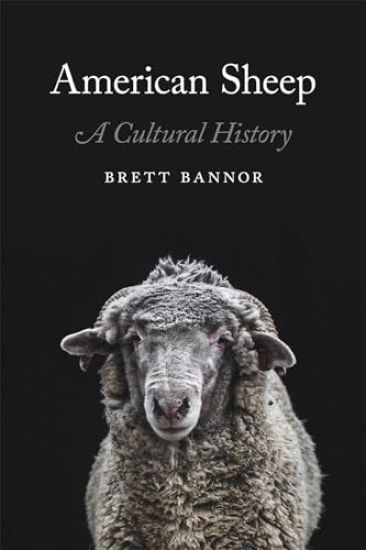
Why did Thomas Jefferson write that he would be happy if all dogs went extinct? What economic opportunity did attorney John Lord Hayes envision for the newly emancipated during Reconstruction? What American workers were mocked by Theodore Roosevelt as “morose, melancholy men”? What problems with revenue collection did Congressman James Beauchamp Clark mention when proposing an income tax? Why did Harley O. Gable of Armour & Company recommend that his meat-packing business manufacture violin strings? Why was Senator Lyndon Johnson angry at the Army and Navy Munitions Board at the start of the Korean War?The answers to all these questions involve sheep. From the colonial era through the mid-twentieth century, America’s flocks played a key role in the nation’s development. Furthermore, much consternation centered around the sheep the United States lacked, so that dependency on foreign wool—a headache in times of peace—became a full-blown crisis in wartime. But more than just providers of wool, sheep were valued for their meat, for their byproducts after slaughter, and even for their efficiency at lawn maintenance.Here is the story of the complex and fascinating relationship between Americans and their sheep. Brett Bannor explains how sheep have significantly impacted the broader growth and development of the United States. The history of America’s sheep encompasses topics that touch on many cornerstones of the American experience, such as enslavement, warfare, western expansion, industrialization, taxation, feminism, conservation, and labor relations, among others.
The "Literacy Primer" is devoted to the most recent topics in literacy studies, such as the meanings of literacy, the invention of alphabetic writing, a history of reading, the consequences of literacy, teaching the two modes of knowing - literary and informational - and literacy for diverse learners. Each chapter includes a glossary of key terms for students new to the field. A list of selected resources and further readings is provided at the end of the volume. The book is written in a refreshingly straightforward style that is inviting to undergraduate students who might otherwise have difficulty learning about the subject.
The image of the movie-obsessed gay man is a widely circulating and readily recognizable element of the contemporary cultural landscape. Using psychoanalytic theory as his guide while inflecting it with insights from both film theory and queer theory, Brett Farmer moves beyond this clichÉ to develop an innovative exploration of gay spectatorship. The result, Spectacular Passions, reveals how cinema has been engaged by gay men as a vital forum for “fantasmatic performance”-in this case, the production of specifically queer identities, practices, and pleasures.Building on the psychoanalytic concept of the fantasmatic, Farmer works to depathologize gay male subjectivity. While discussing such films as Kiss of the Spider Woman, The Pirate, Suddenly Last Summer, and Sunset Boulevard, and stars ranging from Mae West to Montgomery Clift, Farmer argues that the particularities of gay men’s social and psychic positionings motivate unique receptions of and investments in film. The Hollywood musical, gay camp readings of the extravagant female star, and the explicit homoeroticism of the cinematic male body in gay fanzines are further proof, says Farmer, of how the shifting libidinal profiles of homosexual desire interact with the fantasy scenarios of Hollywood film to produce a range of variable queer meanings.This fascinating and provocative study makes a significant new contribution to discussions of cinema, spectatorship, and sexuality. As such, it will be welcomed by those in the fields of film theory, queer theory, and cultural studies.
This work examines how cinematic spectatorship is articulated, practised and experienced in the context of gay male subjectives. The text reveals how cinema has been engaged by gay men as a vital forum for "fantasmatic performance" - in this case, the production of queer identities and practices.
In this ambitious book, Brett Levinson explores the possibilities for a genuinely radical critique of globalized culture and politics—at a time when intellectuals and nonintellectuals alike struggle to understand the configuration of the contemporary world. Levinson seeks to unsettle a naturalized and commonsensical assumption: that democracy and the economic market must be viewed as either united or at odds. Against both neoliberalists and cultural pluralists, he argues that the state is not yielding to the market, but that the universe now turns on a "duopoly" between statist and global forms, one that generates not only economic and cultural sites but also ways of knowing, a postdemocratic episteme. Touching upon current issues such as terrorism, human rights, the attack on the World Trade Center, and the notion of the "people," delving into the idea of bio politics, and investigating the essential relation between language and political praxis, Levinson engages with the work of Giorgio Agamben, Jacques Rancière, Etienne Balibar, Michael Hardt, Antonio Negri, Michel Foucault, and others. Levinson offers no solutions, but his work will be an important voice for readers looking for conceptual tools to grasp what political and intellectual possibilities might exist in the postcommunist world and how this world has come to be shaped in our time.