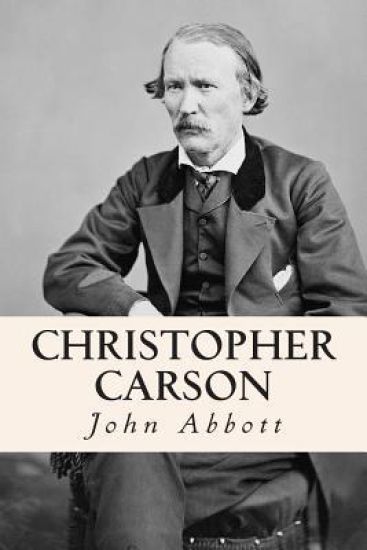
It is a prominent object of this Kit Carson biography, Christopher Carson, to bring to light the wild adventures of the pioneers of this continent, in the solitudes of the mountains, the prairies and the forests; often amidst hostile Indians, and far away from the restraints and protection of civilization. This strange, weird-like life is rapidly passing away, before the progress of population, railroads and steamboats. But it is desirable that the memory of it should not drift into oblivion. Christopher Houston Carson (December 24, 1809 - May 23, 1868), better known as Kit Carson, was an American frontiersman. He was a mountain man (fur trapper), wilderness guide, Indian agent, and U.S. Army officer. Carson became a frontier legend in his own lifetime via biographies and news articles. Exaggerated versions of his exploits were the subject of dime novels. Carson left home in rural present-day Missouri at age 16 to become a mountain man and trapper in the West. In the 1830s, he accompanied Ewing Young on an expedition to Mexican California and joined fur trapping expeditions into the Rocky Mountains. He lived among and married into the Arapaho and Cheyenne tribes. In the 1840s, he was hired as a guide by John C. Fremont. Fremont's expedition covered much of California, Oregon, and the Great Basin area. Fremont mapped and wrote reports and commentaries on the Oregon Trail to assist and encourage westward-bound American pioneers. Carson achieved national fame through Fremont's accounts of his expeditions. Under Fremont's command, Carson participated in the uprising against Mexican rule in California at the beginning of the Mexican-American War. Later in the war, Carson was a scout and courier, celebrated for his rescue mission after the Battle of San Pasqual and for his coast-to-coast journey from California to Washington, DC to deliver news of the conflict in California to the U.S. government. In the 1850s, he was appointed as the Indian agent to the Ute Indians and the Jicarilla Apaches. During the American Civil War, Carson led a regiment of mostly Hispanic volunteers from New Mexico on the side of the Union at the Battle of Valverde in 1862. When the Confederate threat to New Mexico was eliminated, Carson led forces to suppress the Navajo, Mescalero Apache, and the Kiowa and Comanche Indians. Carson was breveted a Brigadier General and took command of Fort Garland, Colorado. He was there only briefly: poor health forced him to retire from military life. Carson was married three times and had ten children. The Carson home was in Taos, New Mexico. Carson died at Fort Lyon, Colorado, of an aortic aneurysm on May 23, 1868. He is buried in Taos, New Mexico, next to his third wife Josefa Jaramillo. In 1847, General William Tecumseh Sherman met Kit Carson in Monterey, California. Sherman wrote: "His fame was then at its height, ... and I was very anxious to see a man who had achieved such feats of daring among the wild animals of the Rocky Mountains, and still wilder Indians of the plains ... I cannot express my surprise at beholding such a small, stoop-shouldered man, with reddish hair, freckled face, soft blue eyes, and nothing to indicate extraordinary courage or daring. He spoke but little and answered questions in monosyllables." Colonel Edward W. Wynkoop wrote: "Kit Carson was five feet five and one half-inches tall, weighed about 140 pounds, of nervy, iron temperament, squarely built, slightly bow-legged, and those members apparently too short for his body. But, his head and face made up for all the imperfections of the rest of his person. His head was large and well-shaped with yellow straight hair, worn long, falling on his shoulders. His face was fair and smooth as a woman's with high cheekbones, straight nose, a mouth with a firm, but somewhat sad expression, a keen, deep-set but beautiful, mild blue eye, which could become terrible under some circumstances, and like the warning of the rattlesnake.
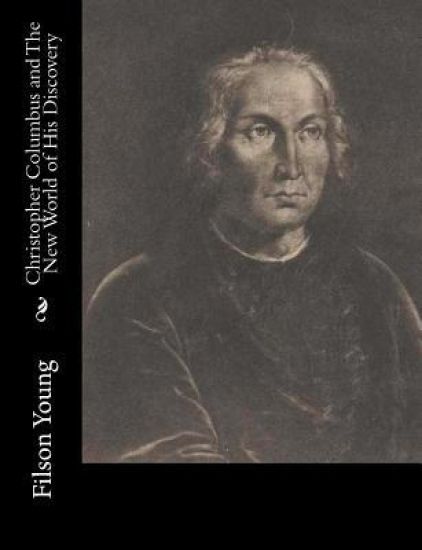
Christopher Columbus, by Mildred Stapley, is a definitive biography of the great Italian explorer. Christopher Columbus was an Italian explorer, navigator, and colonizer. Born in the Republic of Genoa, under the auspices of the Catholic Monarchs of Spain he completed four voyages across the Atlantic Ocean. Those voyages and his efforts to establish settlements on the island of Hispaniola, initiated the permanent European colonization of the New World. At a time when European kingdoms were beginning to establish new trade routes and colonies, motivated by imperialism and economic competition, Columbus proposed to reach the East Indies (South and Southeast Asia) by sailing westward. This eventually received the support of the Spanish Crown, which saw a chance to enter the spice trade with Asia through this new route. During his first voyage in 1492, he reached the New World instead of arriving in Japan as he had intended, landing on an island in the Bahamas archipelago that he named San Salvador. Over the course of three more voyages, he visited the Greater and Lesser Antilles, as well as the Caribbean coast of Venezuela and Central America, claiming all of it for the Crown of Castile. Though preceded by short-lived Norse colonization of North America led by Leif Erikson in the 11th century, Columbus is the European explorer credited with establishing and documenting routes to the Americas, securing lasting European ties to the Americas, and inaugurating a period of exploration, conquest, and colonization that lasted for centuries. His exertions thereby strongly contributed to the development of the modern Western world. He also founded the transatlantic slave trade and has been accused by several historians of initiating the genocide of the Hispaniola natives. Columbus himself saw his accomplishments primarily in the light of spreading the Catholic religion. Columbus had set course in hopes of finding a western route to the Indies (Asia). He called the inhabitants of the lands that he visited indios (Spanish for "Indians"). His strained relationship with the Spanish crown and its appointed colonial administrators in America led to his arrest and dismissal as governor of the settlements on the island of Hispaniola in 1500, and later to protracted litigation over the benefits that he and his heirs claimed were owed to them by the crown.