Kirjahaku
Etsi kirjoja tekijän nimen, kirjan nimen tai ISBN:n perusteella.
1000 tulosta hakusanalla Clyde Forsberg Jr.


Captain Jinks of the Horse Marines; A Fantastic Comedy in Three Acts
Clyde Fitch
Trieste Publishing
2018
nidottu


Trends and Variations in Fertility in the United States
Clyde V Kiser; Wilson H Grabill; Arthur A Campbell
Harvard University Press
1968
sidottu

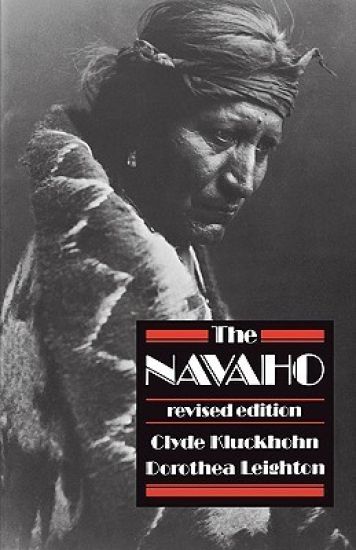
Studies the past and present living conditions, social values, and beliefs of the largest Indian tribe in the United States
Navaho Material Culture
Clyde Kay Maben Kluckhohn; W. W. Hill; Lucy Wales Kluckhohn
Harvard University Press
1971
sidottu
Navaho Material Culture was conceived in the 1940s when the noted anthropologist Clyde Kluckhohn began to collect data for a reference work on Navaho objects. The unique work he began was concluded by W. W. Hill and Lucy Wales Kluckhohn, who incorporated unpublished data collected by more than twenty research workers among the Navaho for varying periods over four decades.The beautifully illustrated collection of material culture traits is organized into five major categories: subsistence, shelter, clothing, ritual, and recreation. Information about the 263 traits includes description of manufacture and use, Navaho knowledge and belief associated with the product, and pertinent material from the anthropological literature.The authors analyze the distribution of traits according to area and through time, and discuss the broader issues of culture change, obsolescence, differential acculturation, and cultural homogeneity. Navaho Material Culture is the first such study to include all these diverse elements; in fact, it is the first such study made of the Navaho or any Southwestern tribe. Because many of the traits are obsolete and others are no longer remembered, much of the information presented here can no longer be obtained.

The Overnight City: The Life and Times of Van Lear, Kentucky, 1908-1947
Clyde Roy Pack
Storyatom Media
2014
nidottu
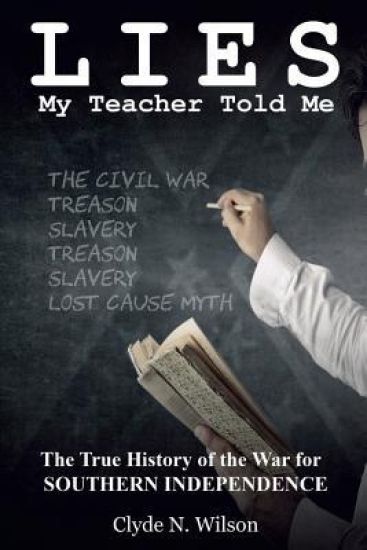
In this hard-hitting collection of 4 essays, Dr Wilson cuts straight to the chase: YOU WERE LIED TO You were lied to about the nature, character, and cause of the American "Civil War," but that is just the start. The entire South-its people, culture, history, customs, both past and present-has been and continues to be lied about and demonized by the unholy trinity of the American establishment: Academia, Hollywood, and the Media.In the midst of the anti-South hysteria currently infecting the American psyche-the banning of flags, charges of hate and "racism," the removal and attempted removal of Confederate monuments, the renaming of schools, vandalism of monuments and property displaying the Confederate Battle Flag, and even physical assaults, albeit rarely at present, on people who display the symbols of the South-Shotwell Publishing offers this unapologetic, unreconstructed, pro-South book with the hope that it will reach those who are left that are not afraid to question the sanity of this cultural purge and the veracity of its narrative concerning the South.This title is enrolled in Kindle MatchBook. FREE if print edition is purchased on Amazon.

The title and message of John Vinson's book is one in the same-Southerner, Take Your Stand This is not an empty call to action or pining for the good ol' days, but a practical guide to reclaiming your identity and your life. Although this book is specific to Southerners, the discerning reader will view Vinson's work as applicable to any individual, family, or community that wants to separate themselves-as far as possible-from the "Establishment" and get back to the basics of faith, family, community, sustainable living, and self-sufficiency. This road to independence is fraught with danger and hardships, but the alternative route is a road to both moral and material ruin: "The time is ripe to set a new course of living and making a living. Southerners and other Americans must understand that to depend on the Establishment is to participate in our own destruction. If we are to be saved, we must save ourselves by striking out on our own, a person at a time, a family at a time, and a community at a time, to build a future worth living as free men and women.... Be warned that the route to Southern renewal will offer hardship, toil, and difficulty. It will require blazing new trails while following ancient directions. It is not a mission for weaklings."The author's hope is that this book will "rouse the Southern remnant and provide new ideas for action."This book is enrolled in Kindle Match
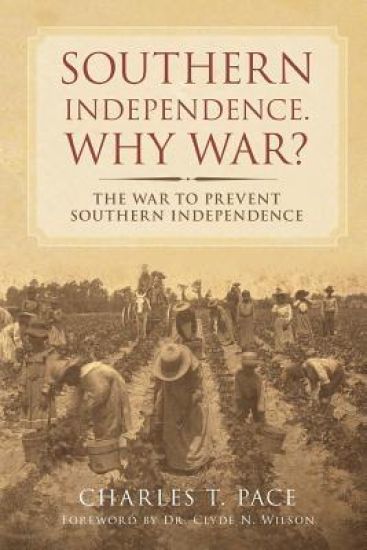
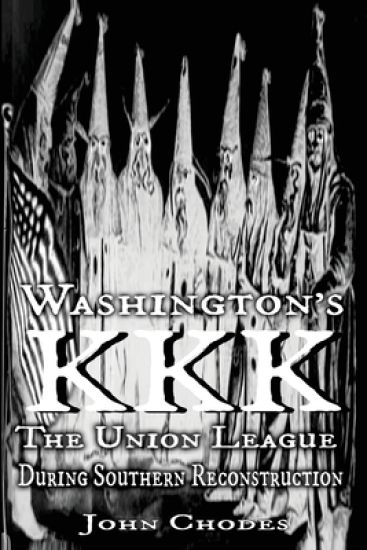
THIS BOOK TELLS THE SHOCKING STORY of this long forgotten chapter in American history-the story of THE UNION LEAGUE, WASHINGTON'S KKK.The "official" version of Southern Reconstruction is that there was a reign of terror - a systematic murder and intimidation by the "white Southern ruling class" who were determined to keep free people of colour in a virtual state of slavery. The real picture is a good deal more complicated.One can find plenty of material about conflict, intimidation, and killing in America during the period 1865-1877; but the Marxist class conflict formulary of history - also known as Political Correctness-takes for granted as fact what is clearly partisan propaganda of the time. They never ask the essential factual and moral question: Who initiated violence? John Chodes shows that the violence was begun by the Republicans through the establishment of the Union League.The Union League was a Northern organisation with the mission of maintaining the illegal and undemocratic control of the Republican Party in the South. Its mobs of Black "militia" led by Carpetbaggers engaged in intimidation, theft, harassment of the innocent, and murder. They deliberately provoked violent response. Their coercion was directed not only at whites, but towards the freedmen who refused to support the Republican regime. In other words, the Union League used the methods of the Ku Klux Klan before the Klan came into existence - the Klan before the Klan *** This title is enrolled in Kindle MatchBook. FREE if print edition is purchased on Amazon.
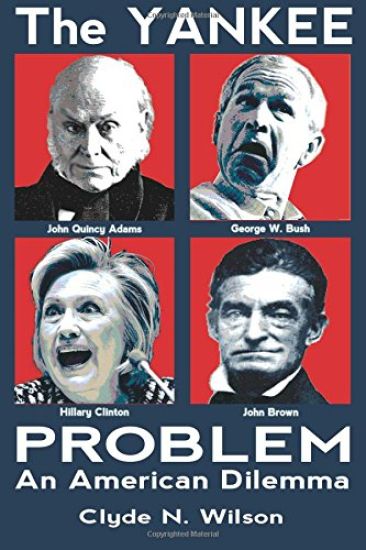
Granny Clampett, on the TV sitcom The Beverly Hillbillies, described the War Between the States as "when the Yankees invaded America" and, indeed, it was Their invasion of America, however, goes back much farther than the conflict of 1861-1865. It began as soon as they dropped their anchor in Plymouth Bay. Since that time, they have meddled, cheated, and lied their way into every nook and cranny of American life. The Southern people warned others about the radical utopians of New England, and even went to war to get away from them, but to no avail. Now all Americans, not just Southerners, are subject to the whims of "those people" and their never ending mission to recreate, not only America, but the entire world in their bizarre, sanctimonious image. Dr. Clyde Wilson, in this first installment of The Wilson Files, takes the Yankee problem head-on. After decades of historical research and personal observation, he exposes and explains these pesky purveyors of mischief and mayhem If you want to understand America, American History, and the upside-down dystopian nightmare in which we all live, you have to understand the problem. We do not have an economic problem, a race problem, a class problem, a gender problem, a toilet access problem, a drug problem, a gun problem, or any other ideological or social problem at the root of America's dysfunctional anti-culture - we have a Yankee problem

In this second installment of The Wilson Files, we collect some of Dr. Wilson's most sagacious writings on the topic of nullification and the unenumerated rights reserved to the several sovereign States that comprise the confederation known as the United States of America.For half a century historian Clyde Wilson has been writing about what he calls "our lost and stolen heritage of states' rights." As Dr. Donald Livingston, founder of the Abbeville Institute, has remarked of current devolutionary strategies, "Clyde Wilson had been plowing the ground long before any of us came to plant."Excerpts from Nullification: Reclaiming the Consent of the Governed: "The cause of states' rights is the cause of liberty; they rise or fall together. . . . We know the problems. Where should we look for solutions? . . . . Thomas Jefferson gives us the answer: our most ancient and best tradition, states' rights: 'the support of the State governments in all their rights, as the most competent administrations for our domestic concerns and the surest bulwarks against anti-republican tendencies' . . . . Some of the Founders hoped that the division of legislative, executive, and judicial power in the general government would help. . . . these checks and balances do not work. They ceased to work a long time ago. There is no serious conflict of power among the federal branches. The acts of all of them are directed toward checking the people of the States. . . . States' rights are historically sound, constitutionally sound, ethically sound, and sound from the point of view of democracy. Where they fall short is simply in the realm of political will and agenda. . . . if we are to speak of curbing the central power, the States are what we have got. They exist. They are historical, political, cultural realities, the indestructible bottom line of the American system. It would be a shame if, in this world-historical time of devolution, Americans did not look back to an ancient and honourable tradition that lies readily at hand."
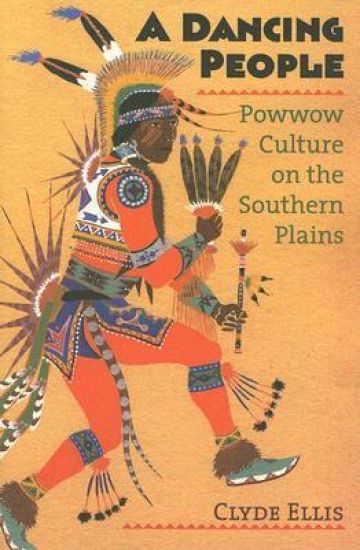
Everywhere they are dancing. From Oklahoma City's huge Red Earth celebration to fund-raising events at local high schools, powwows are a vital element of contemporary Indian life on the Southern Plains. Some see it as tradition, handed down through the generations. Others say it's been sullied by white participation and robbed of its spiritual significance. But, during the past half century, the powwow has become one of the most popular and visible expressions of the dynamic cultural forces at work in Indian country today. Clyde Ellis has written the first comprehensive history of Southern Plains powwow culture--an interdisciplinary, highly collaborative ethnography based on more than two decades of participation in powwows. In seeking to determine what powwow people mean by so designating themselves, he addresses how the powwow and its role in contemporary Indian identity have changed over time--along with its songs and dances--and how Indians for nearly a century have used dance to define themselves within their communities. A Dancing People shows that, whether understood as an intertribal or tribally specific event, dancing often satisfies needs and obligations that are not met in other ways--and that many Southern Plains Indians organize their lives around dancing and the continuity of culture that it represents. As one Kiowa elder explained, When I go to [these dances], I'm right where those old people were. Singing those songs, dancing where they danced. And my children and grandchildren, they've learned these ways, too, because it's good, it's powerful. Ellis tells us not only why and how Southern Plains powwow culture originated, but also something about what it means. He explores powwow's cultural and historical roots, tracing suppression by government advocates of assimilation, Indian resistance movements, internal tribal disputes, and the emergence of powerful song and dance traditions. He also includes a series of conversations and interviews with powwow people in which they comment on why they go to dances and what the dances mean to them as Indian people. An insightful study of performance, ritual, and culture, A Dancing People also makes an important statement about the search for identity among Native Americans today.
Most students entering an electronics technician program have an understanding of mathematics. Basic Electronics Math provides is a practical application of these basics to electronic theory and circuits. The first half of Basic Electronics Math provides a refresher of mathematical concepts. These chapters can be taught separately from or in combination with the rest of the book, as needed by the students. The second half of Basic Electronics Math covers applications to electronics.