Kirjojen hintavertailu. Mukana 12 016 292 kirjaa ja 12 kauppaa.

Kirjahaku

Etsi kirjoja tekijän nimen, kirjan nimen tai ISBN:n perusteella.

1000 tulosta hakusanalla David B. Chesebrough

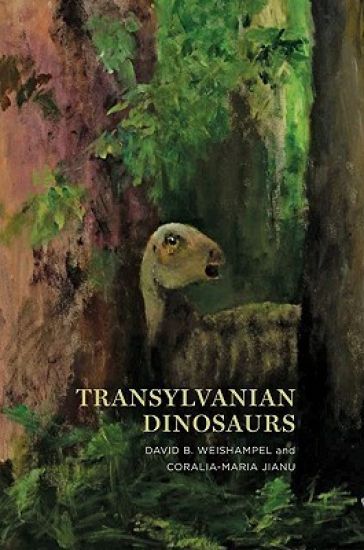
Transylvanian Dinosaurs

Transylvanian Dinosaurs

David B. Weishampel; Coralia-Maria Jianu

Johns Hopkins University Press
2011
sidottu
At the end of the time of the dinosaurs, Transylvania was an island in what was to become southeastern Europe. The island's limited resources affected the size and life histories of its animals, resulting in a local dwarfism. For example, sauropods found on the island measured only six meters long, while their cousins elsewhere grew up to five times larger. Here, David B. Weishampel and Coralia-Maria Jianu present unique evolutionary interpretations of this phenomenon. The authors bring together the latest information on the fauna, flora, geology, and paleogeography of the region, casting these ancient reptiles in their phylogenetic, paleoecological, and evolutionary contexts. What the authors find is that Transylvanian dinosaurs experienced a range of unpredictable successes as they evolved. Woven throughout the detailed history and science of these diminutive dinosaurs is the fascinating story of the man who first discovered them, the mysterious twentieth-century paleontologist Franz Baron Nopcsa, whose name is synonymous with Transylvanian dinosaurs. Hailed by some as the father of paleobiology, it was Nopcsa alone who understood the importance of the dinosaur discoveries in Transylvania; their story cannot be told without recounting his. Transylvanian Dinosaurs strikes an engaging balance between biography and scientific treatise and is sure to capture the imagination of professional paleontologists and amateur dinophiles alike.
Sod Busting

Sod Busting

David B. Danbom

Johns Hopkins University Press
2014
sidottu
Prairie busting is central to the lore of westward expansion, but how was it actually accomplished with little more than animal and human power? In Sod Busting, David B. Danbom tells the story of Great Plains settlement in a way it has seldom been told before. Stretching beyond the sweeping accounts typical of standard textbooks, Danbom challenges students to think about the many practicalities of surviving on the Great Plains in the late nineteenth century by providing a detailed account of how settlers acquired land and made homes, farms, and communities. He examines the physical and climatic obstacles of the plains-perhaps America's most inhospitable frontier-and shows how settlers sheltered themselves, gained access to fuel and water, and broke the land for agriculture. Treating the Great Plains as a post-industrial frontier, Danbom delves into the economic motivations of settlers, as well as the physically and economically difficult process of farm making. He explains how settlers got the capital they needed to succeed and how they used the labor of the entire family to survive until farms returned profits. He examines closely the business decisions that determined the success or failure of these farmers in a boom-and-bust economy; details the creation of churches, schools, and service centers that enriched the social and material lives of the settlers; and shows how the support of government, railroads, and other businesses contributed to the success of plains settlement. Based on contemporary accounts, settlers' reminiscences, and the work of other historians, Sod Busting dives deeply into the practical realities of how things worked to make vivid one of the quintessentially American experiences, breaking new land.
Sod Busting

Sod Busting

David B. Danbom

Johns Hopkins University Press
2014
pokkari
Prairie busting is central to the lore of westward expansion, but how was it actually accomplished with little more than animal and human power? In Sod Busting, David B. Danbom tells the story of Great Plains settlement in a way it has seldom been told before. Stretching beyond the sweeping accounts typical of standard textbooks, Danbom challenges students to think about the many practicalities of surviving on the Great Plains in the late nineteenth century by providing a detailed account of how settlers acquired land and made homes, farms, and communities. He examines the physical and climatic obstacles of the plains-perhaps America's most inhospitable frontier-and shows how settlers sheltered themselves, gained access to fuel and water, and broke the land for agriculture. Treating the Great Plains as a post-industrial frontier, Danbom delves into the economic motivations of settlers, as well as the physically and economically difficult process of farm making. He explains how settlers got the capital they needed to succeed and how they used the labor of the entire family to survive until farms returned profits. He examines closely the business decisions that determined the success or failure of these farmers in a boom-and-bust economy; details the creation of churches, schools, and service centers that enriched the social and material lives of the settlers; and shows how the support of government, railroads, and other businesses contributed to the success of plains settlement. Based on contemporary accounts, settlers' reminiscences, and the work of other historians, Sod Busting dives deeply into the practical realities of how things worked to make vivid one of the quintessentially American experiences, breaking new land.
Marine Fishes of Florida

Marine Fishes of Florida

David B. Snyder; George H. Burgess

Johns Hopkins University Press
2016
pokkari
The most comprehensive book about Florida's marine fishes ever produced, Marine Fishes of Florida includes hundreds of photographs and descriptions of species you'll encounter-plus many that are rare-when diving, snorkeling, kayaking, or fishing. Coverage includes both the Atlantic and Gulf coastline, from habitats near the shore to deeper waters. Fishes found in coastal rivers and other brackish waters are fully represented, as are offshore species that venture into Florida's waters often enough to be called "occasional visitors." David B. Snyder and George H. Burgess intertwine personal observations with results from research studies to provide accurate-often surprising-details. The result is a set of beautifully succinct identification descriptions coupled with information about each species' natural history. From the largest sharks to the smallest cryptic gobies, from homely toadfishes to the spectacularly colored reef fishes, this book is certain to help you better understand the fish you've seen or hooked. Features of Marine Fishes of Florida include * Color photographs by leading marine photographers* Differentiation of adult and juvenile forms* Coverage of 133 fish families and hundreds of species* Size and geographical range data* Natural history and conservation notes* Explanations of geologic history and current habitats
Insects

Insects

David B. Rivers

Johns Hopkins University Press
2017
sidottu
Designed as an introduction to the intriguing world of insect biology, this book examines familiar entomological topics in nontraditional ways. Author David B. Rivers gives important concepts relatable context through a pop culture lens, and he covers subjects that are not typical for entomology textbooks, including the impact of insects on the human condition, the sex lives of insects, why insects are phat but not fat, forensic entomology, and the threats that some insects pose to humanity. Each chapter presents clear and concise key concepts, chapter reviews, review questions following Bloom's taxonomy of learning, web links to videos and other resources, and breakout boxes (called Fly Spots) that capture student interest with unique and entertaining facts related to entomology. Focusing on both traditional and cutting-edge aspects of insect biology and packed with extensive learning resources, Insects covers a wide range of topics suitable for life science majors, as well as non-science students, including: * the positive and negative influences of insects on everyday human life* insect abundance* insect classification (here presented in the context of social media)* insect feeding, communication, defense, and sex* how insects are responding to climate change* forensic entomology* how insects can be used as weapons of war* how insects relate to national security* why insects have wings* how to read pesticide labels
Operation Ebola

Operation Ebola

David B. Hoyt

Johns Hopkins University Press
2017
pokkari
One of the horrors of the West African Ebola outbreak was the decimation of the area's already thin ranks of surgeons. As Ebola spread, health facilities closed, and some doctors-afraid of catching the disease-left the region or stopped performing surgery. Many of those who stayed contracted Ebola and died. As the pool of doctors available-and willing-to perform surgery dwindled, treatable conditions unrelated to the disease, including appendicitis, unrepaired hernias, stomach ulcers, and obstructed labor, went untreated with devastating results. Drs. Sherry M. Wren and Adam L. Kushner both worked extensively with surgeons in Ebola-ravaged countries during the 2014 outbreak. Recognizing that there was no guidance available for how to perform surgery under such dangerous conditions, Wren and Kushner collaborated to create official guidelines for safe surgical procedures in cases of confirmed or suspected Ebola. Operation Ebola documents these procedures and describes in vivid detail the conditions that faced both local surgeons and the international surgeons who came to help. Bringing together a group of medical experts from Sierra Leone and across the globe to tell their stories and offer hard-learned lessons, this book is a riveting first-hand account of performing surgery in under-resourced parts of the world. Through these health workers' eyes, readers will come to understand what it feels like to wear personal protective equipment (PPE) while operating, what dangers remain when using PPE, how to construct an Ebola maternity ward, and how to give anesthesia to patients during a time of Ebola. A succinct and gripping exploration of how an outbreak can affect surgical care and the surgeons who provide it, this book will interest medical professionals, students, policy makers, donors, and anyone who cares about Ebola or global health. Contributors: Kathryn P. Barron, Hakon A. Bolkan, Severine Caluwaerts, Joseph Forrester, Andrew M. R. Hall, Eva Hancilles, Mark J. Harris, Angela Hewlett, David B. Hoyt, Daniel W. Johnson, Thaim B. Kamara, Songor S. J. Koedoyoma, Michael Koroma, Adam L. Kushner, Marta Lado, Ronald C. Marsh, Andrew J. Michaels, Mohamed G. Sheku, Sherry M. Wren
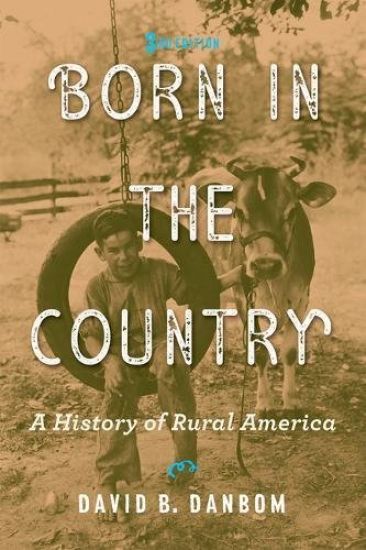
Born in the Country

Born in the Country

David B. Danbom

Johns Hopkins University Press
2017
pokkari
Throughout most of its history, America has been a rural nation, largely made up of farmers. David B. Danbom's Born in the Country was the first-and still the only-general history of rural America. Ranging from pre-Columbian times to the enormous changes of the twentieth century, the book masterfully integrates agricultural, technological, and economic themes with new questions about the American experience. Danbom employs the stories of particular farm families to illustrate the experiences of rural people-including the persistence of Old-World custom, chores of family members, decisions about inheritance, the evolution from subsistence to commercial farming, movement westward, demographic erosion as children left for cities, the rise of corporate agriculture, and the decline of family farming. This substantially revised and updated third edition * expands and deepens its coverage of the late twentieth and early twenty-first centuries* focuses on the changes in agriculture and rural life in the progressive and New Deal eras as well as the massive shifts that have taken place since 1945* adds new information about African American and Native American agricultural experiences* discusses the decline of agriculture as a productive enterprise and its impact on farm families and communities* explores rural culture, gender issues, agriculture, and the environment* traces the relationship among farmers, agribusiness, and consumers In a new and provocative concluding chapter, Danbom reflects on increasing consumer disenchantment with and resistance to modern agriculture as well as the transformation of rural America into a place where farmers are a shrinking minority. Ultimately, he asks whether a distinctive style of rural life exists any longer.
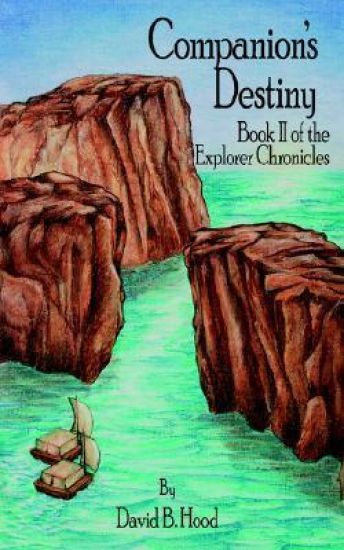
Companion's Destiny

Companion's Destiny

David B Hood

Authorhouse
2006
pokkari
Legacy's Fate opens with Vistamir and Emaris (the island of Valtar's leaders) discussing Randak, the unlikely protagonist who is considered an eccentric storyteller. Telling his tales at the Annual River Celebrations (held in honor of the Meander River - their only clean water supply), all but Vistamir dismissed them as fanatical musings of a senile old man. Vistamir sought out Randak the following day, and when the storyteller floated across the river in front of the leader, Vistamir's suspicions about the old man being special were real. Randak met with Vistamir and some trusted friends the next day, when the old man then revealed the surprising secret of his life as well as theirs. It turns out that Randak (a.k.a. Doug Parker) is a 400-year-old longevity experiment, and that all the people on Valtar were descendants of a spaceship crew from Earth that was forced to land there centuries ago. On this foreign planet the current population had forgotten their roots, so the storyteller's revelation was life changing. But the leaders and the others wanted more proof his stories were true, especially Doug's cryptic remark about something killing the island. Doug then takes Vistamir and Emaris as well as Mystel and Kaskin (the leader's twin female partners) and the twin's father Baldor to the spaceship's well-preserved remains hidden in the island's northwestern mountains. The old man's credibility was now confirmed, and afterward he took his guests to the Meander River's source, located in a cave high up in the mountains. Doug told them his suspicions were true after testing the water here: their only fresh water supply was becoming chemically polluted and will eventually be undrinkable. After the shock of this revelation, the companions head back to the ship where Doug instructs them on building some simple filtration units using lava rock. They spend the night there and plan another trip back to the source the next day - the extra lava rock they nee
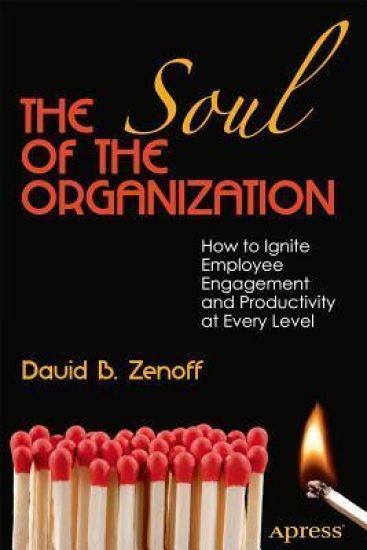
The Soul of the Organization

The Soul of the Organization

David B. Zenoff

APress
2012
nidottu
Given the opportunity to describe Apple as a company in just a word or two, most would respond with adjectives like: Innovative. Design-conscious. Iconic. Some would probably even say: Secretive. But here's another: Soulful. Yes, Apple has a soul, and it is not alone in that respect. A select few organizations can similarly be said to exhibit similar qualities of soul that inspire passion in their employees and set them on the path to high levels of sustained organizational performance. But, given that most organizations are plagued by low levels of employee engagement and lackluster organizational performance, how do high-performing organizations do it? How do they ignite and sustain employee engagement and boost individual and overall organizational productivity? That is exactly the question that organizational expert David B. Zenoff sets out to answer in The Soul of the Organization. Based on the author's extensive experience consulting to and observing some of the best-known organizations in the world, The Soul of the Organization (www.souloftheorganization.com) journeys into eleven high-performing organizations operating in both the for-profit and not-for-profit worlds to determine the underlying elements of soul that foster strong employee engagement at all levels. What Zenoff finds in his inquiry is that organizations as different as home goods retailer Williams-Sonoma and not-for-profit group Larkin Street Youth Services all share in common five key elements of soul that, taken together, are powerful forces for fostering employee engagement, satisfaction, and meaning. And he doesn't stop once he has identified the five core elements of an organization's soul. Instead, he goes on to offer both a conceptual framework and a practical primer on how to leverage these key ingredients to create, sustain, and nourish a soul in your organization. Organizations of all stripes and in all industries and domains have great difficulty motivating their workforces to demonstrate a strong commitment to giving their all in the workplace. As a result, these organizations' overall productivity and growth are compromised, and their employees cannot find meaning or satisfaction in their work. If your organization struggles with sub-par employee loyalty, commitment, and drive, you will find the guidance you need in The Soul of the Organization, a guide to infusing into your workplace that "special something" that engages employees, drives their productivity, and taps into their collective well of potential so that your organization can make its mark on the world.
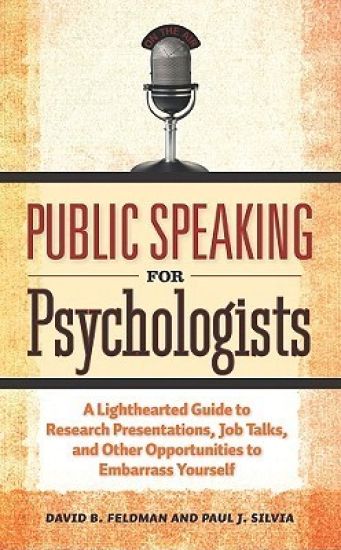
Public Speaking for Psychologists

Public Speaking for Psychologists

David B. Feldman; Paul J. Silvia

American Psychological Association
2010
pokkari
Public Speaking for Psychologists is a practical and lighthearted guide to planning, designing, and delivering a presentation. Public speaking is one of the most common fears. Few people look forward to talking in front of others and even fewer do it as effectively as they could. A career in psychology and its related fields involves extensive public speaking, so you will need to learn to do it well. With time and practice, you too can become a confident and effective presenter. The first half of Public Speaking for Psychologists covers the nuts-and-bolts of public speaking: preparing a talk, submitting an abstract, developing your slides, managing anxiety, handling questions, and preventing public-speaking disasters. The second half applies these tips to common presentations, such as research talks, poster presentations, job talks, and talks to lay audiences. Throughout the book, the authors-both experienced presenters-offer realistic advice, useful tips, and humorous stories of embarrassing mistakes they'll never make again.