Kirjojen hintavertailu. Mukana 12 016 292 kirjaa ja 12 kauppaa.

Kirjahaku

Etsi kirjoja tekijän nimen, kirjan nimen tai ISBN:n perusteella.

1000 tulosta hakusanalla David a McIntee

A Practitioner's Guide to State and Local Population Projections

A Practitioner's Guide to State and Local Population Projections

Stanley K. Smith; Jeff Tayman; David A. Swanson

Springer
2014
sidottu
This book focuses on the methodology and analysis of state and local population projections. It describes the most commonly used data sources and application techniques for four types of projection methods: cohort-component, trend extrapolation, structural models, and microsimulation. It covers the components of population growth, sources of data, the formation of assumptions, the development of evaluation criteria, and the determinants of forecast accuracy. It considers the strengths and weaknesses of various projection methods and pays special attention to the unique problems that characterize small-area projections. The authors provide practical guidance to demographers, planners, market analysts, and others called on to construct state and local population projections. They use many examples and illustrations and present suggestions for dealing with special populations, unique circumstances, and inadequate or unreliable data. They describe techniques for controlling one set of projections to another, for interpolating between time points, for sub-dividing age groups, and for constructing projections of population-related variables (e.g., school enrollment, households). They discuss the role of judgment and the importance of the political context in which projections are made. They emphasize the “utility” of projections, or their usefulness for decision making in a world of competing demands and limited resources. This comprehensive book will provide readers with an understanding not only of the mechanics of the most commonly used population projection methods, but also of the many complex issues affecting their construction, interpretation, evaluation, and use.?

A Practitioner's Guide to State and Local Population Projections

A Practitioner's Guide to State and Local Population Projections

Stanley K. Smith; Jeff Tayman; David A. Swanson

Springer
2016
nidottu
This book focuses on the methodology and analysis of state and local population projections. It describes the most commonly used data sources and application techniques for four types of projection methods: cohort-component, trend extrapolation, structural models, and microsimulation. It covers the components of population growth, sources of data, the formation of assumptions, the development of evaluation criteria, and the determinants of forecast accuracy. It considers the strengths and weaknesses of various projection methods and pays special attention to the unique problems that characterize small-area projections. The authors provide practical guidance to demographers, planners, market analysts, and others called on to construct state and local population projections. They use many examples and illustrations and present suggestions for dealing with special populations, unique circumstances, and inadequate or unreliable data. They describe techniques for controlling one set of projections to another, for interpolating between time points, for sub-dividing age groups, and for constructing projections of population-related variables (e.g., school enrollment, households). They discuss the role of judgment and the importance of the political context in which projections are made. They emphasize the “utility” of projections, or their usefulness for decision making in a world of competing demands and limited resources. This comprehensive book will provide readers with an understanding not only of the mechanics of the most commonly used population projection methods, but also of the many complex issues affecting their construction, interpretation, evaluation, and use.?
A Framework for Exploring Cybersecurity Policy Options

A Framework for Exploring Cybersecurity Policy Options

Igor Mikolic-Torreira; Ryan Henry; Don Snyder; Sina Beaghley; Stacie L. Pettyjohn; Sarah Harting; Emma Westerman; David A. Shlapak; Megan Bishop; Jenny Oberholtzer; Lauren Skrabala; Cortney Weinbaum

RAND
2016
pokkari
RAND conducted two cybersecurity-focused discovery games in Washington, D.C., and California s Silicon Valley that aimed to capture the widest possible range of perspectives. The goals were to explore opportunities for improving cybersecurity, assess the implications of possible solutions, and develop an initial framework to support debate and inform decisions regarding cybersecurity policies and practices."
The Police Heritage in England and America: A Developmental Survey

The Police Heritage in England and America: A Developmental Survey

Samuel G. Chapman; T. Eric St Johnston; David A. Booth

Literary Licensing, LLC
2012
sidottu
The Police Heritage In England And America: A Developmental Survey is a comprehensive book written by Samuel G. Chapman that provides an in-depth analysis of the history and development of the police force in both England and America. The book traces the origins of the police force, starting from the early days of ancient civilizations to the modern-day police systems in both countries.The author highlights the significant events and milestones that shaped the police force in England and America, including the establishment of the Bow Street Runners in England and the development of the first modern police force in America. The book also explores the impact of social and political changes on the police force, such as the introduction of new technologies and the rise of organized crime.Throughout the book, Chapman provides a critical analysis of the police force's role in society and highlights the challenges and controversies that have faced the police force over the years. He also examines the cultural differences between the police forces in England and America, highlighting the unique characteristics and approaches of each system.Overall, The Police Heritage In England And America: A Developmental Survey is an informative and insightful book that provides a detailed and engaging history of the police force in both countries. It is an essential read for anyone interested in the history and development of law enforcement in England and America.This scarce antiquarian book is a facsimile reprint of the old original and may contain some imperfections such as library marks and notations. Because we believe this work is culturally important, we have made it available as part of our commitment for protecting, preserving, and promoting the world's literature in affordable, high quality, modern editions, that are true to their original work.
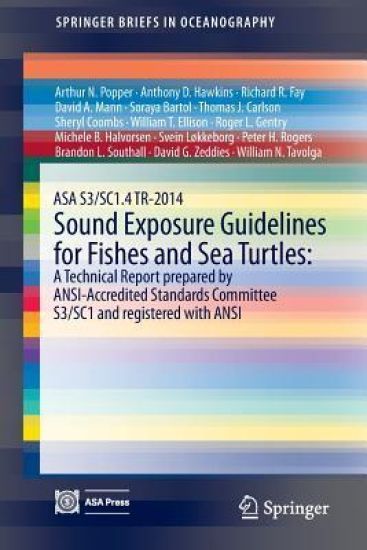
ASA S3/SC1.4 TR-2014 Sound Exposure Guidelines for Fishes and Sea Turtles: A Technical Report prepared by ANSI-Accredited Standards Committee S3/SC1 and registered with ANSI

ASA S3/SC1.4 TR-2014 Sound Exposure Guidelines for Fishes and Sea Turtles: A Technical Report prepared by ANSI-Accredited Standards Committee S3/SC1 and registered with ANSI

Arthur N. Popper; Anthony D. Hawkins; Richard R. Fay; David A. Mann; Soraya Bartol; Thomas J. Carlson; Sheryl Coombs; William T. Ellison; Roger L. Gentry; Michele B. Halvorsen; Svein Løkkeborg; Peter H. Rogers; Brandon L. Southall; David G. Zeddies; William N. Tavolga

Springer International Publishing AG
2014
nidottu
This Technical Report presents the outcome of a Working Group that was established to determine broadly applicable sound exposure guidelines for fishes and sea turtles. After consideration of the diversity of fish and sea turtles, guidelines were developed for broad groups of animals, defined by the way they detect sound. Different sound sources were considered in terms of their acoustic characteristics and appropriate metrics defined for measurement of the received levels. The resultant sound exposure guidelines are presented in a set of tables. In some cases numerical guidelines are provided, expressed in appropriate metrics. When there were insufficient data to support numerical values, the relative likelihood of effects occurring was evaluated, although the actual likelihood of effects depends on the received level. These sound exposure guidelines, which are based on the best scientific information at the time of writing, should be treated as interim. The expectation is that with more research the guidelines can be refined and more cells in the tables completed. Recommendations are put forward defining the research requirements of highest priority for extending these interim exposure guidelines.
Managing Brand Equity

Managing Brand Equity

David A. Aaker

JOHN WILEY SONS INC
1991
sidottu
The most important assets of any business are intangible: its company name, brands, symbols and slogans and their underlying association, perceived quality, name awareness, and customer base. These assets, which comprise brand equity, are a primary source of competitive advantage and future earnings, contends David Aaker, a national authority on branding. Yet, research shows that managers cannot identify with confidence their brand associations, level of consumer awareness, or degree of customer loyalty. Moreover, in the last decade, managers desperate for short-term financial results have often unwittingly damaged their brands through price promotions and unwise brand extensions, causing irreversible deterioration of the value of the brand name. In an examination of the phenomenon of brand equity, Aaker provides a structure of the relationship between a brand and its symbol and slogan, as well as each of the five underlying assets, which will clarify for managers exactly how brand equity does contribute value. The author opens each chapter with an historical analysis of either the success or failure of a particular company's attempt at building brand equity: the fascinating ivory soap story; the transformation of Datsun to Nissan; the decline of Schlitz beer; the making of the Ford Taurus; and others. Finally, with dozens of additional real company examples, Aaker shows how to avoid the temptation to place short-term performance before the health of the brand and, instead, to manage brands strategically by creating, developing, and exploiting each of the five assets in turn.
Sociology Through the Eyes of Faith

Sociology Through the Eyes of Faith

David A Fraser; Anthony Campolo

HarperCollins Religious
2009
nidottu
Colorfully written by two popular and respected sociologists, this volume shows how sociology has evolved, how it became divided from Christian faith, and how Christian sociologists can make sense of this branch of social science.
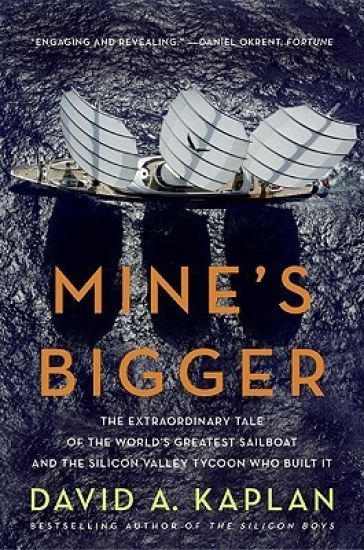
Mine's Bigger

Mine's Bigger

David A Kaplan

HarperPaperbacks
2008
pokkari
Tom Perkins, the venture capitalist behind such companies as Google, Genentech, Amazon, and AOL, doesn't do things halfway. When he collected vintage cars, for instance, he had the world's largest collection of Bugatti automobiles. And when he decided to pursue a lifelong dream and build a sailing yacht, he went the whole nine yards: He decided it would be the world's largest yacht - big enough to fit Noah's Ark on its deck. He wanted it to sail at a record 26 knots, under unprecedented physical forces. And, he thought, having built this marine wonder, why not use it to try to smash the 155-year-old world sailing record from New York to San Francisco around Cape Horn? So Perkins built 'the perfect yacht' - as long as a football field, 42 feet wide, and with three masts so tall they will just fit under the great suspension bridges of the world. The Maltese Falcon, as he dubbed his ship, uses technology no clipper skipper ever imagined - a rig with no sheets, no stays, no halyards - just free-standing, rotating carbon fiber masts with 18 sails surging freely in the wind. At $130 million, it is a technological marvel - as complex as the man himself.
Capture: Unraveling the Mystery of Mental Suffering
New York Times Bestseller Why do we think, feel, and act in ways we wished we did not? For decades, New York Times bestselling author Dr. David A Kessler has studied this question with regard to tobacco, food, and drugs. Over the course of these investigations, he identified one underlying mechanism common to a broad range of human suffering. This phenomenon--capture--is the process by which our attention is hijacked and our brains commandeered by forces outside our control.In Capture, Dr. Kessler considers some of the most profound questions we face as human beings: What are the origins of mental afflictions, from everyday unhappiness to addiction and depression--and how are they connected? Where does healing and transcendence fit into this realm of emotional experience?Analyzing an array of insights from psychology, medicine, neuroscience, literature, philosophy, and theology, Dr. Kessler deconstructs centuries of thinking, examining the central role of capture in mental illness and questioning traditional labels that have obscured our understanding of it. With a new basis for understanding the phenomenon of capture, he explores the concept through the emotionally resonant stories of both well-known and un-known people caught in its throes.The closer we can come to fully comprehending the nature of capture, Dr. Kessler argues, the better the chance to alleviate its deleterious effects and successfully change our thoughts and behavior Ultimately, Capture offers insight into how we form thoughts and emotions, manage trauma, and heal. For the first time, we can begin to understand the underpinnings of not only mental illness, but also our everyday worries and anxieties. Capture is an intimate and critical exploration of the most enduring human mystery of all: the mind.
Capture: Unraveling the Mystery of Mental Suffering
"A breakthrough book. In a world of increasingly specialized knowledge, it takes a particular gift and some stubbornness to cut across the fields of neuroscience, psychiatry, philosophy and psychology and to ask the fundamental question: Why it is that we can allow our best selves to be captured by and torpedoed by thoughts and actions that sink us?. . . . Kessler's] ultimate answer is profound and one that could be life-changing and life-saving. I know I will be handing this book out for just that reason." -- Abraham Verghese, MD, author of Cutting for StoneIn Capture, New York Times bestselling author Dr. David A. Kessler considers some of the most profound questions we face as human beings: What are the origins of mental afflictions, from everyday unhappiness to addiction and depression--and how are they connected? Where does healing and transcendence fit into this realm of emotional experience?Analyzing an array of insights from psychology, medicine, neuroscience, literature, philosophy, and theology, Dr. Kessler deconstructs centuries of thinking, examining the central role of capture in mental illness and questioning traditional labels that have obscured our understanding of it. Looking to the emotionally resonant lives of figures such as David Foster Wallace, Virginia Woolf, William James, Tennessee Williams, John Belushi, Sylvia Plath, and Robert Lowell, among others, he explains how this concept is at play in their lives and--by extension--our own.Ultimately, Capture offers insight into how we form thoughts and emotions, manage trauma, and heal. For the first time, we can begin to understand the underpinnings not only of mental illness but also of our everyday worries and anxieties. Capture is an intimate and critical exploration of the most enduring human mystery of all: the mind.
Fast Carbs, Slow Carbs

Fast Carbs, Slow Carbs

David A. Kessler

Harper Wave
2020
sidottu
The American body is in trouble. Unprecedented numbers of us suffer from obesity, heart disease, diabetes, and other debilitating illnesses. The root cause is a once-revolutionary idea that seemed to offer so much promise, but instead has become the cause of a global health crisis: processed foods. Over the past seventy-five years, a number of factors aligned to create a reality in which processed carbohydrates became our main food source. In Fast Carbs, Slow Carbs, bestselling author and former FDA Commissioner David A. Kessler explains how the quest to feed a nation resulted in a population that is increasingly suffering from obesity and chronic disease and offers a solution for changing course.For decades, no one questioned the effects of these processed carbohydrates. The focus was on fertile grassland, ideal for growing vast amounts of wheat and corn; an industrial infrastructure perfect for refining those grains into starch; a food production behemoth that turns refined grains into affordable, appealing, and ever-present food items, from pizza to burritos to bagels; and an efficient distribution network that ensures consumption by Americans nationwide.But during those same decades, our bodies quietly contended with the metabolic chaos caused by consuming rapidly absorbable starch. Slowly but surely, these effects accumulated and became disastrous, leading to the public health crisis in which we find ourselves today.In Fast Carbs, Slow Carbs, Kessler explains how eating refined grains such as wheat, corn, and rice leads to a cascade of hormonal and metabolic issues that make it very easy to gain weight and nearly impossible to lose it. Worse still is how excess weight creates a very real link to diabetes, heart disease, cognitive decline, and a host of cancers. We can no longer afford to dismiss the consequences of eating food that is designed to be rapidly absorbed as sugar in our bodies. Informed by cutting-edge research as well as Dr. Kessler’s own personal quest to manage his weight, Fast Carbs, Slow Carbs reveals in illuminating detail how we got to this critical turning point in our health as a nation—and outlines a plan for eliminating heart disease, allowing us to, finally, regain control of our health.
Reinforced Concrete Structures: Analysis and Design, Second Edition
This comprehensive guide to reinforced concrete structures has been fully revised to cover 2014 updates to the ACI 318 Structural Concrete codeReinforced Concrete Structures: Analysis and Design, Second Edition offers clear explanations of the underlying principles behind reinforced concrete design and provides easy-to-follow analysis, design, and construction techniques. This edition has been thoroughly updated to conform to the new ACI 2014 Building Code.This authoritative resource discusses reinforced concrete members and provides techniques for sizing the cross section, calculating the required amount of reinforcement, and detailing the reinforcement. Brand-new information is included on earthquake design and detailing. Easy-to-follow design procedures and illuminating flowcharts guide you through complex code requirements.• Concisely explains every provision in the 2014 ACI 318 Structural Concrete code• Features a new chapter on design and detailing for earthquake effects• Solved problems and real-world examples demonstrate each provision’s proper application• Author has written numerous technical publications on the design of reinforced concrete and load determination
Fibrous Proteins: Coiled-Coils, Collagen and Elastomers

Fibrous Proteins: Coiled-Coils, Collagen and Elastomers

David A.D. Parry; John M. Squire

Academic Press Inc
2005
sidottu
Fibrous Protein: Coiled-Coils, Collagen and Elastomers is the first of a three-part series on Fibrous Proteins. The books are based on a very successful workshop in Alpbach, Austria on the general topic of Fibrous Proteins that gave rise to the award winning issue of Journal of Structural Biology. Part II will contain an extensive discussion of Molecular Motors and Muscle, Part III on Amyloids, Prions and Beta Proteins. Advances in Protein Chemistry is available online on ScienceDirect — full-text online of volumes 53 onwards.
Human Motor Control

Human Motor Control

David A. Rosenbaum

Academic Press Inc
2009
sidottu
Motor Control is a complex process that involves the brain, muscles, limbs, and often external objects. It underlies motion, balance, stability, coordination, and our interaction with others and technology. This book is a comprehensive introduction to motor control, covering a complex topic in an approachable way encompassing the psychological, physiological, and computational approaches to motor control. Human Motor Control, 2e cuts across all movement related disciplines: physical education, dance, physical therapy, robotics, etc. This second edition incorporates advances to the field, and integrates throughout the book how research harkens back to four critical questions: how do we select our actions of the many actions possible? How are these behaviors sequenced for appropriate order and timing between them? How does perception integrate with motor control? And how are perceptual–motor skills acquired? As before, the book retains its signature organization around activity systems. These activity systems include walking, looking, reaching, drawing and writing, keyboarding, speaking and singing, and smiling. Chapters here exemplify rather than encompass all the behaviors related to them. Hence smiling discusses physical and neural control of the face used in other expressions besides smiling, as well as the origins of emotional expression, and the importance of emotion expression in social interaction. These chapters on activity systems are preceded by chapters on basics, with an introduction and information on the physiological and psychological foundations of movement. The last section discusses integration of movements, individual differences, theories of motor control, and the contributions of both genetics and technology to motor control. Special features of the second edition:Organization by major activity systems New: brain imaging, social action, embodied cognition, advances in genetics and technology Detailed treatment of motor neuroscience Further Readings section added to each chapter
General Circulation Model Development

General Circulation Model Development

David A. Randall

Academic Press Inc
2000
sidottu
General Circulation Models (GCMs) are rapidly assuming widespread use as powerful tools for predicting global events on time scales of months to decades, such as the onset of EL Nino, monsoons, soil moisture saturation indices, global warming estimates, and even snowfall predictions. While GCMs have been praised for helping to foretell the current El Nino and its impact on droughts in Indonesia, its full power is only now being recognized by international scientists and governments who seek to link GCMs to help them estimate fish harvests, risk of floods, landslides, and even forest fires. Scientists in oceanography, hydrology, meteorology, and climatology and civil, ocean, and geological engineers perceive a need for a reference on GCM design. In this compilation of information by an internationally recognized group of experts, Professor Randall brings together the knowledge base of the forerunners in theoretical and applied frontiers of GCM development. General Circulation Model Development focuses on the past, present, and future design of numerical methods for general circulation modeling, as well as the physical parameterizations required for their proper implementation. Additional chapters on climate simulation and other applications provide illustrative examples of state-of-the-art GCM design.
Computer Organization and Design ARM Edition

Computer Organization and Design ARM Edition

David A. Patterson; John L. Hennessy

Morgan Kaufmann Publishers In
2016
nidottu
The new ARM Edition of Computer Organization and Design features a subset of the ARMv8-A architecture, which is used to present the fundamentals of hardware technologies, assembly language, computer arithmetic, pipelining, memory hierarchies, and I/O. With the post-PC era now upon us, Computer Organization and Design moves forward to explore this generational change with examples, exercises, and material highlighting the emergence of mobile computing and the Cloud. Updated content featuring tablet computers, Cloud infrastructure, and the ARM (mobile computing devices) and x86 (cloud computing) architectures is included. An online companion Web site provides links to a free version of the DS-5 Community Edition (a free professional quality tool chain developed by ARM), as well as additional advanced content for further study, appendices, glossary, references, and recommended reading.