Kirjojen hintavertailu. Mukana 12 016 292 kirjaa ja 12 kauppaa.

Kirjahaku

Etsi kirjoja tekijän nimen, kirjan nimen tai ISBN:n perusteella.

1000 tulosta hakusanalla George Perry

George Washington and the New Nation: 1783-1793 - Volume 3
Several problems, however, block William Conrad Brant MacKenzie’s entrance to the Oval Office. First, the rumor mill is flooded with talk Willy may well be insane, or at least emotionally unstable. Second, the Supreme Court has refused to recognize his election because of his age. And third, even if Willy is inaugurated, he may have a difficult time presiding over the nation. As the twenty-first century dawns, the United States is in a rapid state of political, social, and moral decline.
George Washington: Anguish and Farewell 1793-1799 - Volume IV
So how did Willy MacKenzie, scion of one of America’s wealthiest and most eccentric families, get elected in the first place? To discover the answer to this puzzling question, renegade Gonzo journalist Mr. Jack Steel, Willy’s own Mephistopheles, takes us on a journey through 20th century America. We meet Willy’s great grandfather, Ulysses S. Grant MacKenzie; his reclusive, war hero father; his mother, a strong, magical woman of Iroquois ancestry; and Dawn, the great and enduring love of Willy’s life.
George Berkeley: Three Dialogues Between Hylas and Philonous (Longman Library of Primary Sources in Philosophy)
Part of the “Longman Library of Primary Sources in Philosophy,” this edition of Berkeley's Three Dialogues Between Hylas and Philonous is framed by a pedagogical structure designed to make this important work of philosophy more accessible and meaningful for readers. A General Introduction includes biographical information on Berkeley, the work's historical context, and a discussion of historical influences, and a conclusion discusses how the work has influenced other philosophers and why it is important today. Annotations and notes from the editor clarify difficult passages for greater understanding. A bibliography gives the reader additional resources for further study.
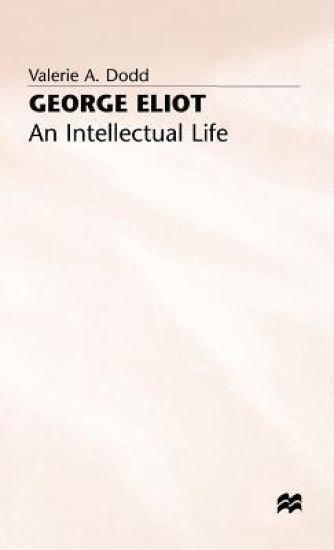
George Eliot: An Intellectual Life

George Eliot: An Intellectual Life

V. Dodd

Palgrave Macmillan
1990
sidottu
There have been several biographies of George Eliot but this is the first study to focus on her intellectual development. The book provides an analysis of the biographical and intellectual factors which encouraged George Eliot to decide upon fiction as her chosen mode of expression, and demonstrates how that decision was influenced by, and an echoing of, J.S.Mill's and Carlyle's critiques of philosophy.
George Orwell

George Orwell

P. Davison

Palgrave Macmillan
1996
sidottu
This account of Orwell's life is chiefly concerned with what influenced Orwell, his relations with publishers and editors, and the analysis of certain key experiences - the deposition that during the Spanish Civil War he was guilty of espionage and high treason; his work at the BBC; his interest in pamphlet literature; and his time as a war correspondent. There is a detailed assessment of his earnings from 1922 to 1945 and a fresh look at his attitudes to class, women, and religious belief. Special attention is paid to his essays.
George Orwell

George Orwell

P. Davison

Palgrave Macmillan
1996
nidottu
This account of Orwell's life is chiefly concerned with what influenced Orwell, his relations with publishers and editors, and the analysis of certain key experiences - the deposition that during the Spanish Civil War he was guilty of espionage and high treason; his work at the BBC; his interest in pamphlet literature; and his time as a war correspondent. There is a detailed assessment of his earnings from 1922 to 1945 and a fresh look at his attitudes to class, women, and religious belief. Special attention is paid to his essays.
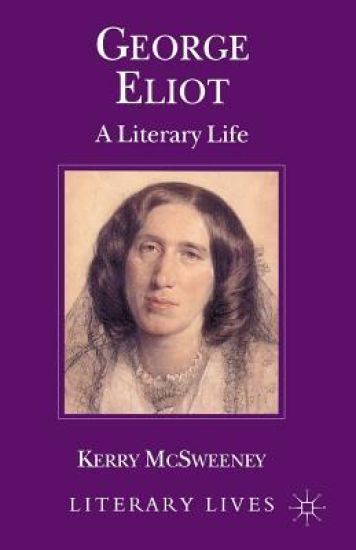
George Eliot

George Eliot

K. McSweeney

Palgrave Macmillan
1996
nidottu
George Eliot (Marian Evans) as a writer of fiction is the central theme of this literary life. The events of Eliot's formative years, together with the growth of her renowned intellect, are outlined, giving us an insight into the creative talent responsible for some of the best-known novels in the English-language. Her views on other novels and novelists are detailed and we follow the development of her craft as writer as it evolved from the faithful representation of everyday life, as in Scenes of Clerical Life, through to the more complex considerations of Middlemarch and Daniel Deronda.
George Herbert

George Herbert

C. Malcolmson

Palgrave Macmillan
2003
sidottu
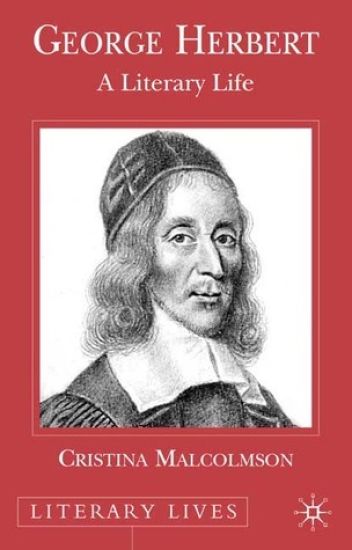
This volume replaces the traditional image of George Herbert as meditative recluse with a portrait of the poet as engaged throughout his life with the religion, politics and society of his time. Instead of an isolated genius living in retreat from the world, Herbert appears as a man writing public verse, active within an important social circle, and committed to nationalistic Protestantism. The book attends to the poetic brilliance of his verse as well as the institutions and contexts that influenced him: the upper class coterie, Cambridge University, and the Church of England.
George Herbert

George Herbert

C. Malcolmson

Palgrave Macmillan
2003
nidottu
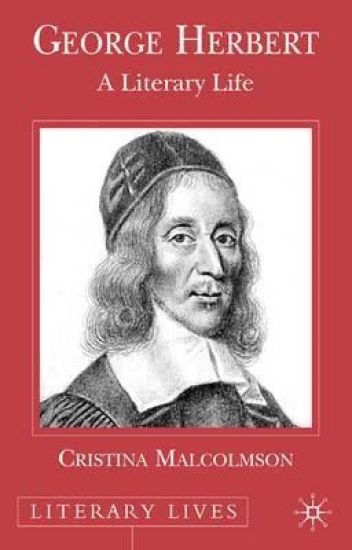
This volume replaces the traditional image of George Herbert as meditative recluse with a portrait of the poet as engaged throughout his life with the religion, politics and society of his time. Instead of an isolated genius living in retreat from the world, Herbert appears as a man writing public verse, active within an important social circle, and committed to nationalistic Protestantism. The book attends to the poetic brilliance of his verse as well as the institutions and contexts that influenced him: the upper class coterie, Cambridge University, and the Church of England.
George Eliot and Italy

George Eliot and Italy

A. Thompson

Palgrave Macmillan
1997
sidottu
This study considers George Eliot's novels in relation to Dante and to nineteenth-century Italian culture during the Italian national revival and shows how these helped shape her fiction. Thompson argues that Eliot was able to draw selectively on a powerful Risorgimento mythology of national regeneration and that her engagement with the work of Dante Alighieri increases steadily in her later novels, where the Divine Comedy becomes a sustaining metaphor for Eliot's meliorist vision and for her theme of moral growth through suffering.
George Eliot

George Eliot

Pauline Nestor

Red Globe Press
2002
nidottu
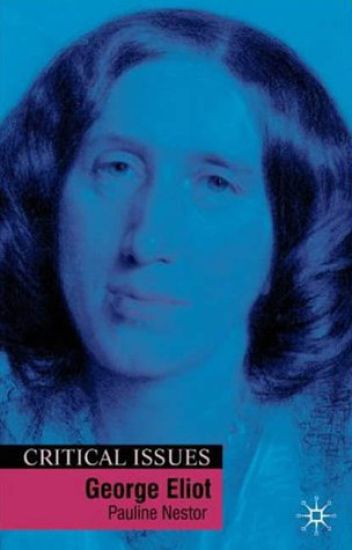
George Eliot was one of the great thinkers of her time, a figure central to the main currents of thought and belief in the nineteenth century. Yet when this distinguished public intellectual turned to fiction writing at the age of thirty-six, she regarded it not as a lesser pursuit, but as the distillation of all of her knowledge and ideas. For Eliot, fiction enabled the consideration of life 'in its highest complexity', and had the capacity not merely to elicit, but actually to create, moral sentiment by surprising readers into the recognition of realities other than their own.In this new study, Pauline Nestor offers a challenging reassessment of Eliot's contribution to the critical debates, both of her age and of her own era. In particular, she examines the author's literary expolration of ethics, especially in relation to the negotiation of difference. Nestor argues compellingly that, through a reading of their sophisticated drama of otherness, Eliot's novels can be seen as freshly relevant to contemporary theoretical debates in feminism, moral philosophy, post-colonial studies and psychoanalysis.Covering the writer's complete body of major fiction, this is an indispensable voume for anyone studying the work of one of the most important and influential novelists of the nineteenth century.
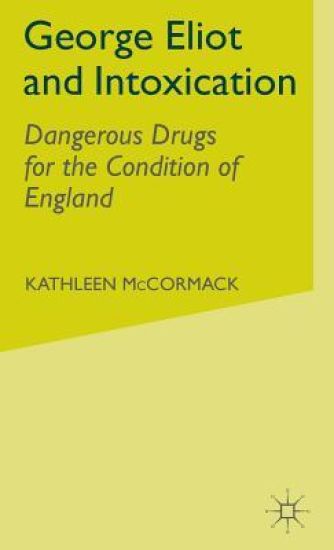
George Eliot and Intoxication

George Eliot and Intoxication

K. McCormack

Palgrave Macmillan
1999
sidottu
Throughout George Eliot's fiction, not only do a remarkable number of her characters act under the influence of unwise consumption of alcohol and opium, but drugs also recur often as metaphors and allusions. Together, they create an extensive pattern of drug/disease references that represent socio-political problems as diseases in a social body and solutions to those problems (especially solutions that depend on some kind of written language) as volatile remedies that retain the potential to either kill or cure.
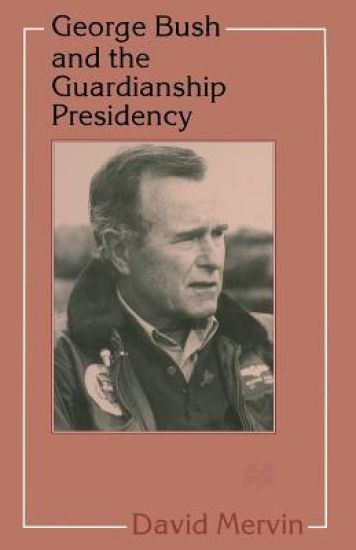
George Bush and the Guardianship Presidency

George Bush and the Guardianship Presidency

David Mervin

PALGRAVE MACMILLAN
1998
nidottu
A clearly written, provocative analysis of the Bush presidency that draws on extensive interviews with White House staff. The Budget crisis of 1990 and the Gulf war receive particular attention as defining events in Bush's incumbency, demonstrating the strengths and weaknesses in his approach to presidential leadership. This book not only casts light on Bush's record in office, it also helps to resolve methodological problems that arise in the study of the presidency generally.
George Eliot and Victorian Historiography

George Eliot and Victorian Historiography

Neil McCaw

Palgrave Macmillan
2000
sidottu
In this new study of George Eliot's fiction, textual attempts to imagine a coherent and unified national past are seen as producing a contradictory vision of Englishness. It is a historiographical national identity, constructed in the image of predominant, and conflicting, trends in the Victorian writing of history. The inherent uncertainty caused by the shift between different perceptions of English history leads, in the later fiction, to an abandonment of contemporaneous grand narratives. The consequence is a history that anticipates a more modern, radical philosophy of history.
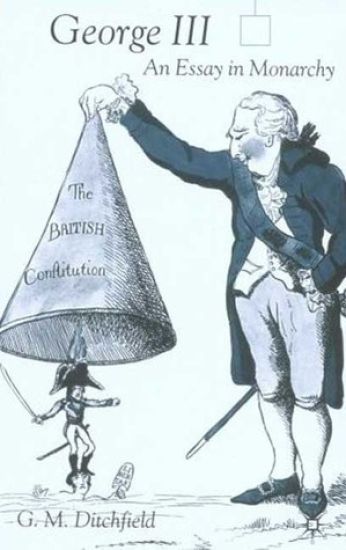
George III

George III

G. Ditchfield

Palgrave Macmillan
2002
sidottu
This book is a political study of the reign of George III which draws upon unpublished sources and takes account of recent research to present a rounded appreciation of one of the most important and controversial themes in British history. It examines the historical reputation of George III, his role as a European figure and his religious convictions, and offers a discussion of the domestic and imperial policies with which he was associated.
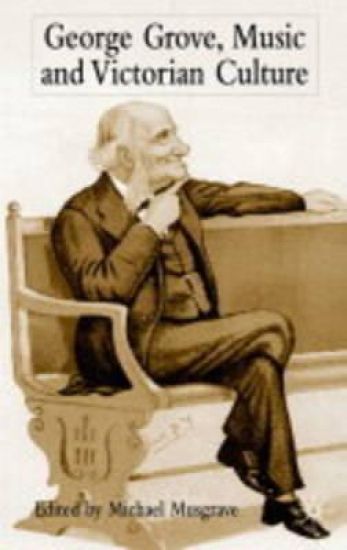
George Grove, Music and Victorian Culture

George Grove, Music and Victorian Culture

Michael Musgrave

Palgrave Macmillan
2003
sidottu
Though George Grove (1820-1900) was never a professional musician, his is one of the most familiar names in music: as founder of the great Dictionary of Music and Musicians that bears his name and first director of the Royal College of Music. This book surveys his varied activities as engineer, biblical scholar, administrator, educationalist and writer on music, and assesses the qualities that led him to play a major role in the cultural life of London in the period 1850-1900.